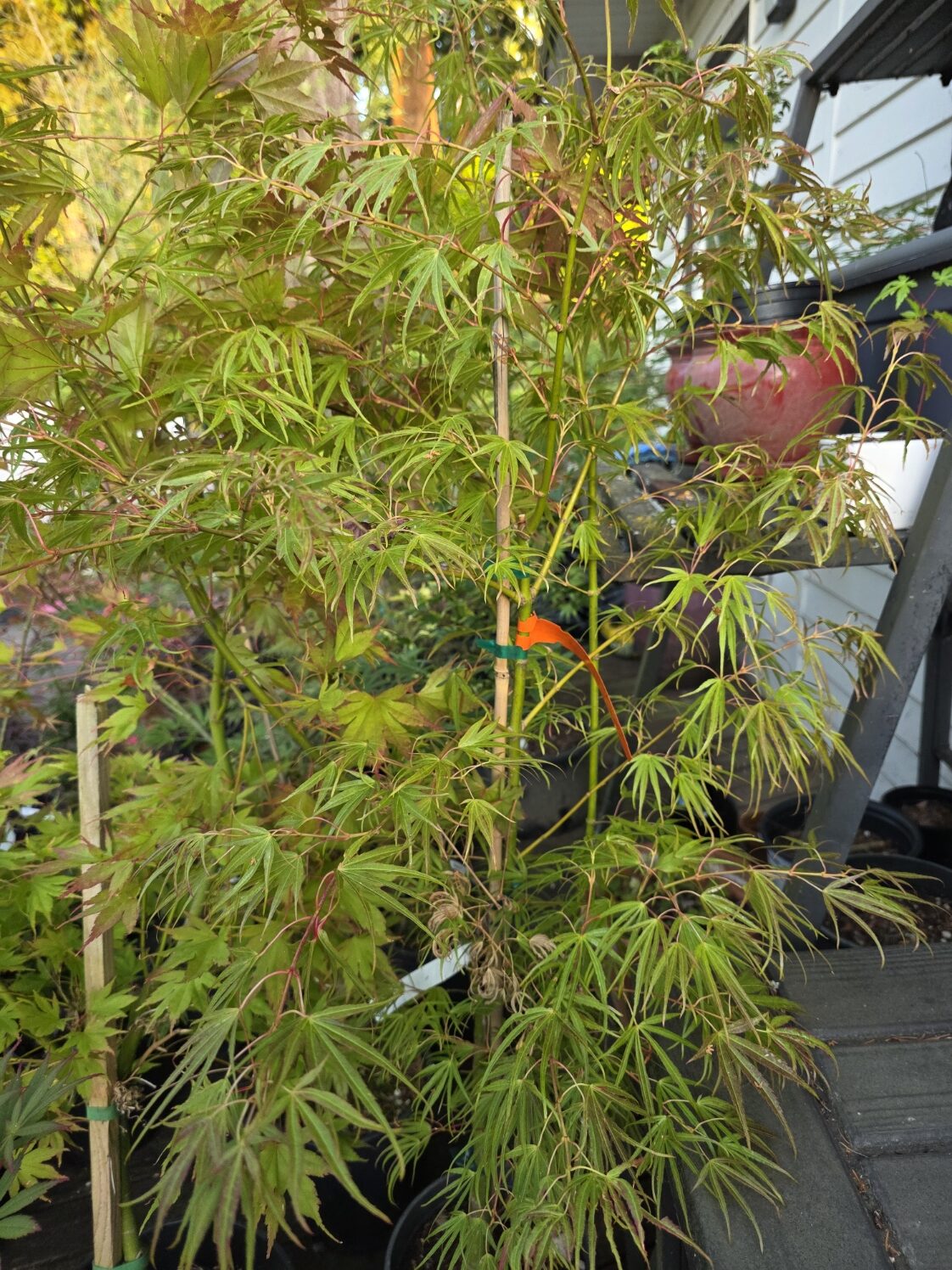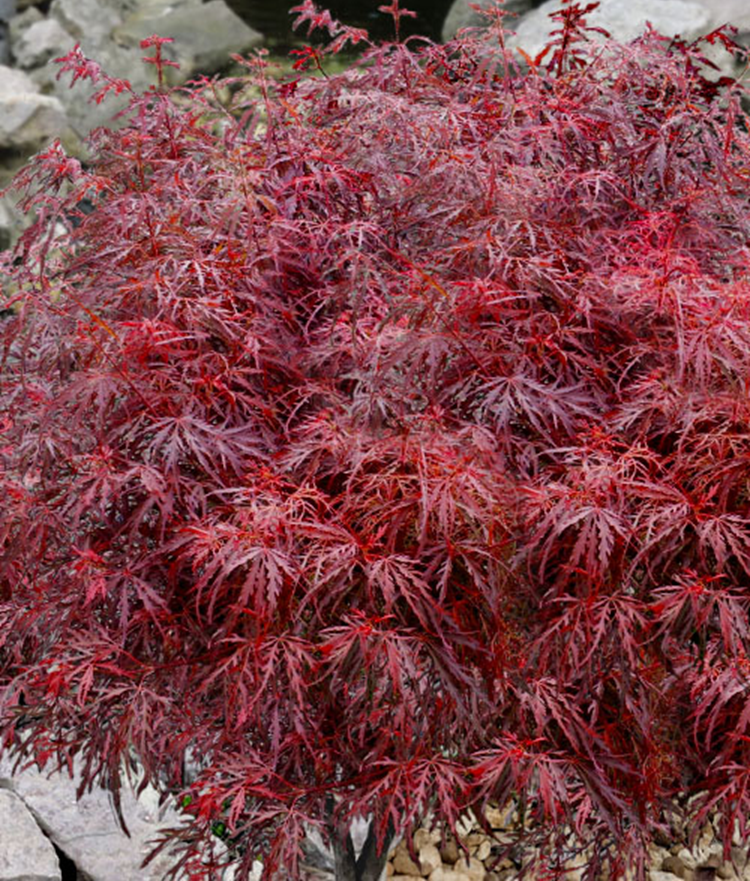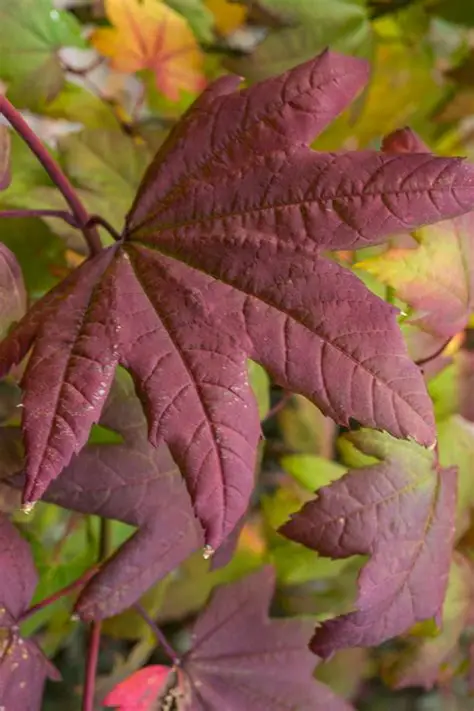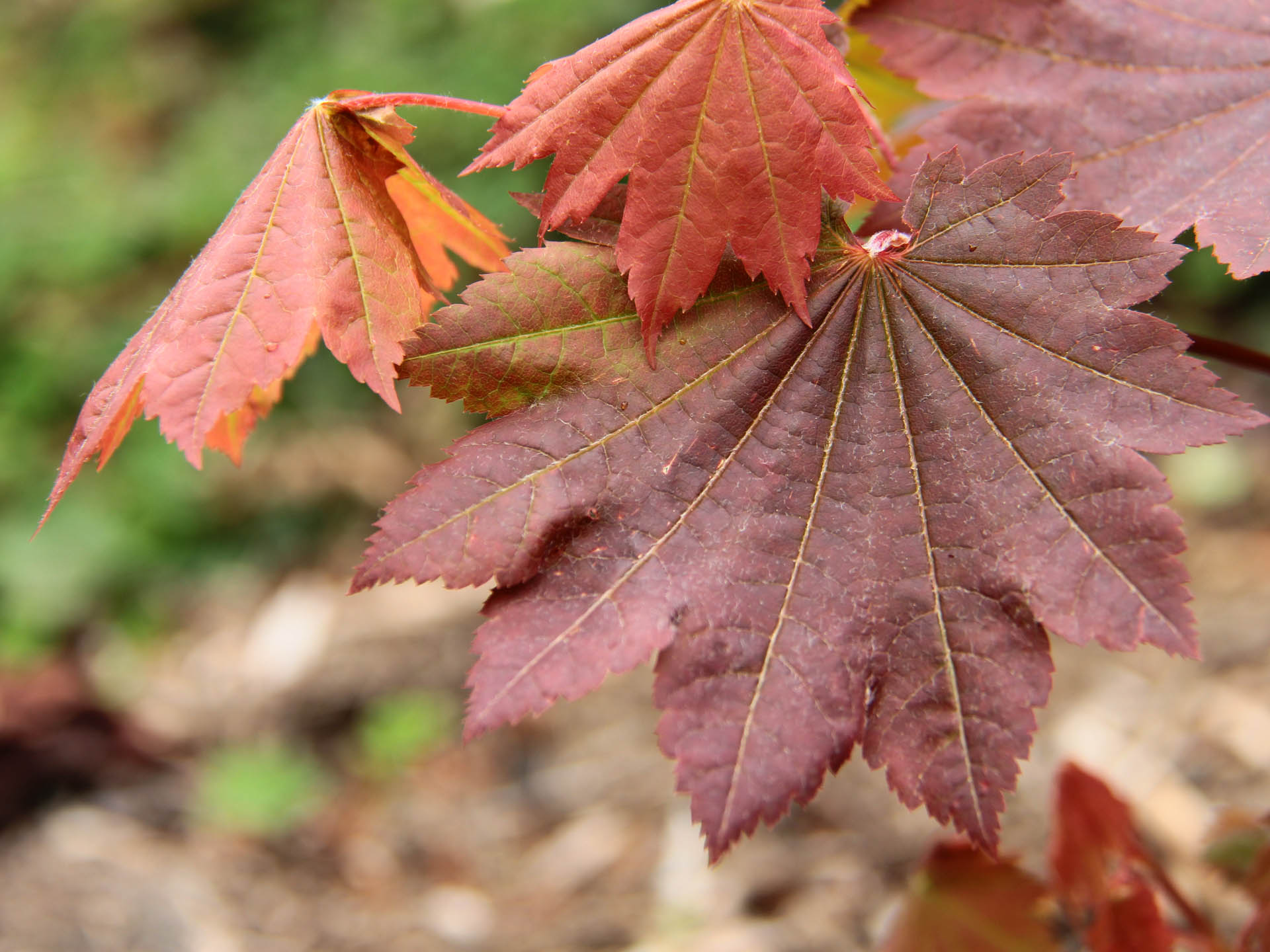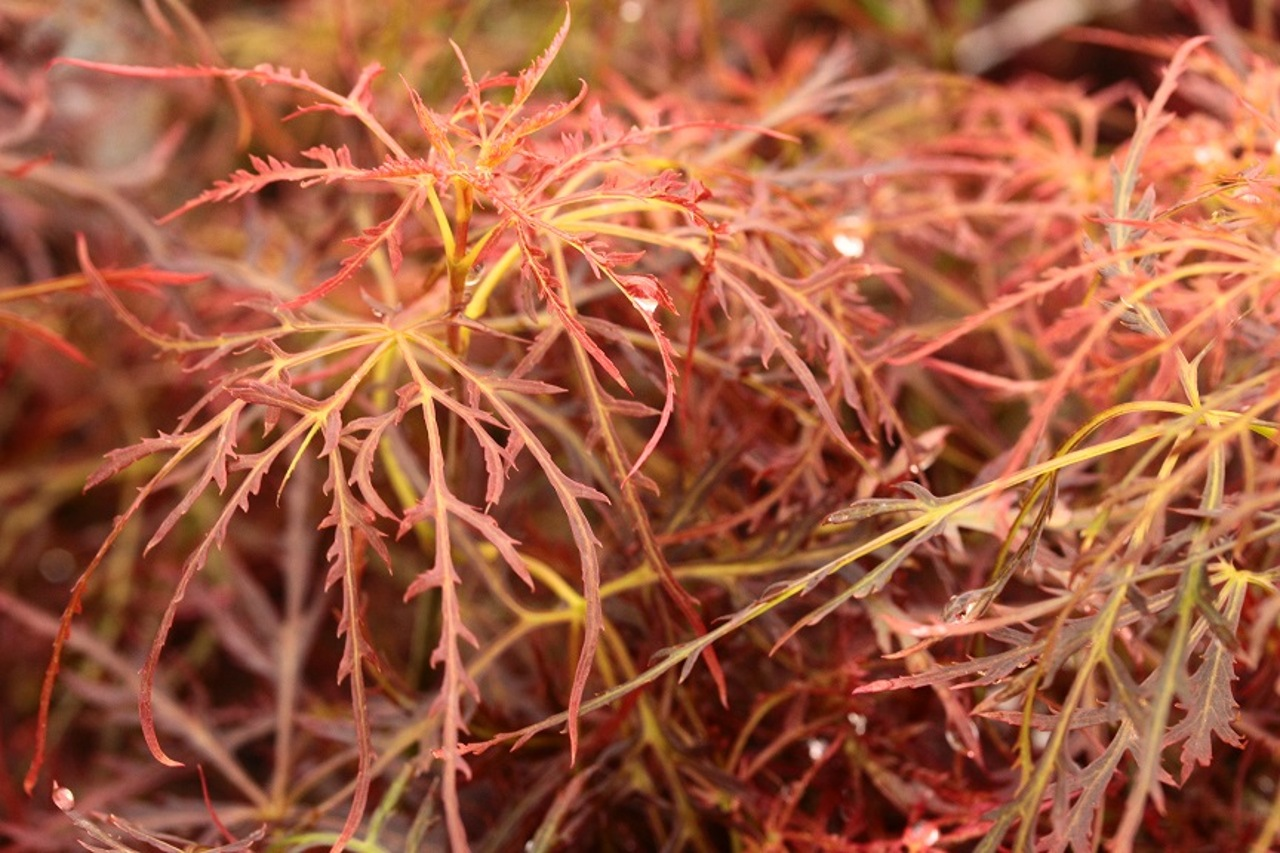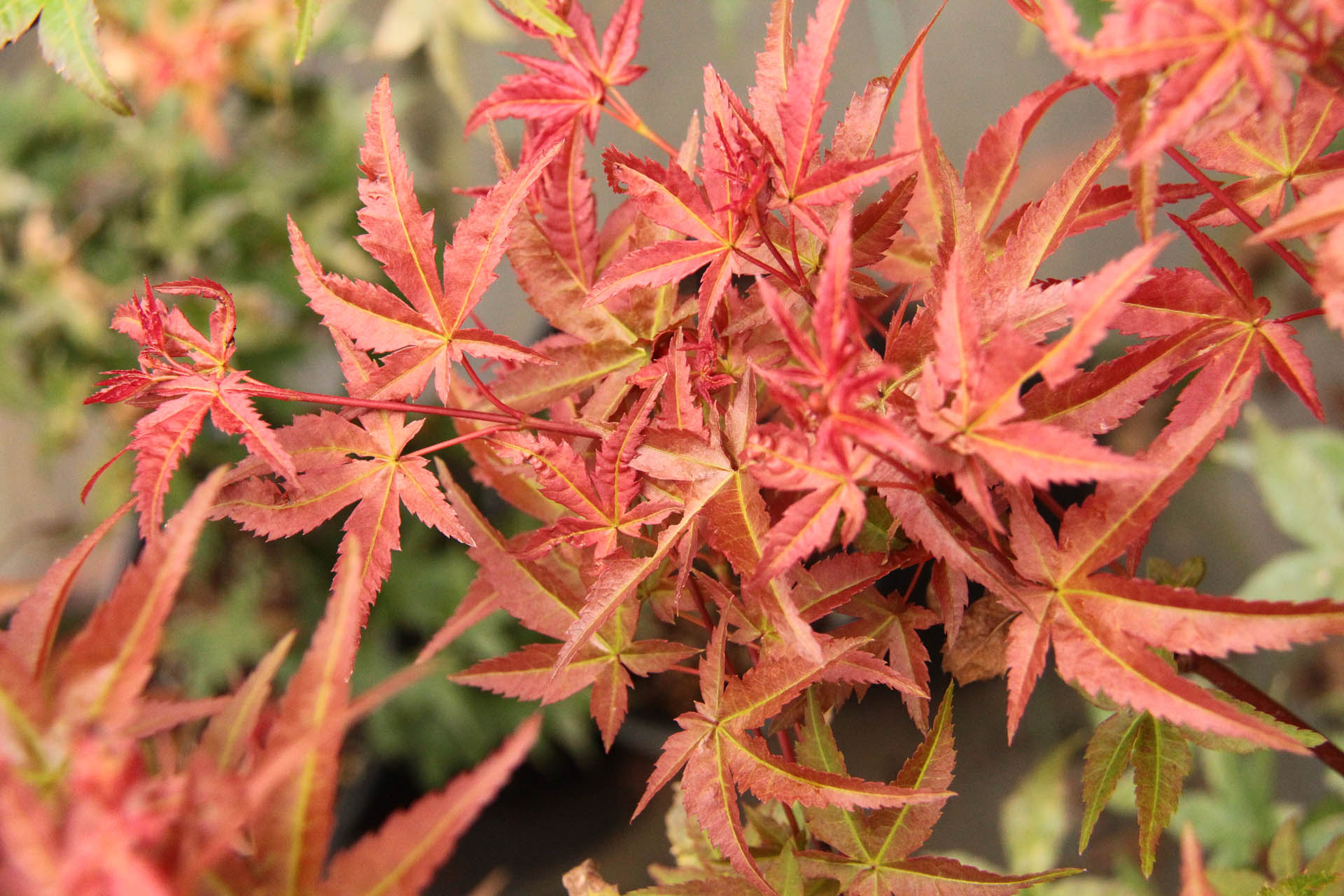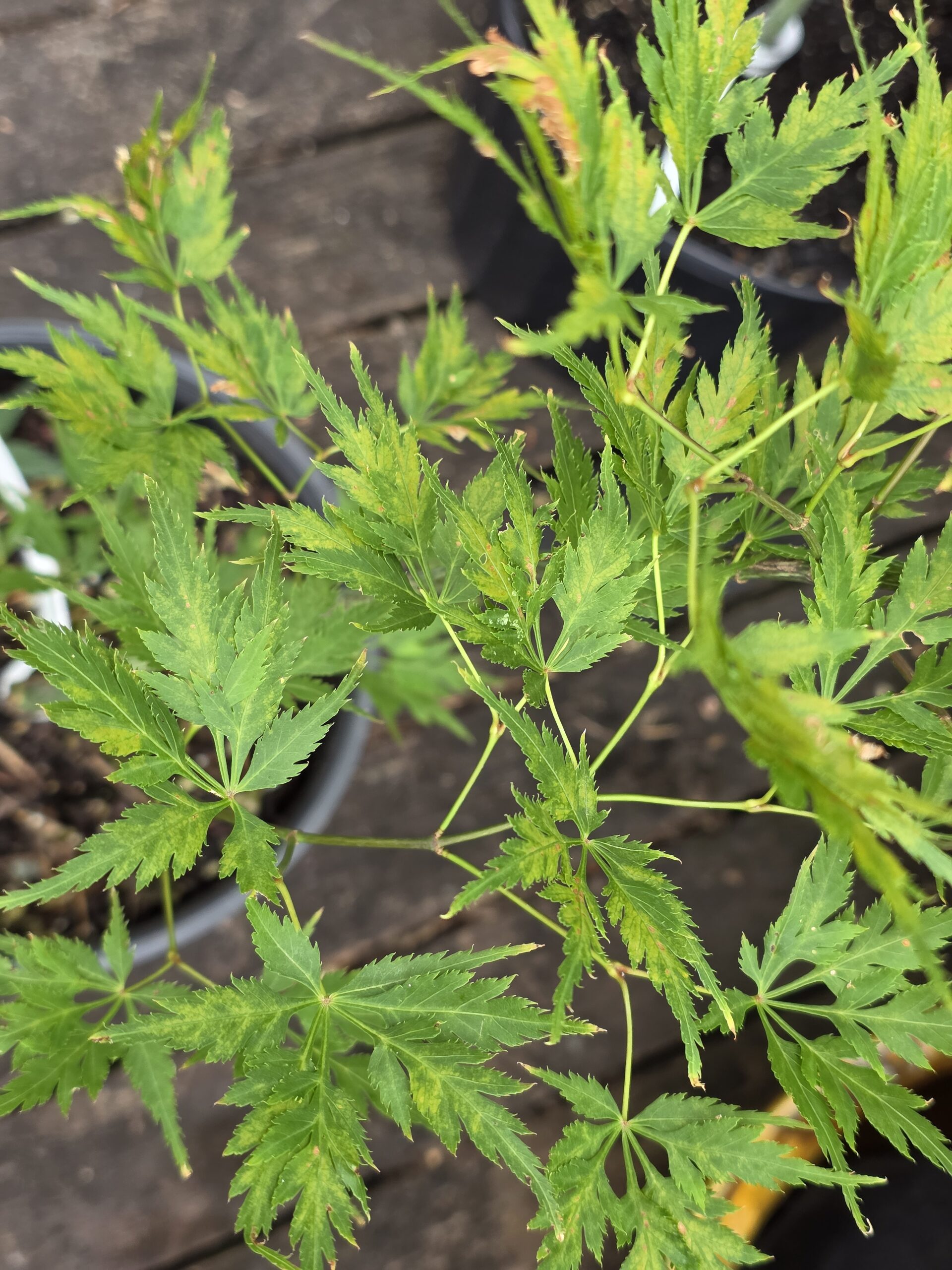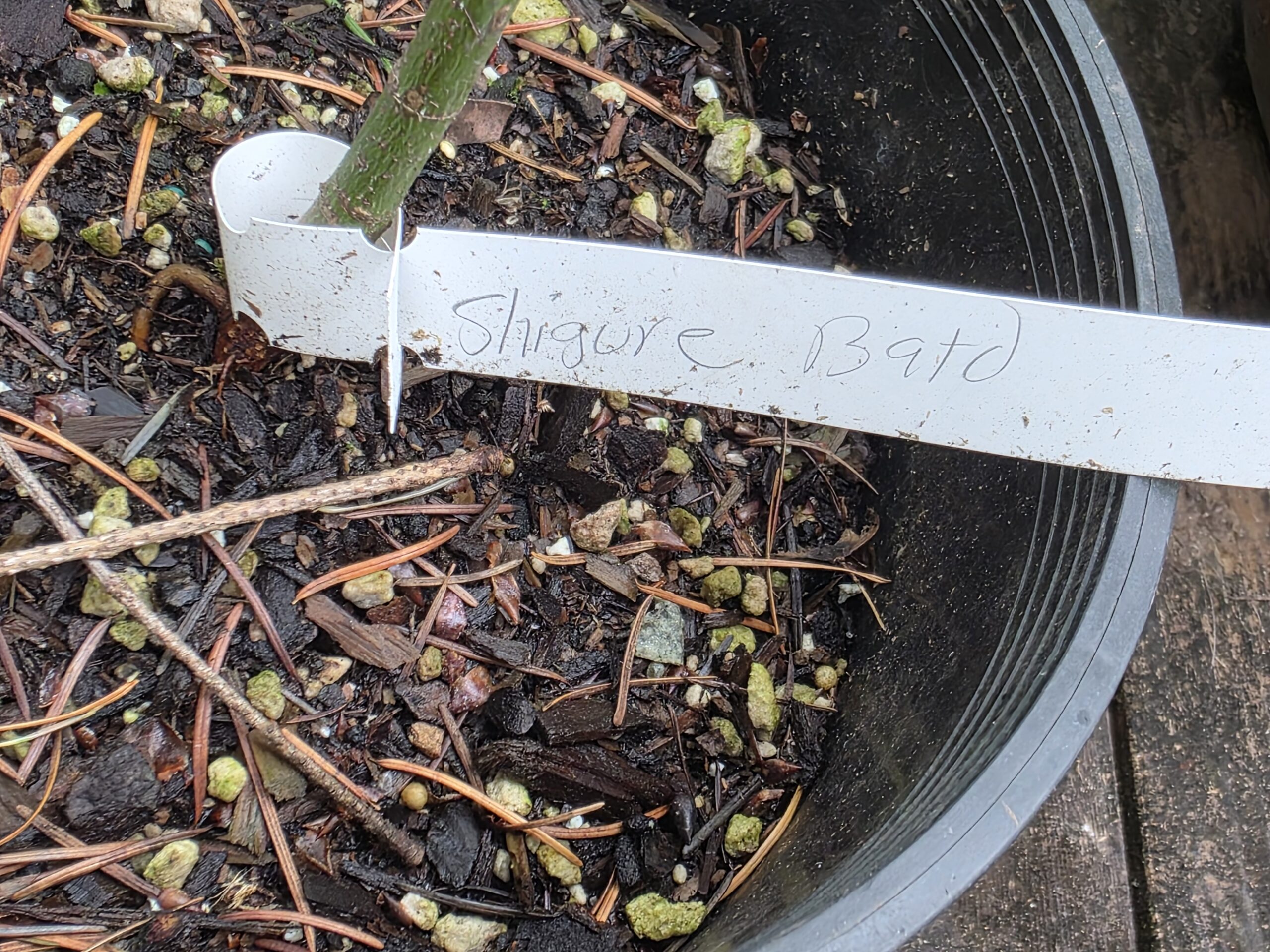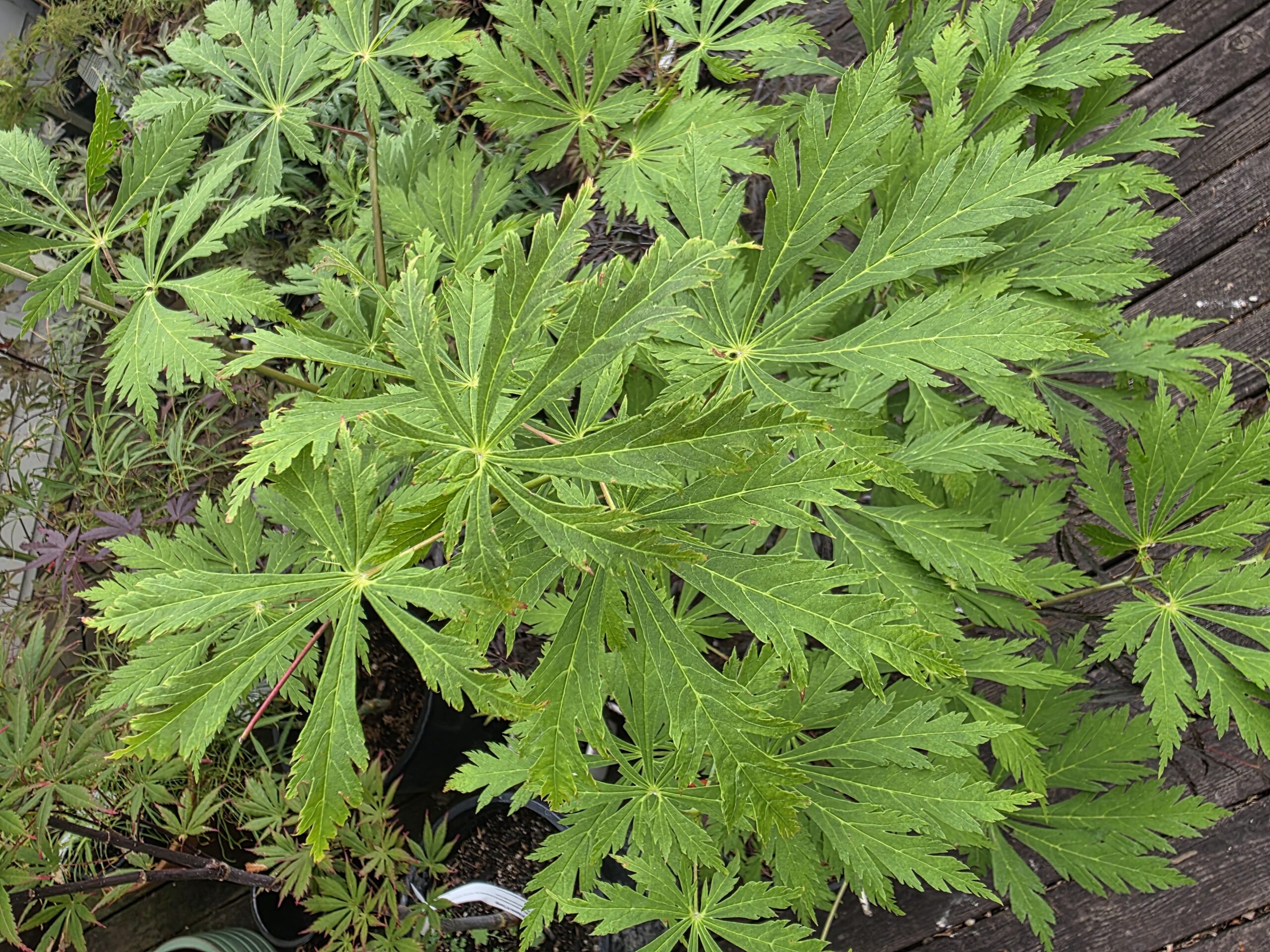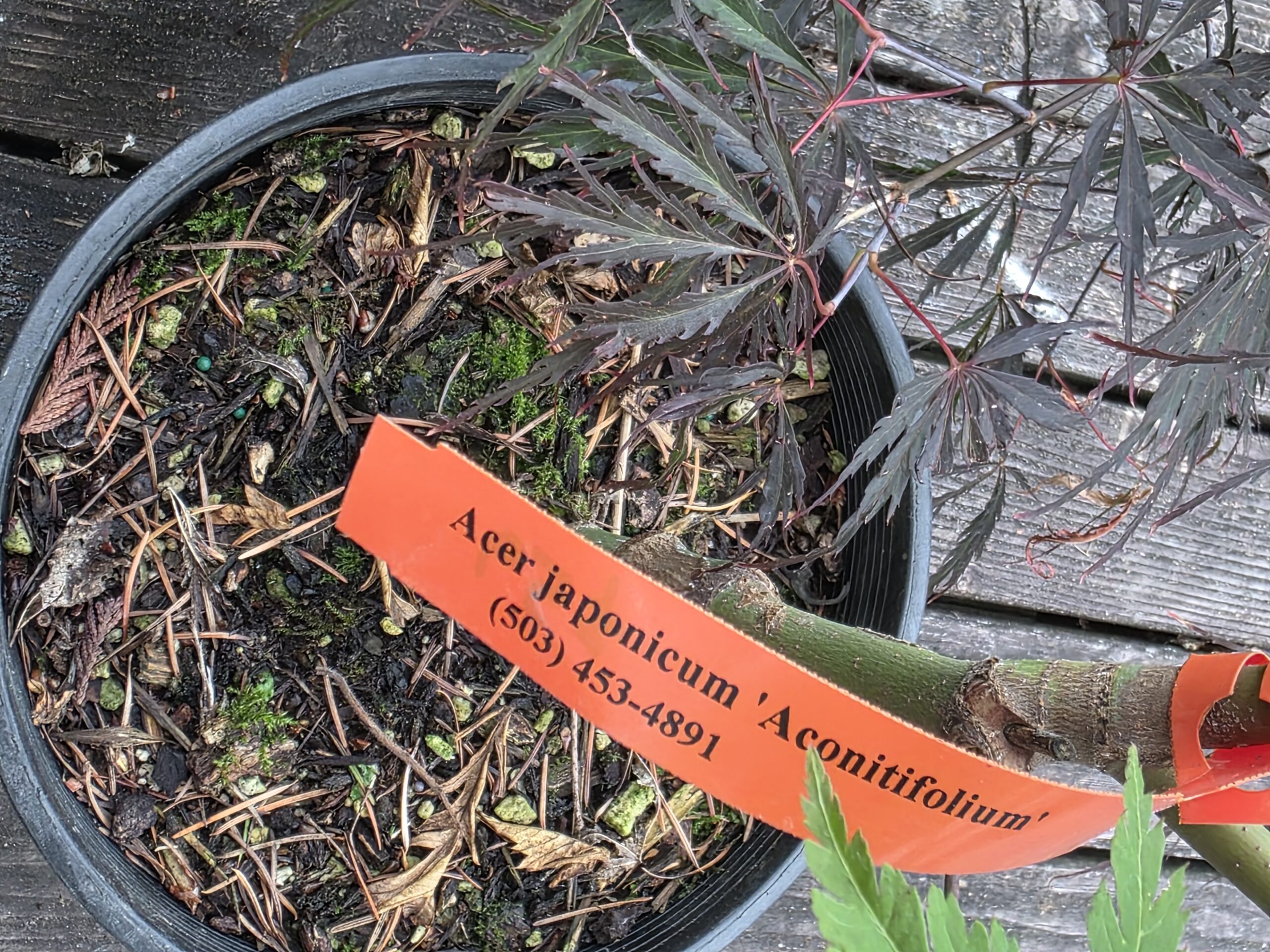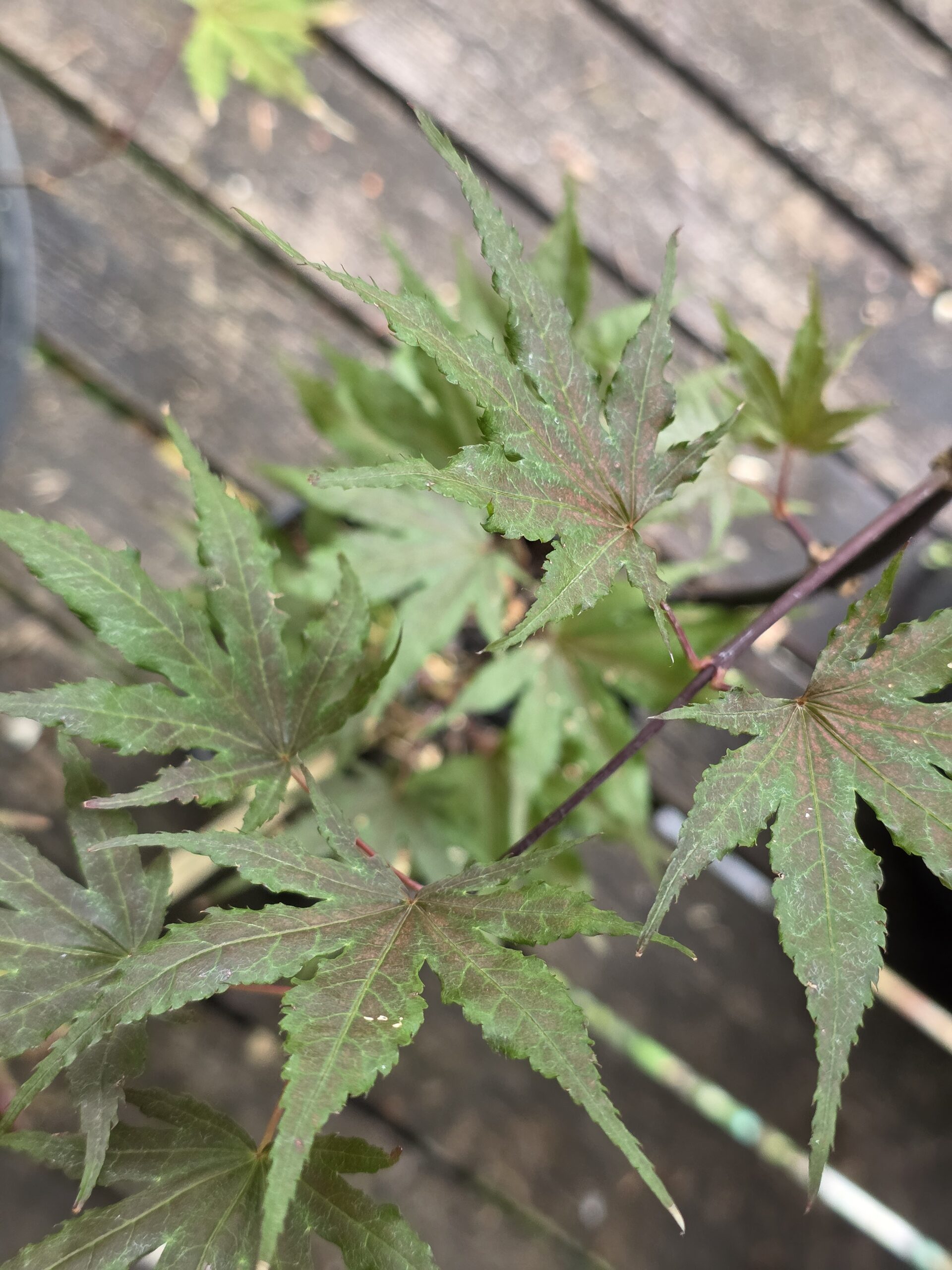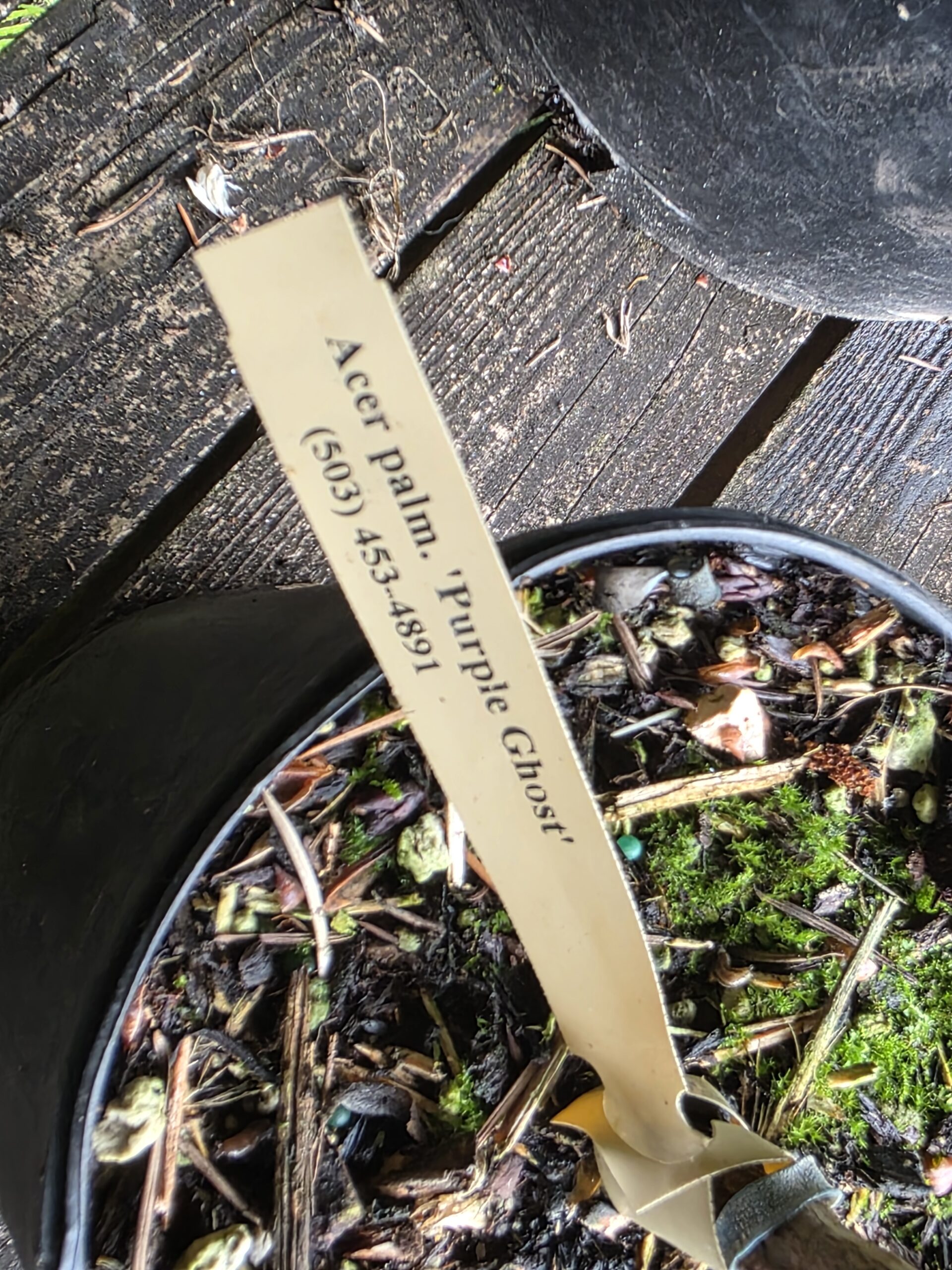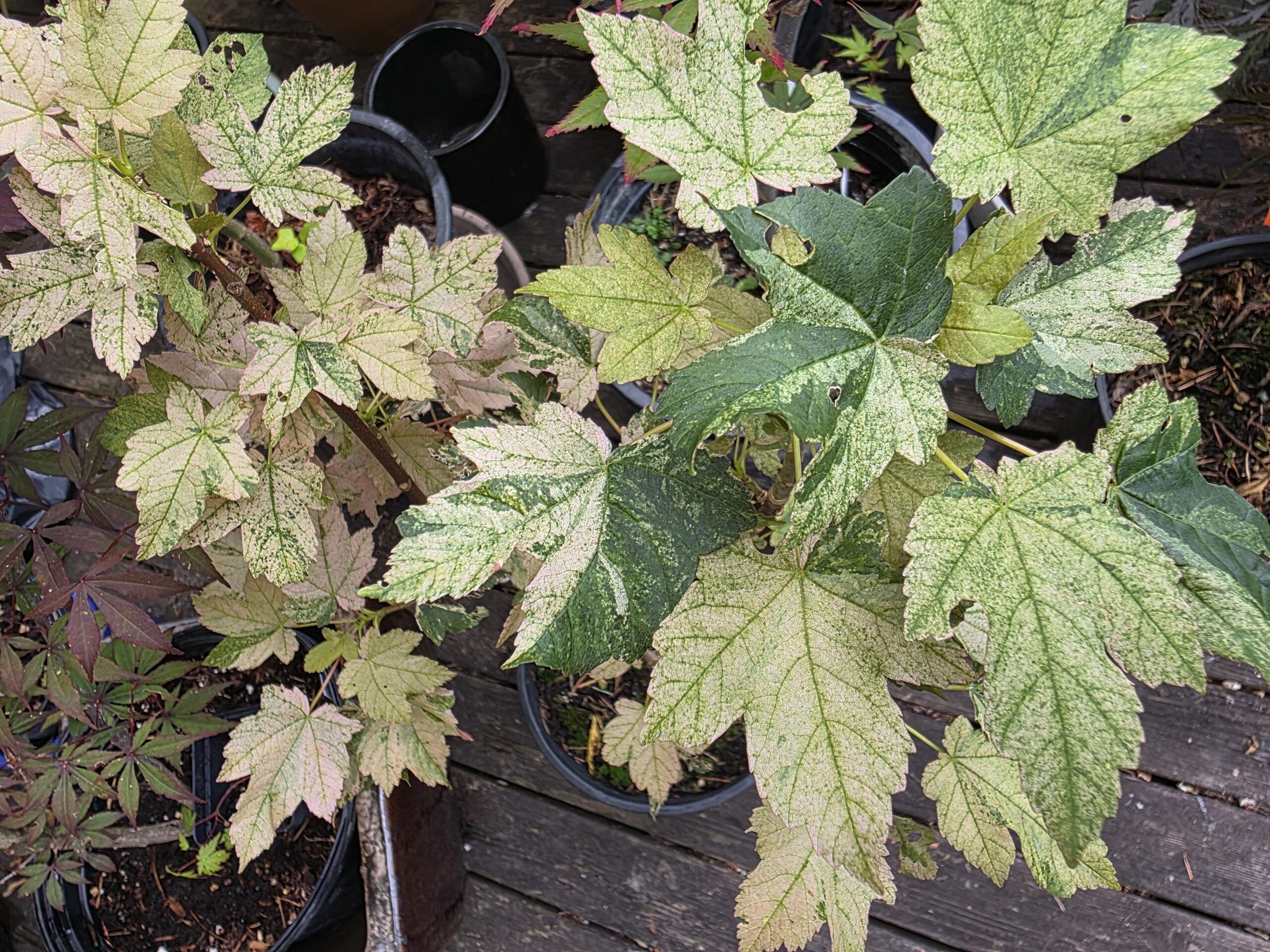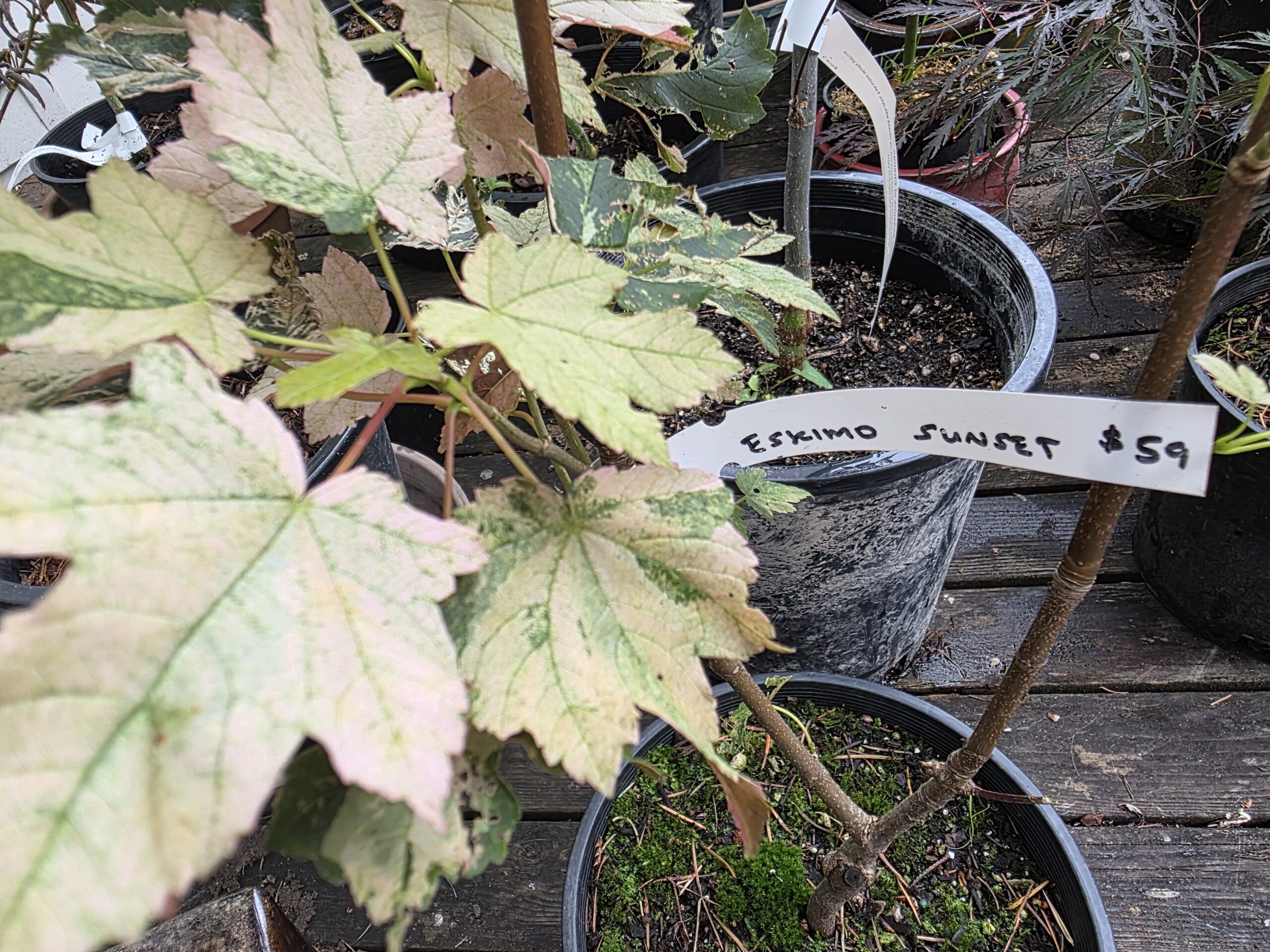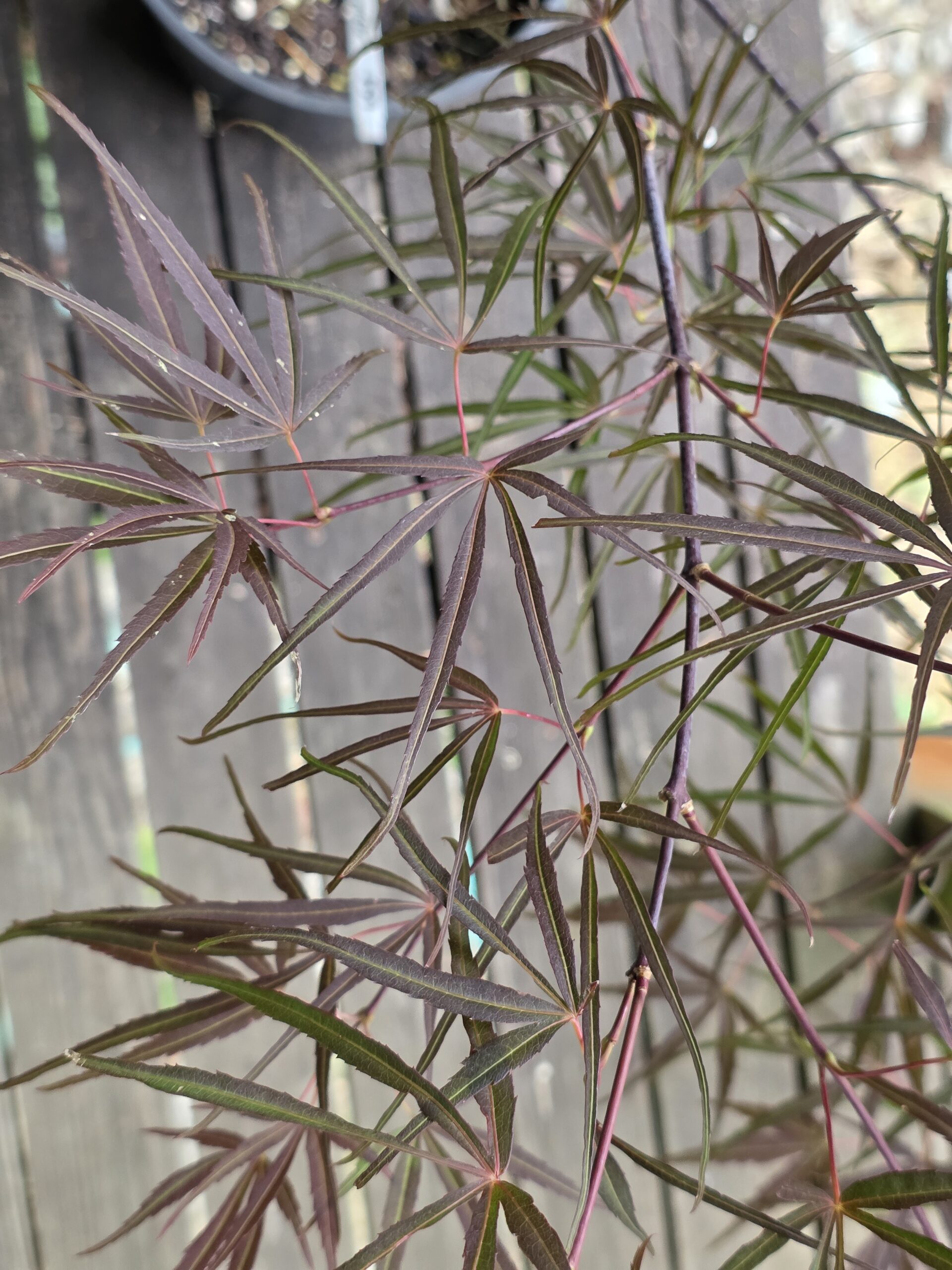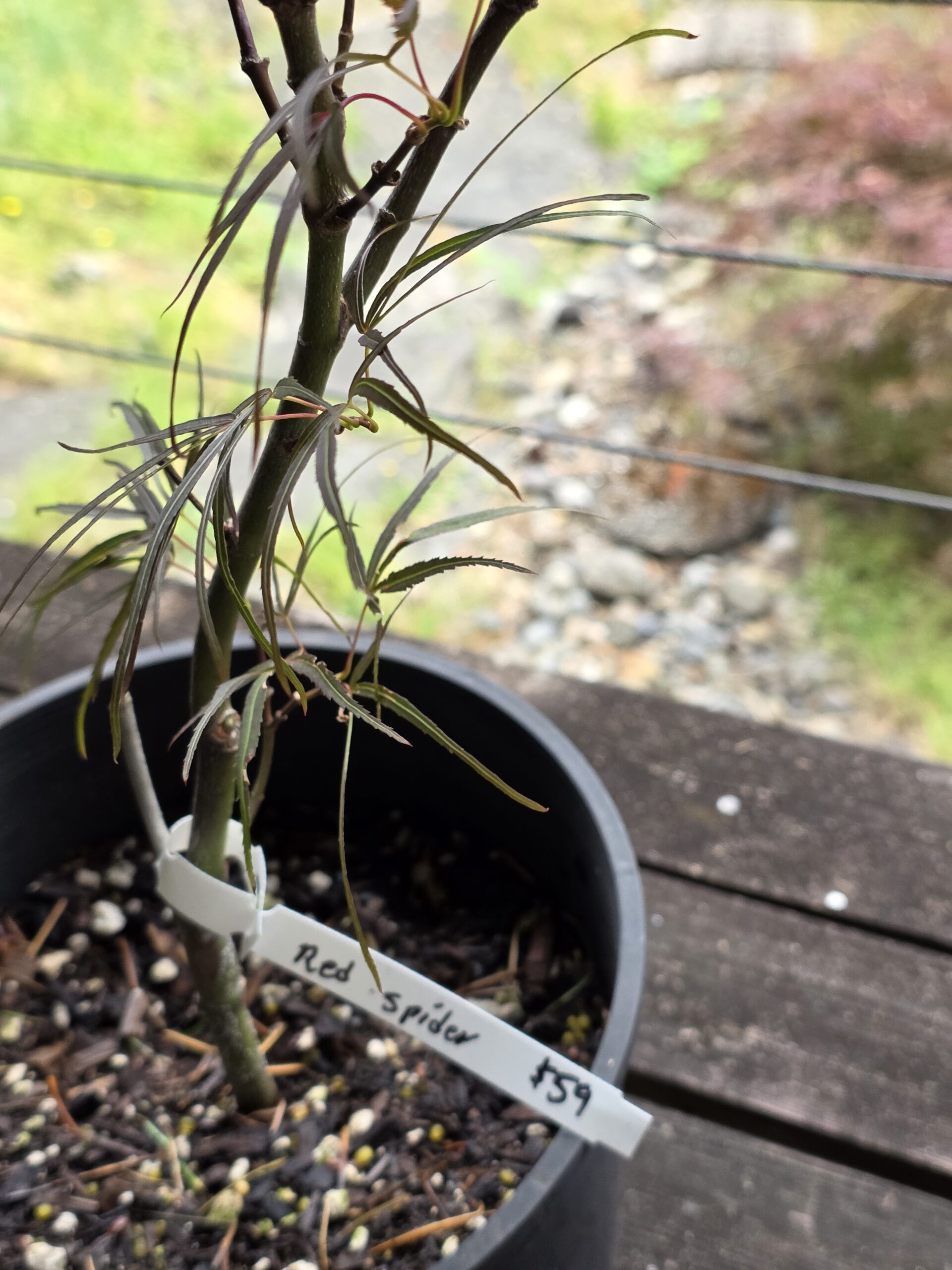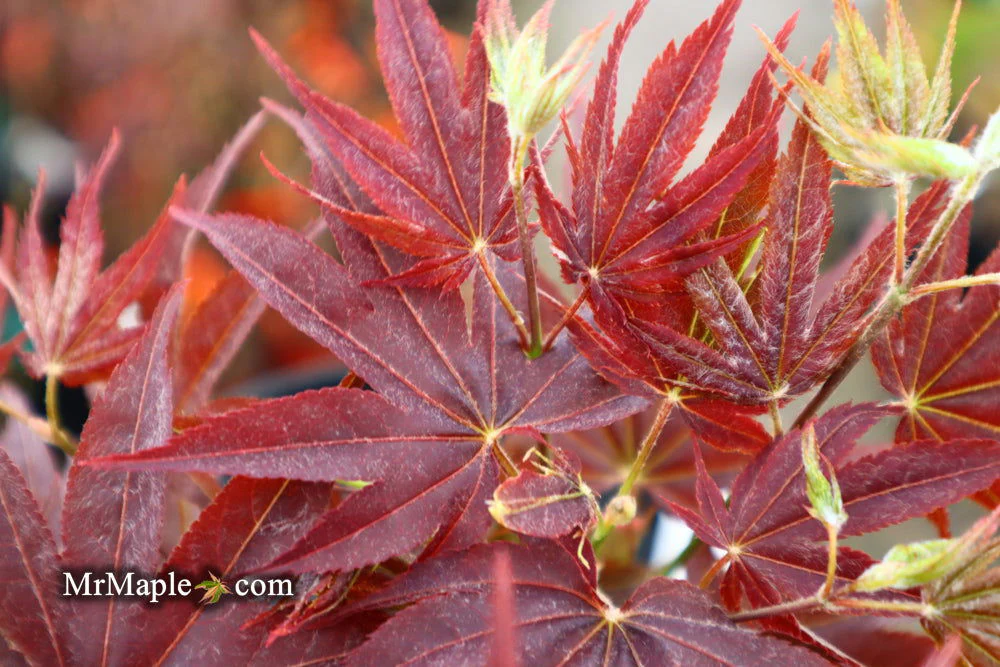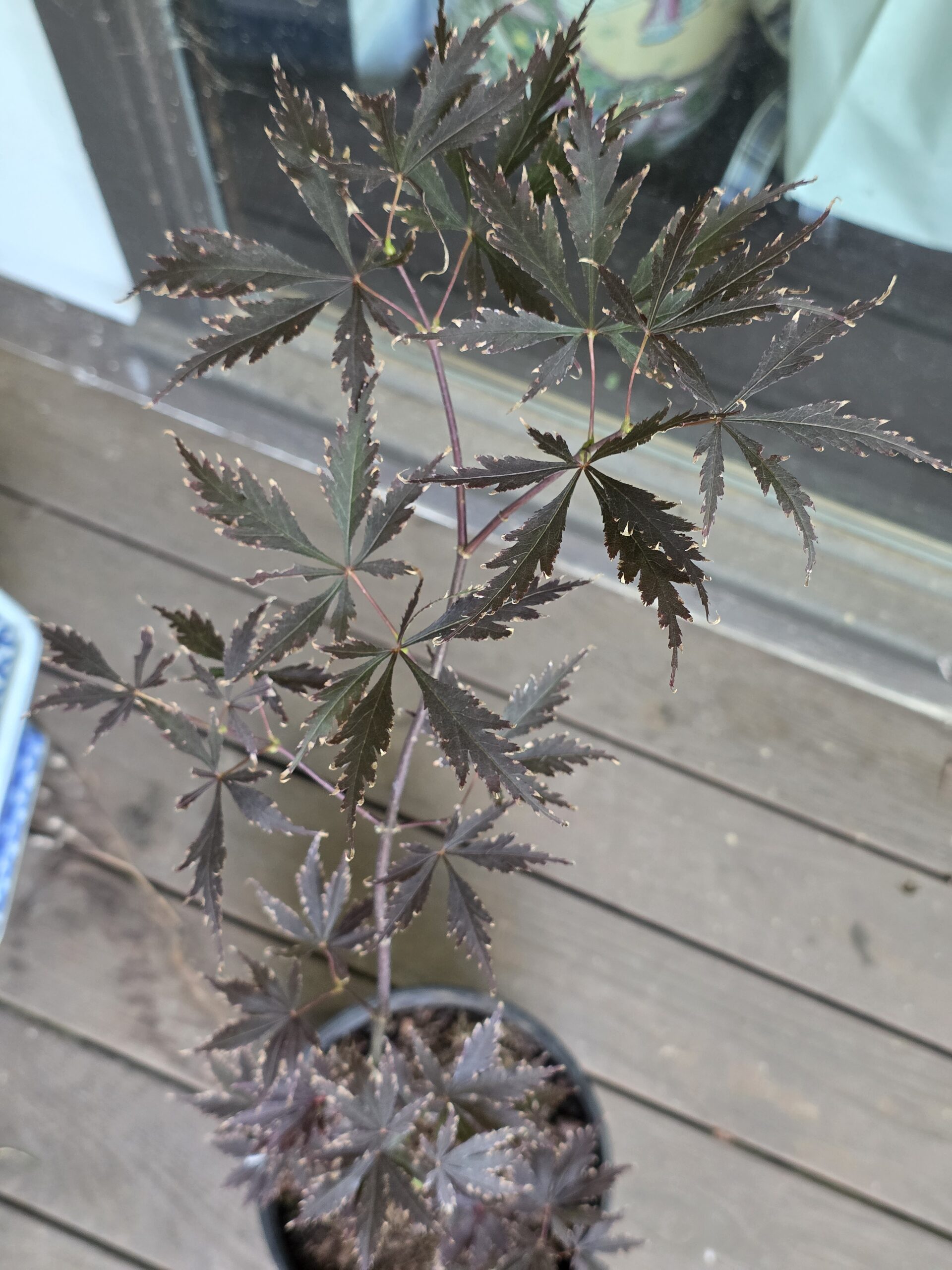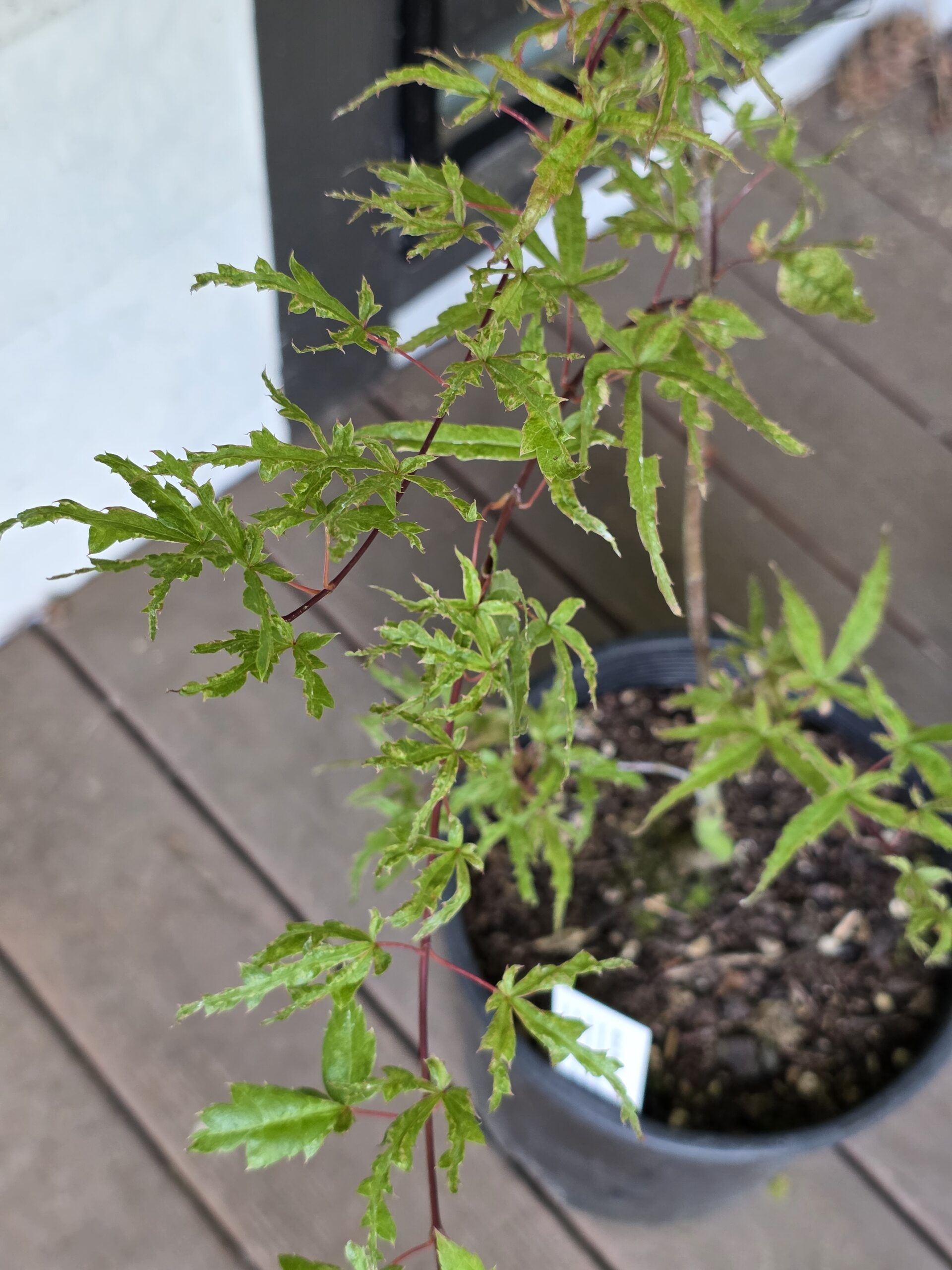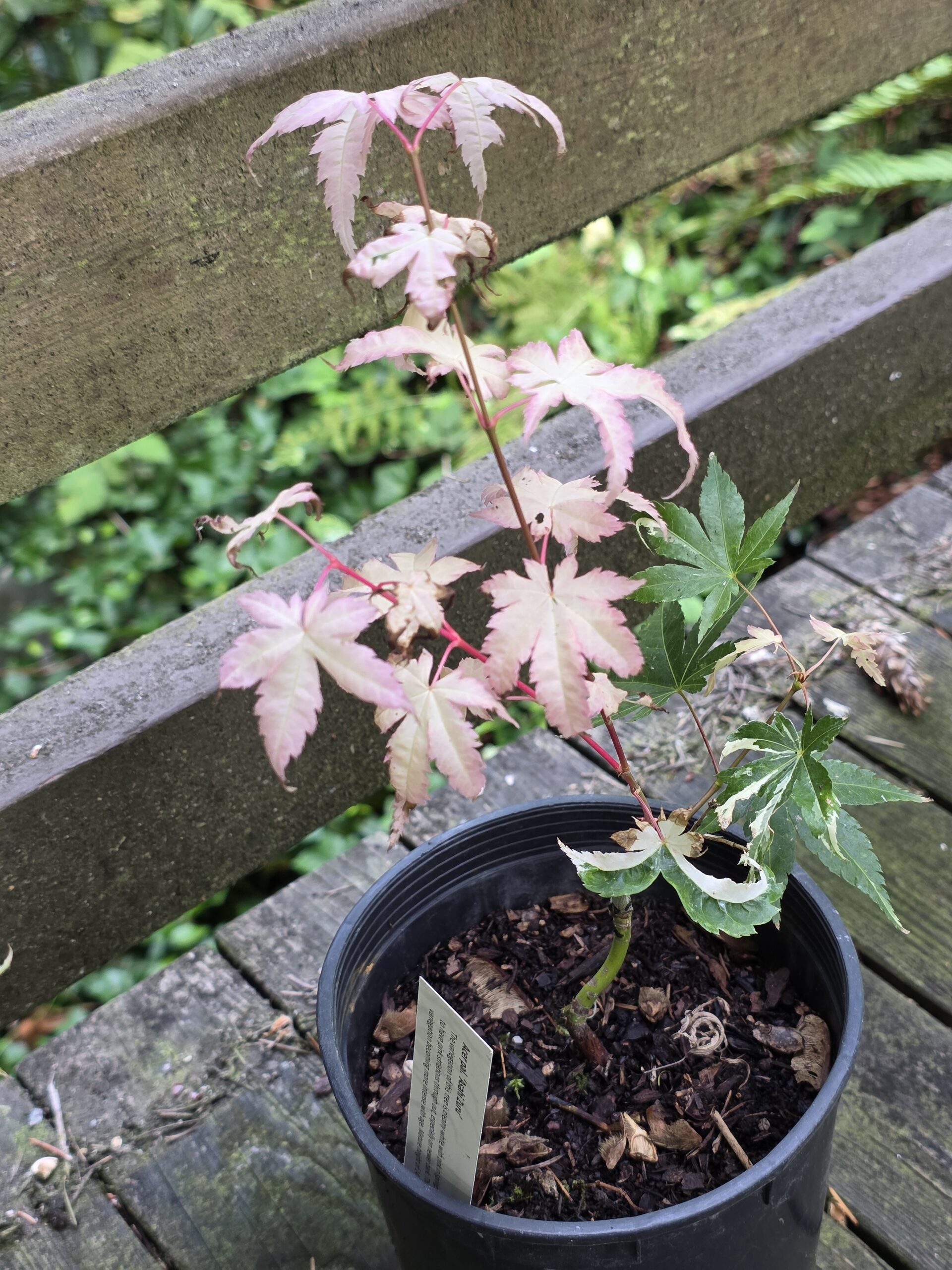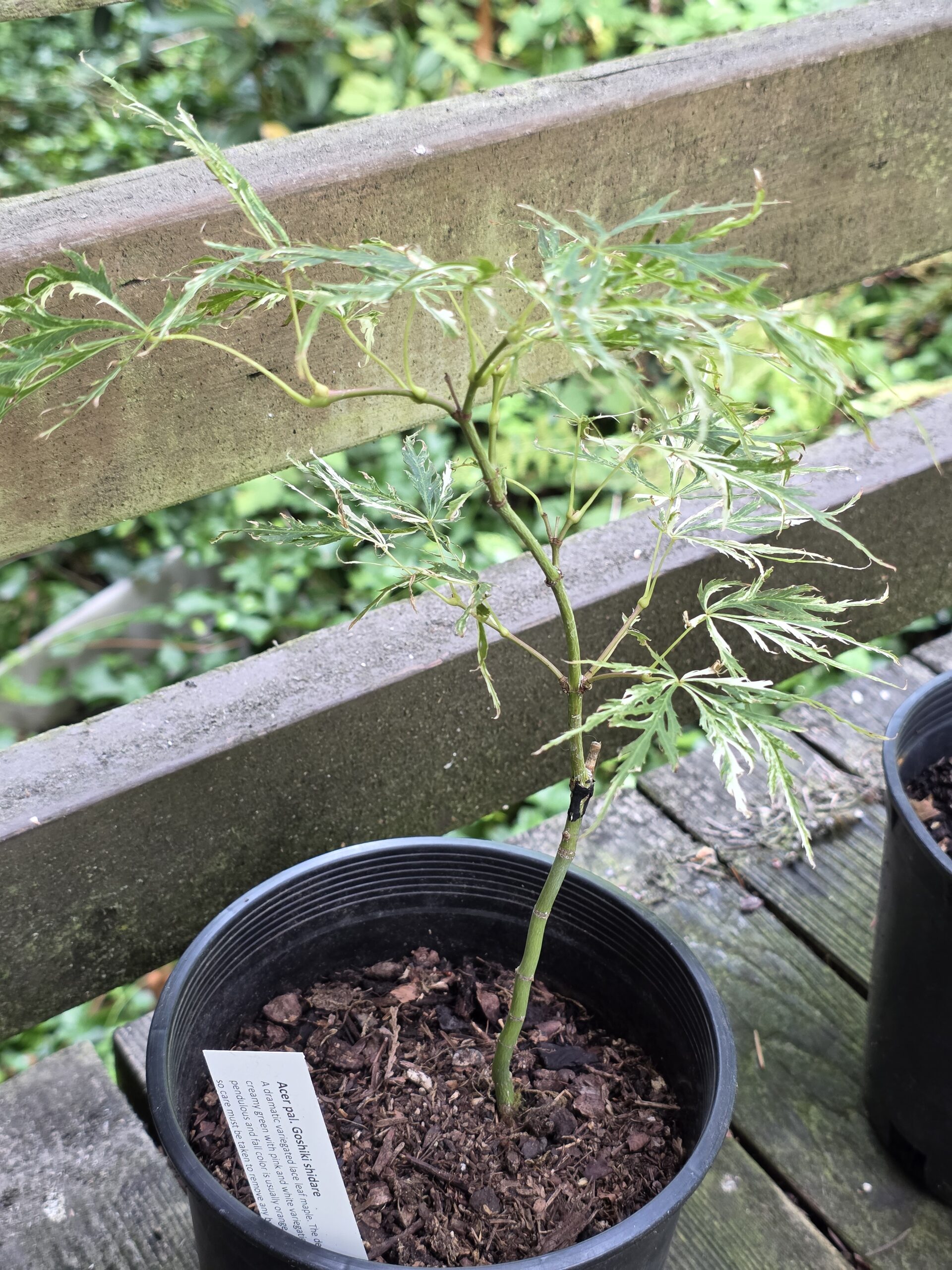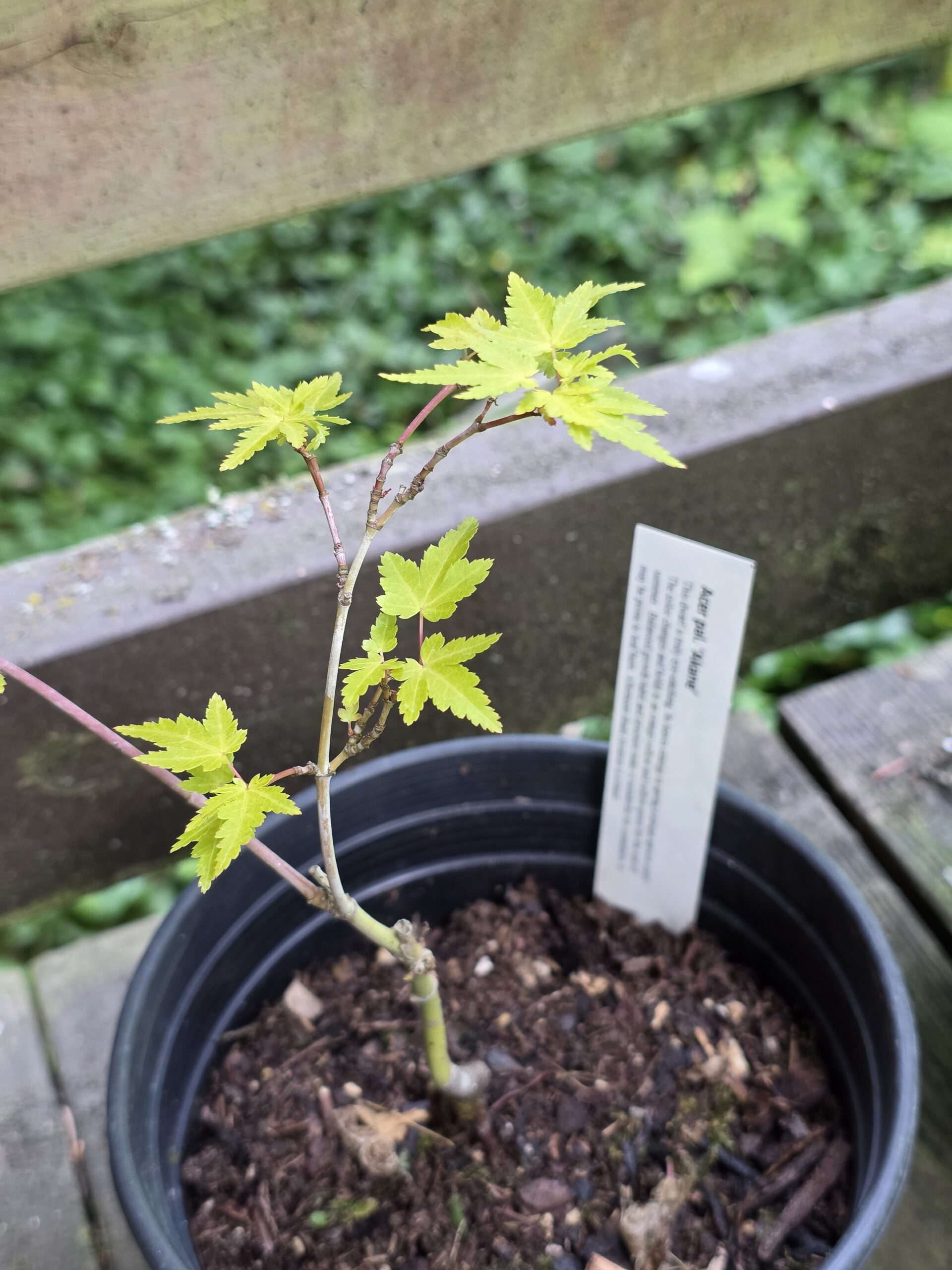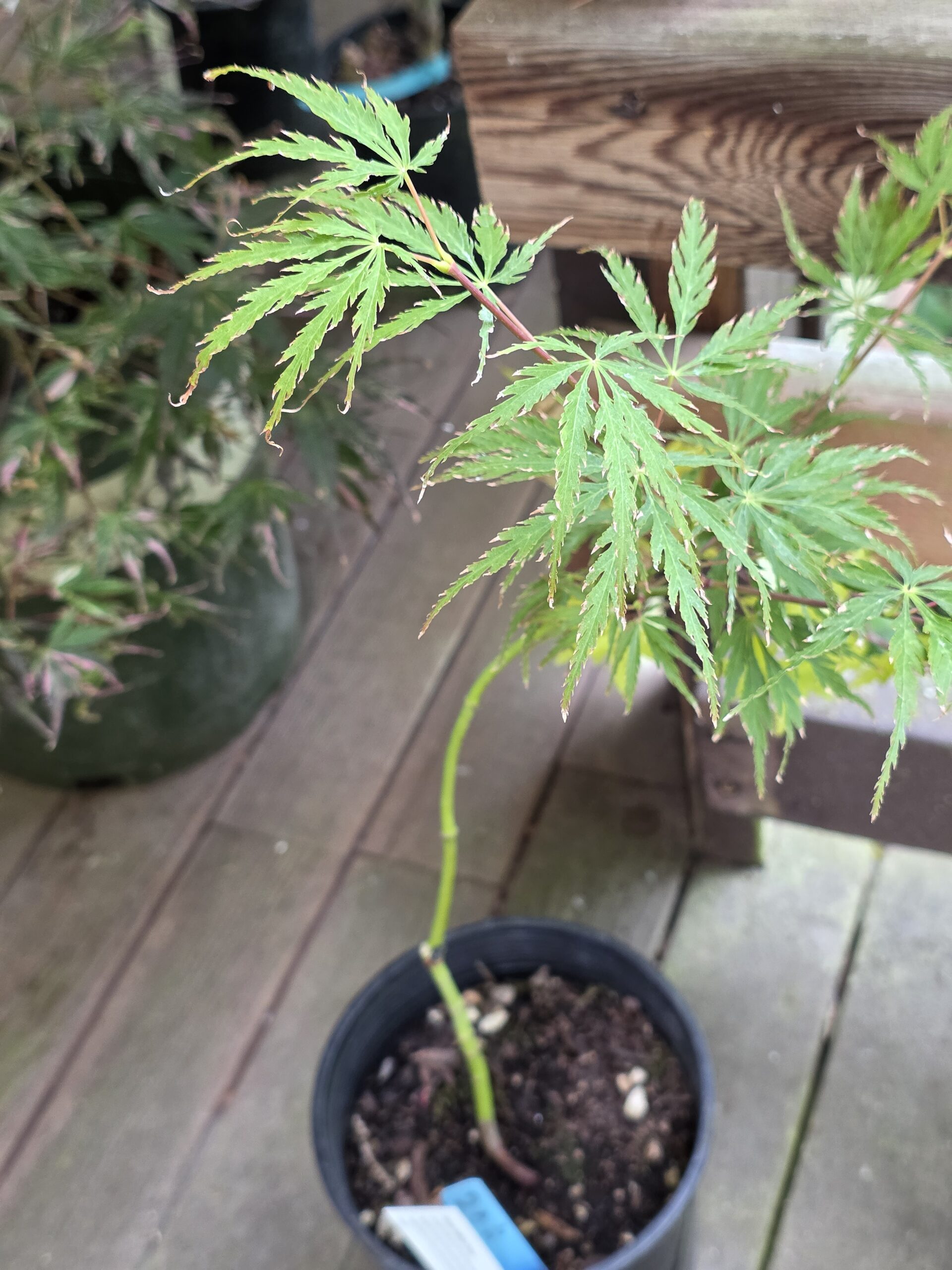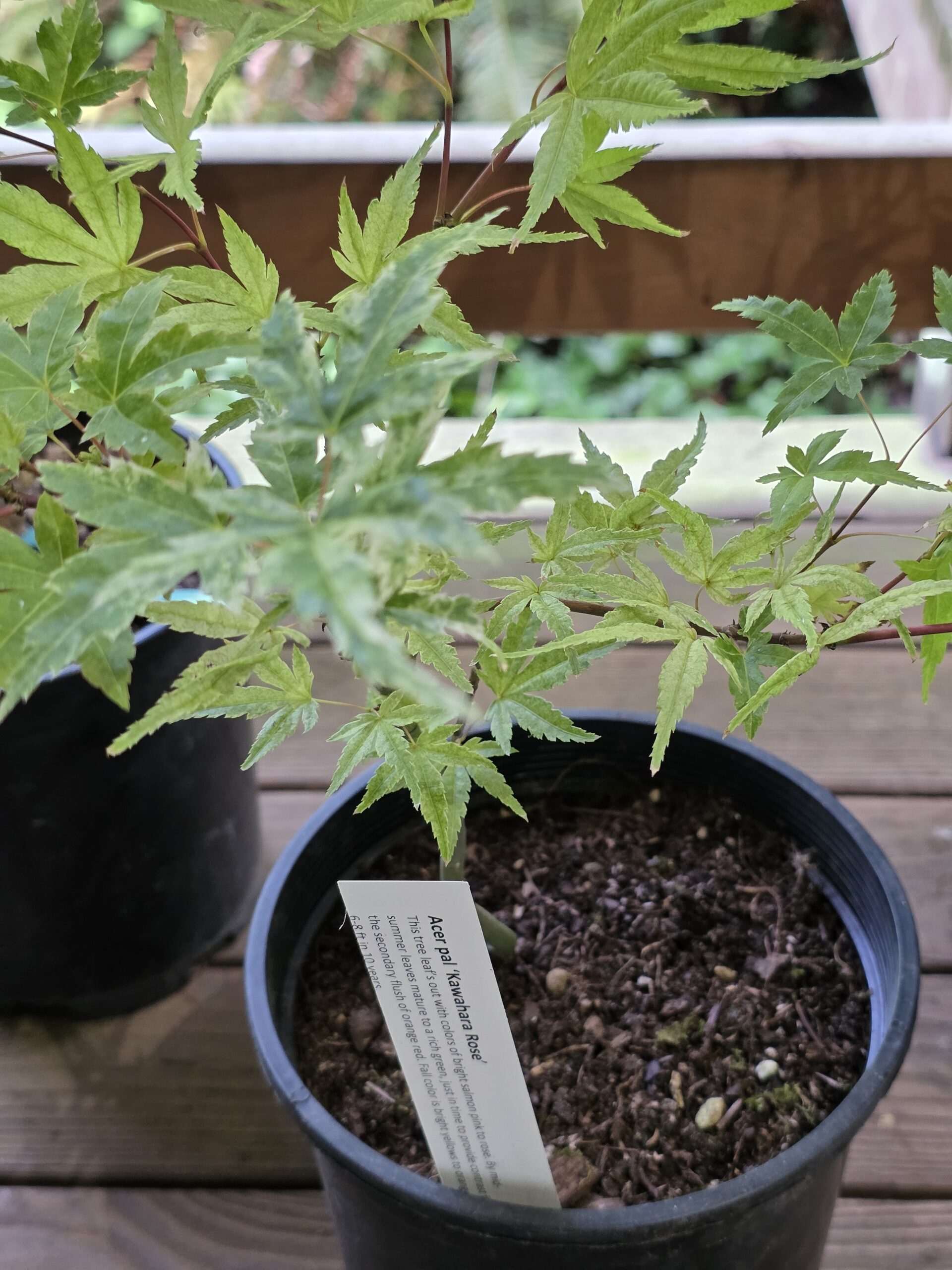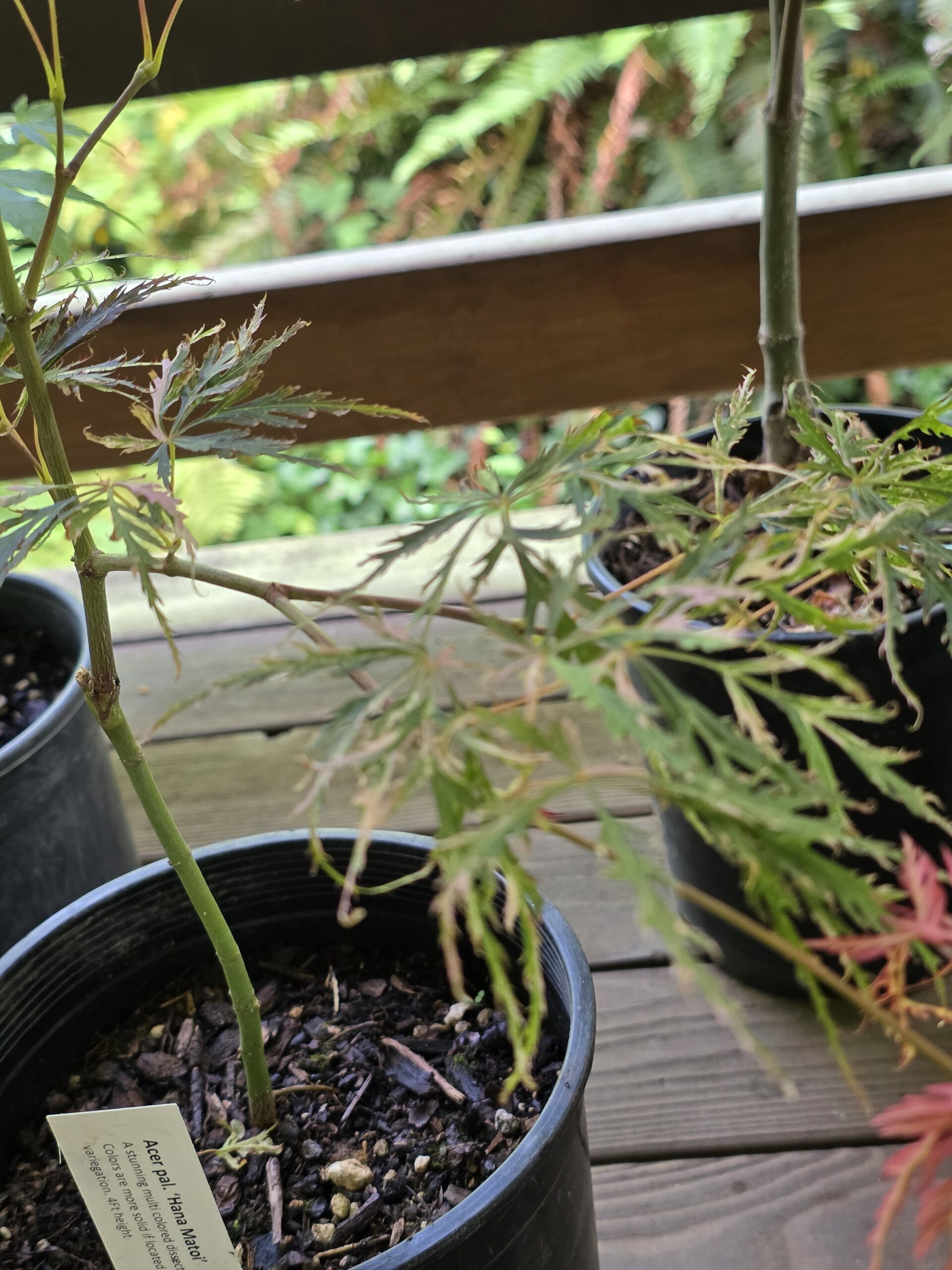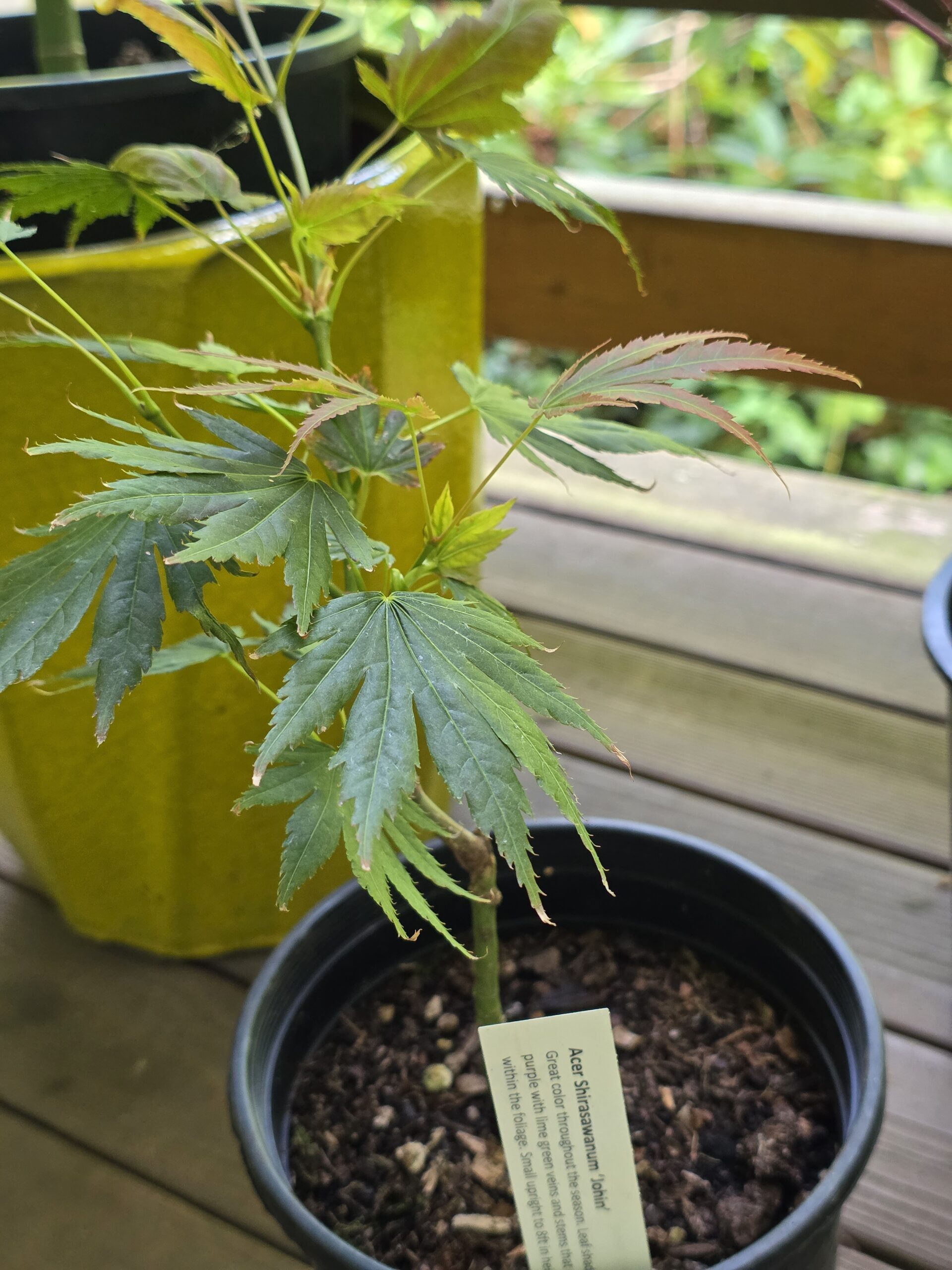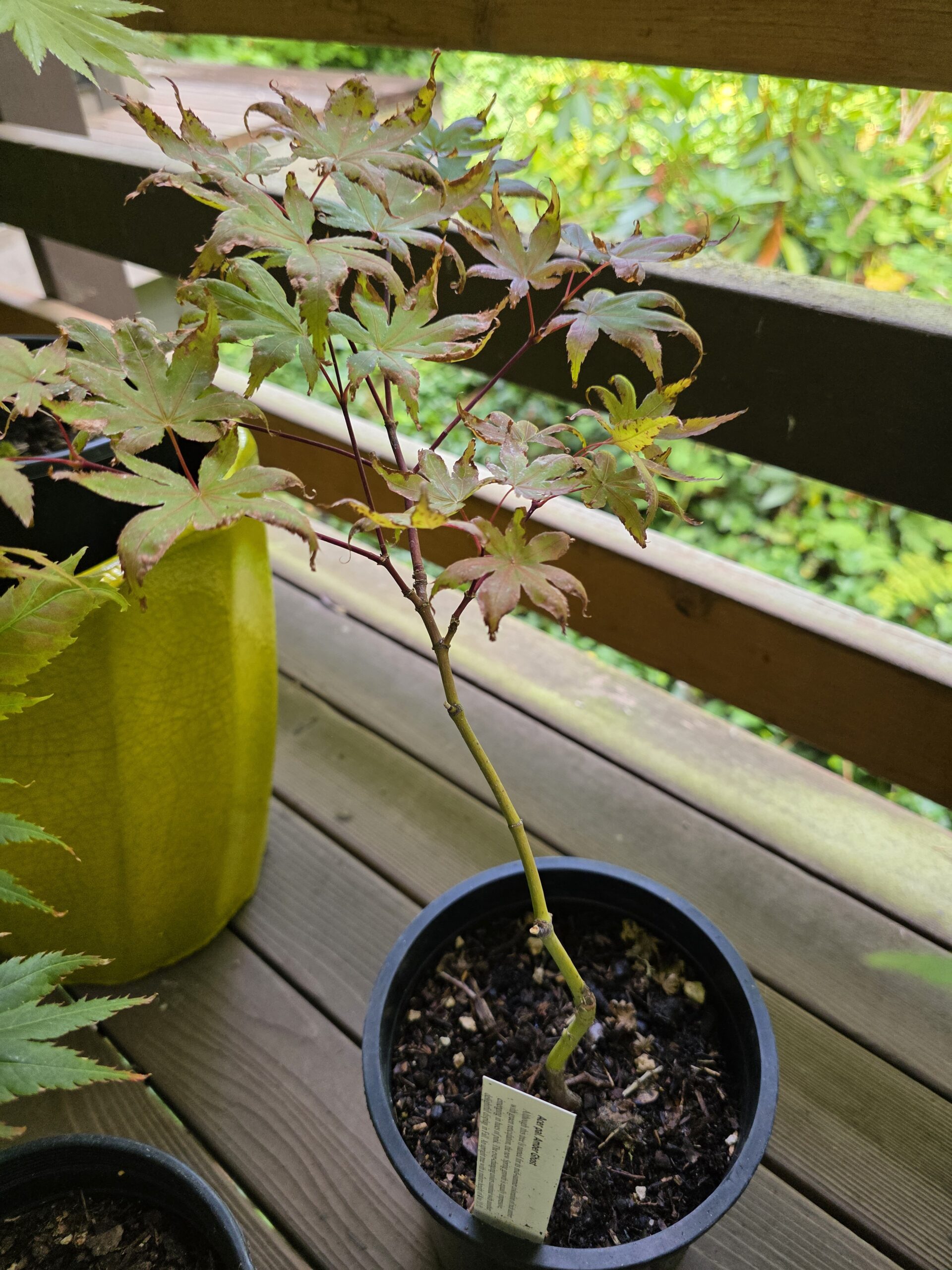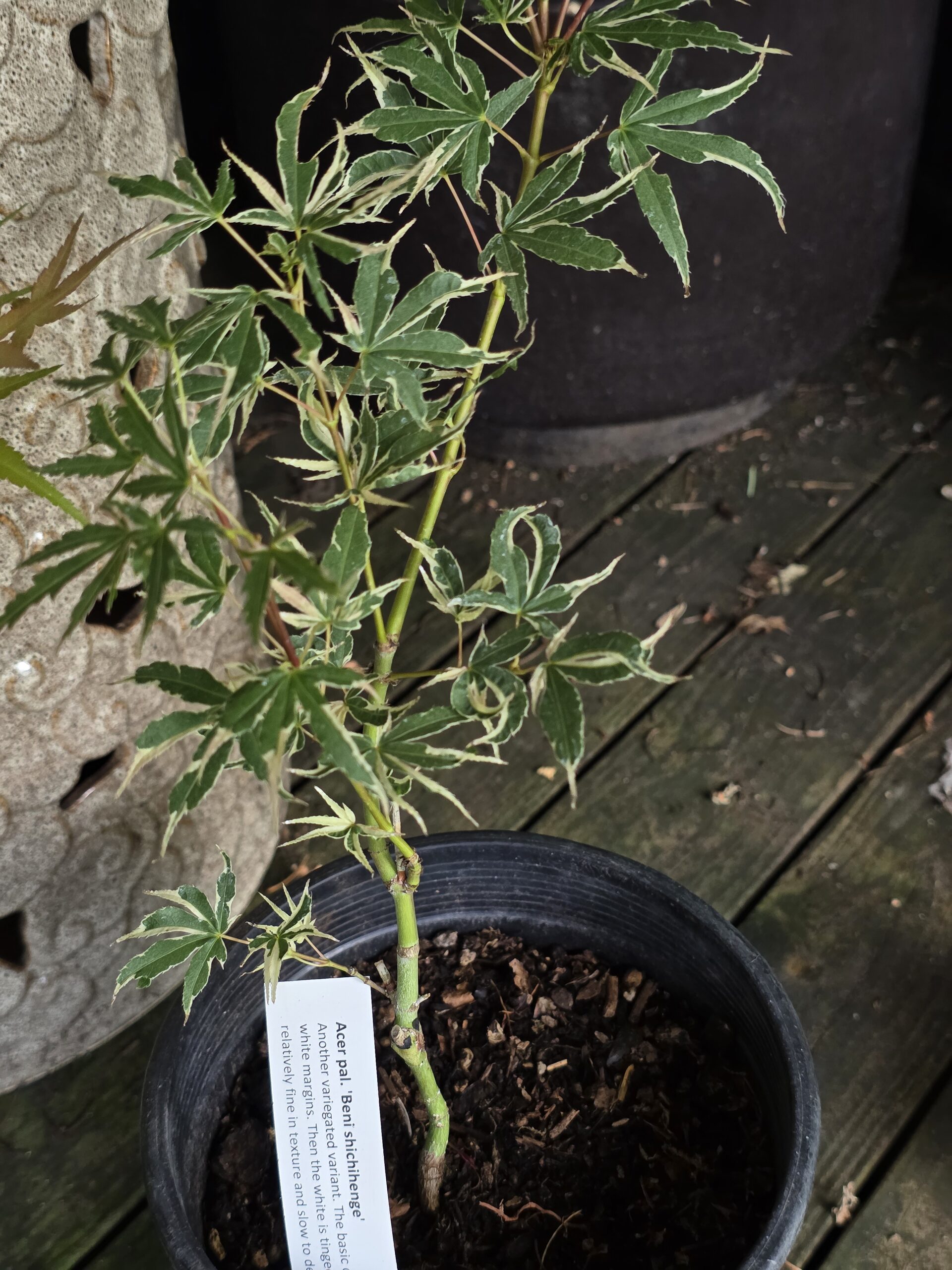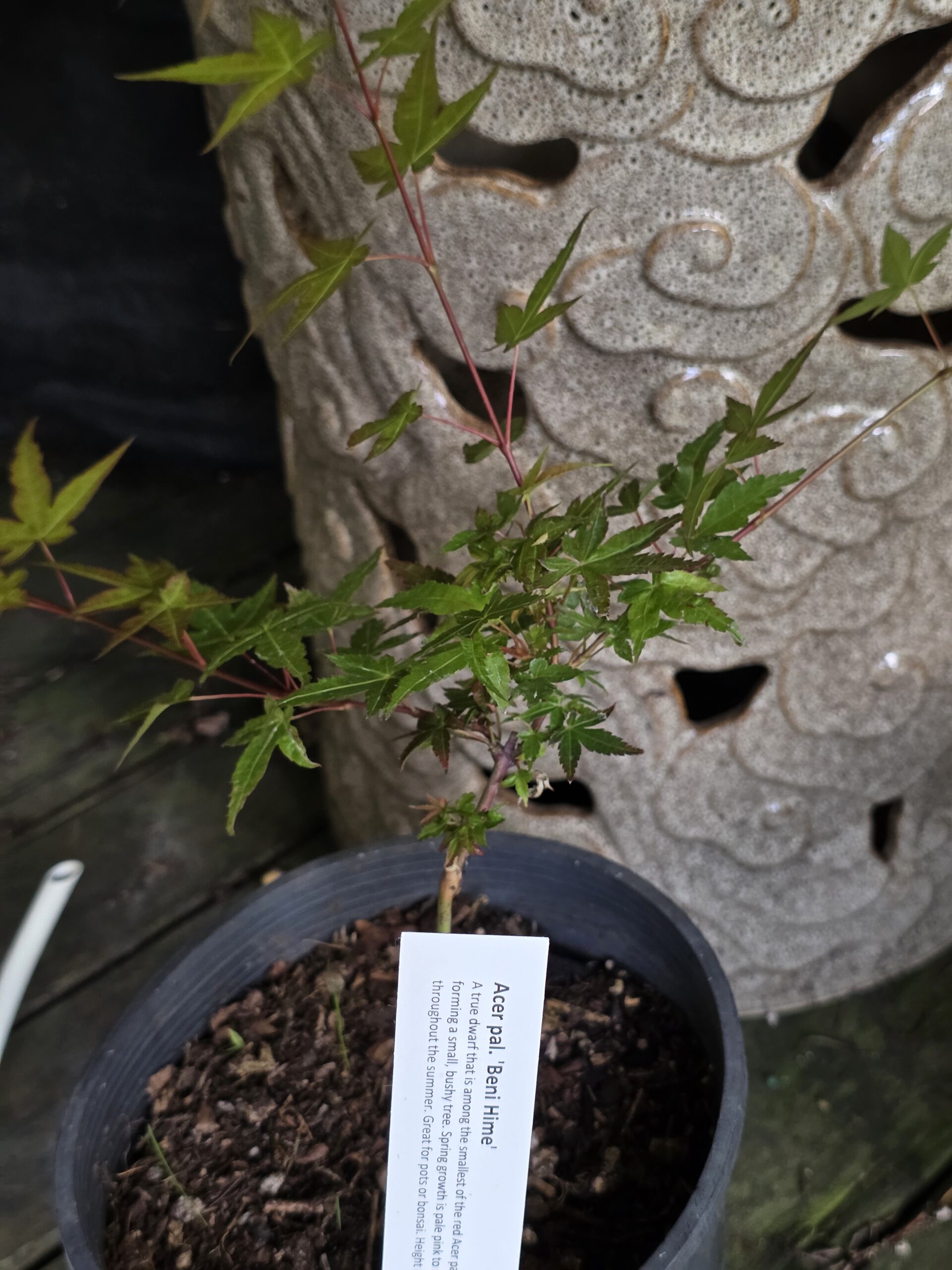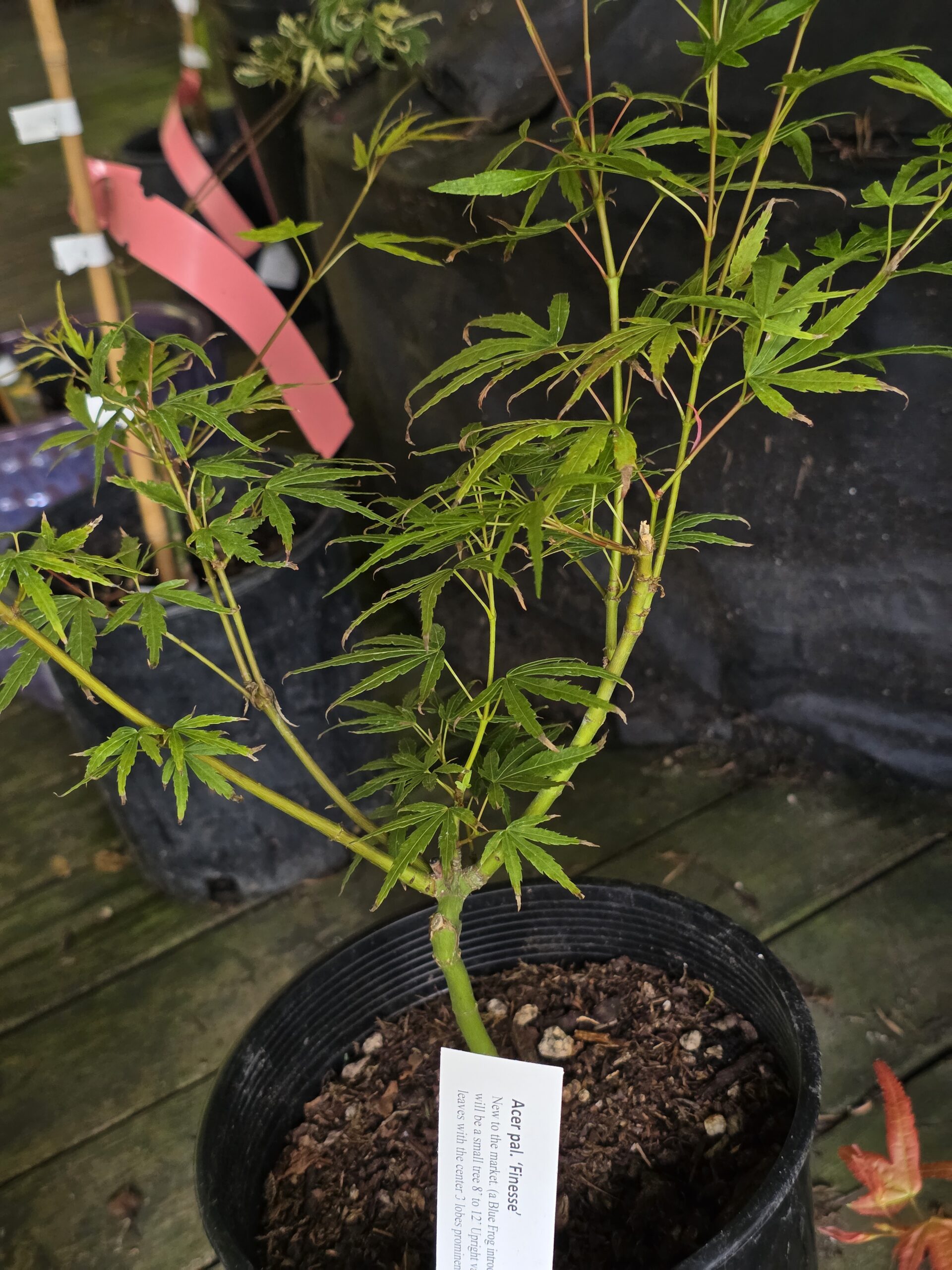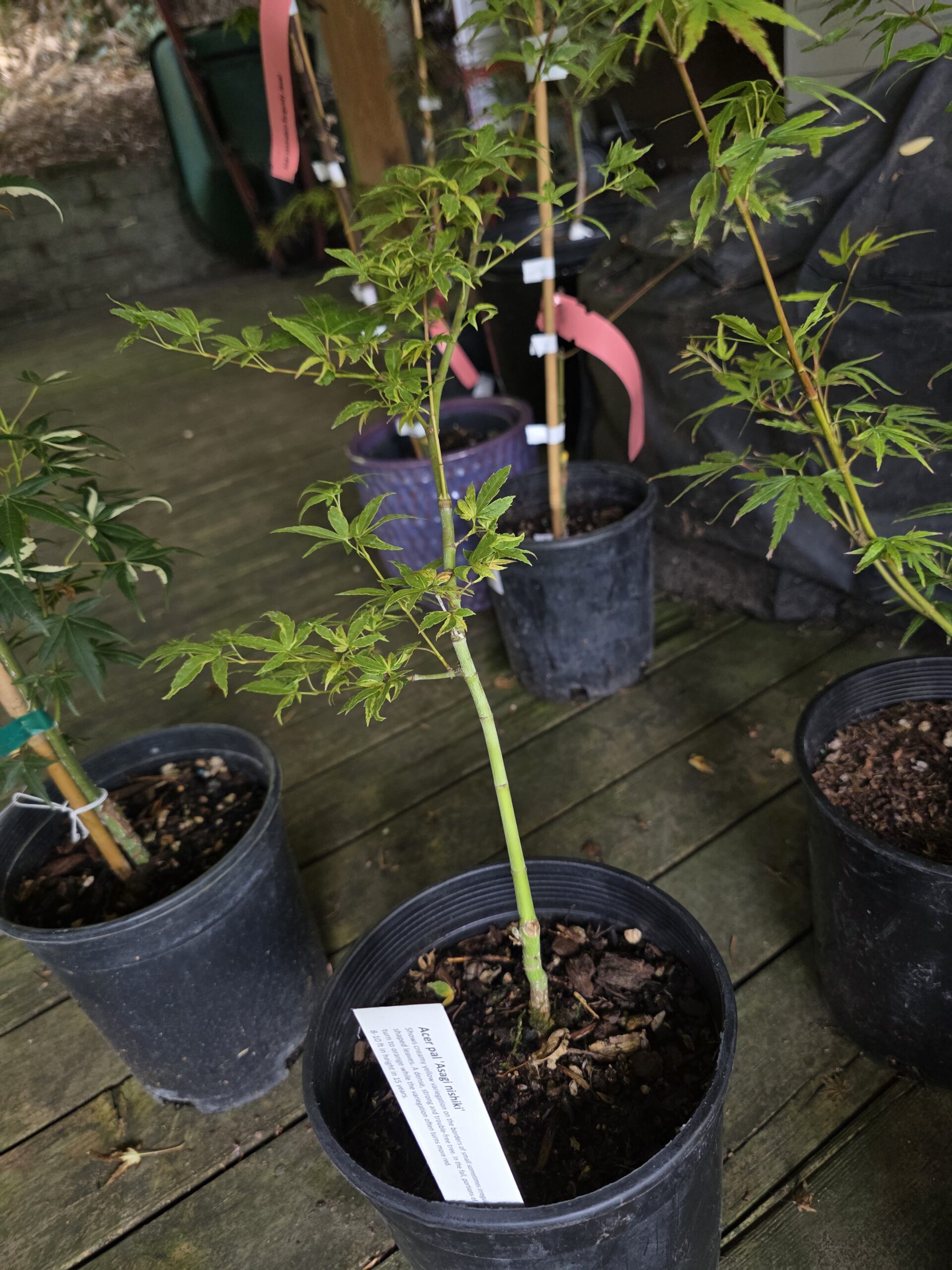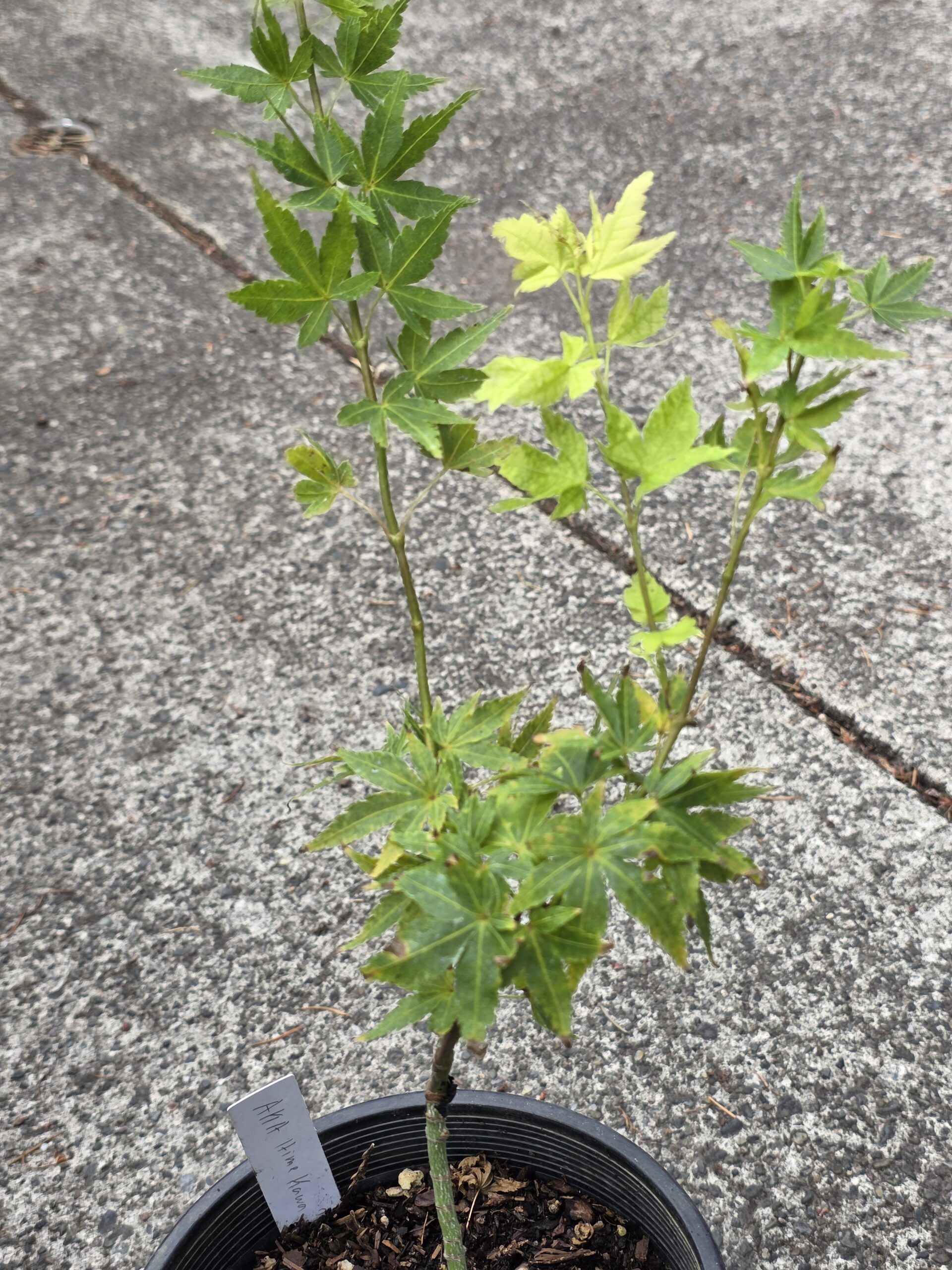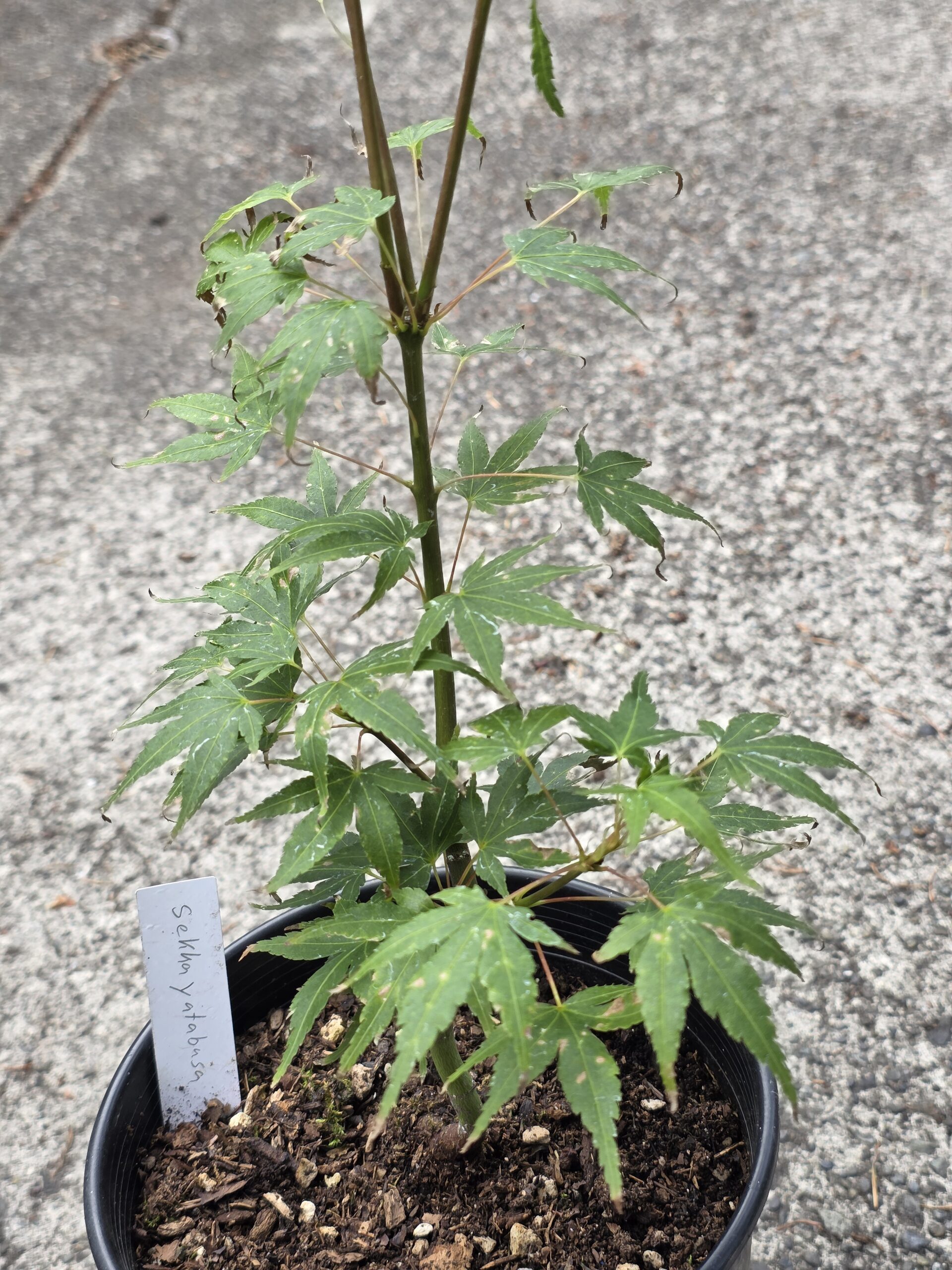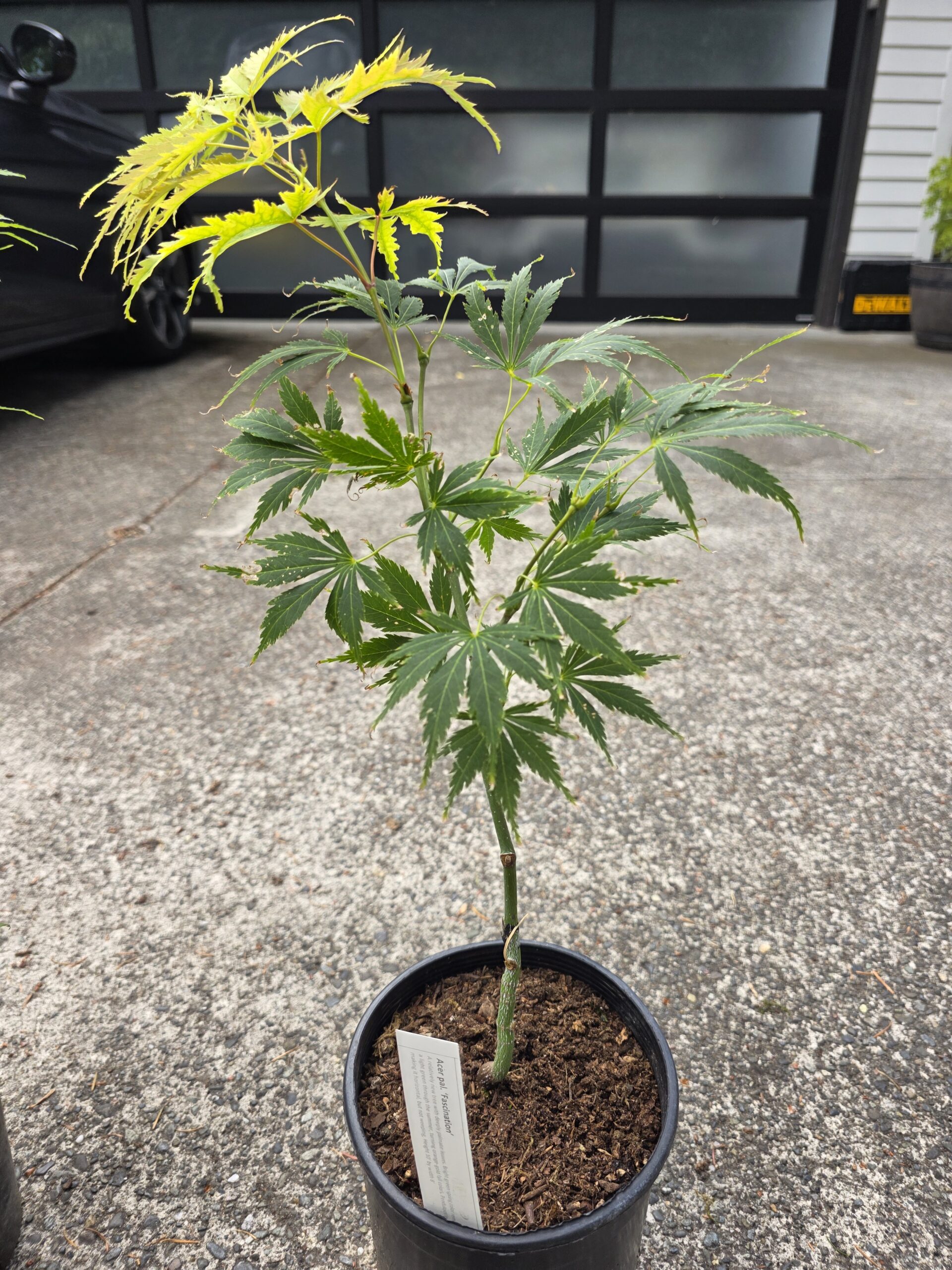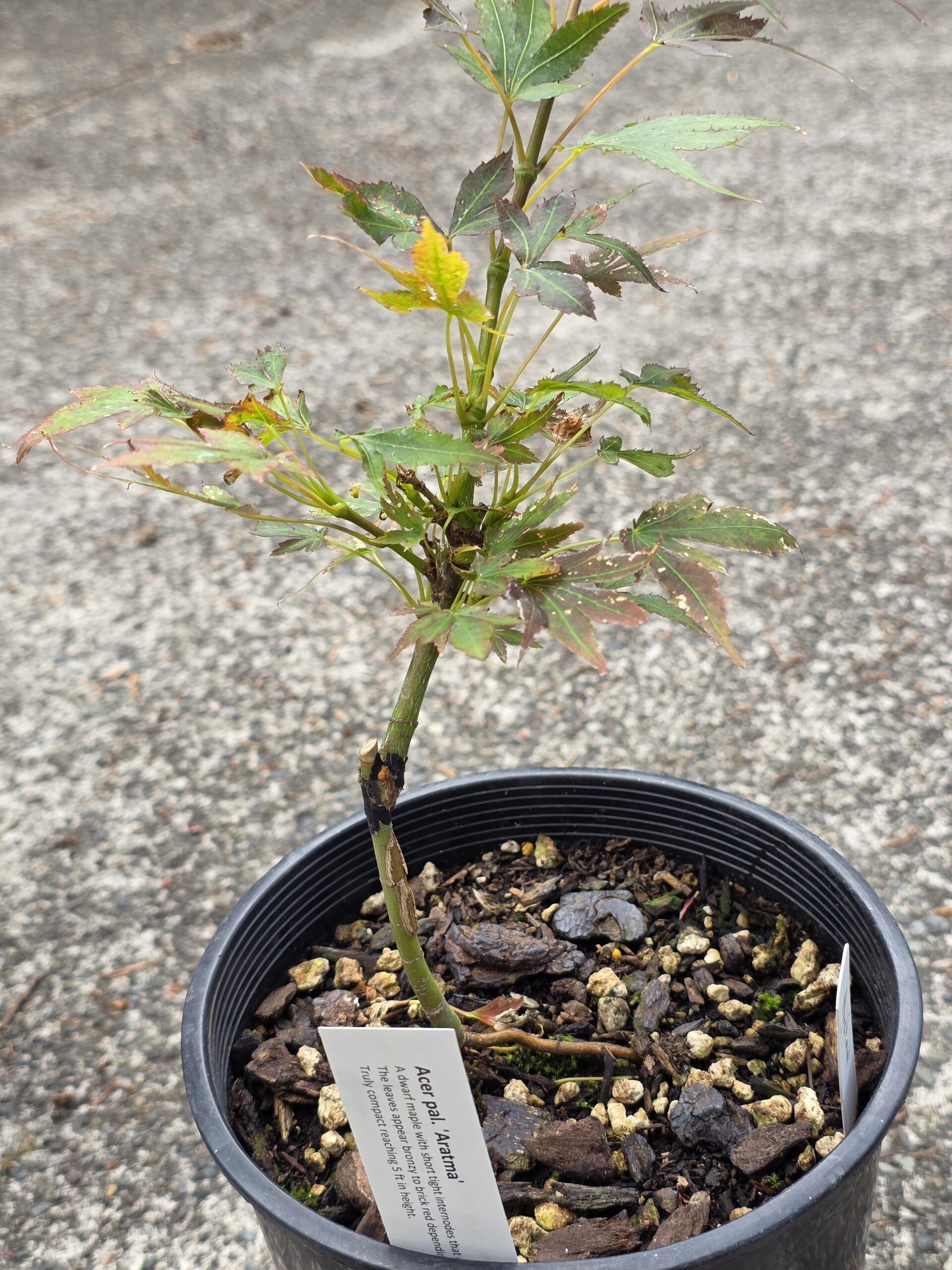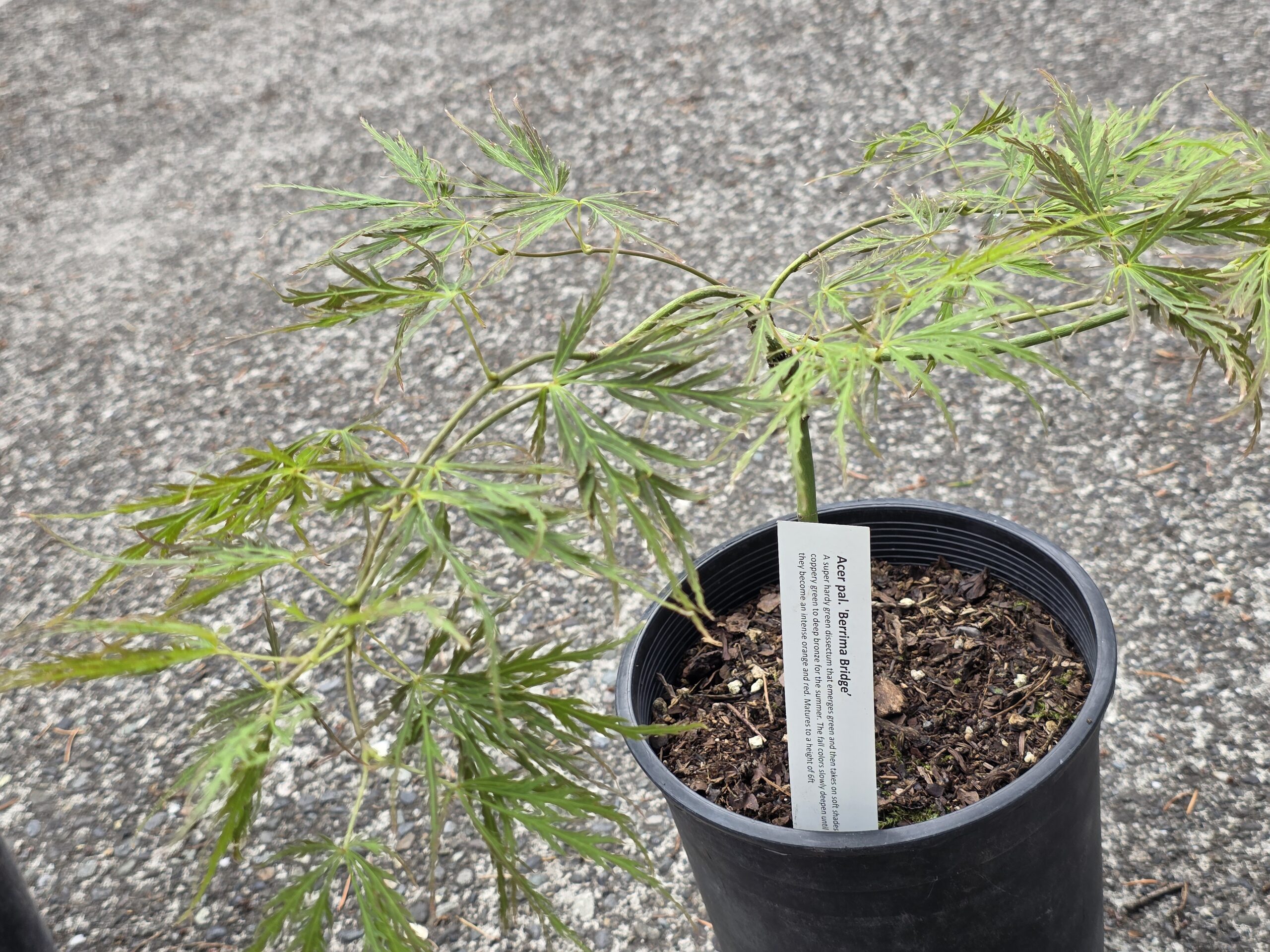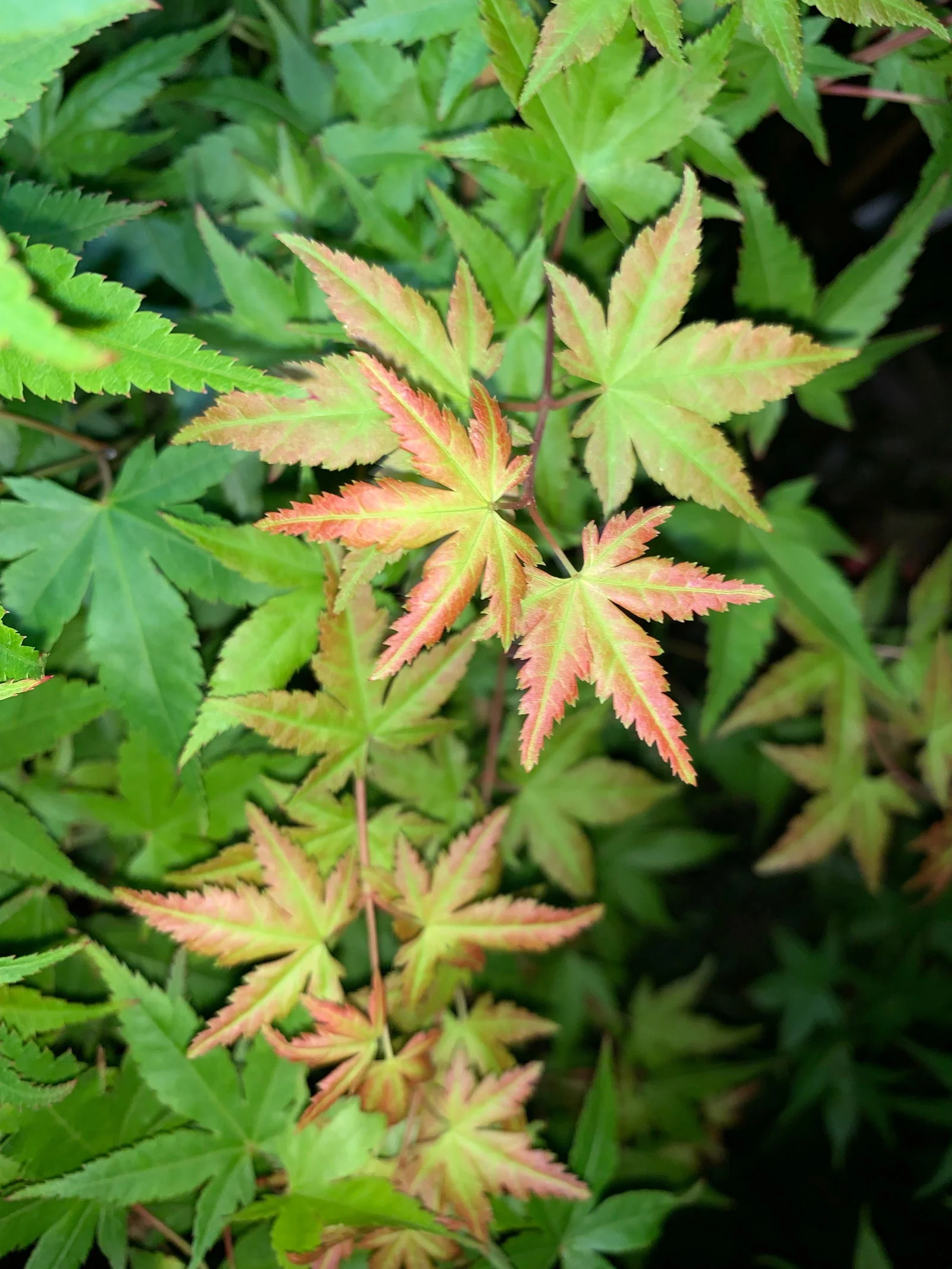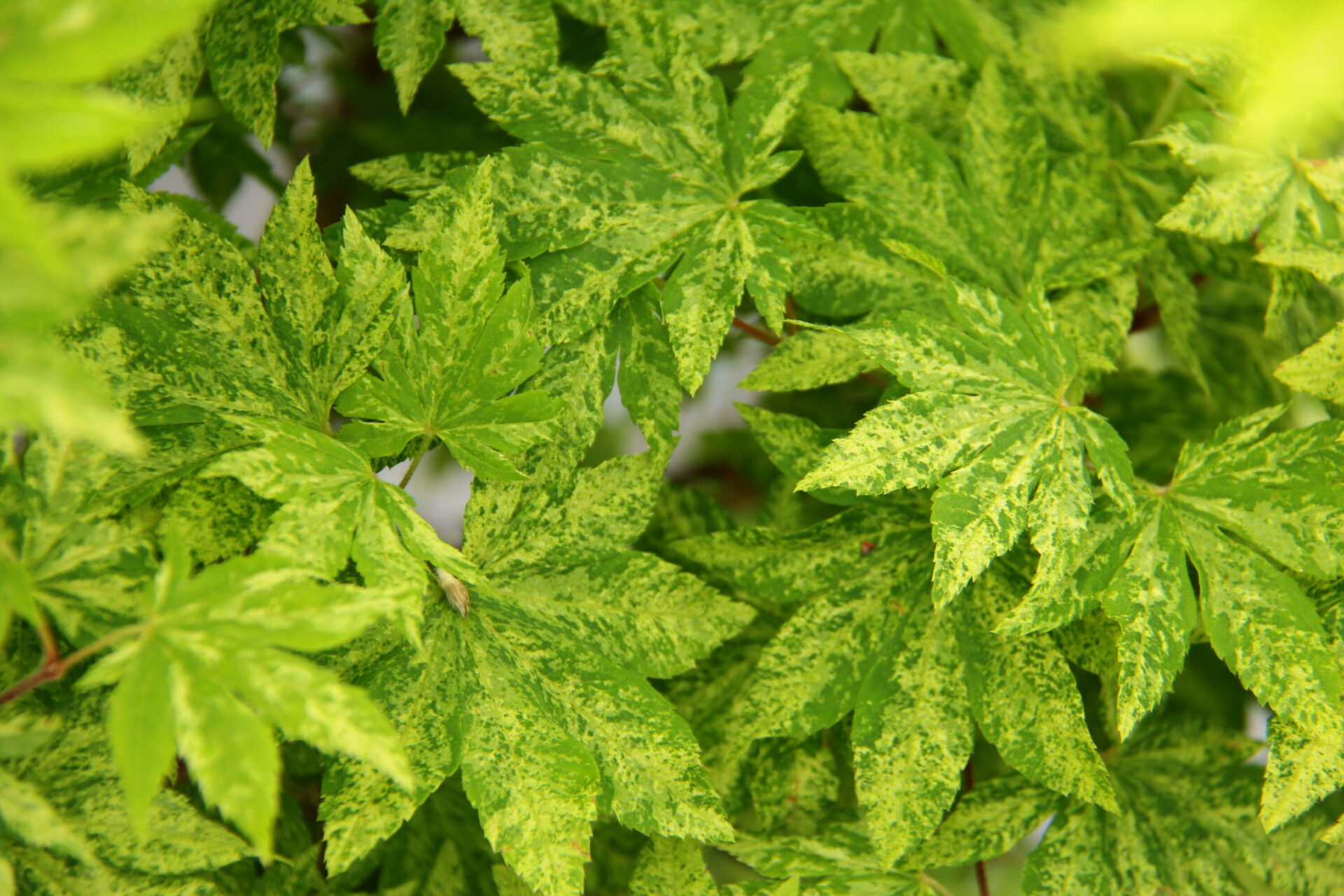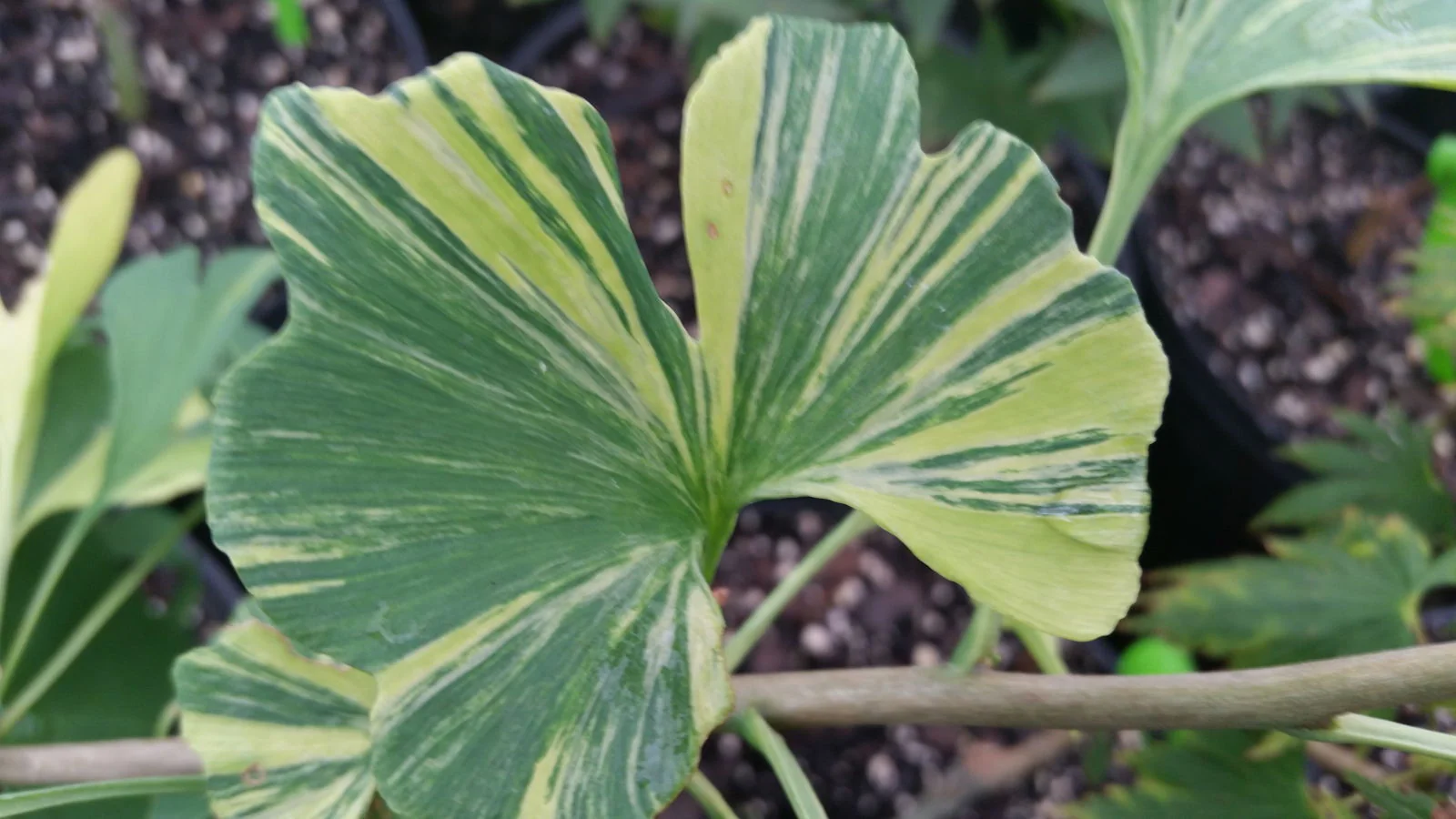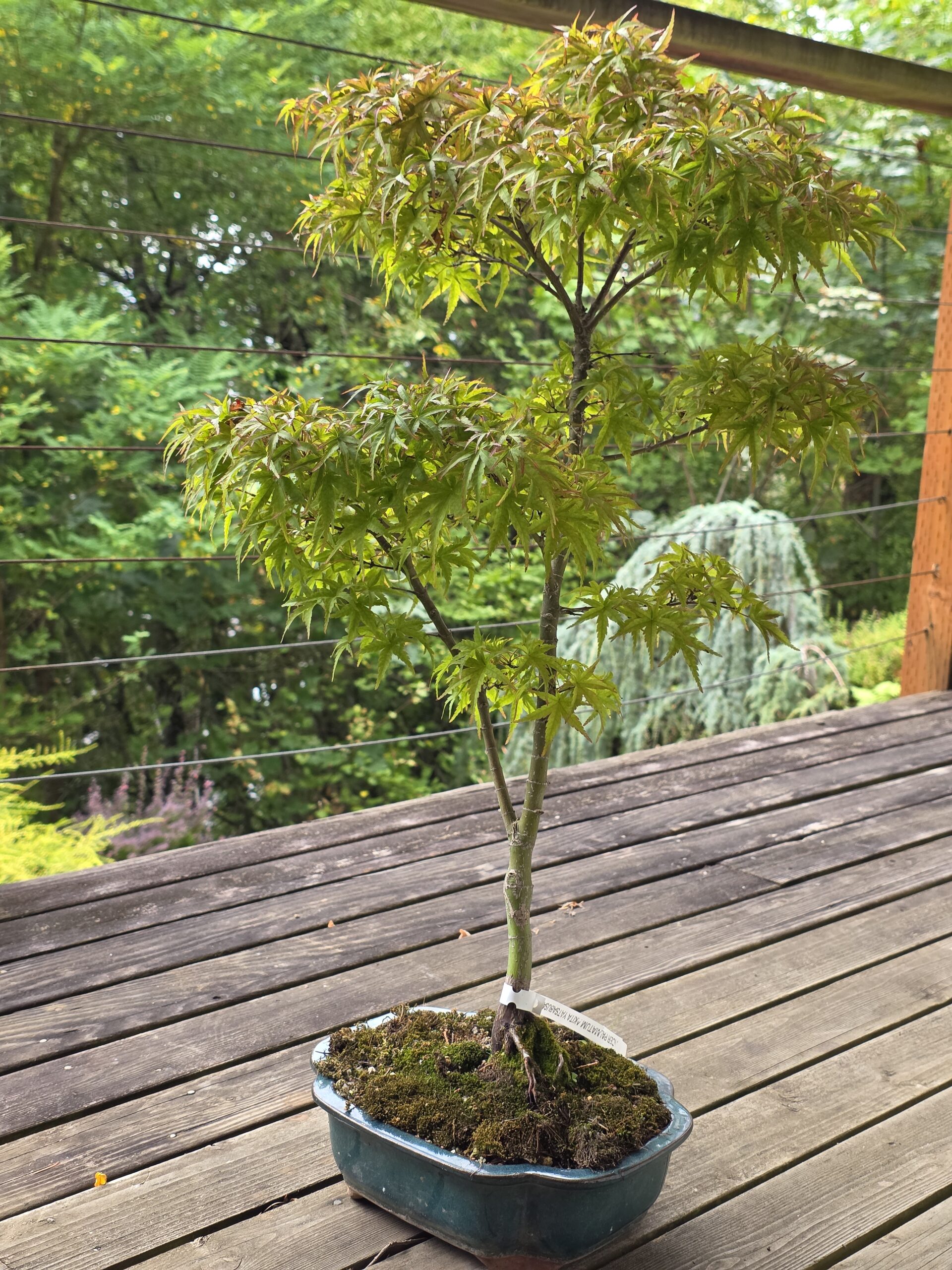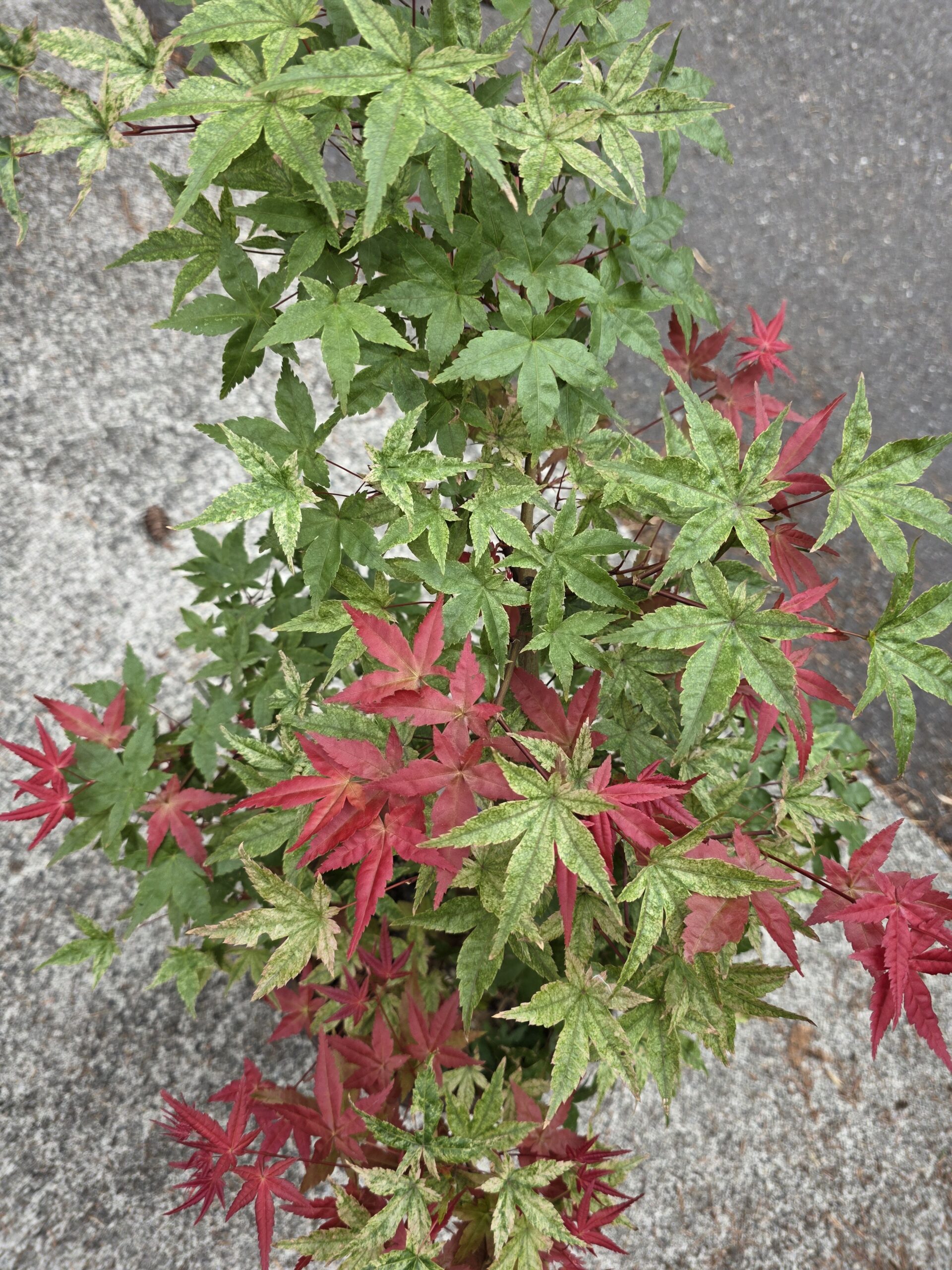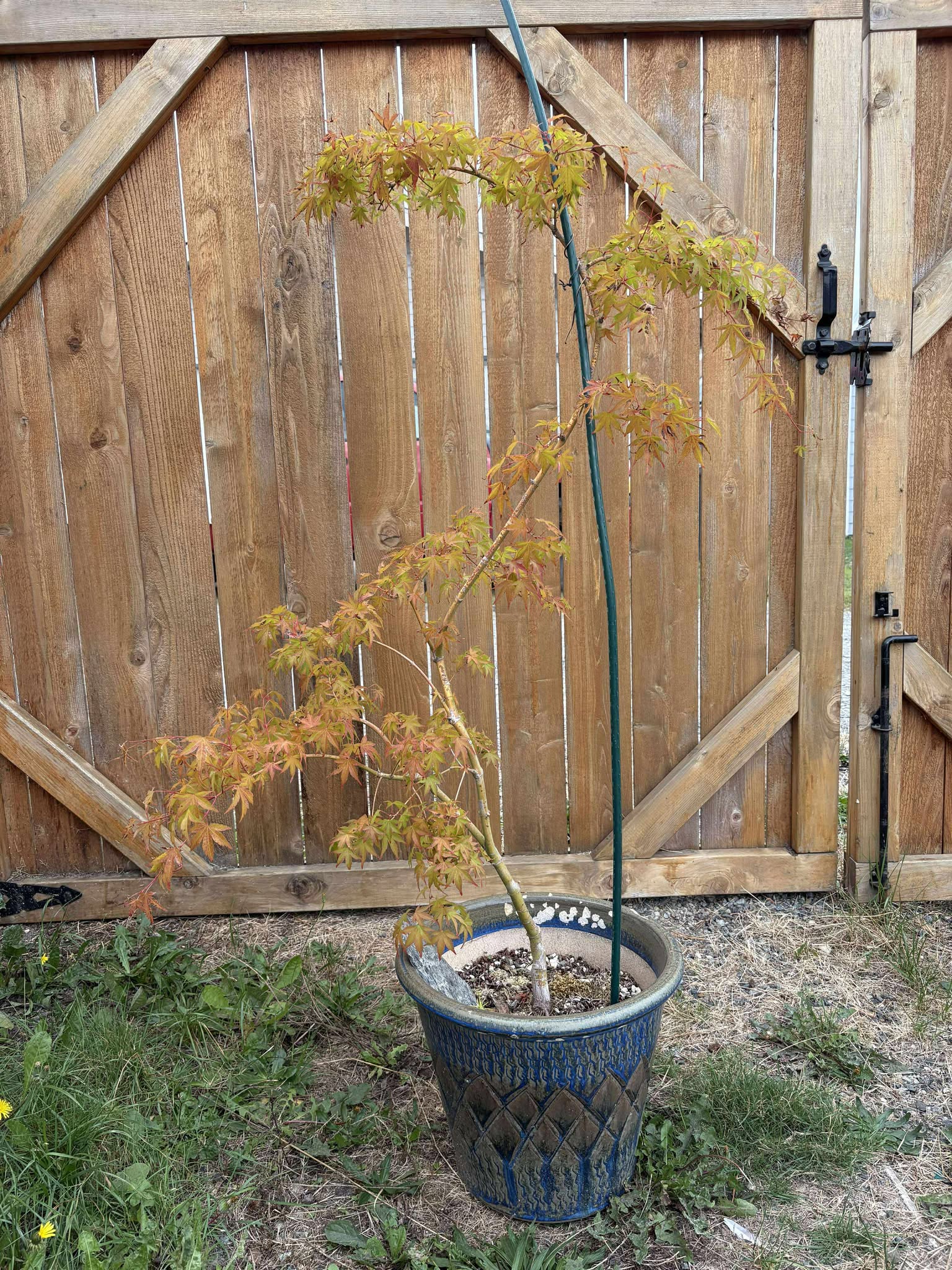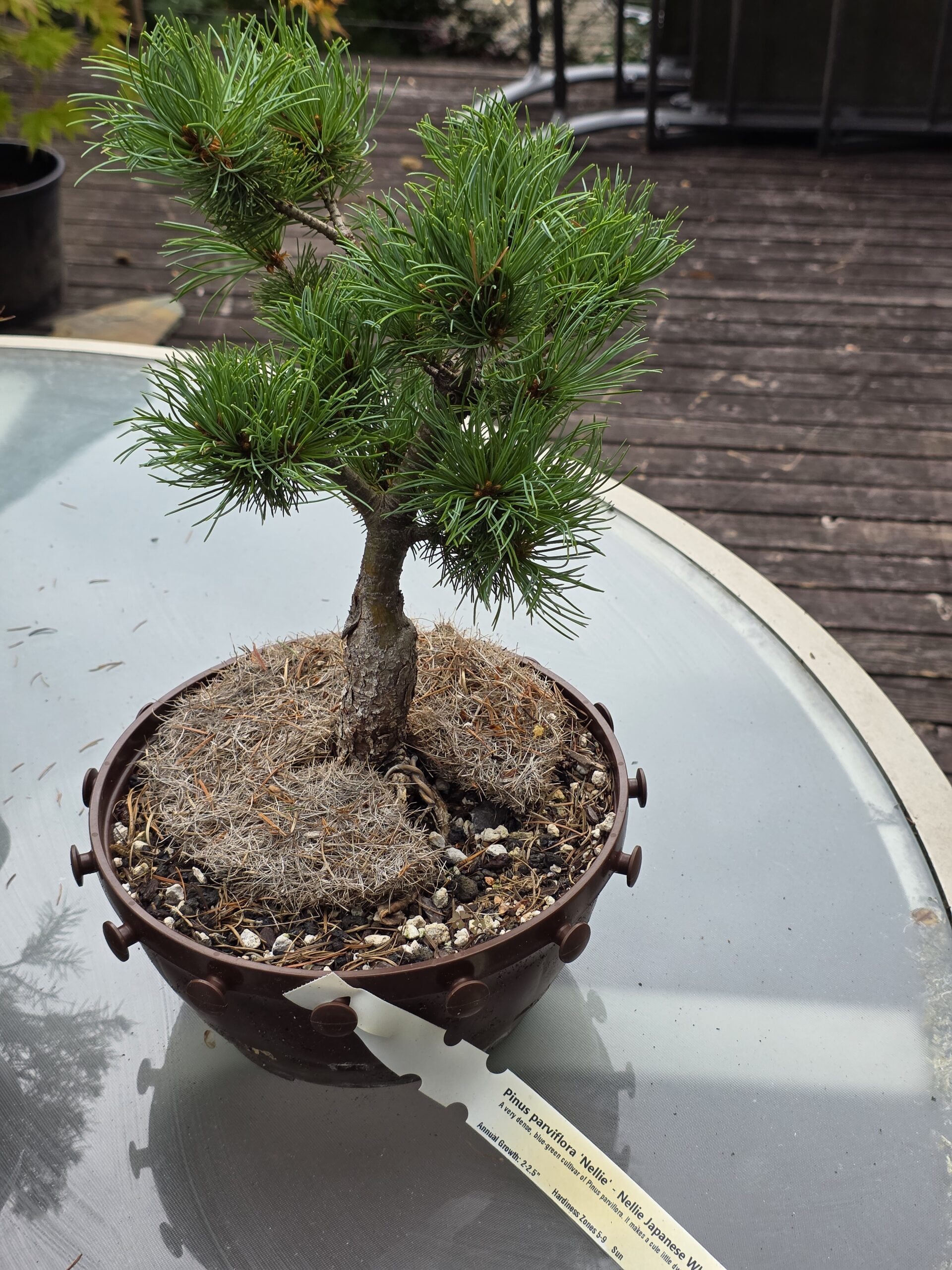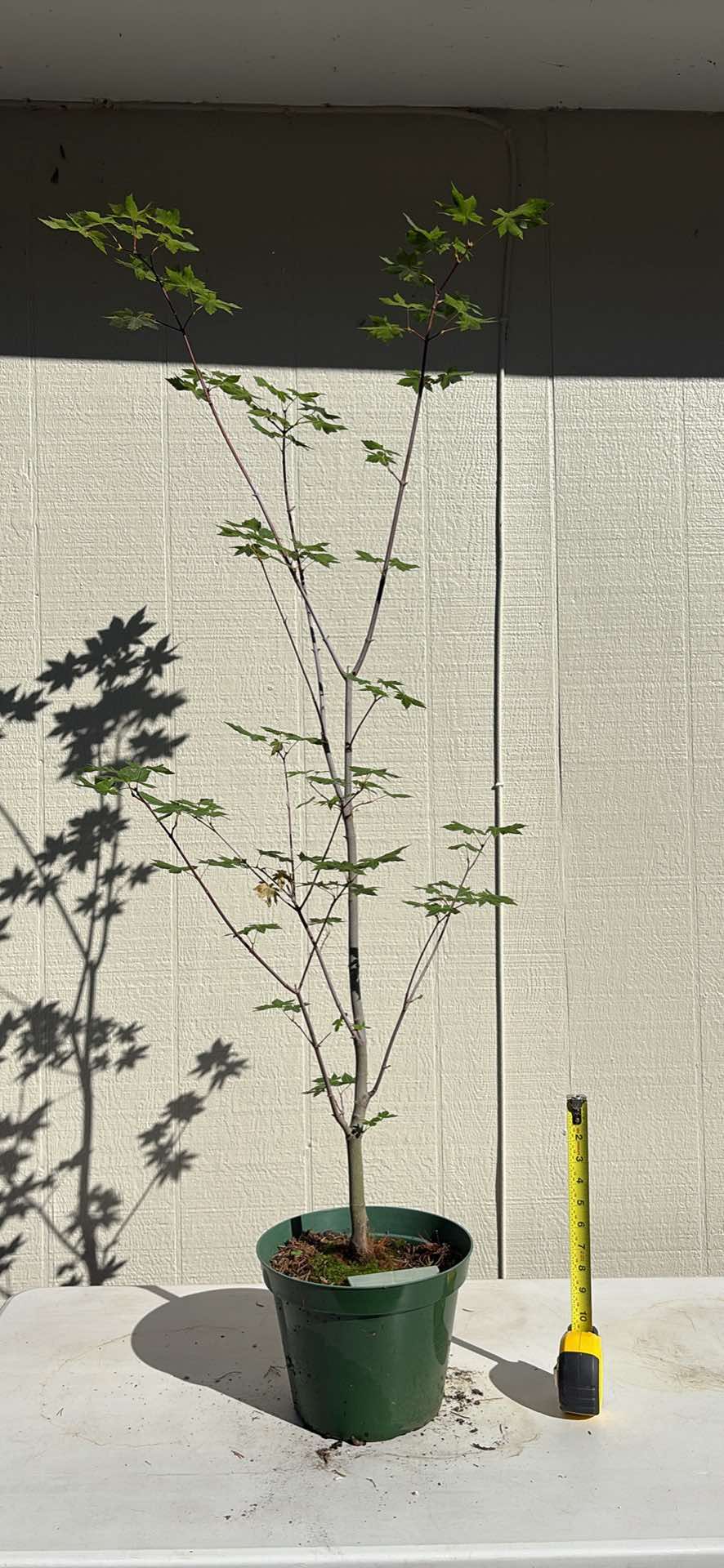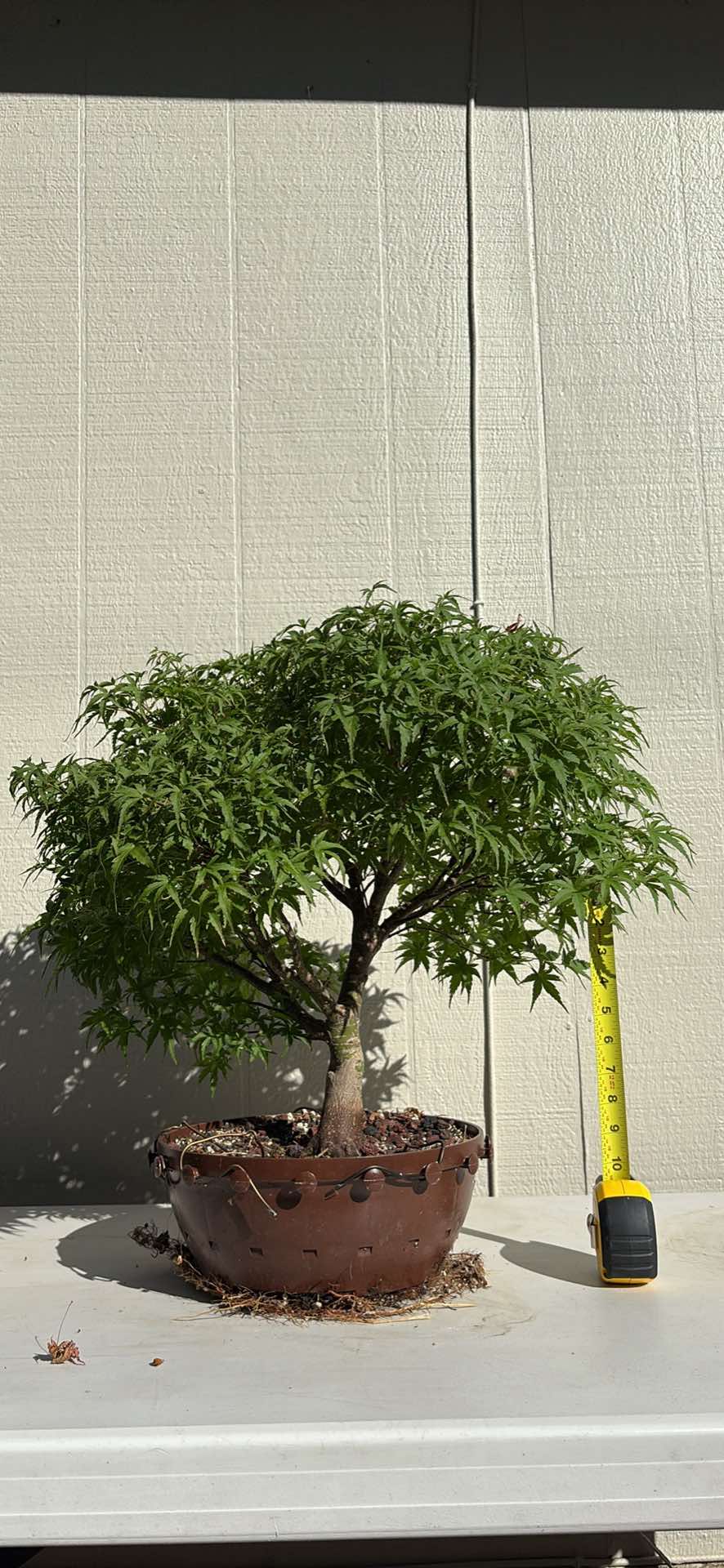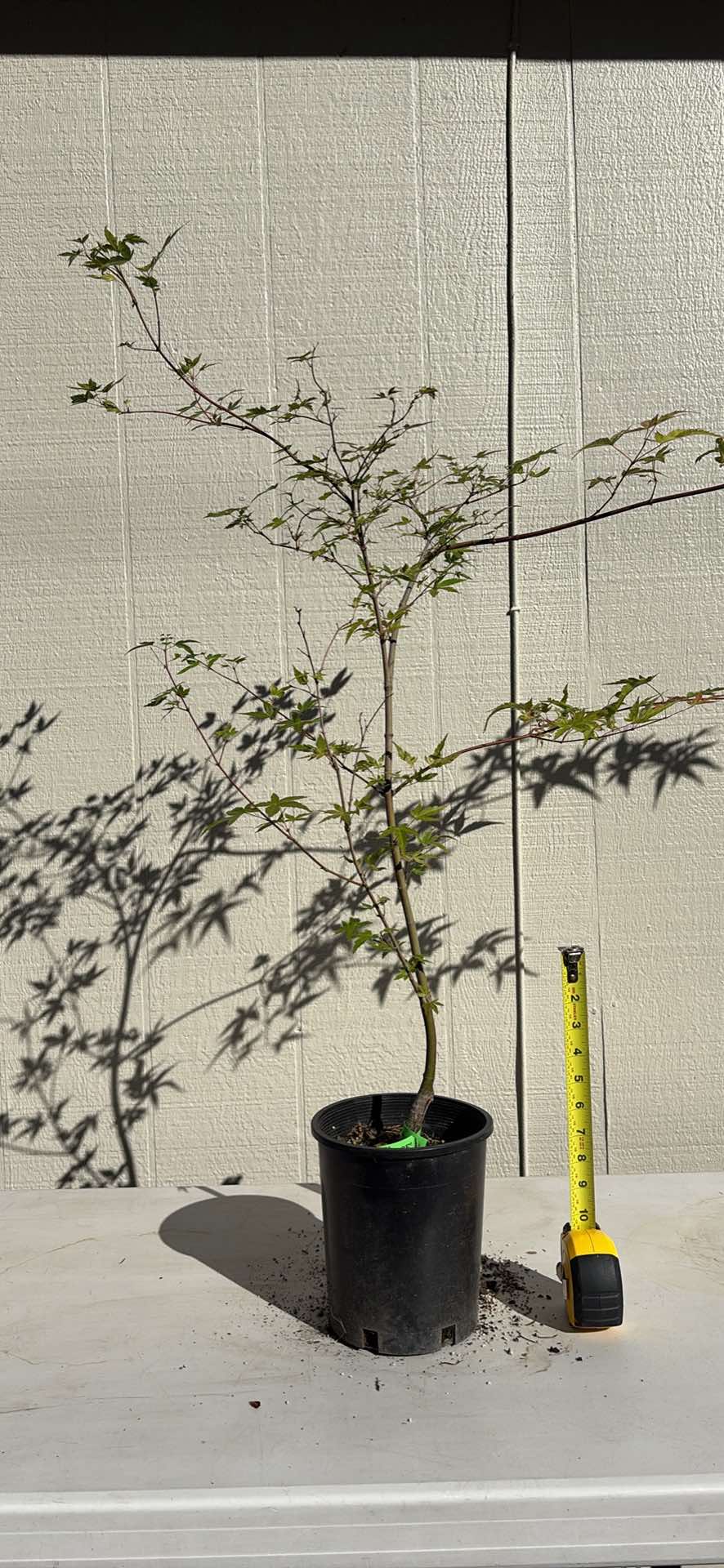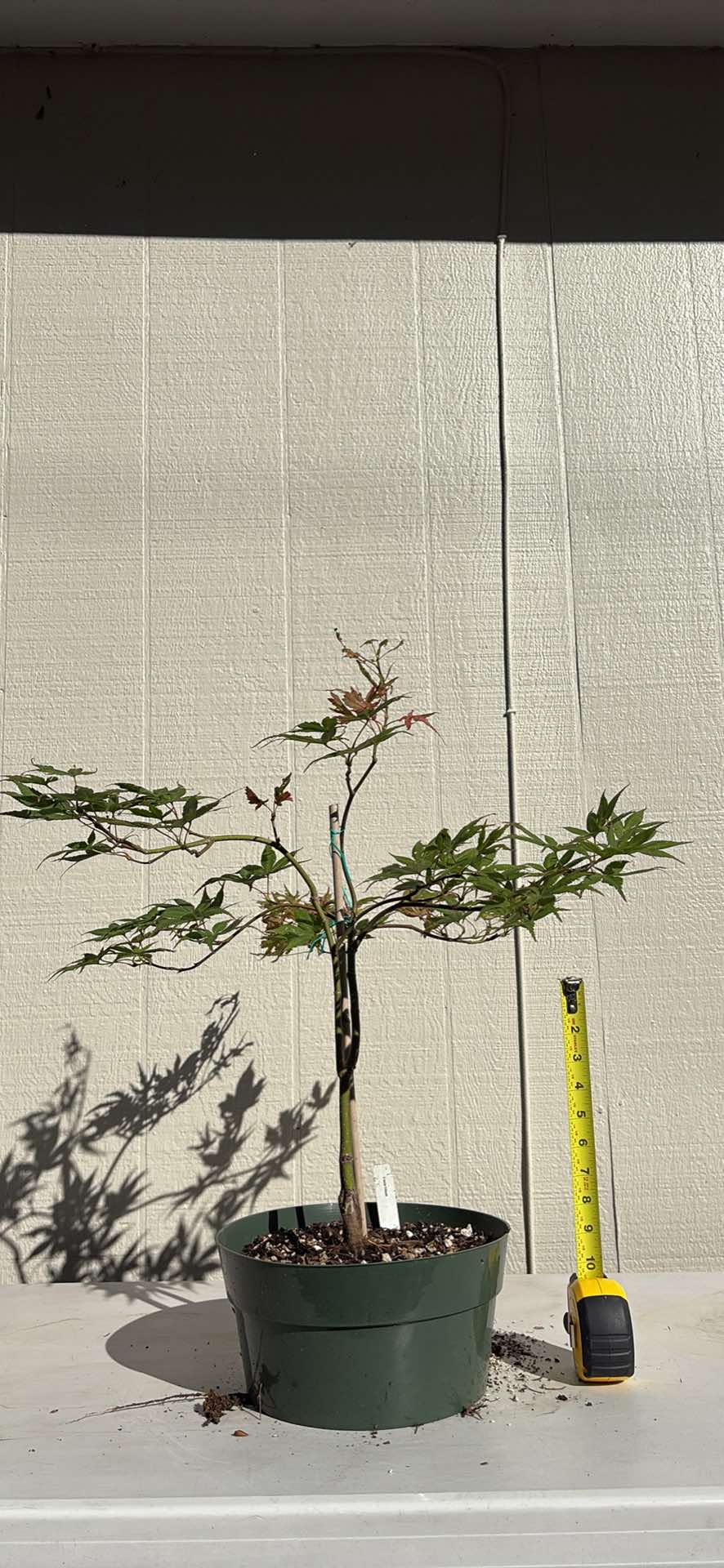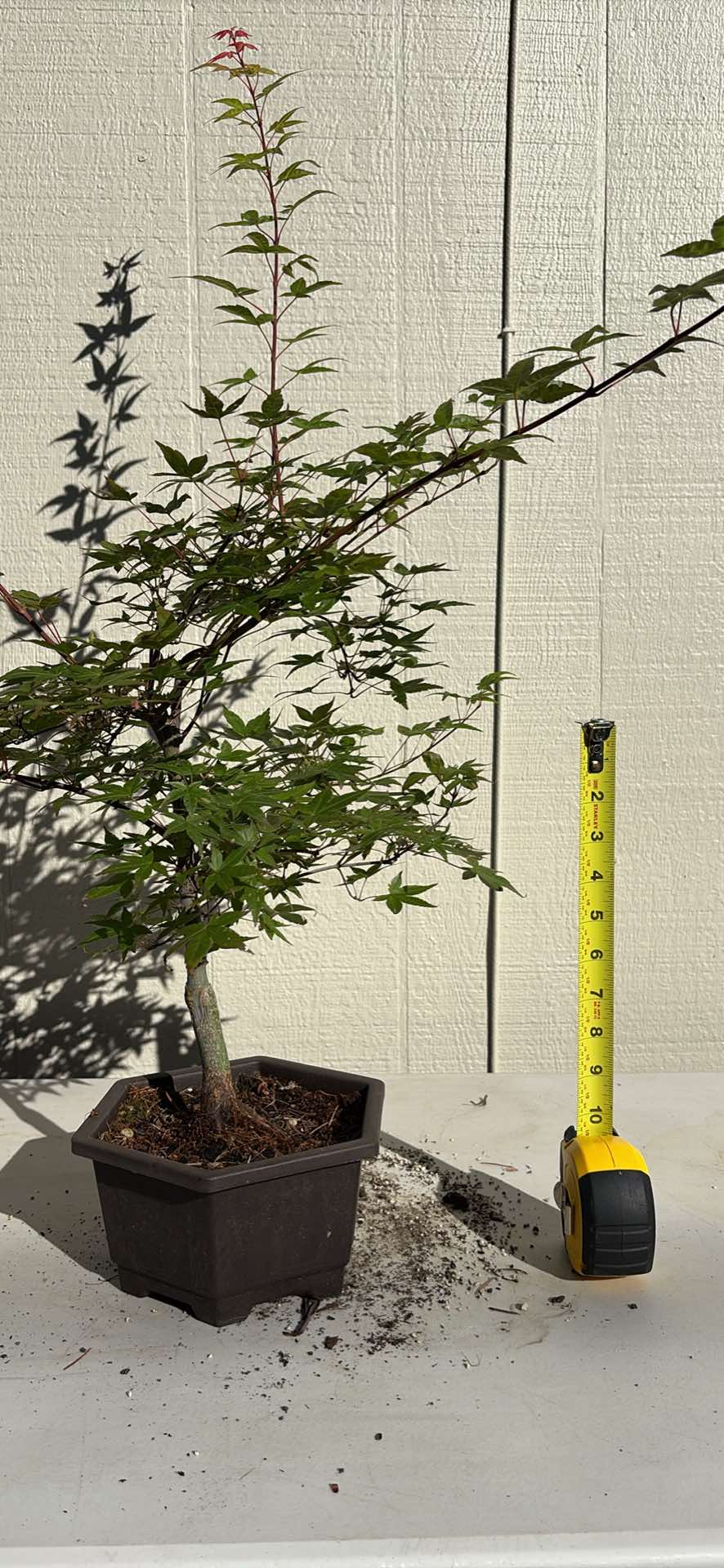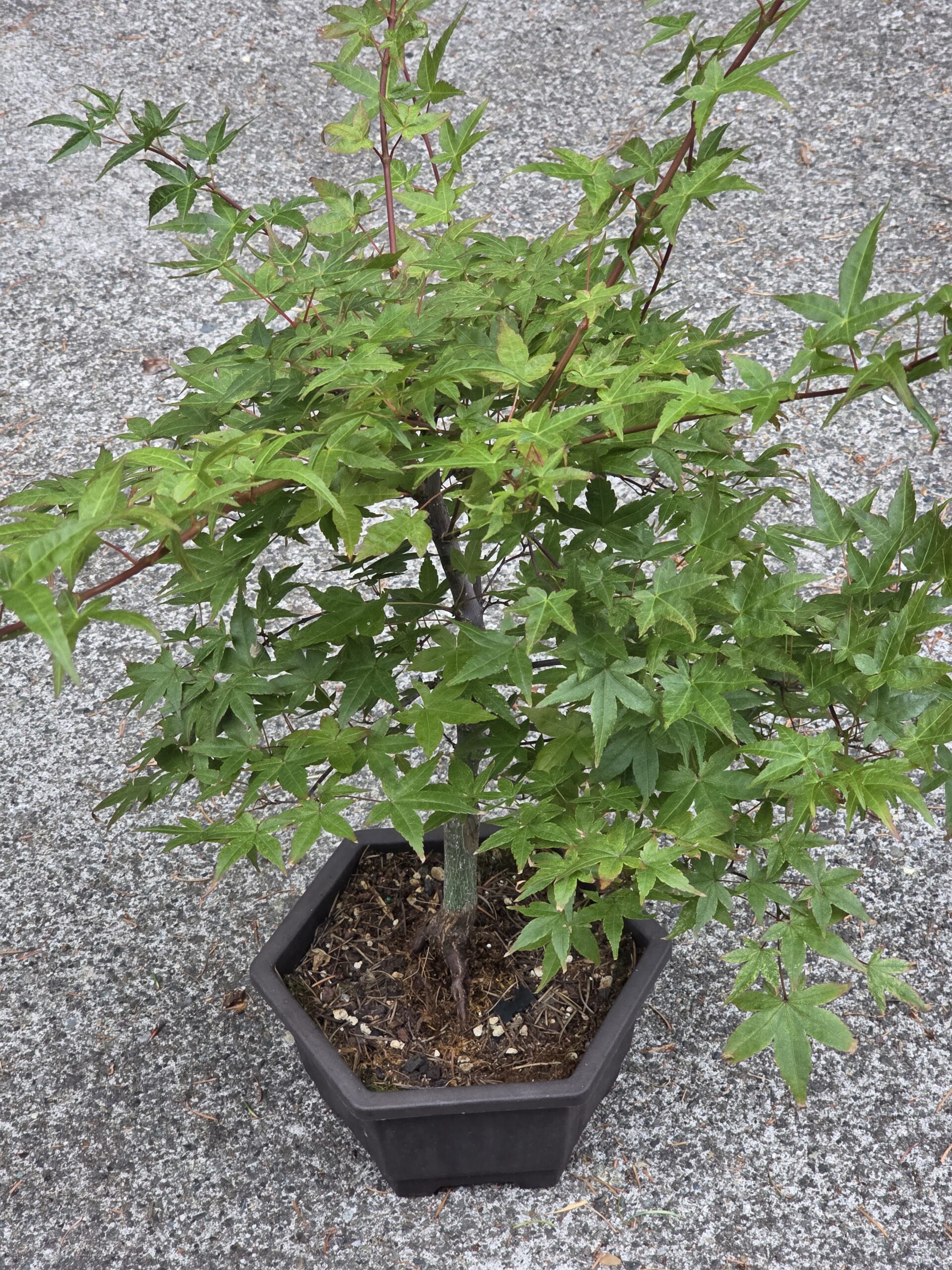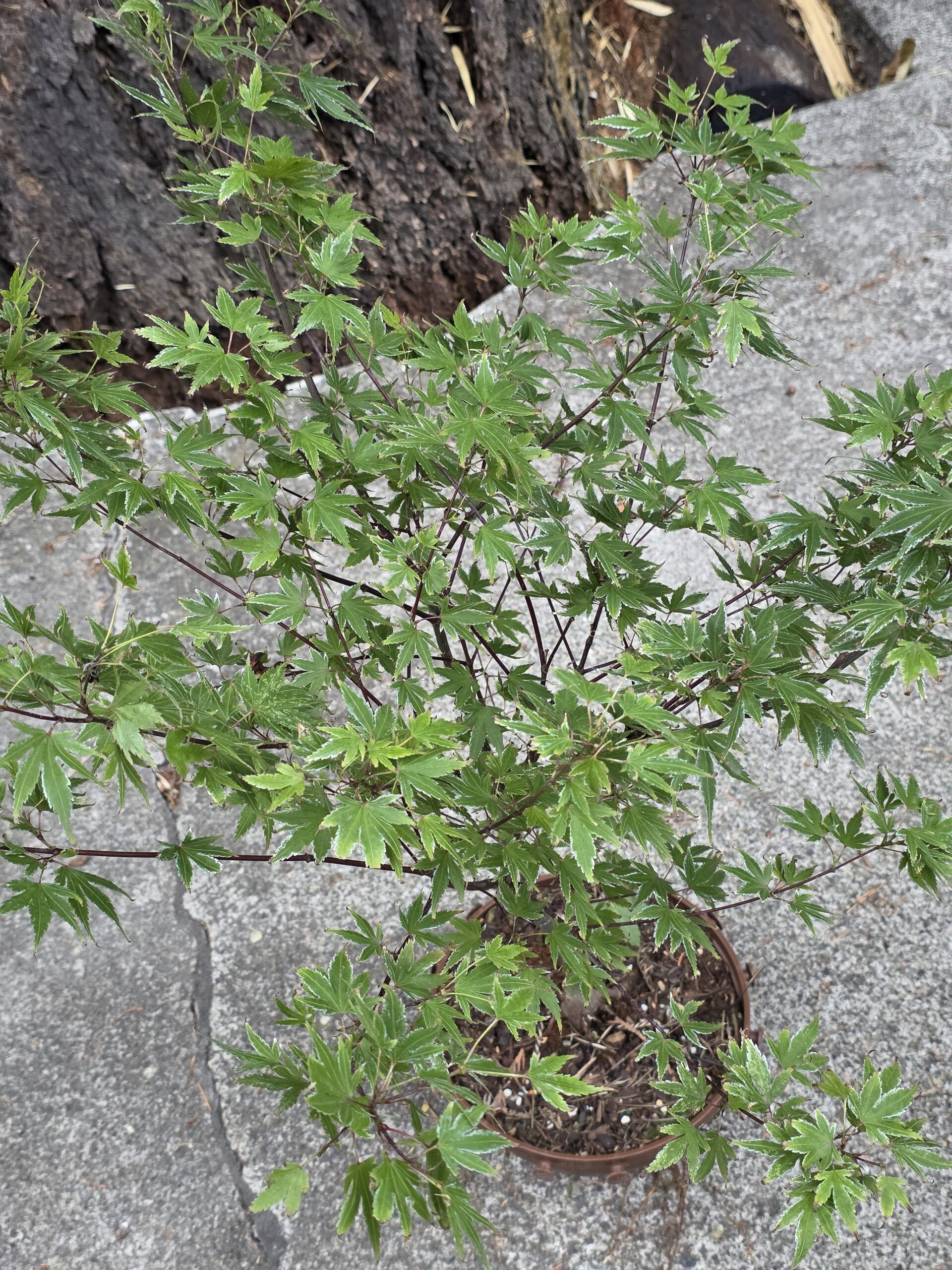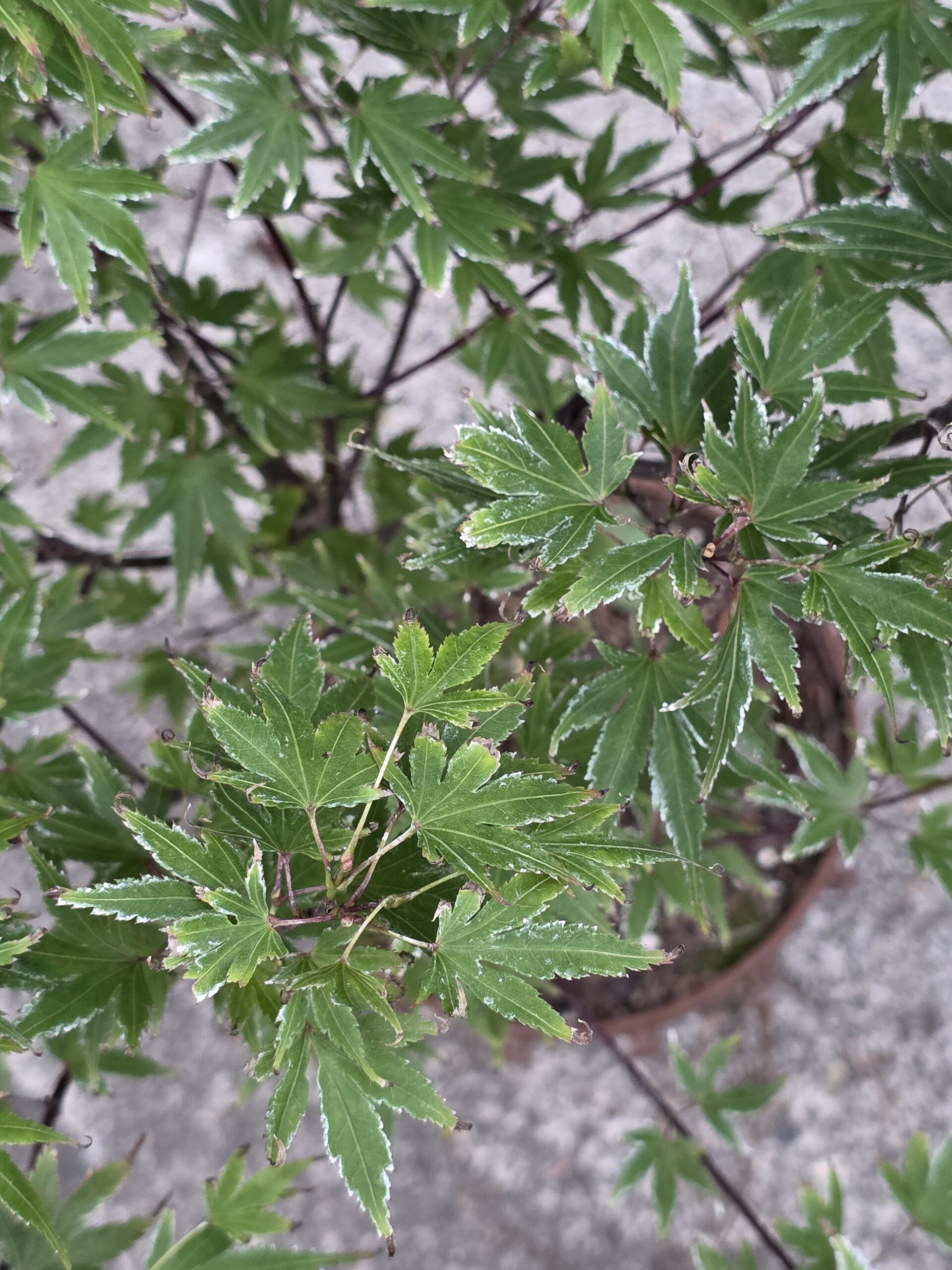
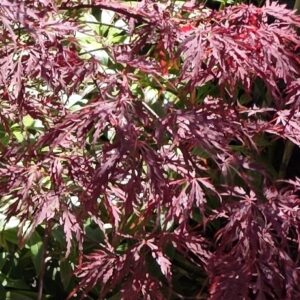
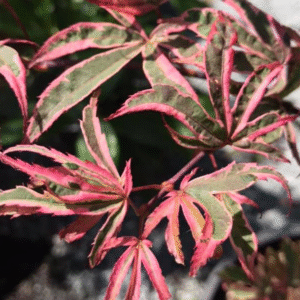
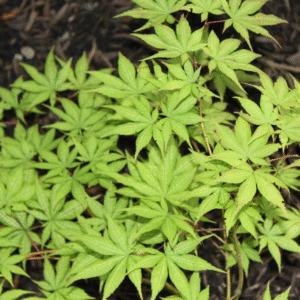
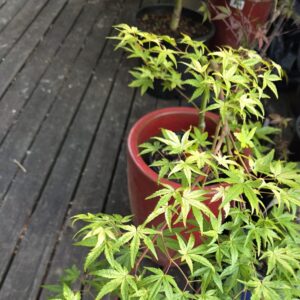
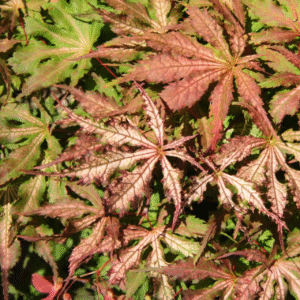
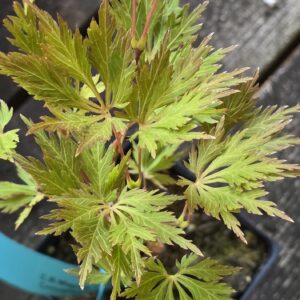
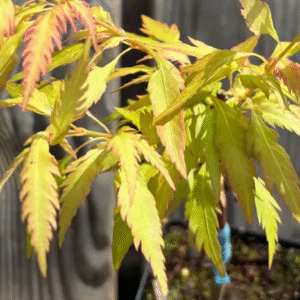

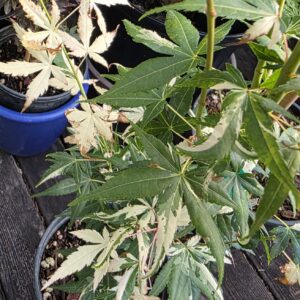
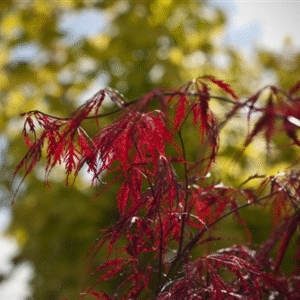
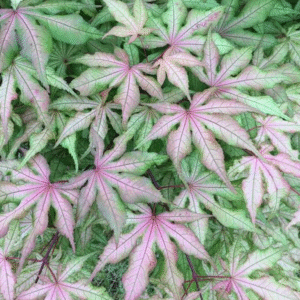
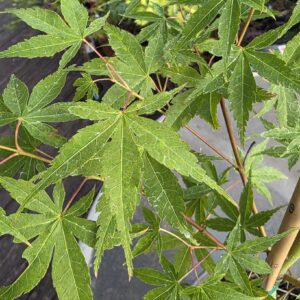
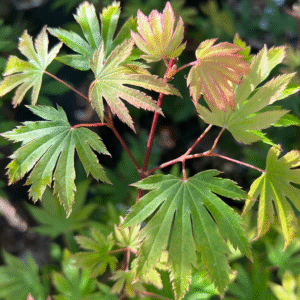
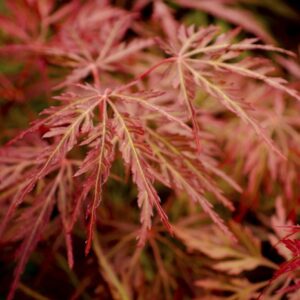
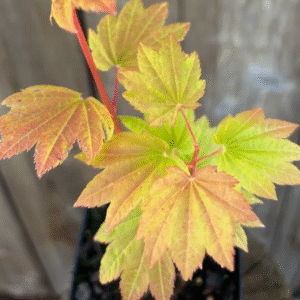
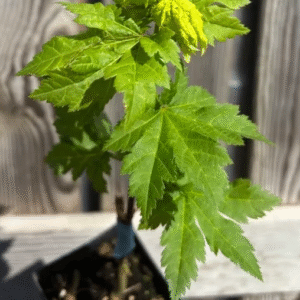
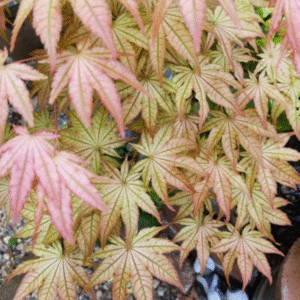
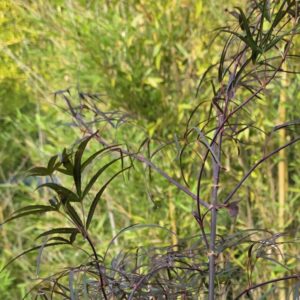
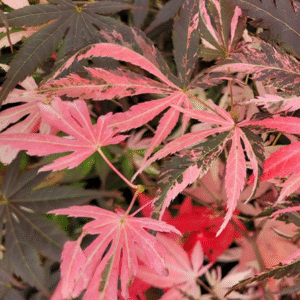
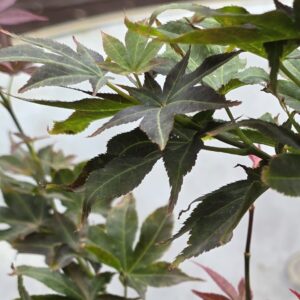
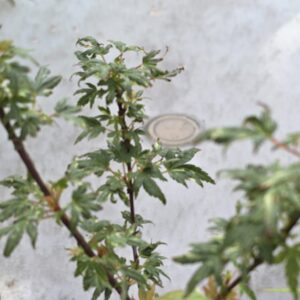
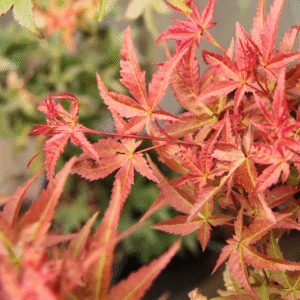
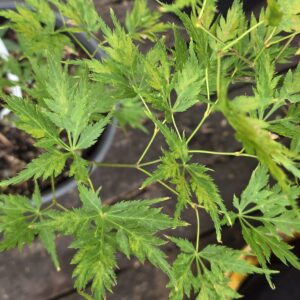
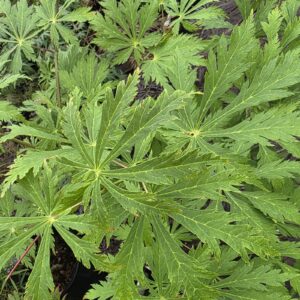
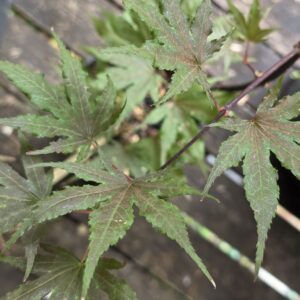
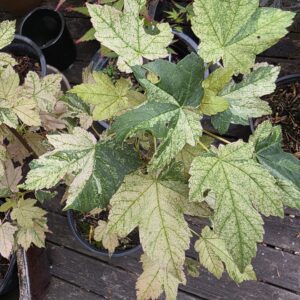
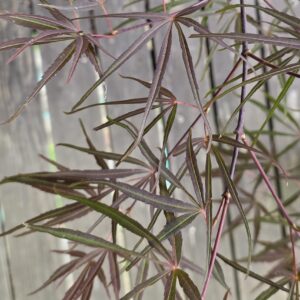
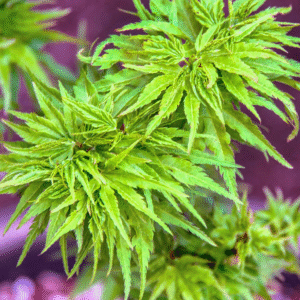
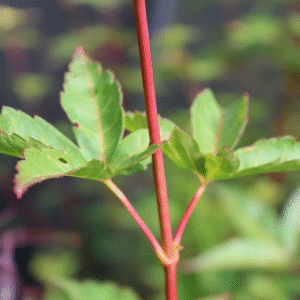
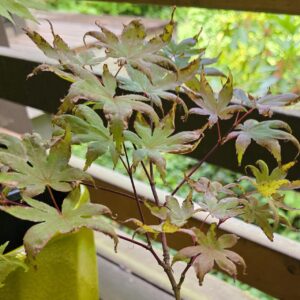
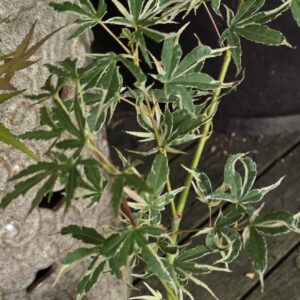
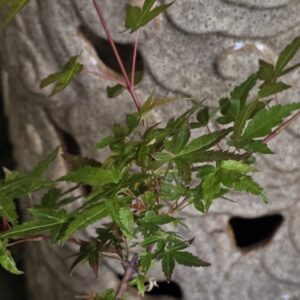
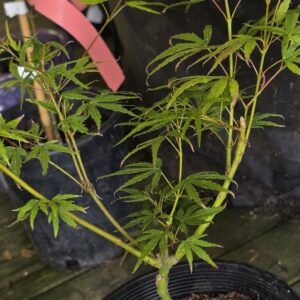
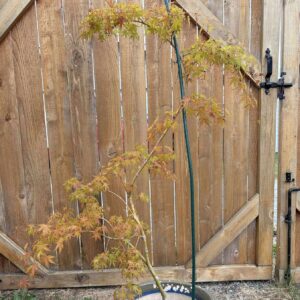
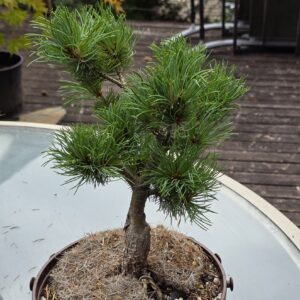
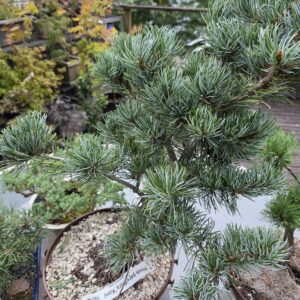
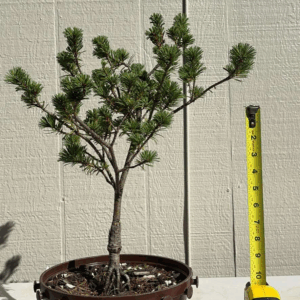
General Characteristics
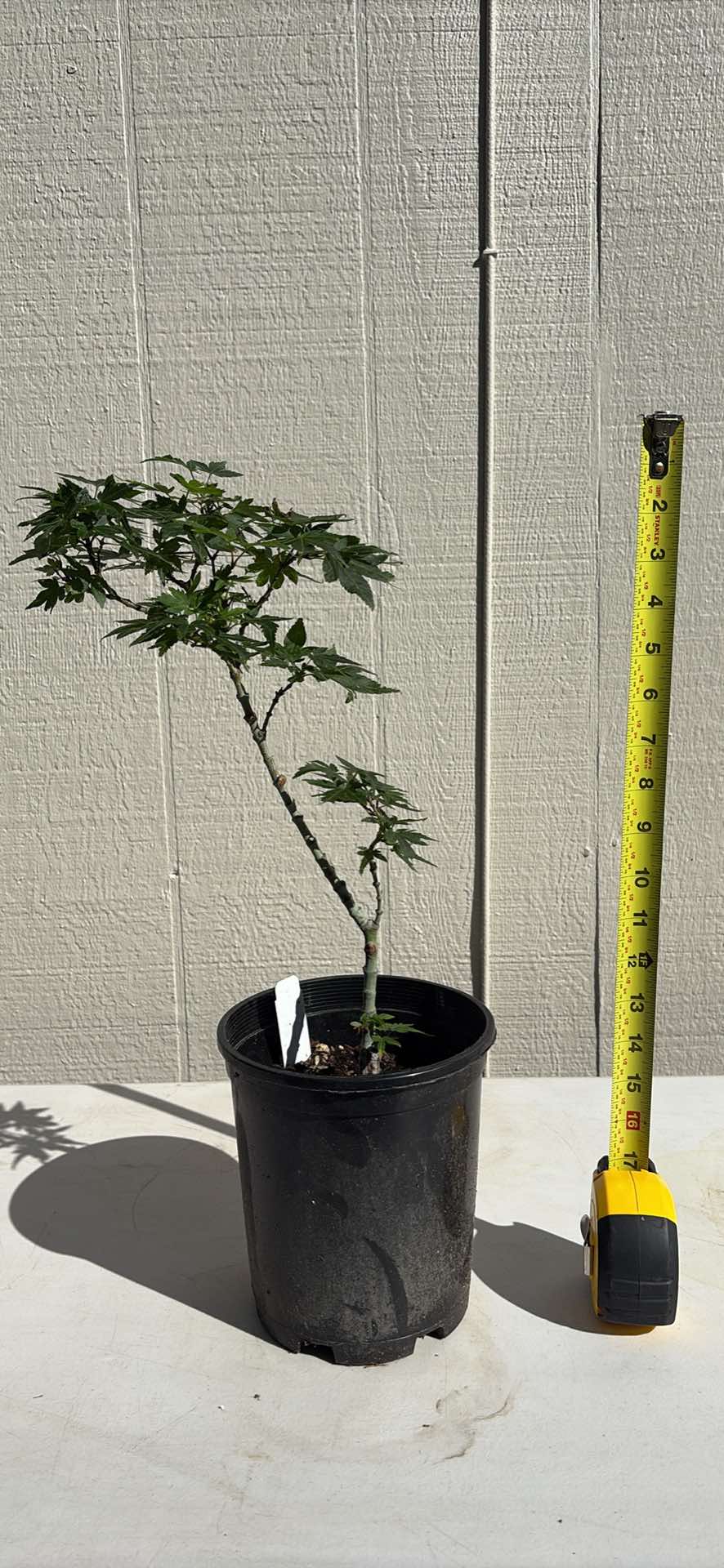
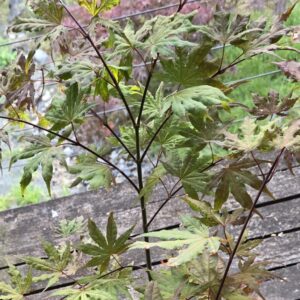
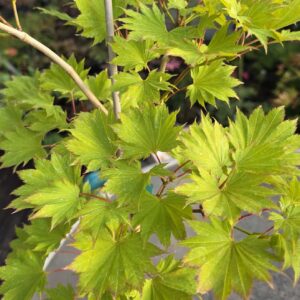
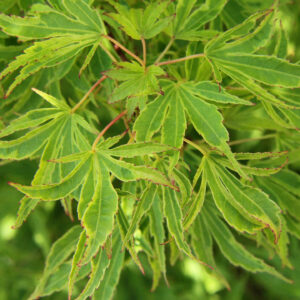
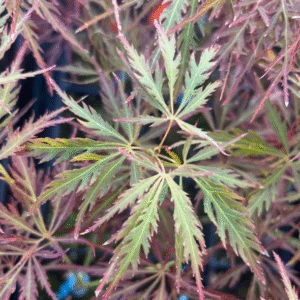
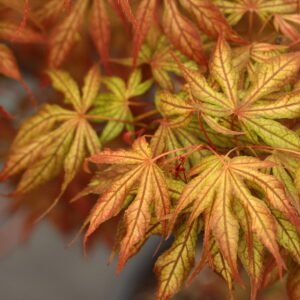
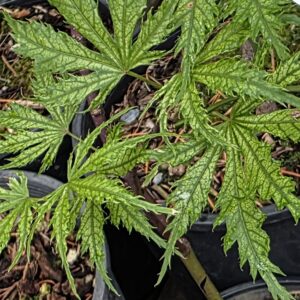
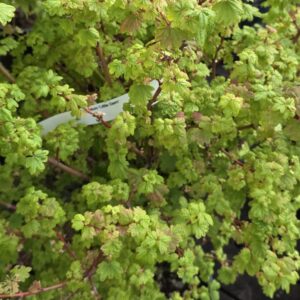
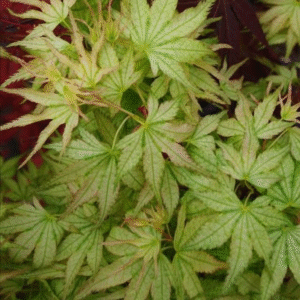
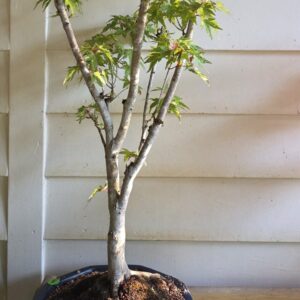
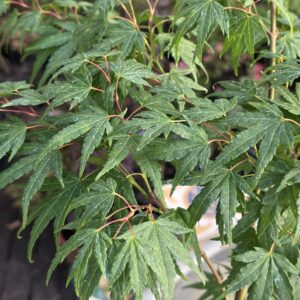
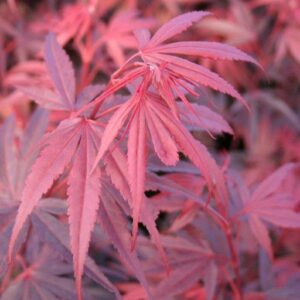
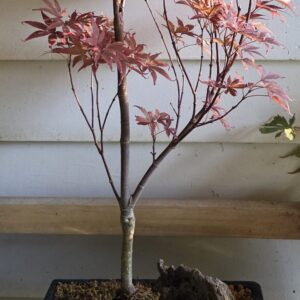
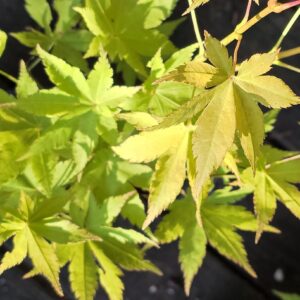
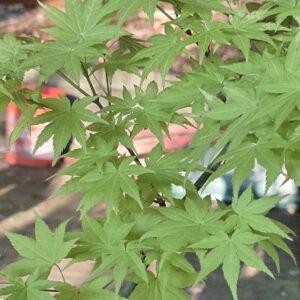
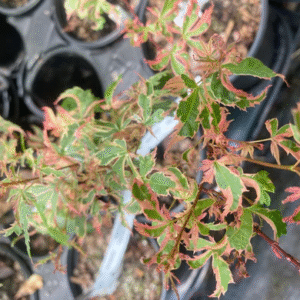
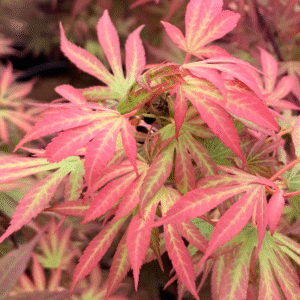
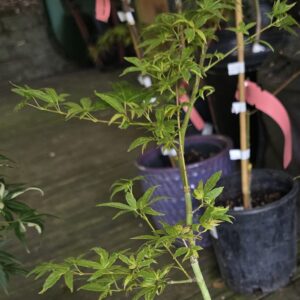
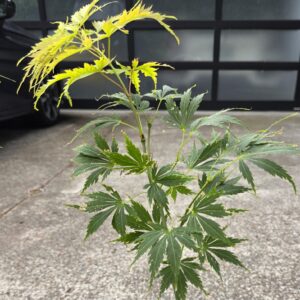
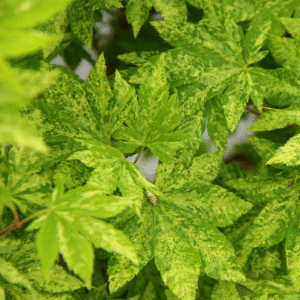
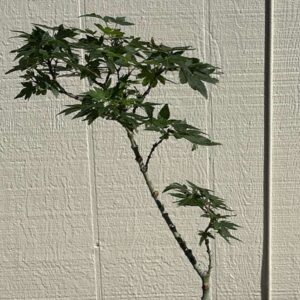
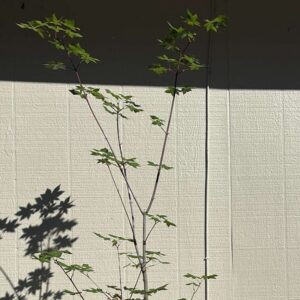
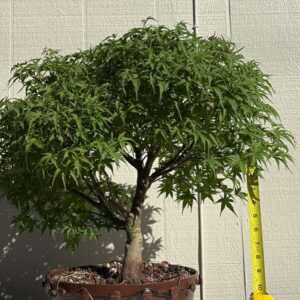
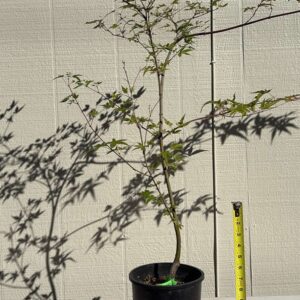
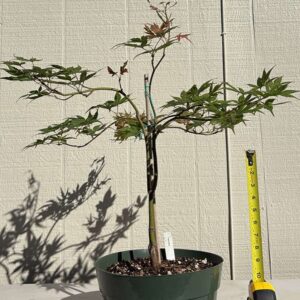
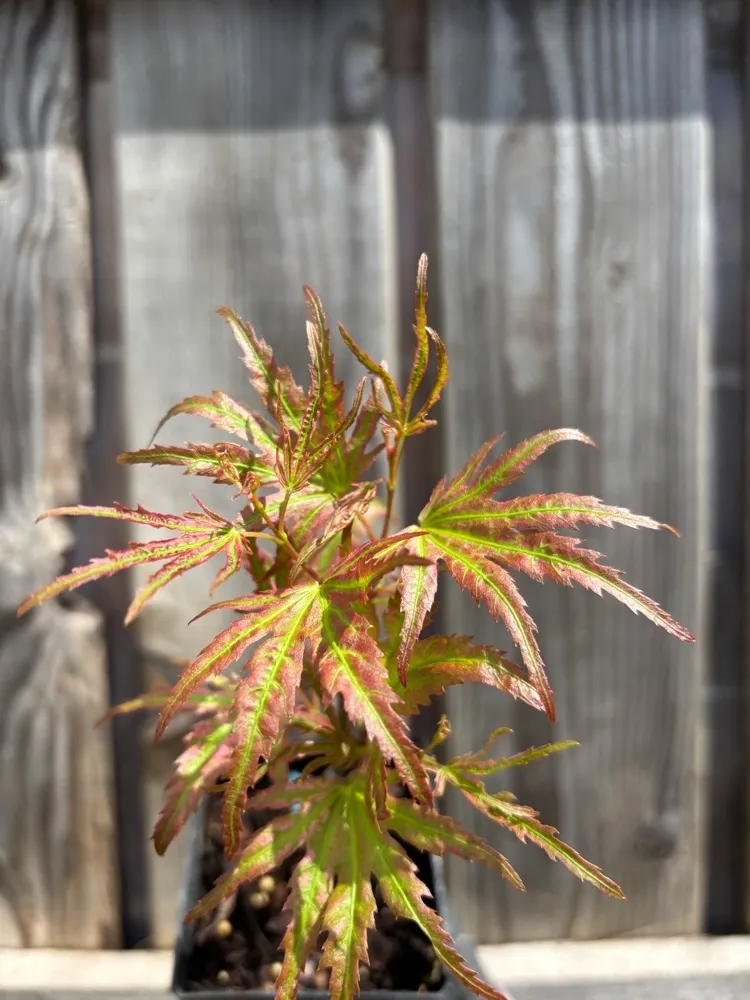
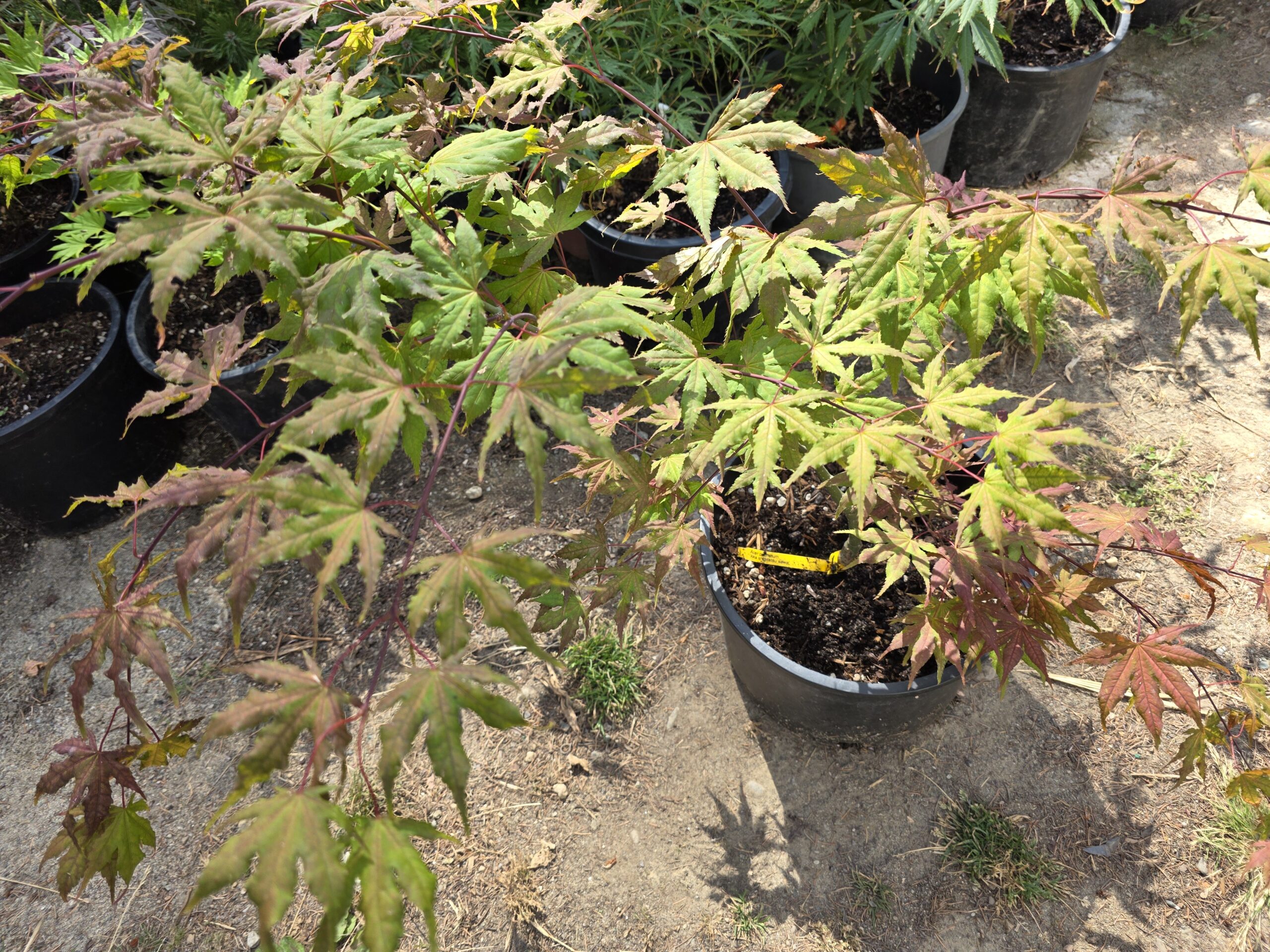
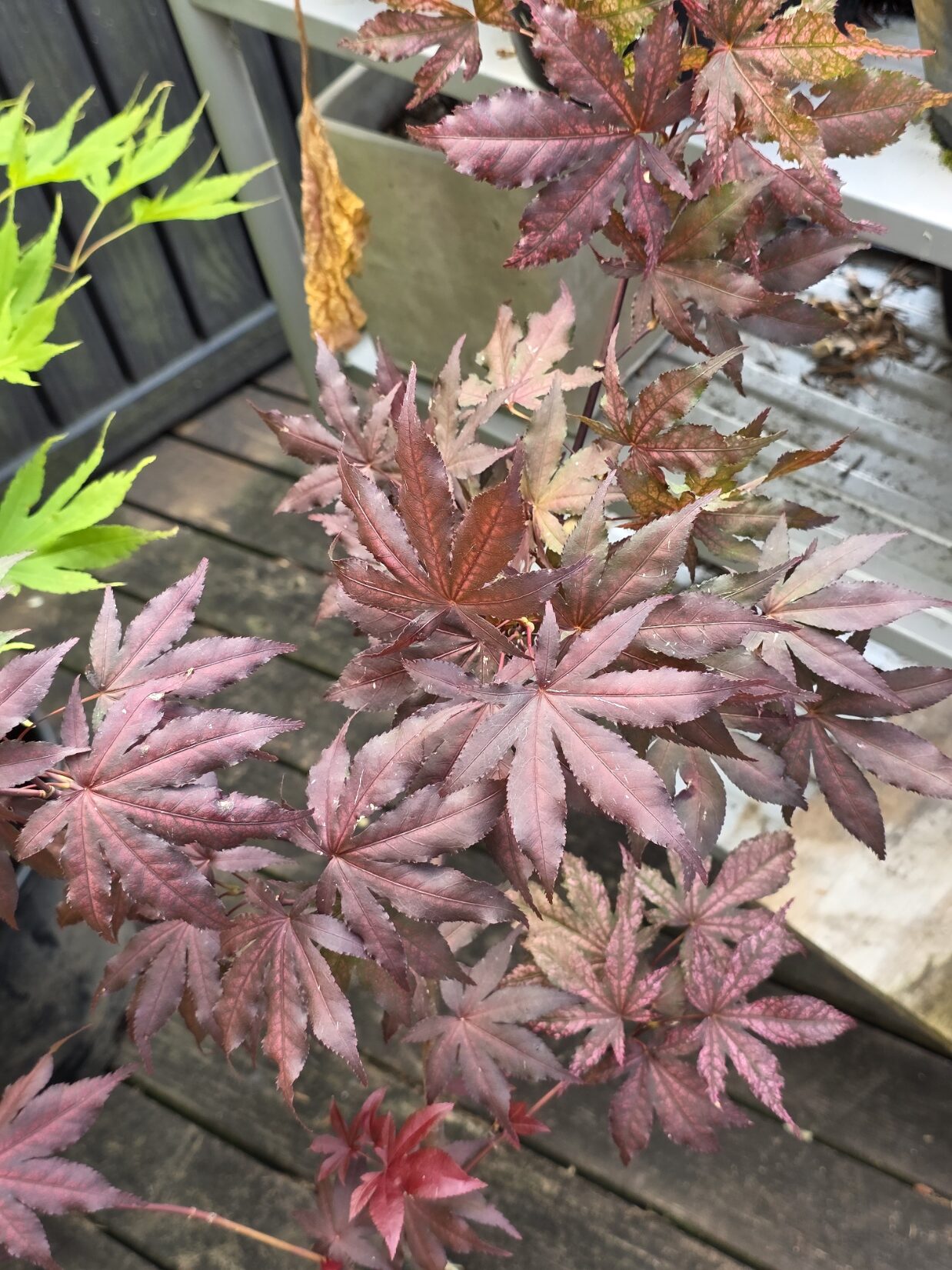
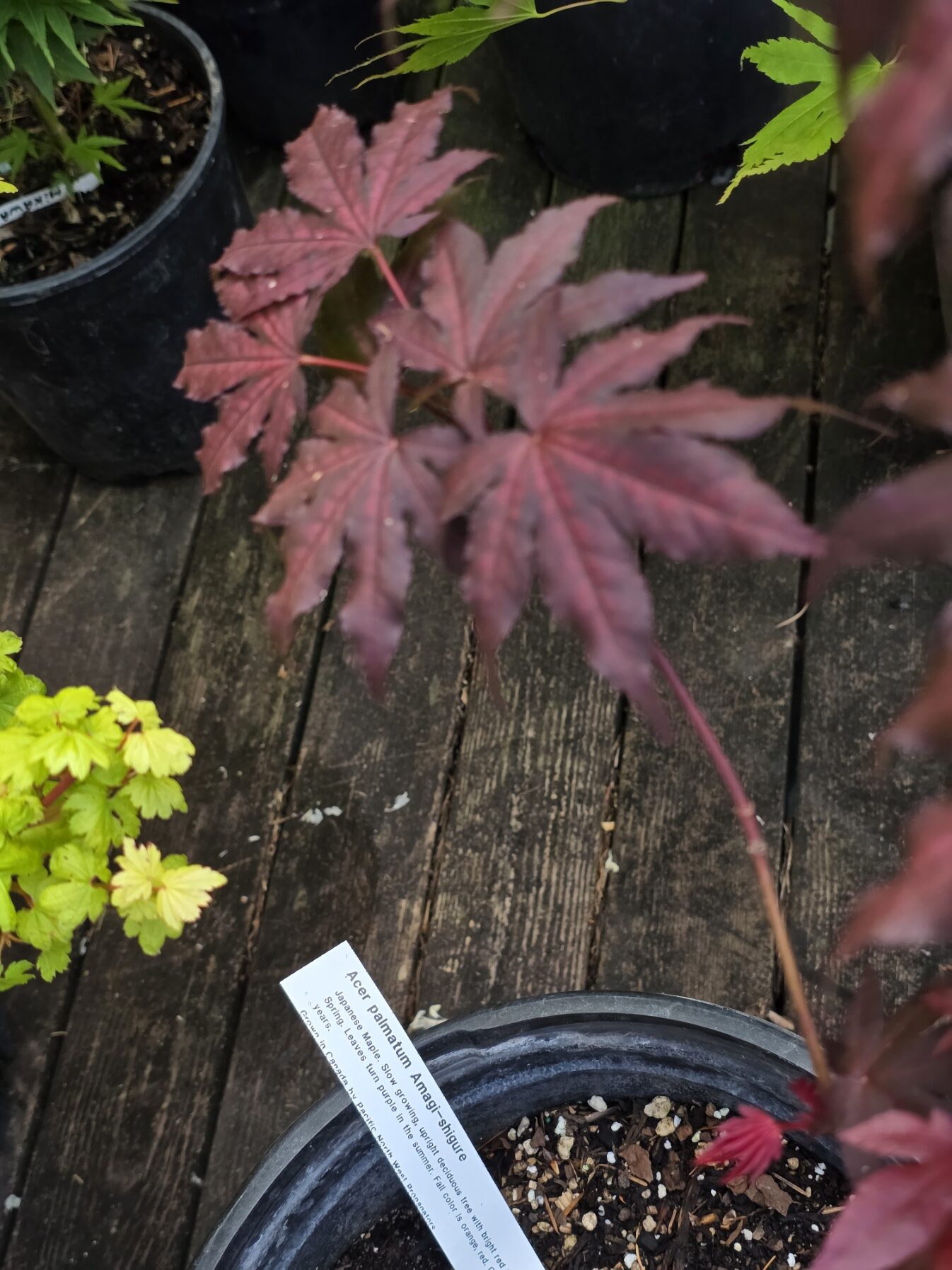
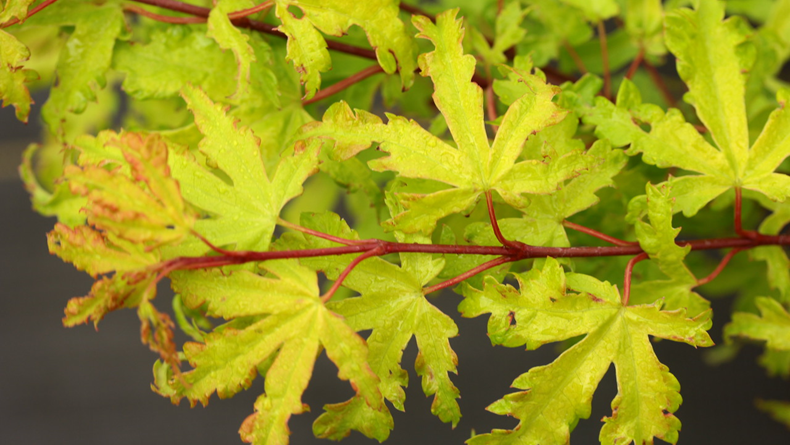
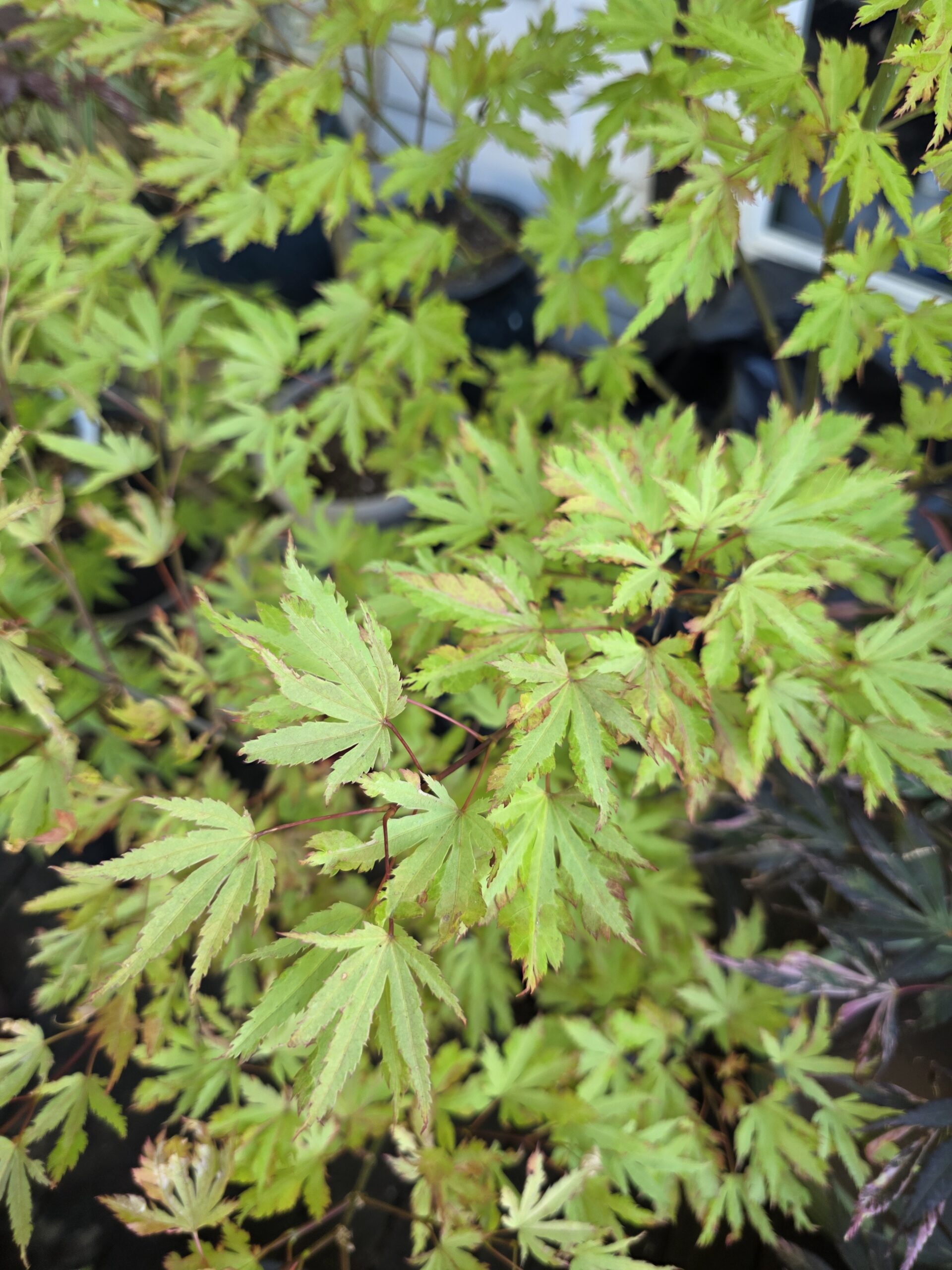
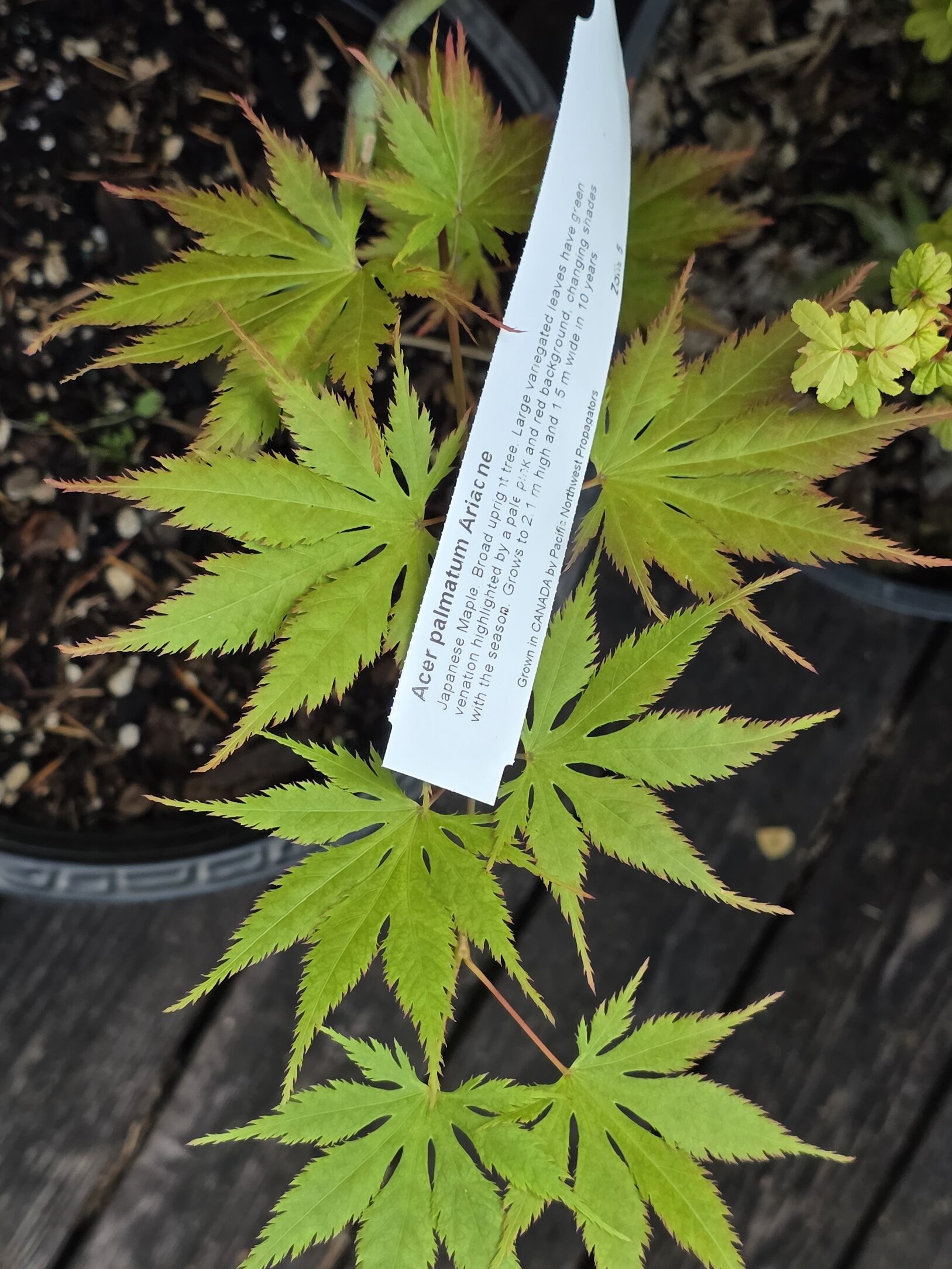
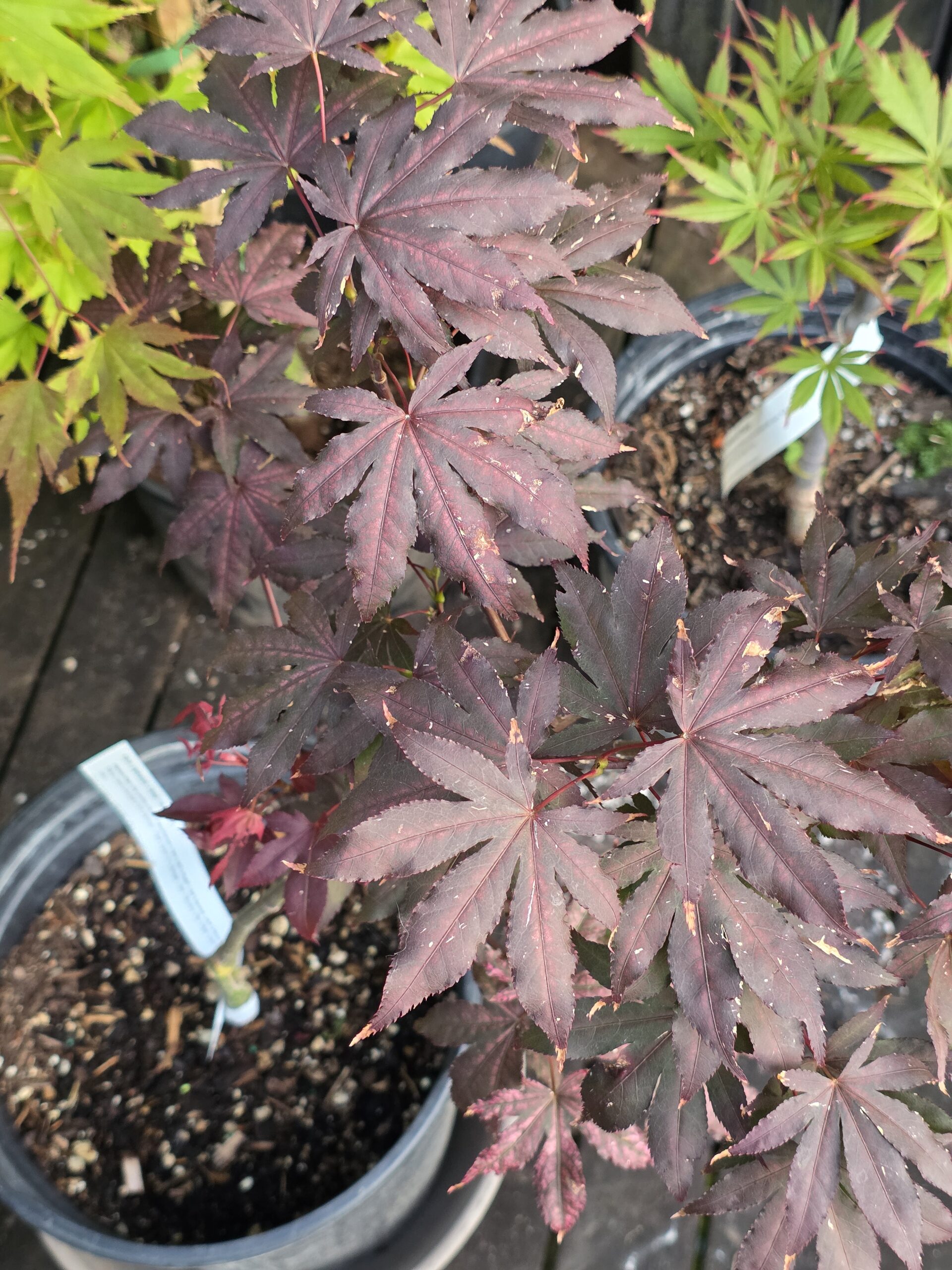
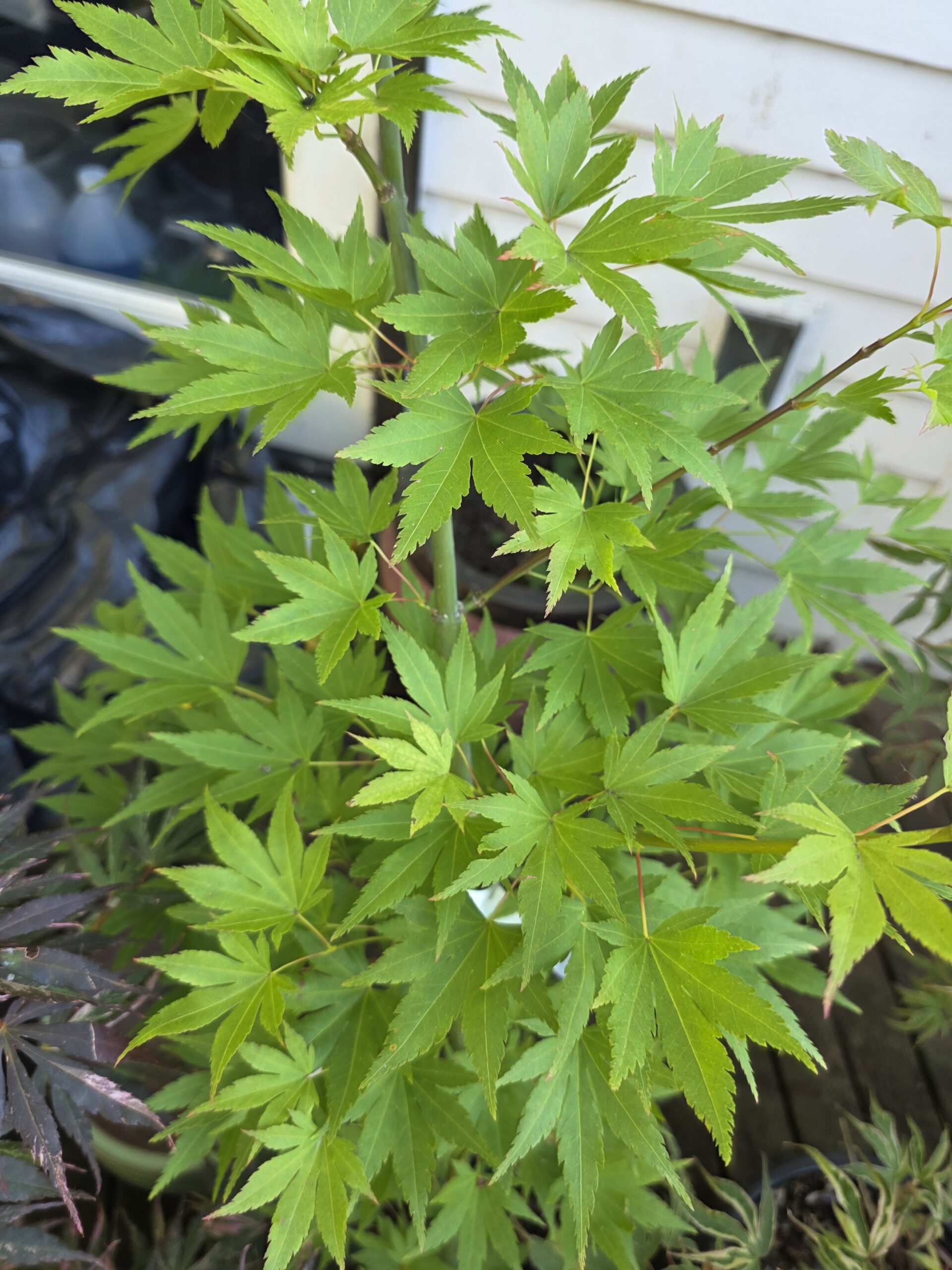
- Scientific Name: Acer japonicum 'Attaryi'
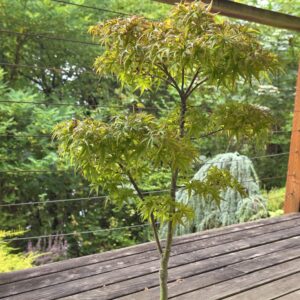
- Size: Typically reaches 8-10 feet in height and 6-8 feet in width over 10 years. It can grow slightly larger, up to about 30 feet in some conditions.
- Growth Habit: The tree has a rounded or broad, upright shape, developing a dense crown as it matures.
Foliage
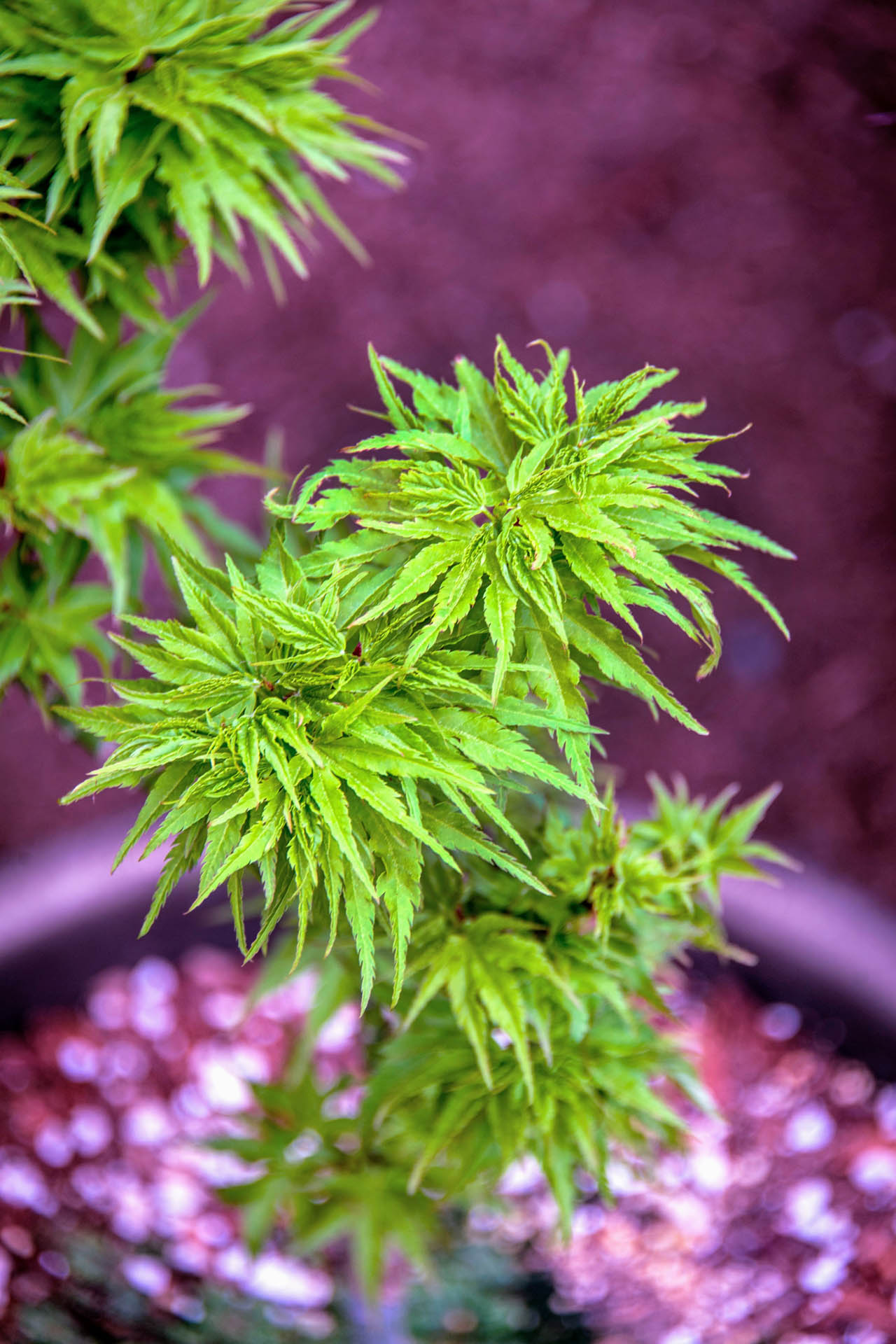
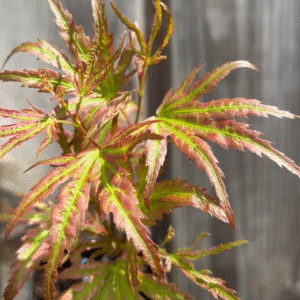
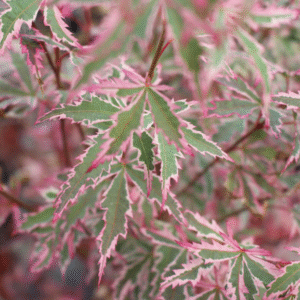
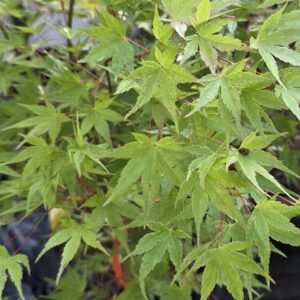
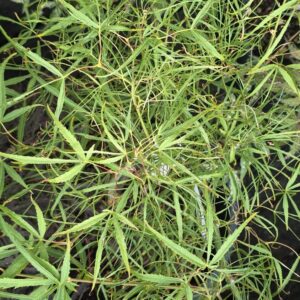
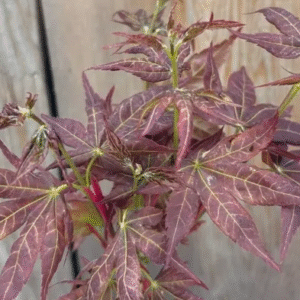
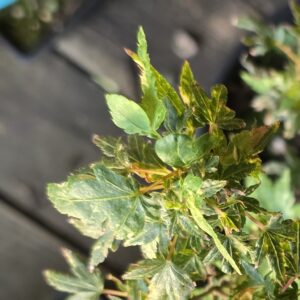
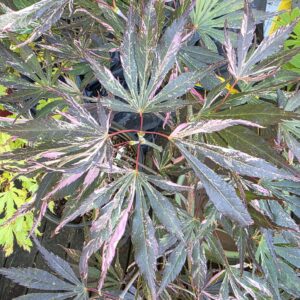
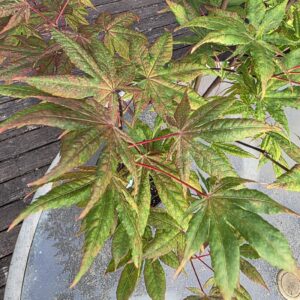
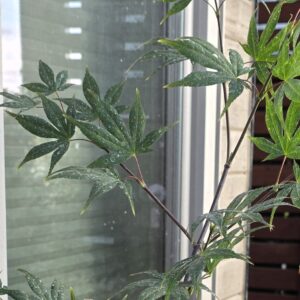
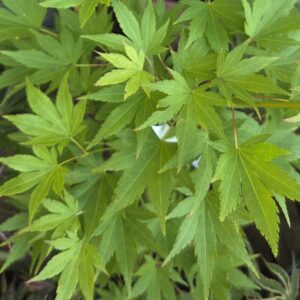
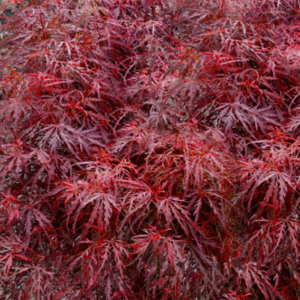
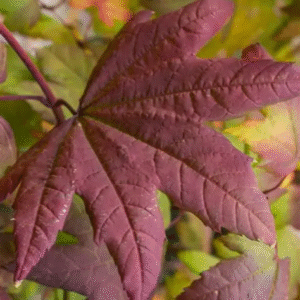
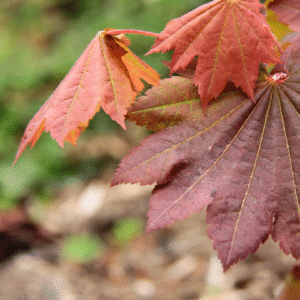
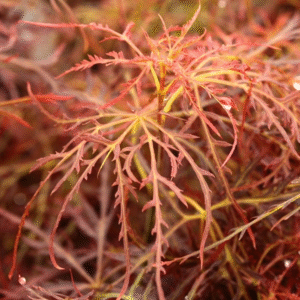
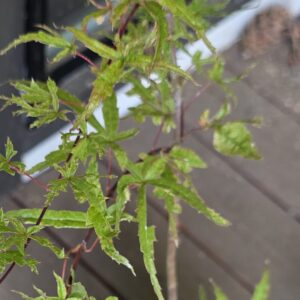
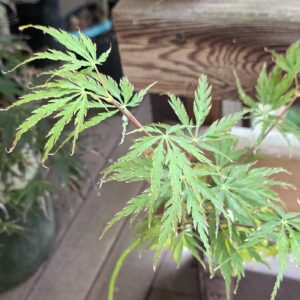
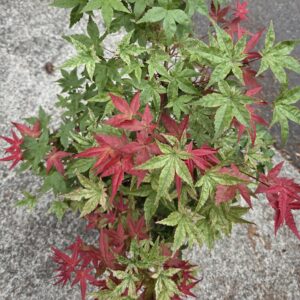
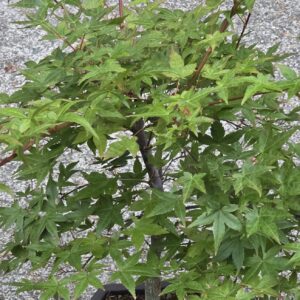
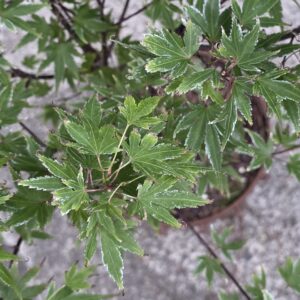
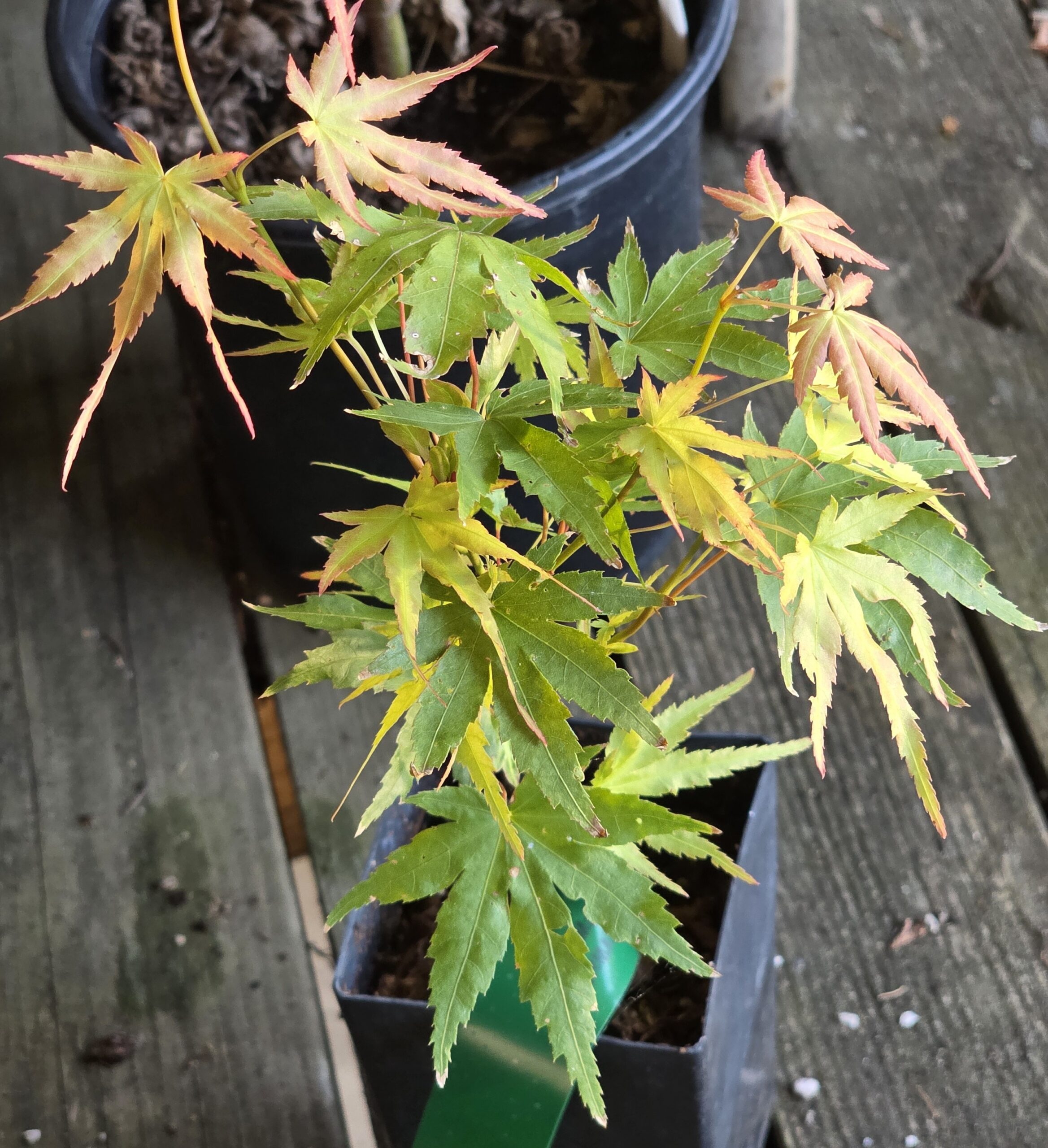
- Leaves: The leaves are large, deeply lobed with 7 to 9 lobes, giving them a unique, fern-like appearance. New growth appears as lime green tinged with pink, transitioning to dark green in summer.
- Fall Color: In autumn, the leaves turn a striking mixture of brilliant reds, oranges, and yellows, providing a stunning display that adds color to any landscape.
Growing Conditions
- Sunlight: Prefers partial shade to full sun. However, some protection from harsh afternoon sun is beneficial, especially in warmer climates.
Source
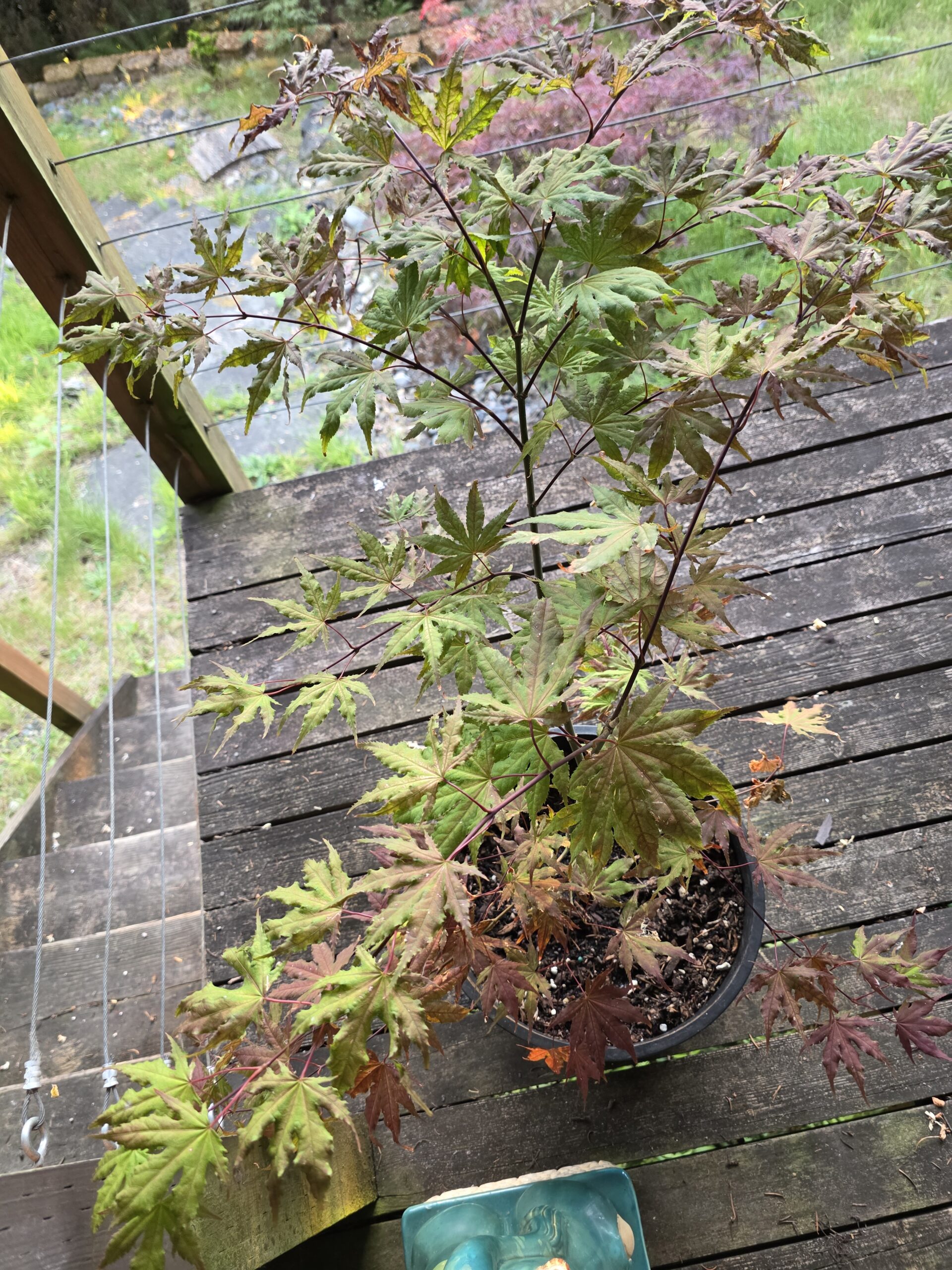
Acquired July 19, 2025, from Scott R (Kirkland) in a 3-gallon container at about 2' high.
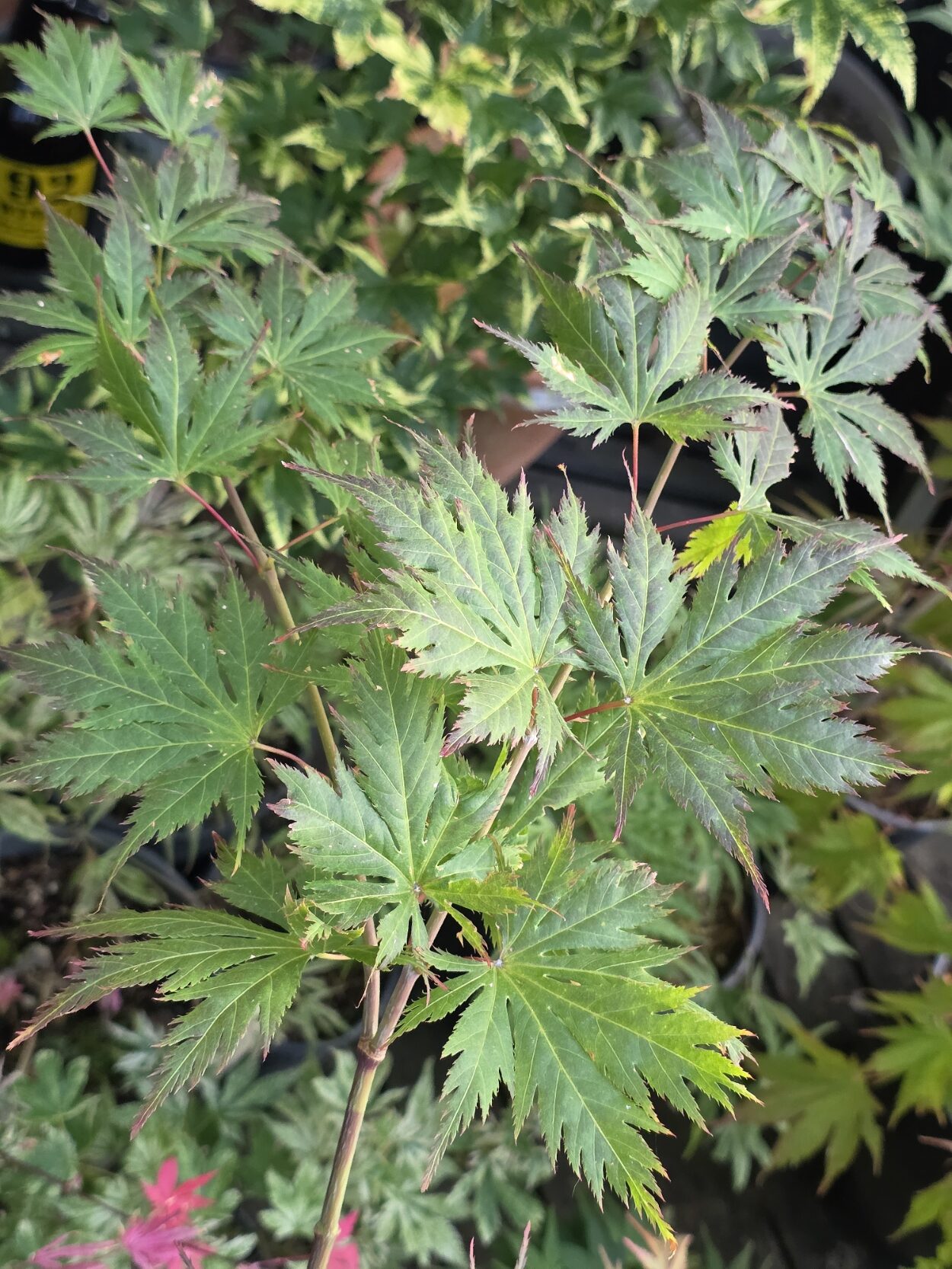
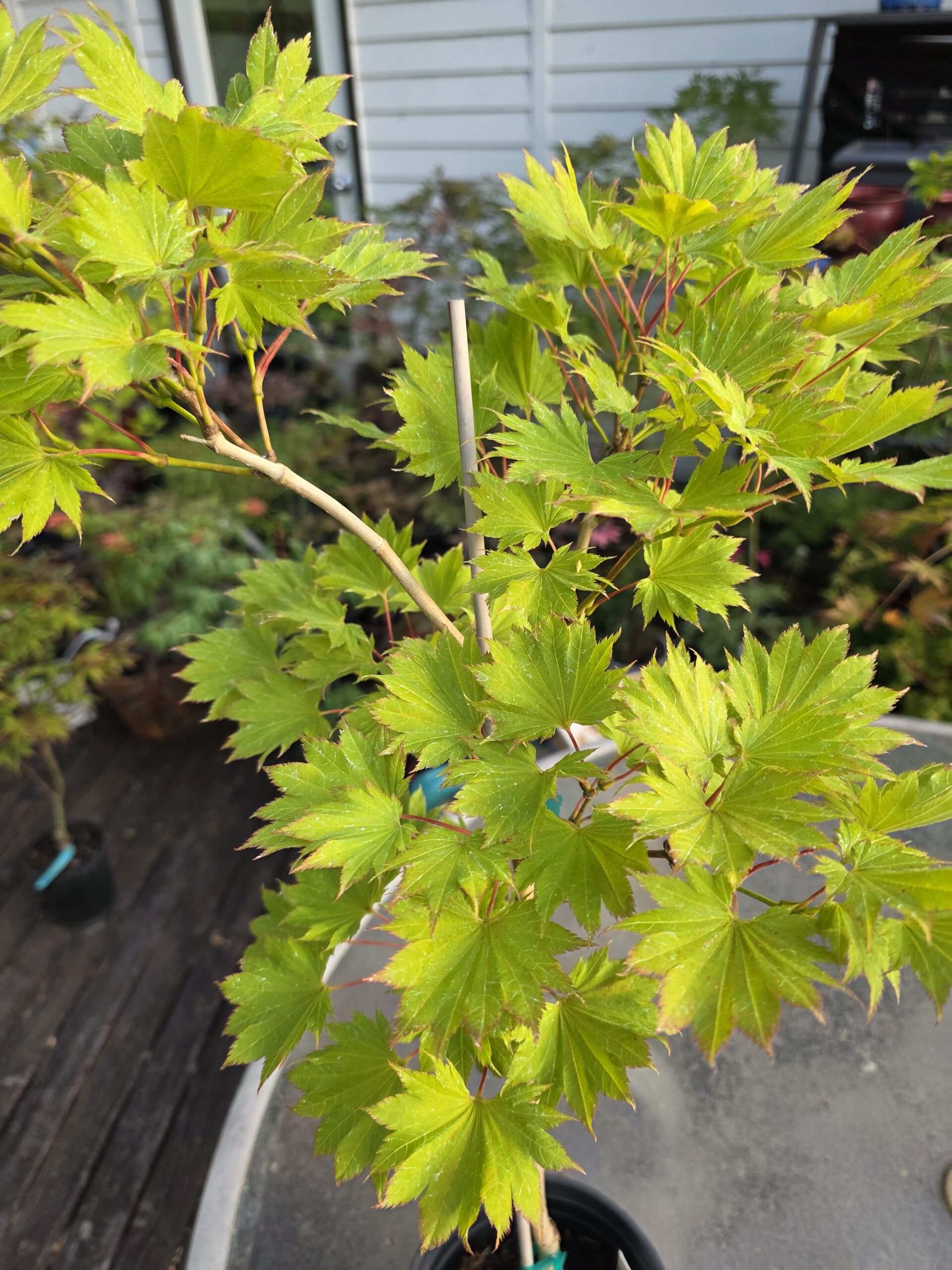
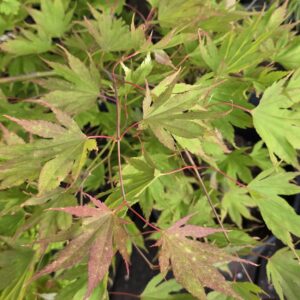
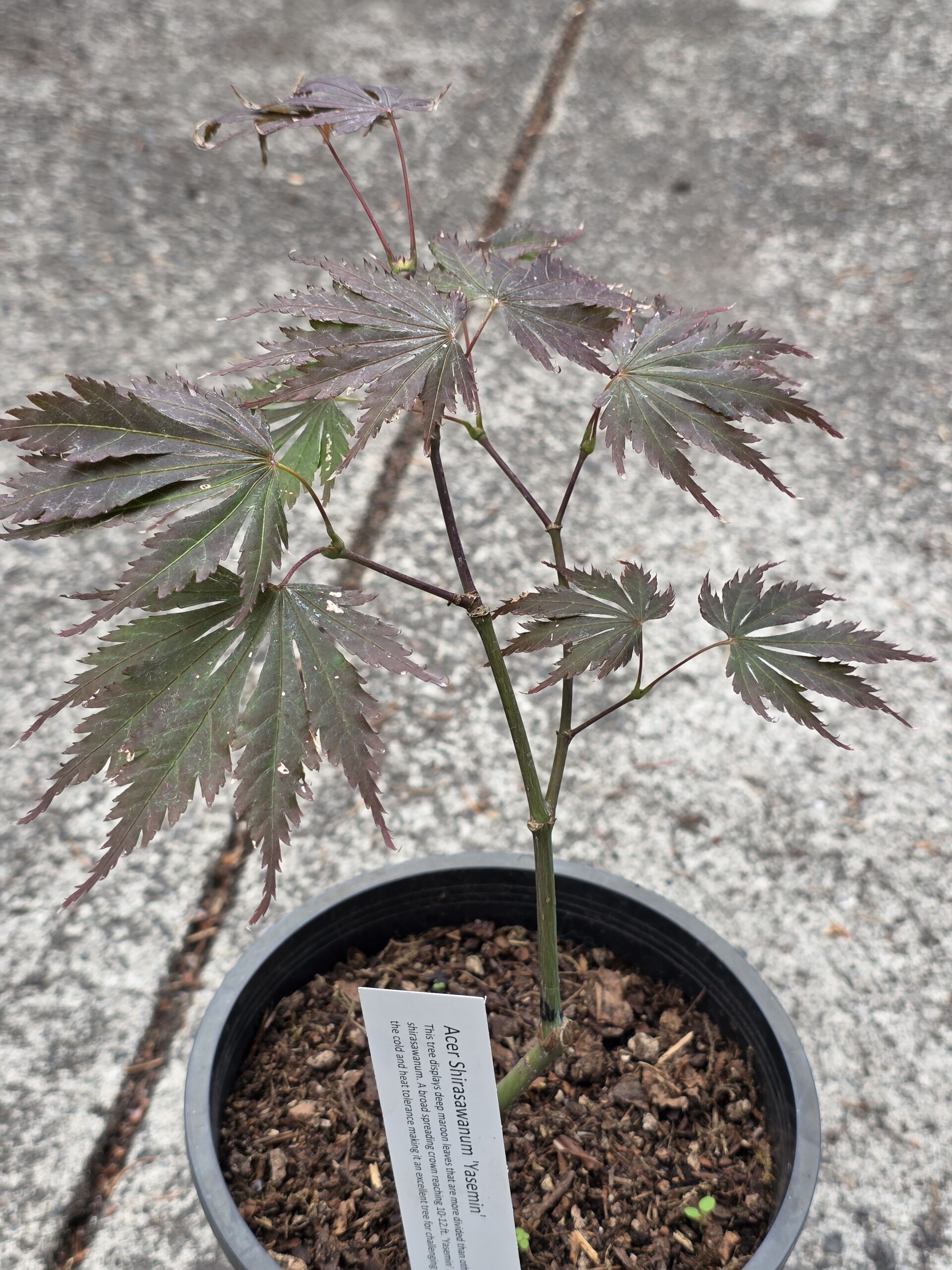
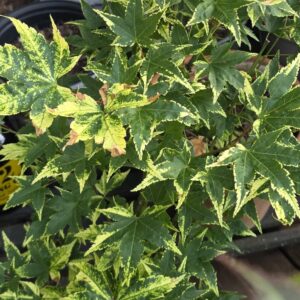
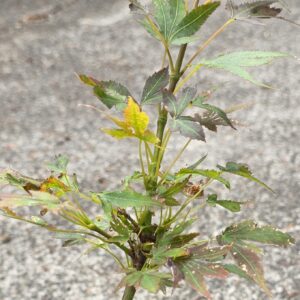
The Autumn Moon Japanese Maple is a stunning ornamental tree known for its exceptional foliage, which changes color dramatically through the seasons.
Overview
- Species: Acer shirasawanum
- Common Name: Full Moon Maple
- Growth Rate: Slow to moderate
- Mature Height: 10 to 15 feet (can reach up to 20 feet)
- Mature Width: 5 to 7 feet
- Hardiness Zones: 5 to 8
Unique Characteristics
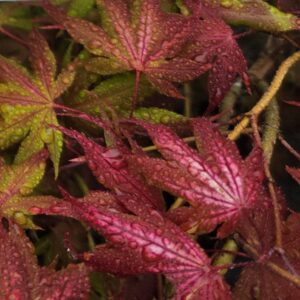
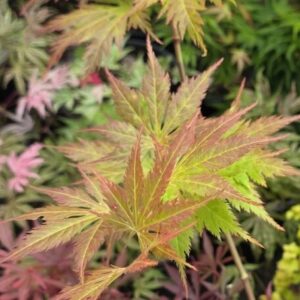
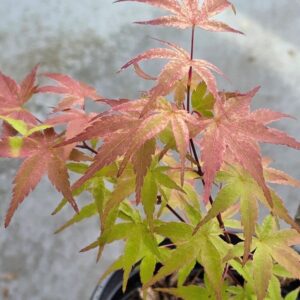
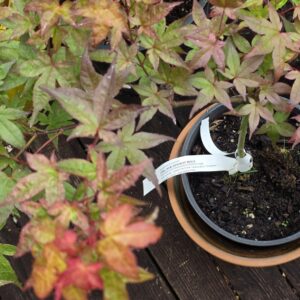
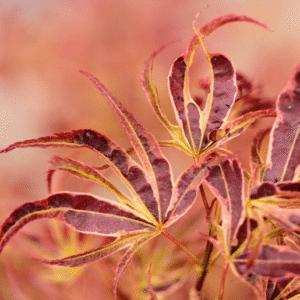
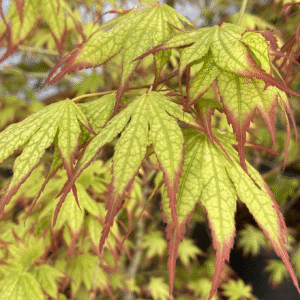
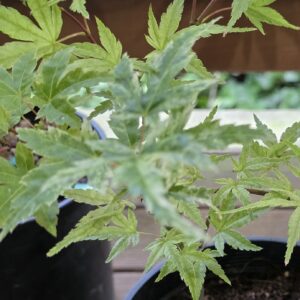
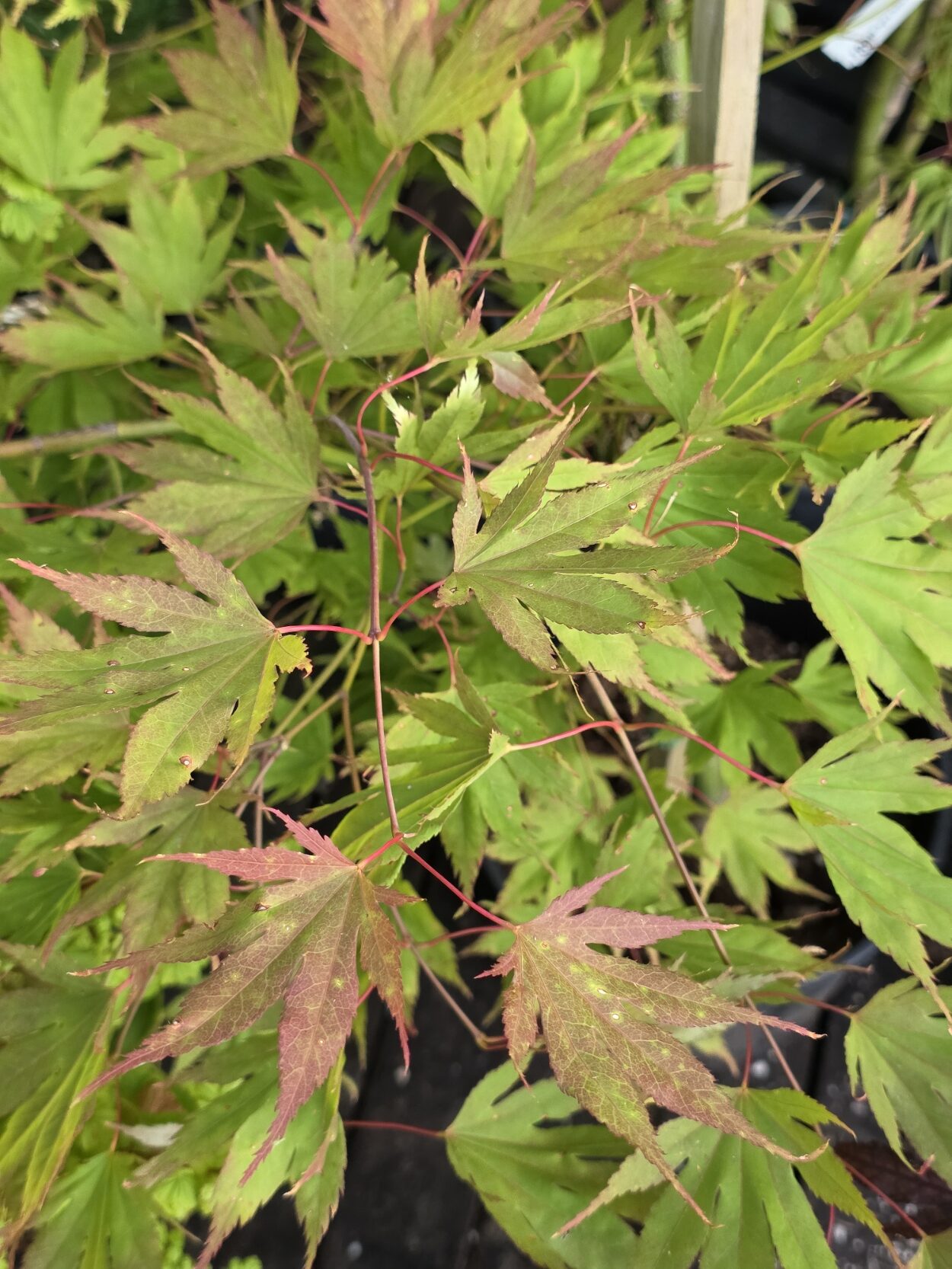
- Leaf Color: The Autumn Moon Japanese Maple is celebrated for its stunning leaf coloration. In spring, its leaves unfurl with vivid burnt orange hues, which transition to green and eventually display a palette of red, orange, and gold in the fall .
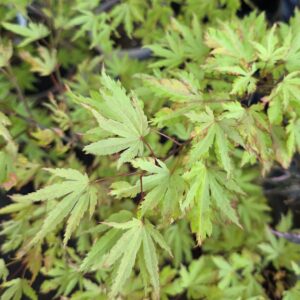
- Shape: The leaves are palmate, often resembling a fan, with a unique pleated effect .
- Structure: This tree has a graceful branching pattern that requires minimal pruning, making it a low-maintenance choice for gardeners .
Growing Conditions
- Sun Exposure: The Autumn Moon thrives in full sun to partial shade. For optimal leaf color, it should receive several hours of morning sun while being protected from the harsh afternoon sun .
Source
Acquired from Scott (Kirkland) in a 3-gallon container at about 30" in height for $59.
Characteristics
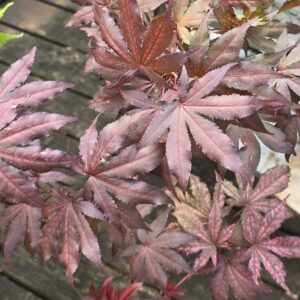
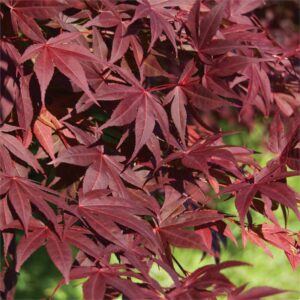
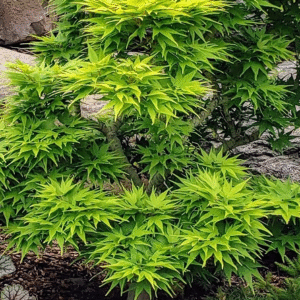
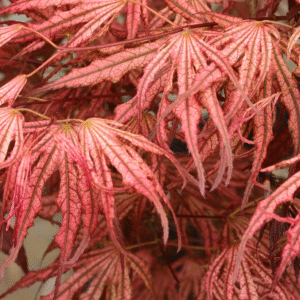
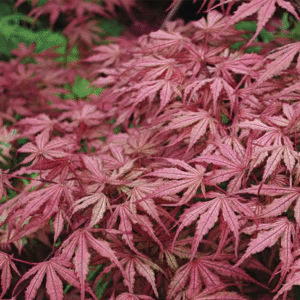
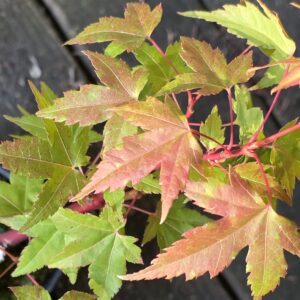
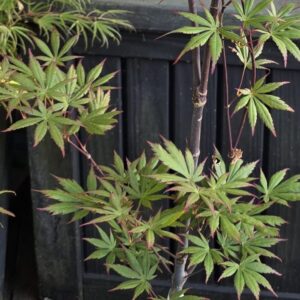
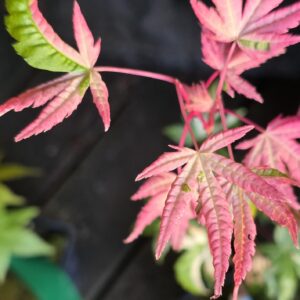
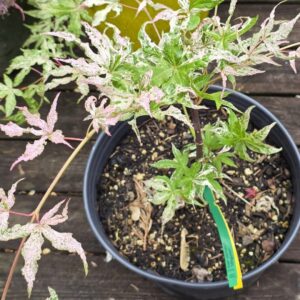
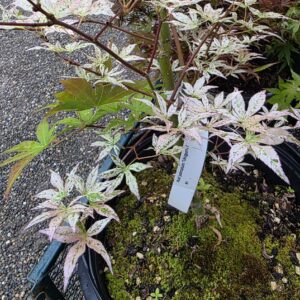
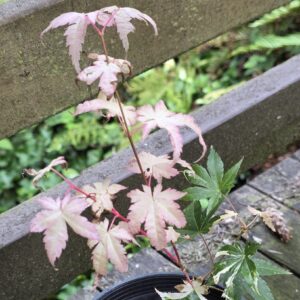
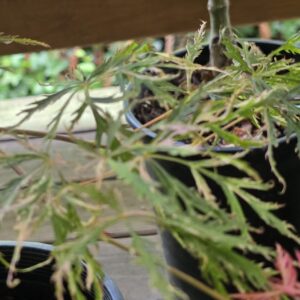
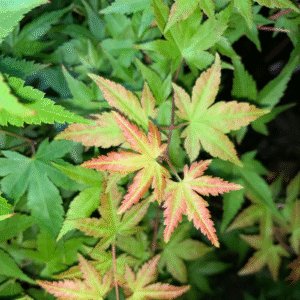
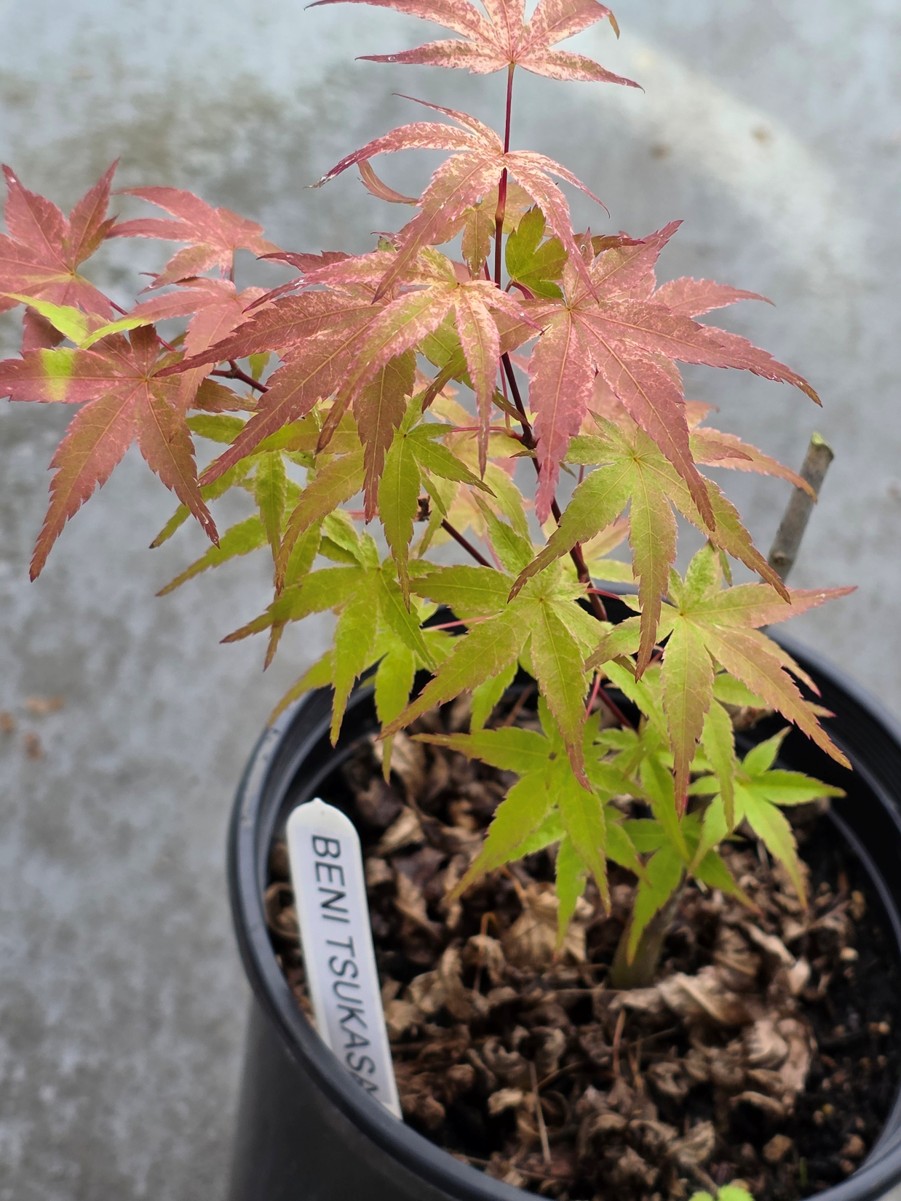
- Foliage: The leaves of Beni Tsukasa emerge in spring with shades of peach/apricot, yellow, pink and red, with shaded portions of the plant mottled blush-pink and cream. Summer colors transition through mottled-pink/soft-green in summer and finally displaying brilliant reds and oranges in fall. The unique leaf shape resembles delicate, outstretched fingers, enhancing its ornamental appeal.
- Growth Habit: This cultivar typically grows in an upright, rounded form and can reach heights of 10 to 12 feet tall and wide over time. It has a slow growth rate, averaging about 5 to 7 feet in height over the first 10 years.
Care Requirements
- Sunlight: Beni Tsukasa prefers full sun to partial shade. While it can tolerate full sun, providing some afternoon shade can help prevent leaf scorch in hotter climates.
Source
Acquired from Dan (Celestial Maples, Gig Harbor) as a new issue specimen in a 1-gallon container for $80.
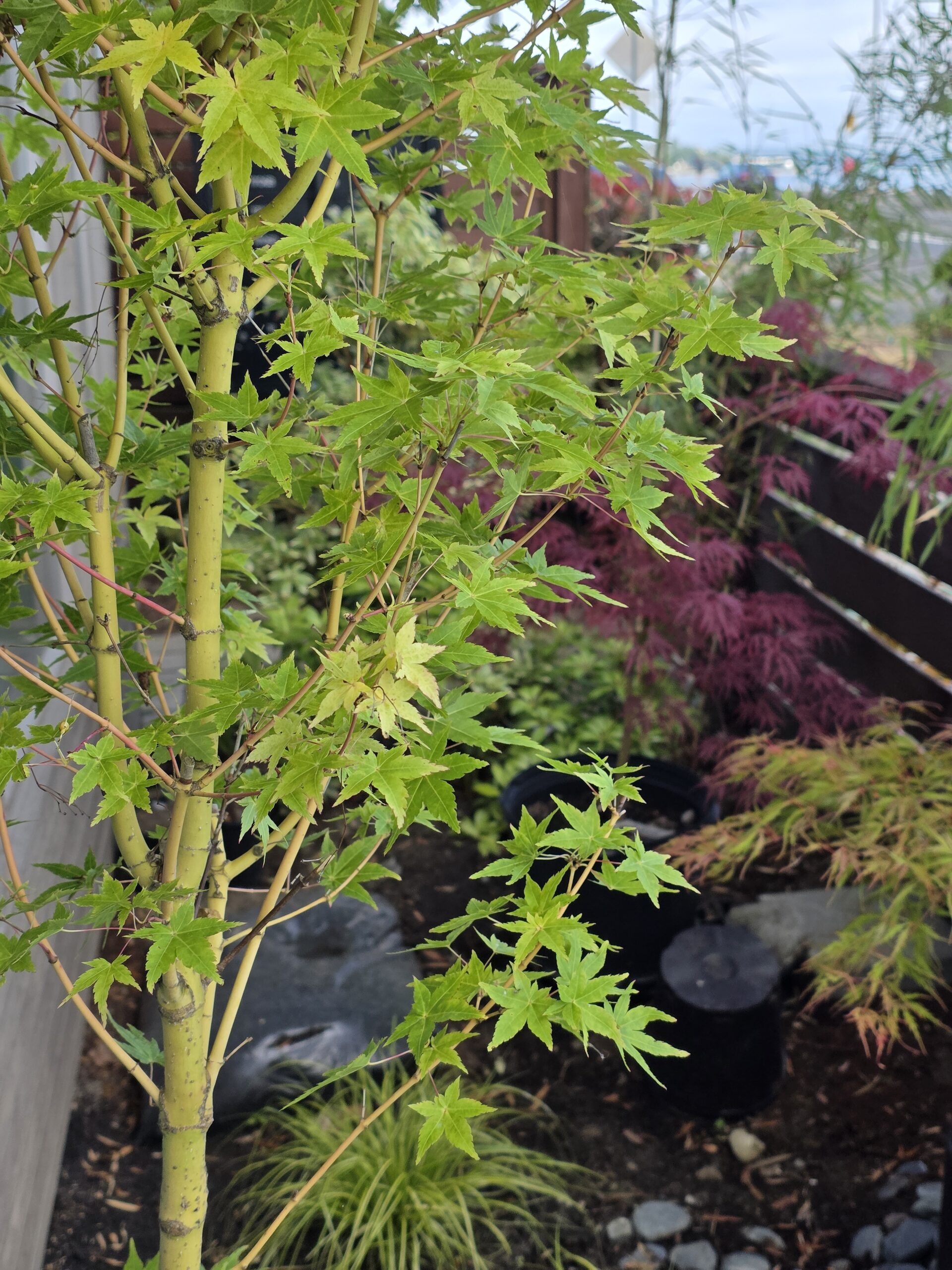
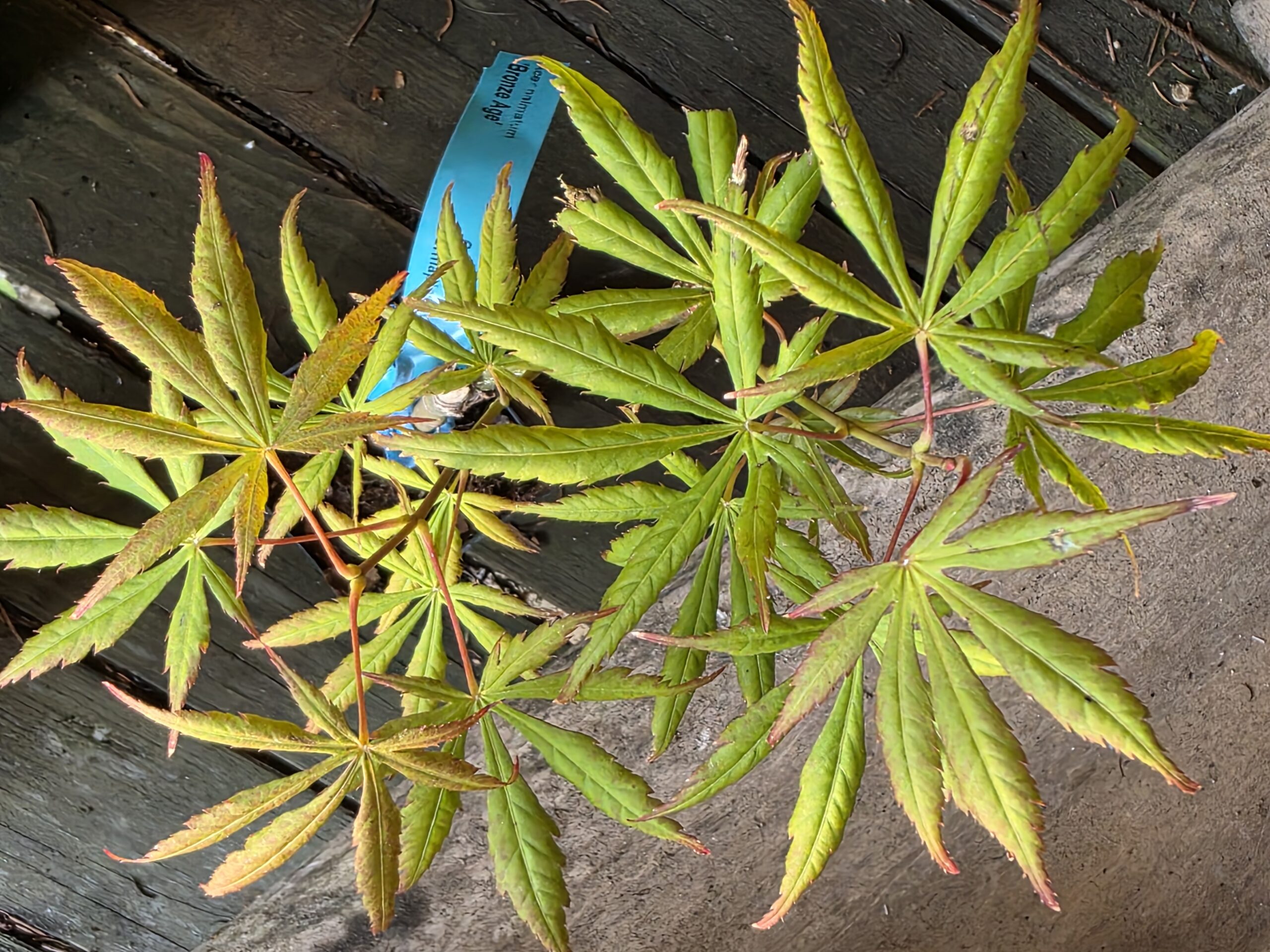
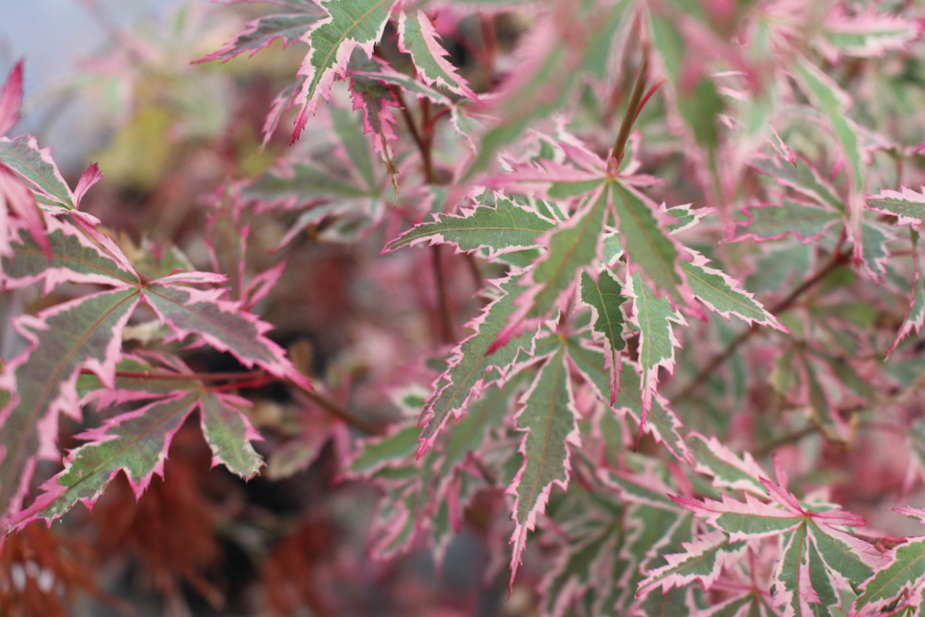
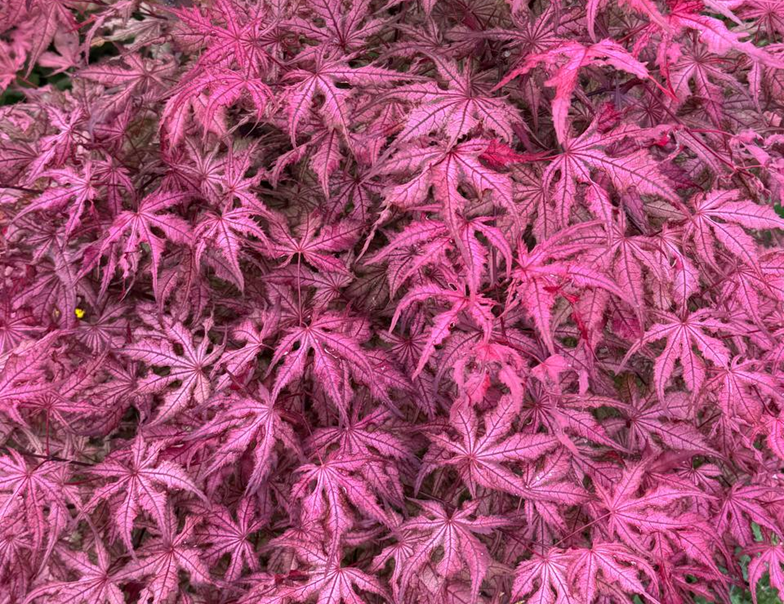
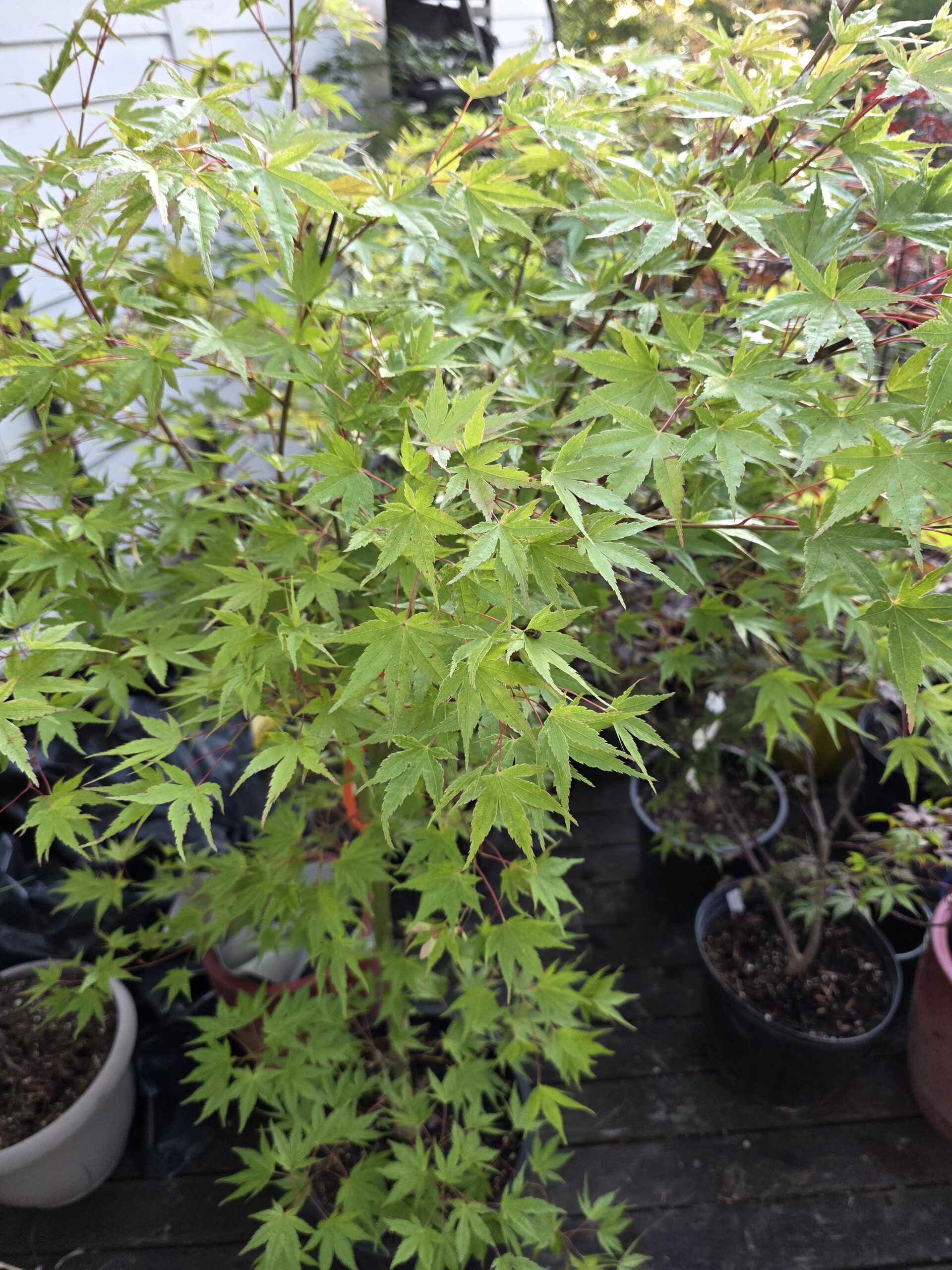
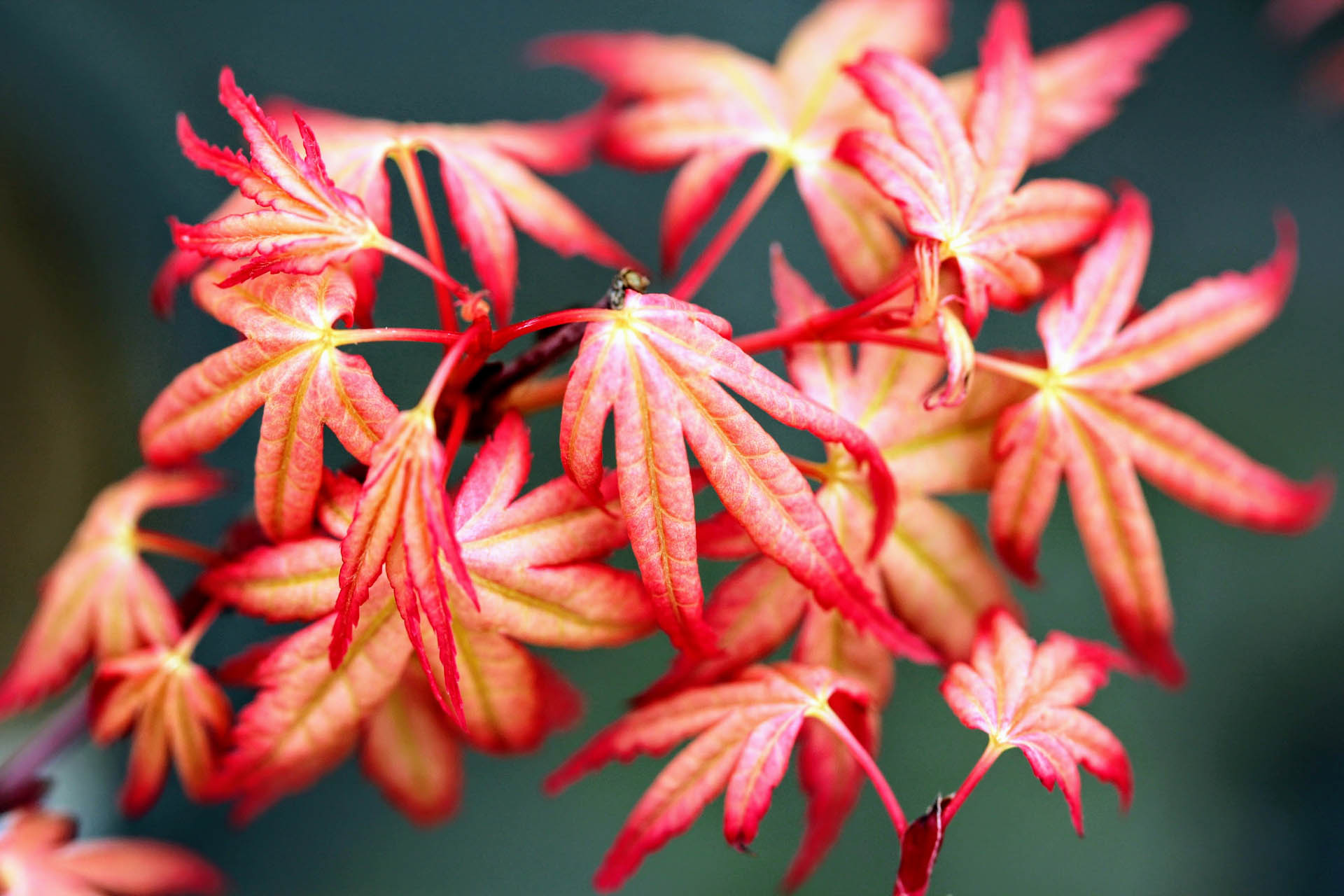
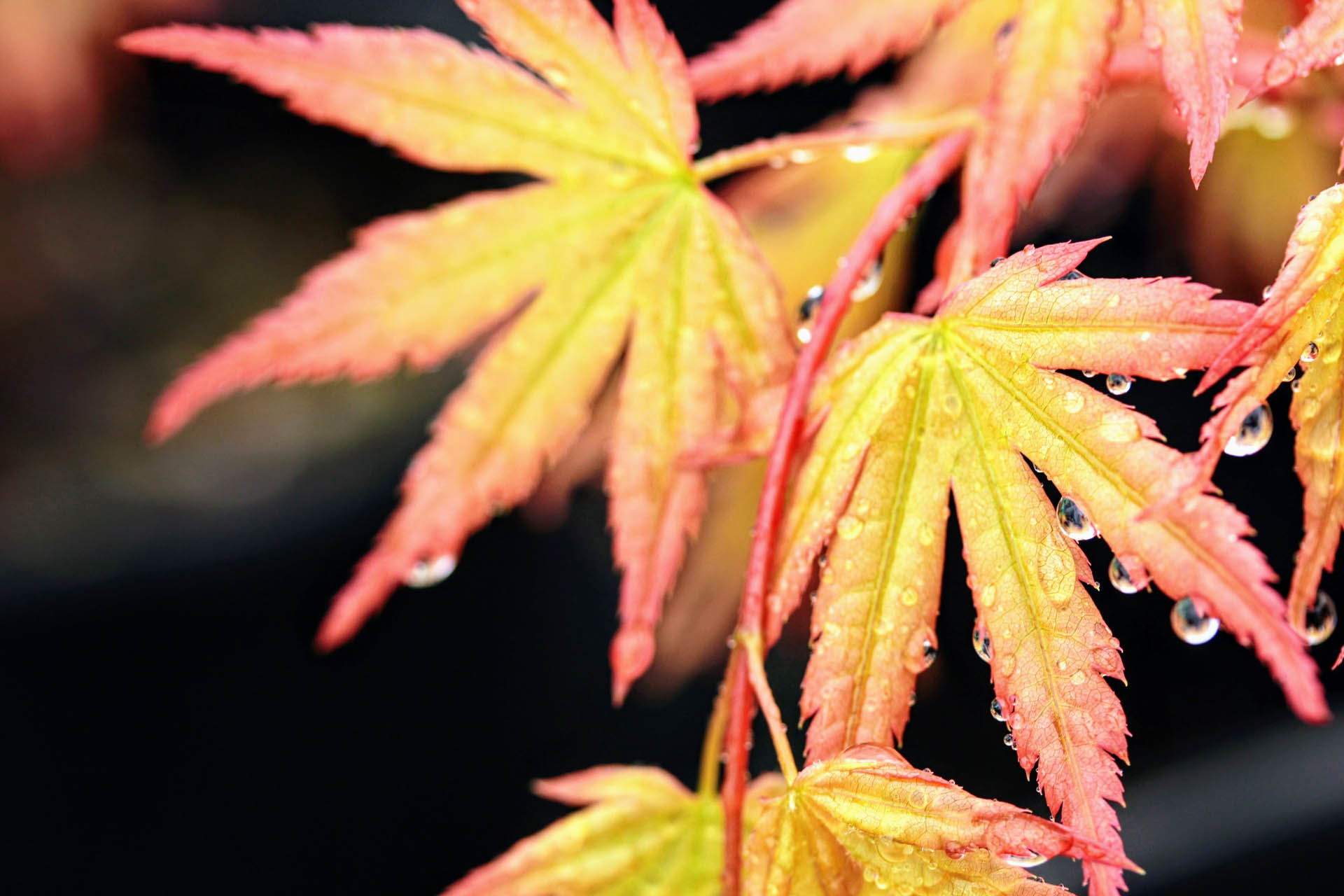
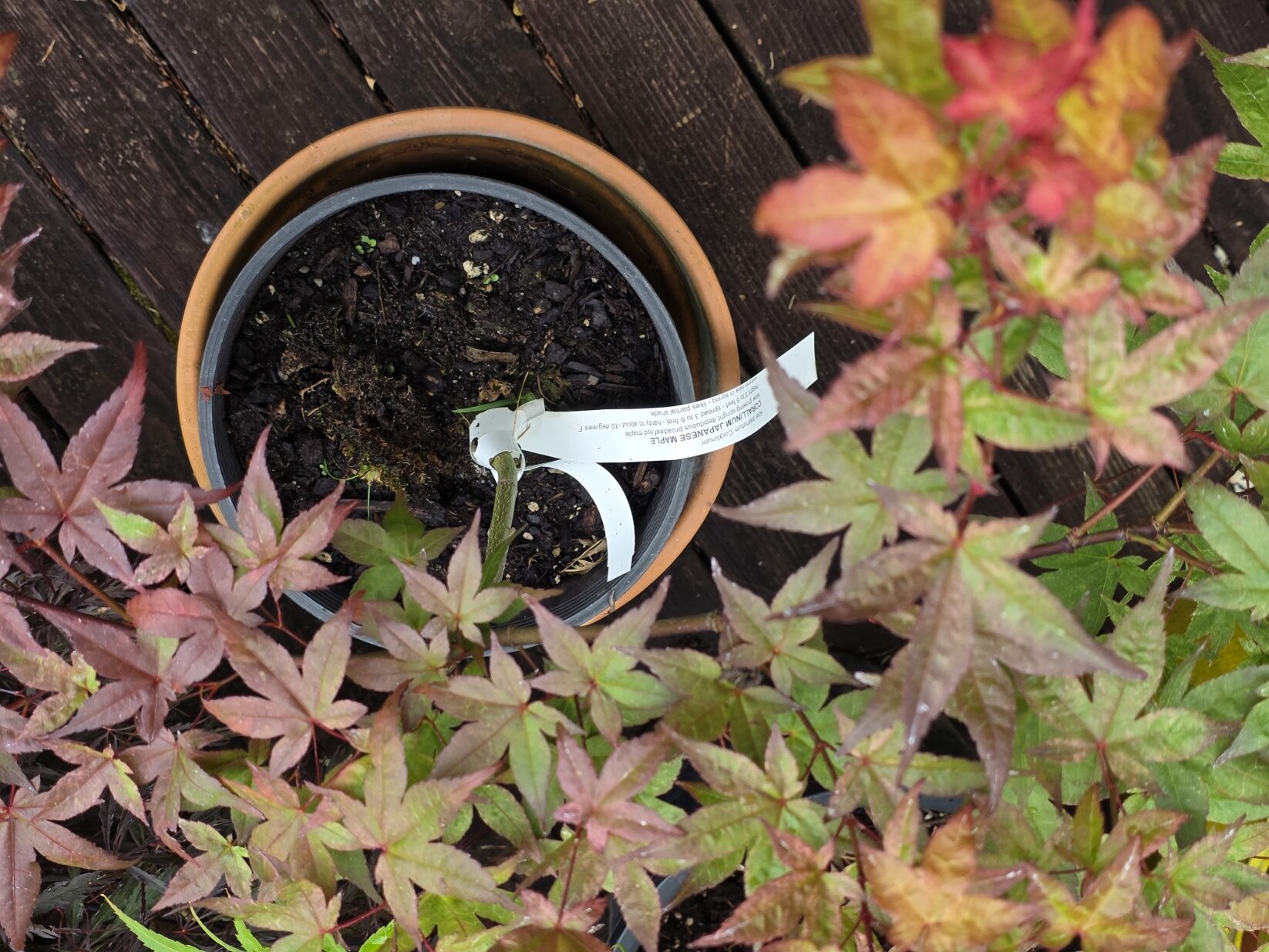
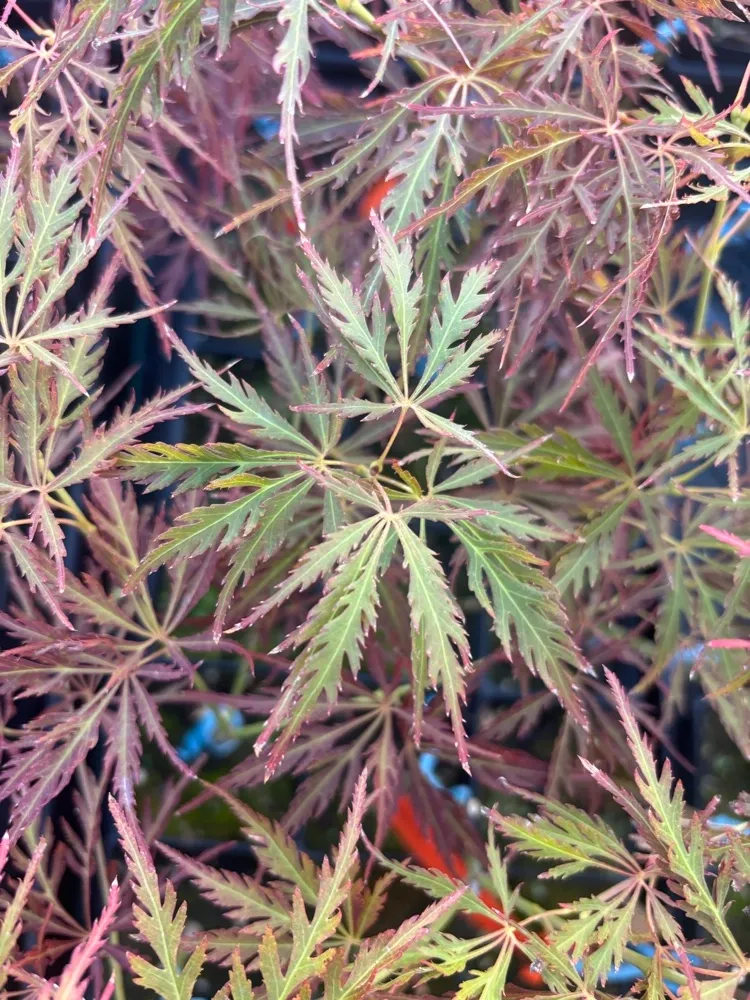
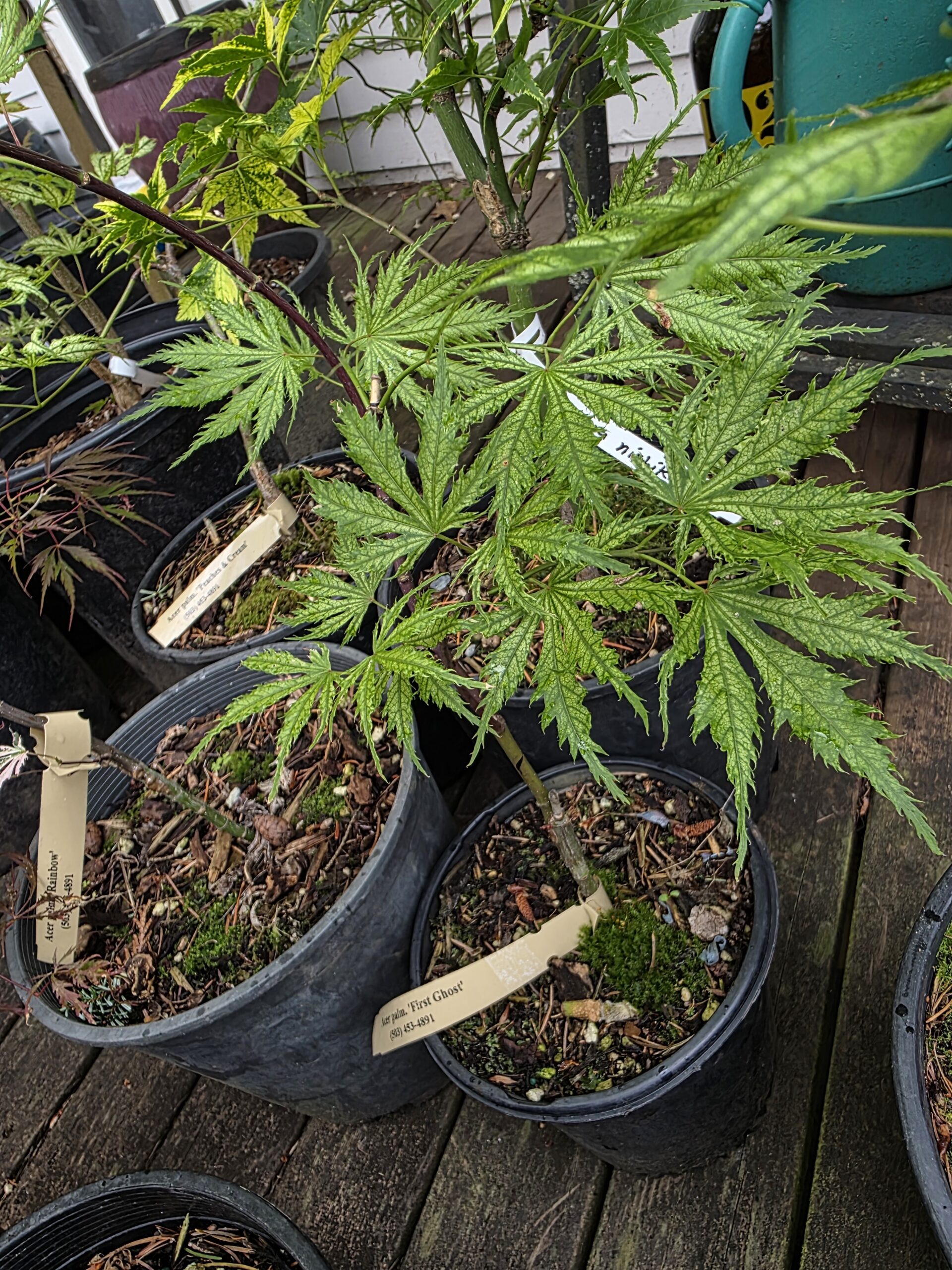
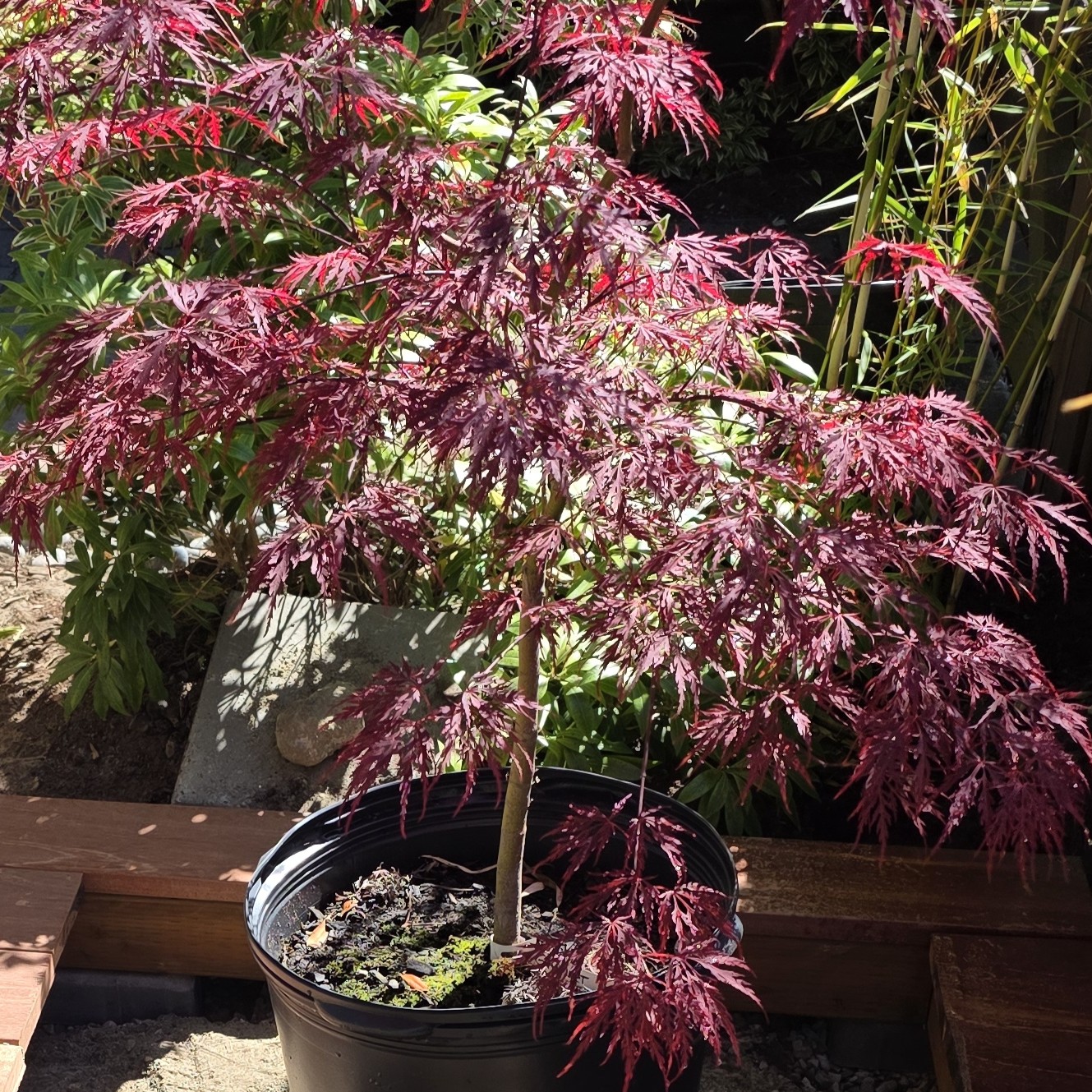
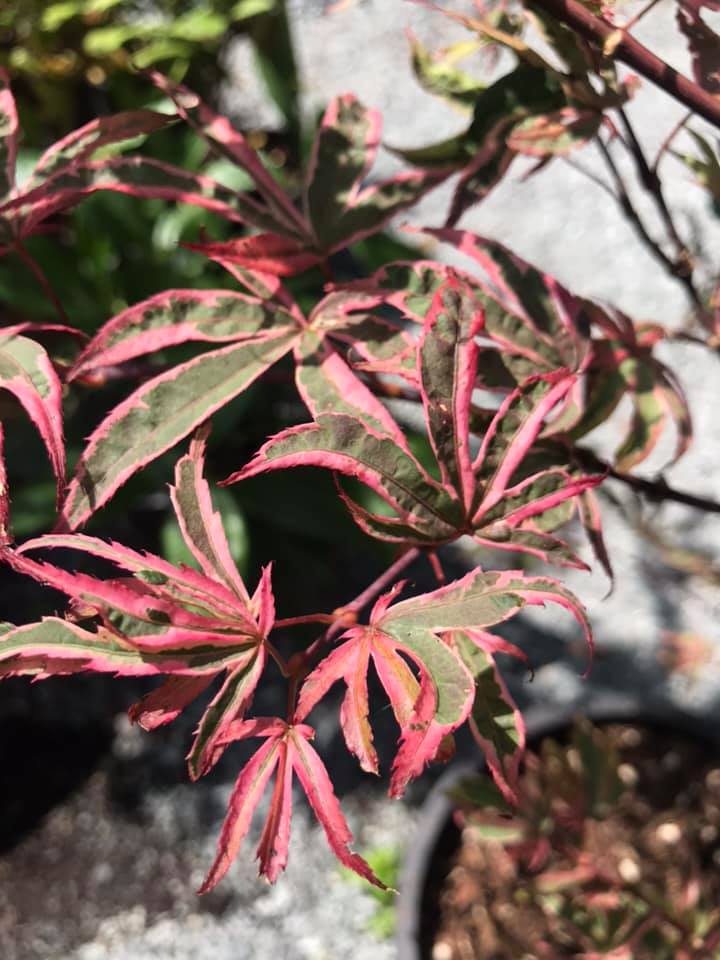
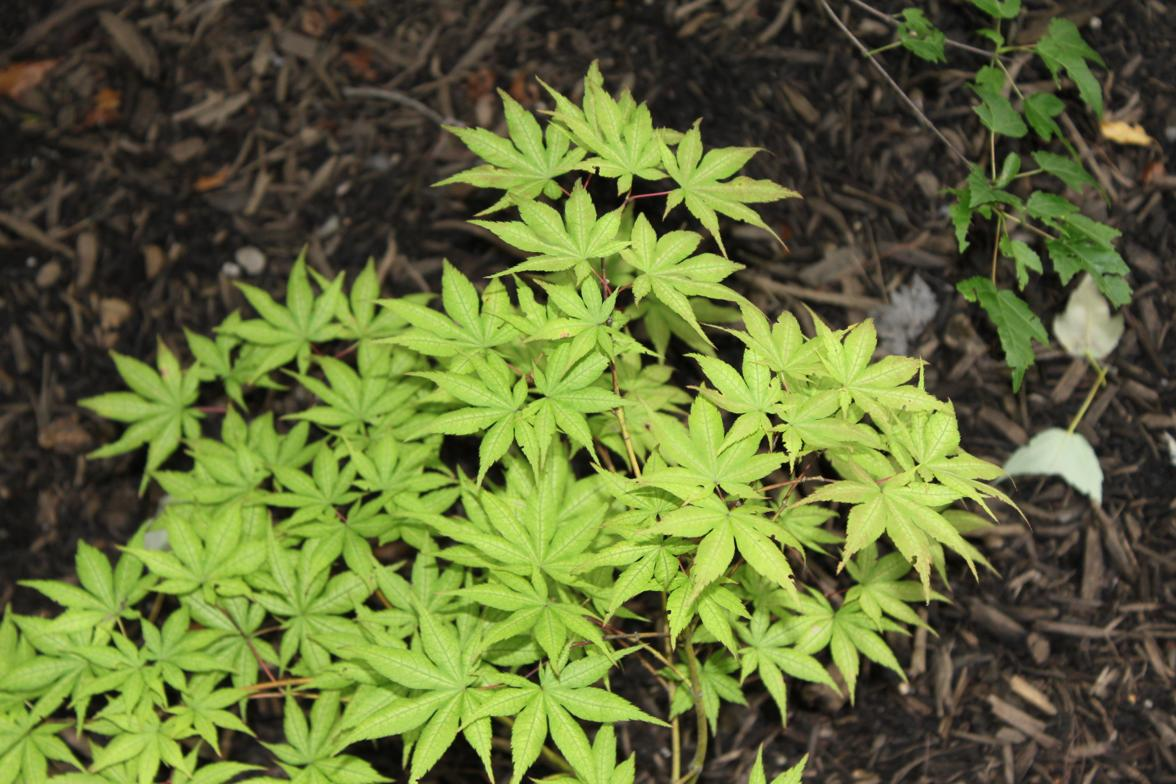
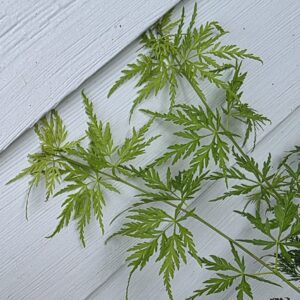
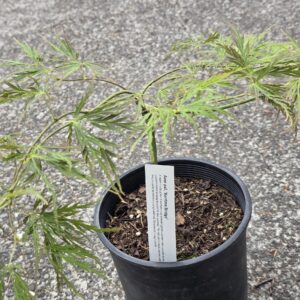
The Golden Falls Maple is a striking weeping variety of Japanese maple known for its golden yellow foliage and graceful cascading branches.
Characteristics
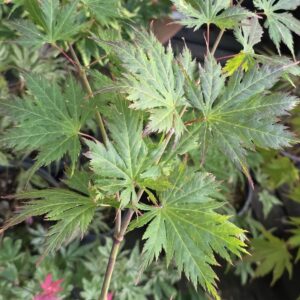
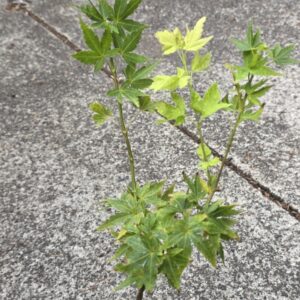
- Scientific Name: Acer palmatum 'Golden Falls'
- Growth Habit: This maple is a weeping dwarf variety, featuring highly pendulous branches that create a dramatic waterfall effect. It can be staked to control height or allowed to grow as a ground cover, spreading outwards.
Foliage
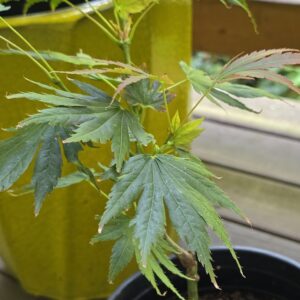
- Spring Color: In spring, the leaves emerge as bright golden yellow with orange margins, adding vibrant color to any garden .
- Summer Color: During summer, foliage transitions to a soft chartreuse .
- Fall Color: In autumn, the leaves change to stunning shades of orange and red, providing seasonal interest.
Growing Conditions
- Sun Preference: The Golden Falls Maple prefers partial sun, ideally receiving morning sunlight with some shade from the intense afternoon heat .
Source
Dan M (Gig Harbor) in a 2-gallon container as a 3' long draping form.
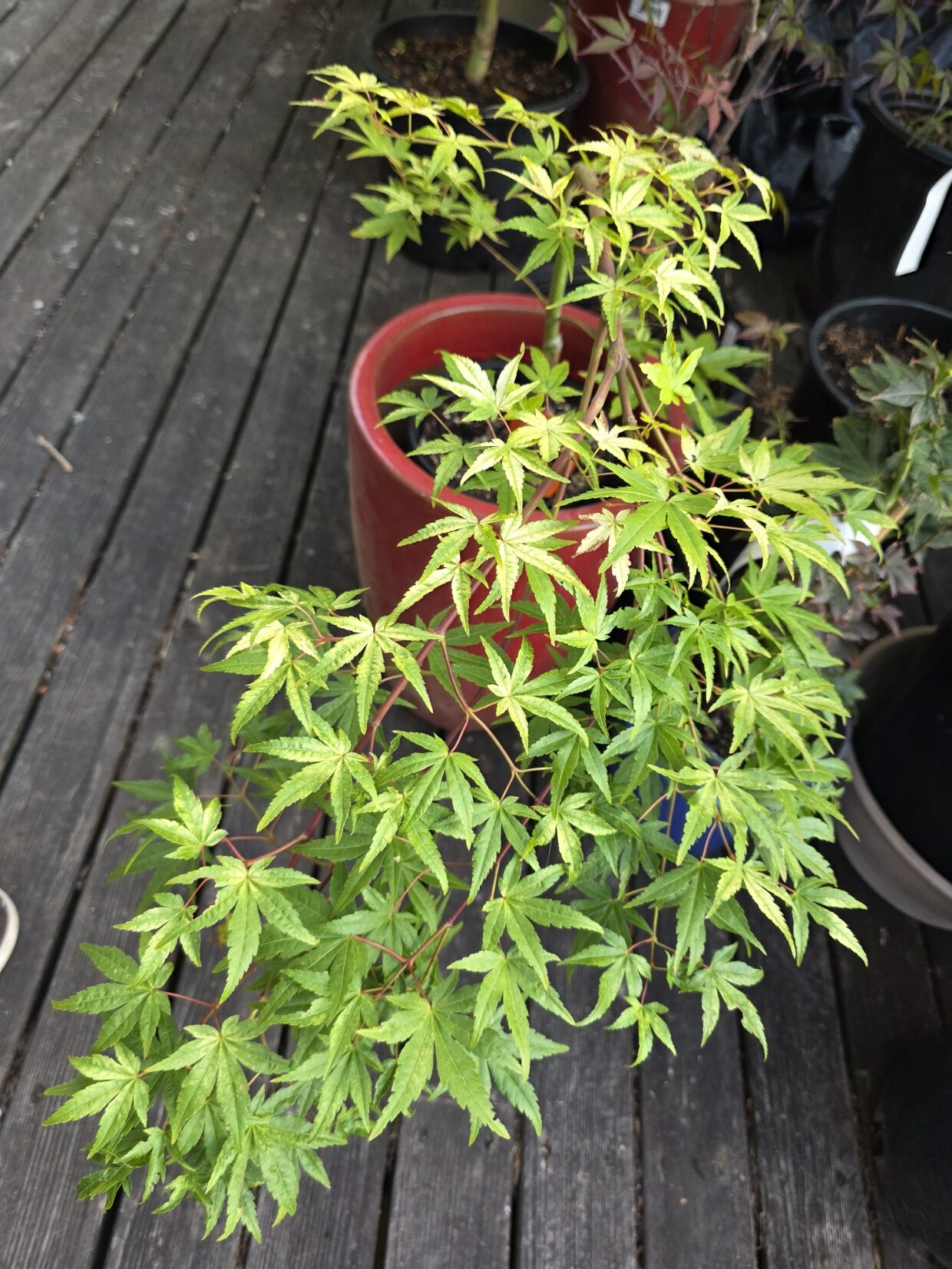
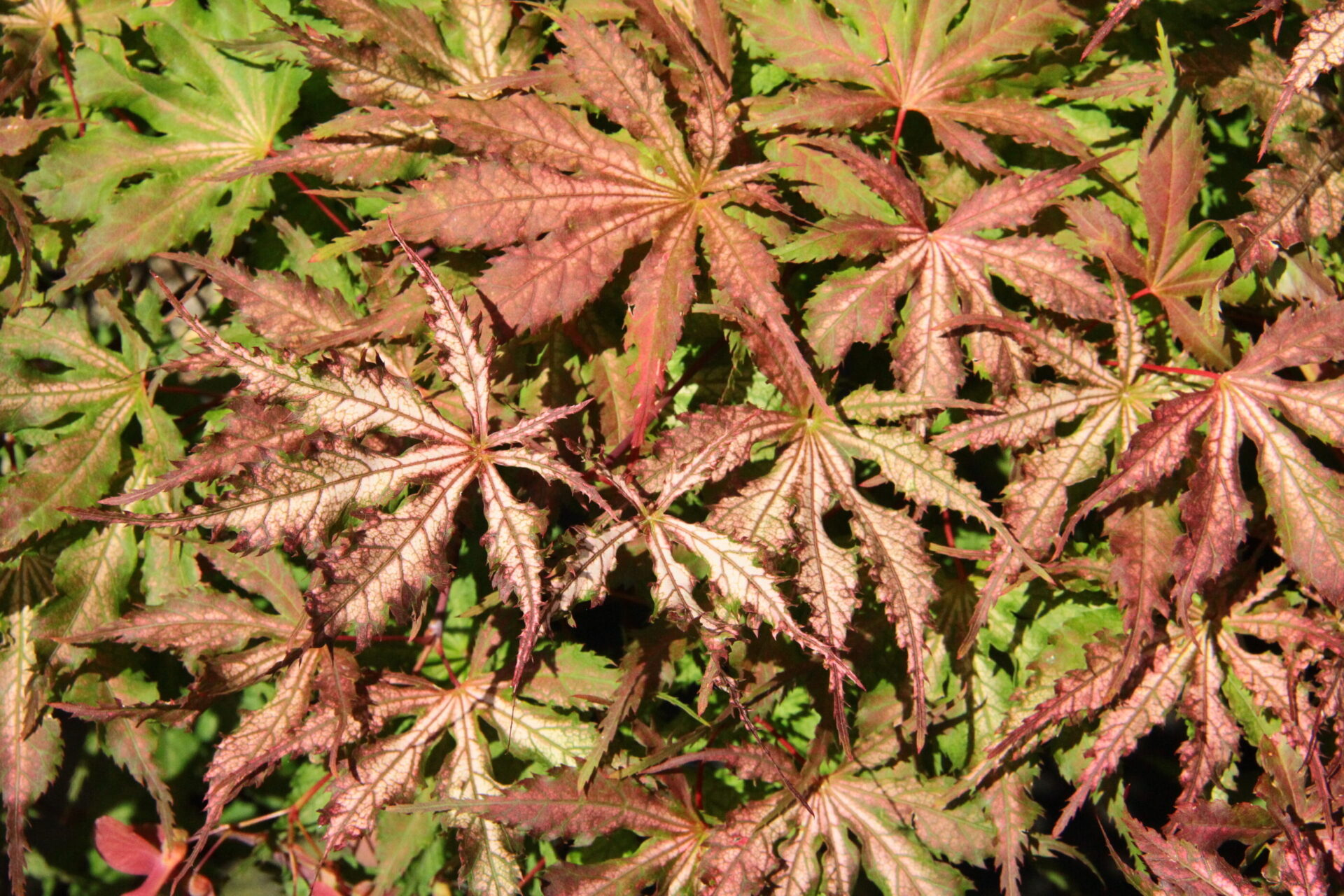
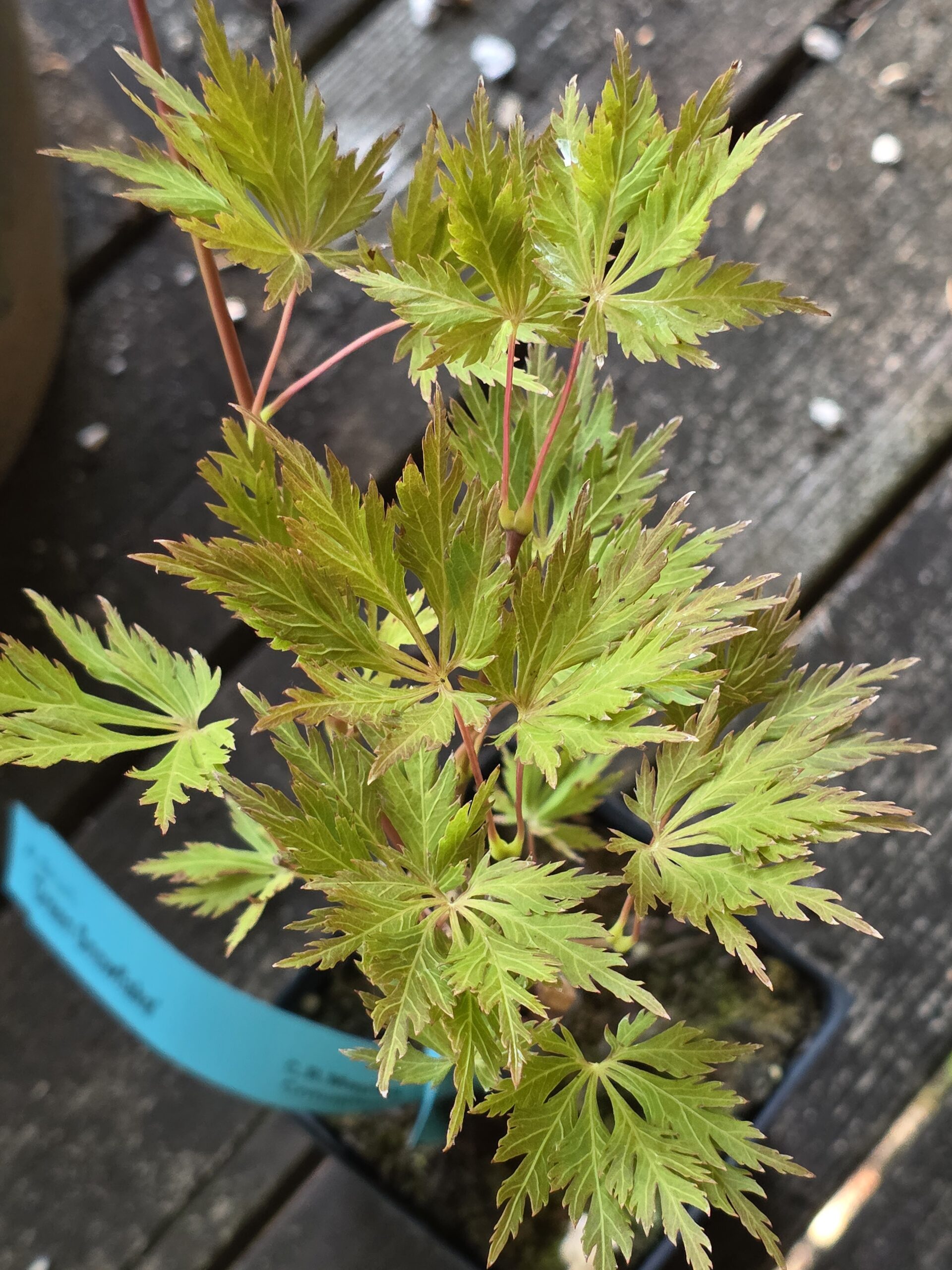
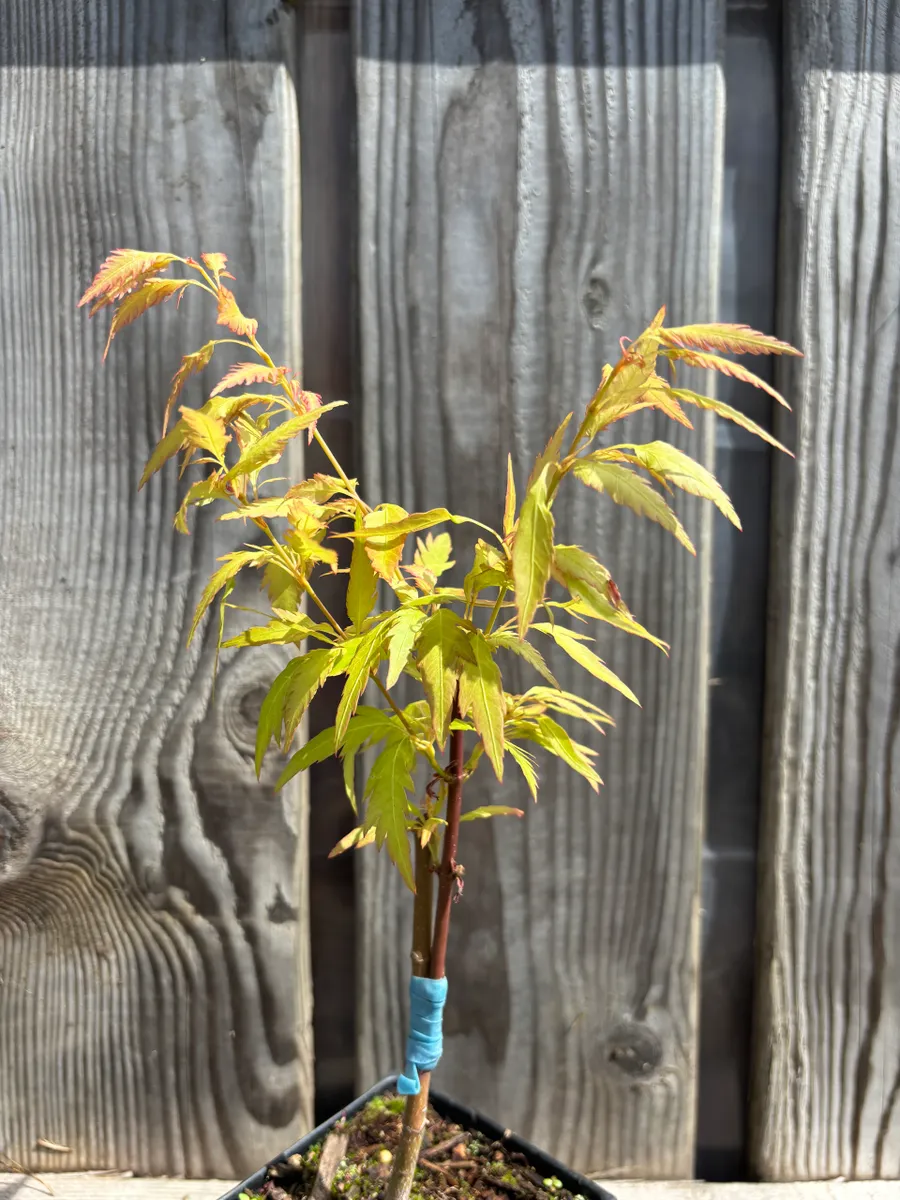
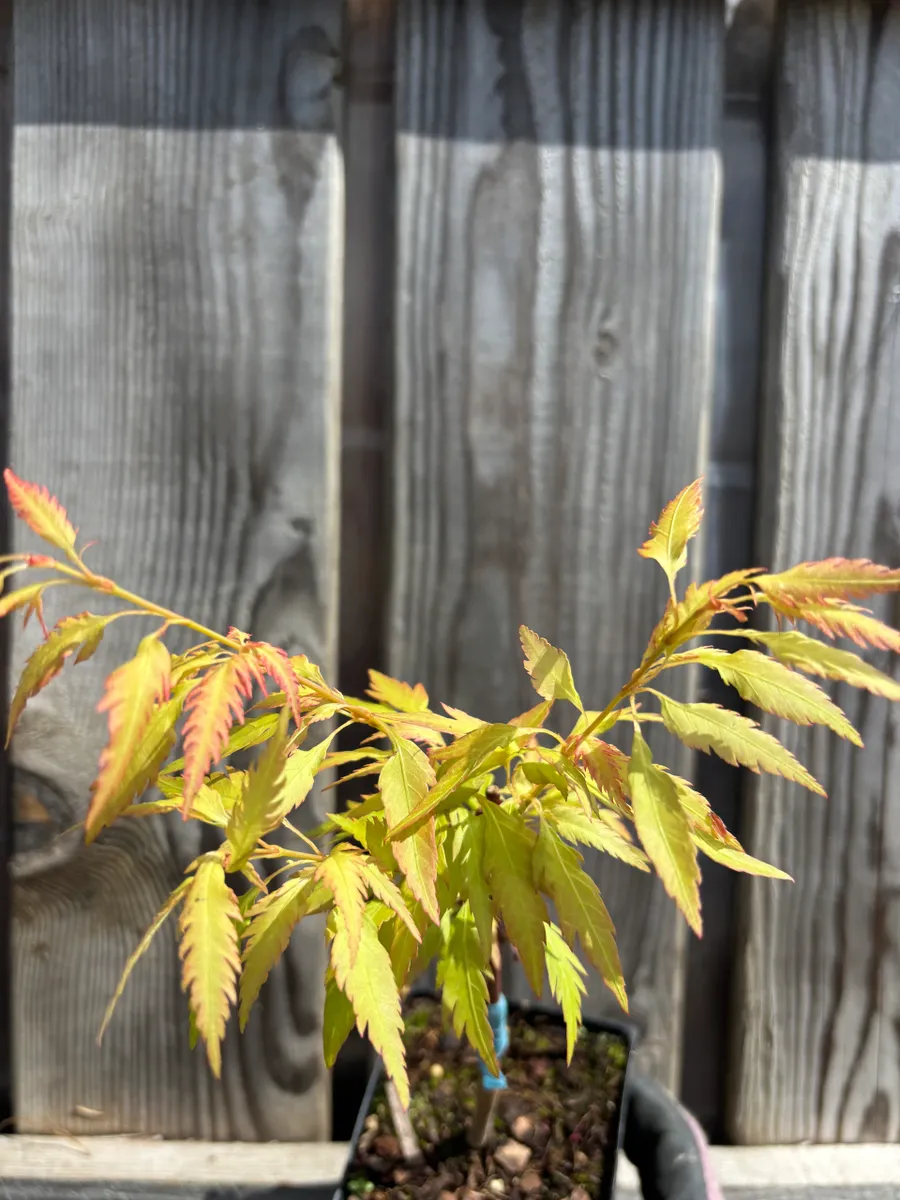
The 'Hubb's Red Willow', is a striking deciduous tree characterized by its slender, bamboo-like leaves that change color throughout the seasons, making it a stunning addition to any landscape.
Key Characteristics
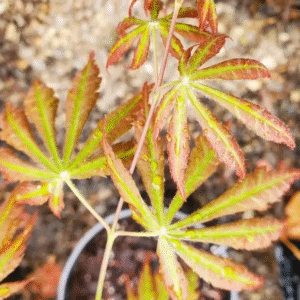
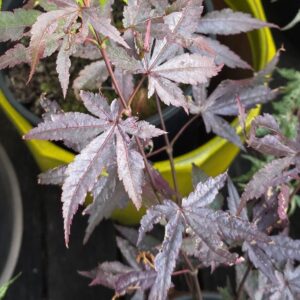
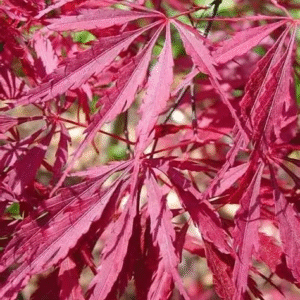
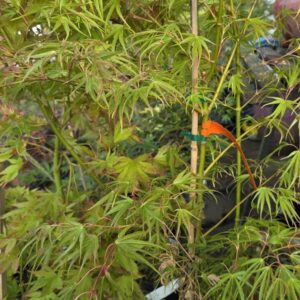
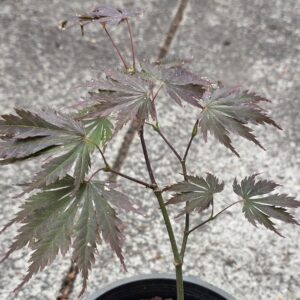
- Foliage: The leaves emerge bright red in spring, resembling long, narrow lobes that give a delicate appeal. As summer progresses, the color deepens to maroon, transitioning to fiery shades of red and orange in the fall .
- Size and Growth: This maple typically grows to about 10-12 feet tall and 8 feet wide in approximately 10-12 years, making it suitable for smaller gardens or as a focal point in landscaping .
- Growth Habit: It has an upright growth form, with a graceful, slender structure that can easily fit into various garden styles, especially Asian-inspired designs.
Care Requirements
- Sunlight: Prefers full sun to partial shade, thriving best in dappled sunlight, which mimics its natural understory habitat.
Seasonal Interest
- Spring: Bright red foliage adds vibrant color to gardens, creating a captivating visual in early spring.
- Summer: The leaves transition to a deeper maroon, providing a more subdued yet rich color palette that complements other plants.
- Fall: The tree showcases a spectacular display of crimson and orange hues, enhancing the autumn landscape with fiery colors .
Source
Acquired from Nerie (Burien) July 10, 2025, in a 1-gallon container at about 18" high.
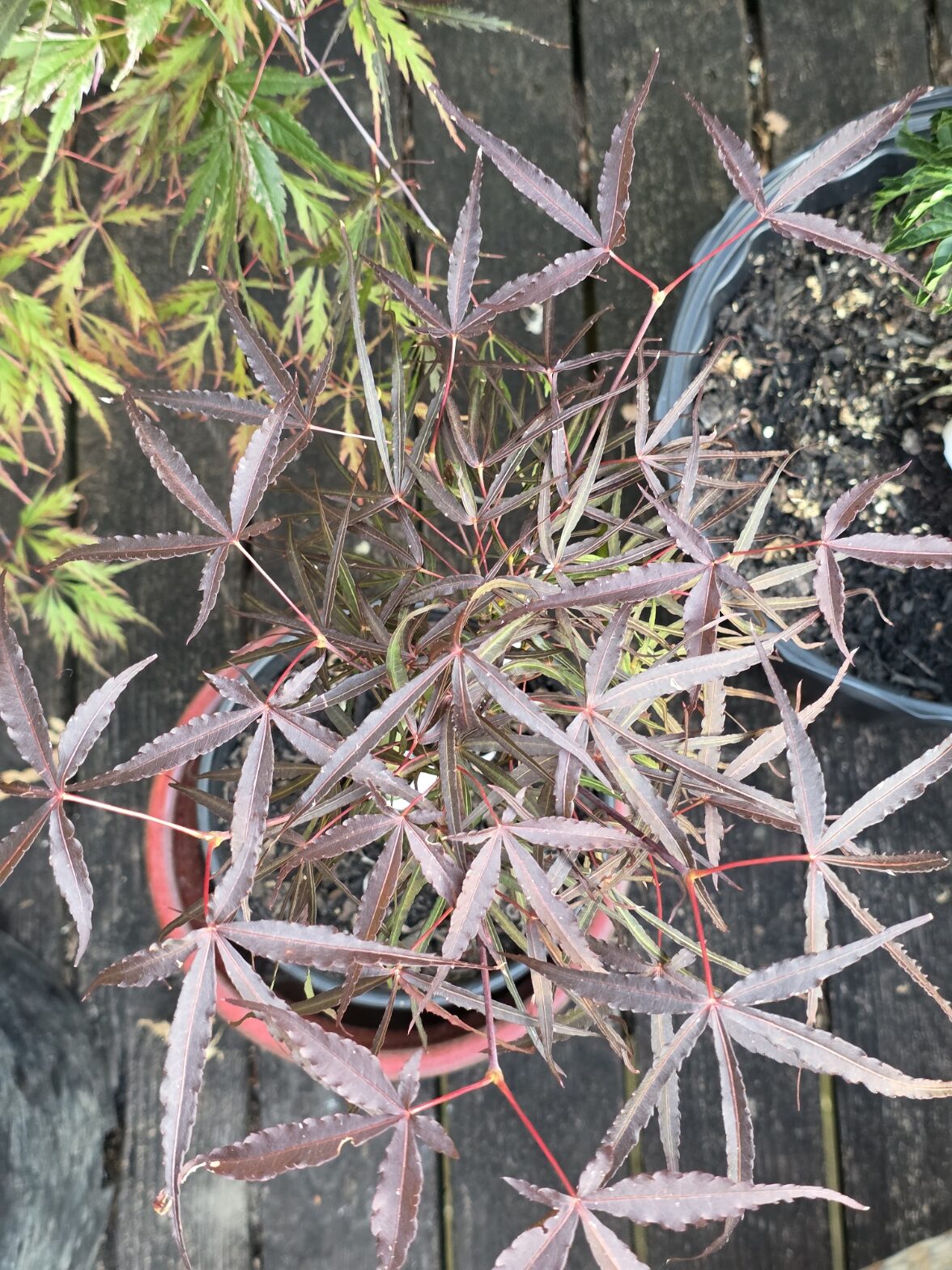
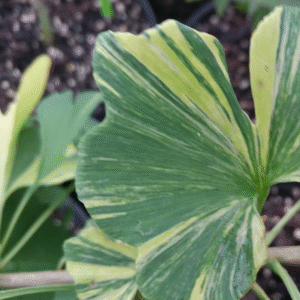
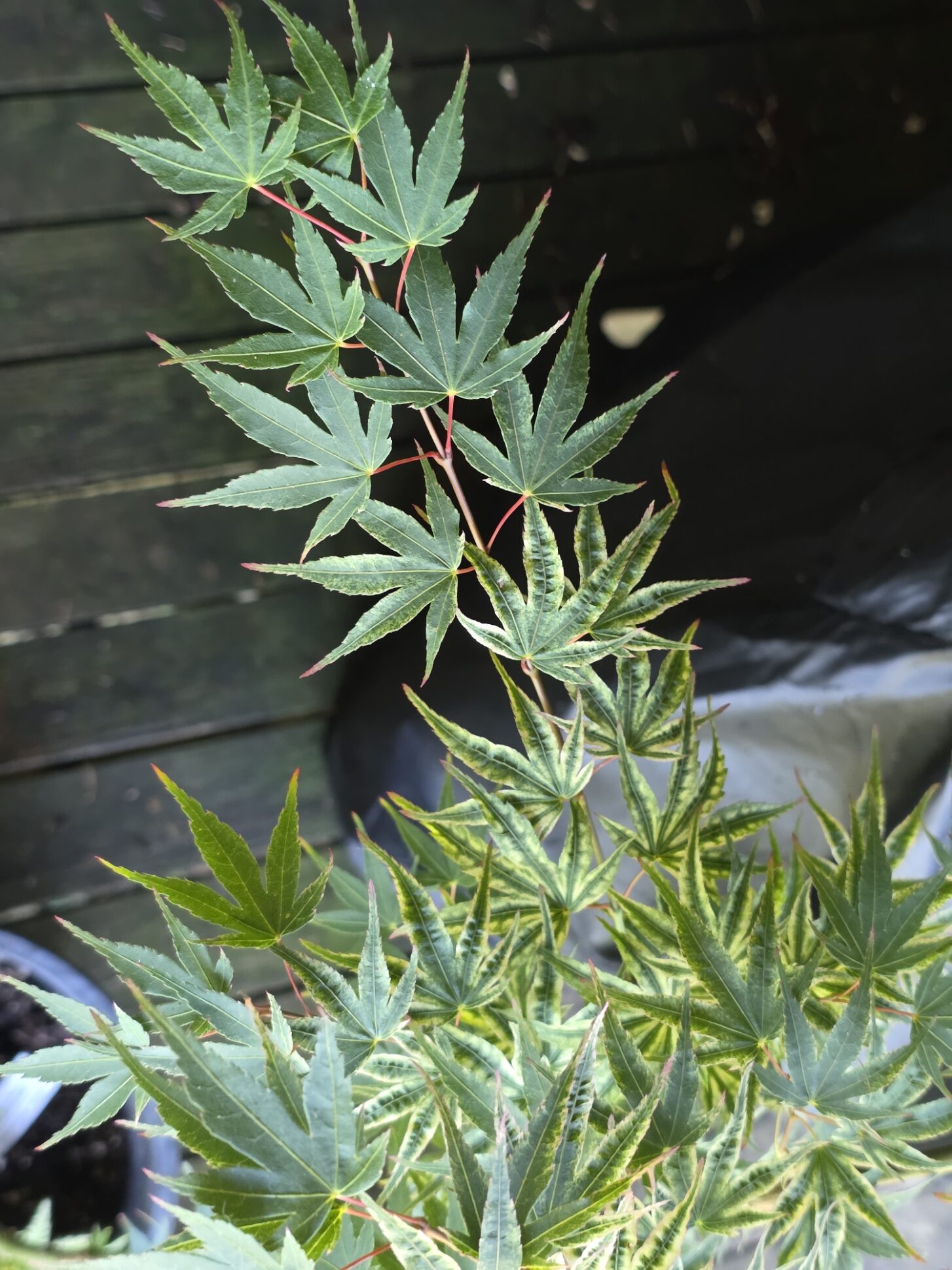
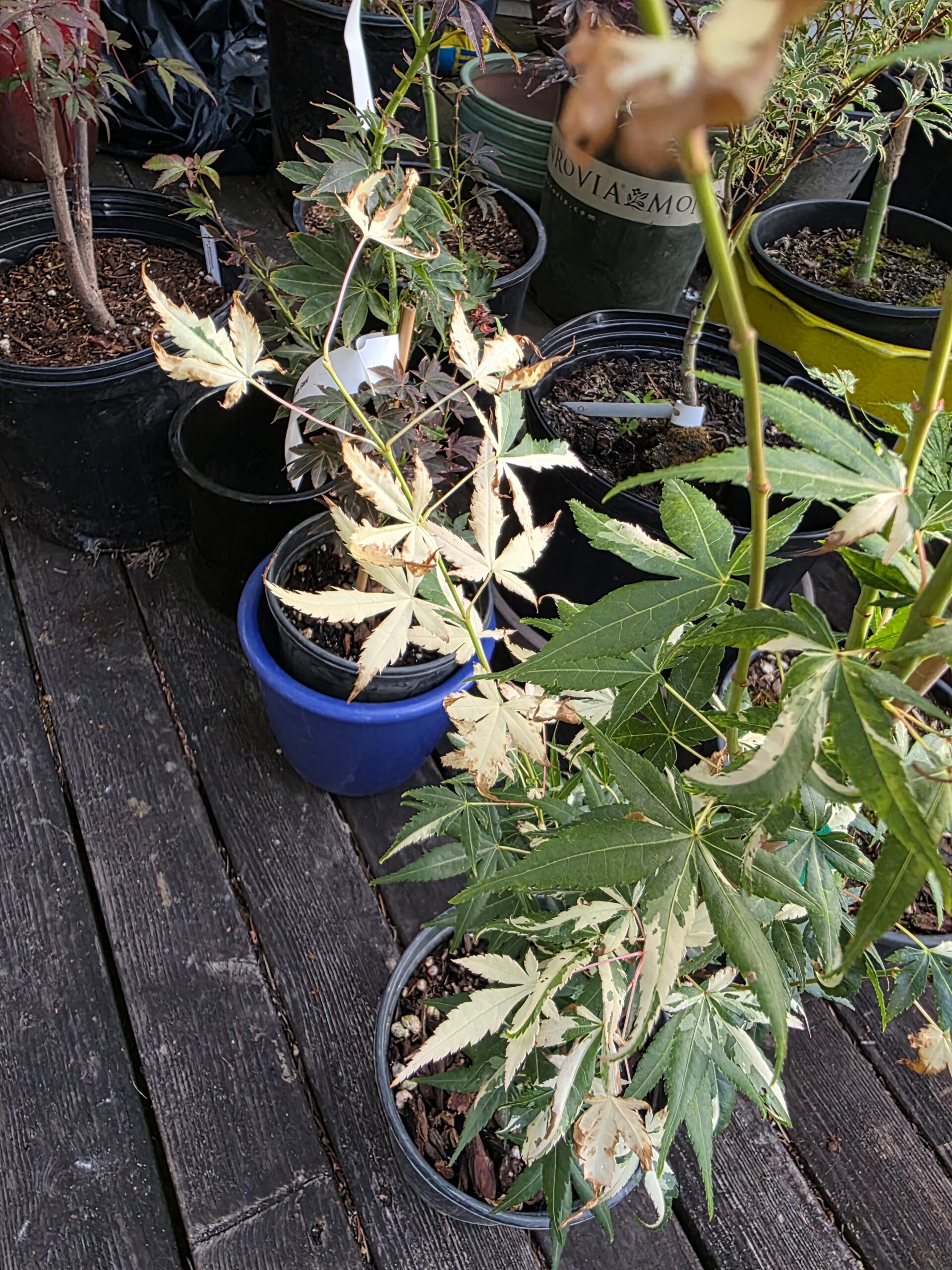
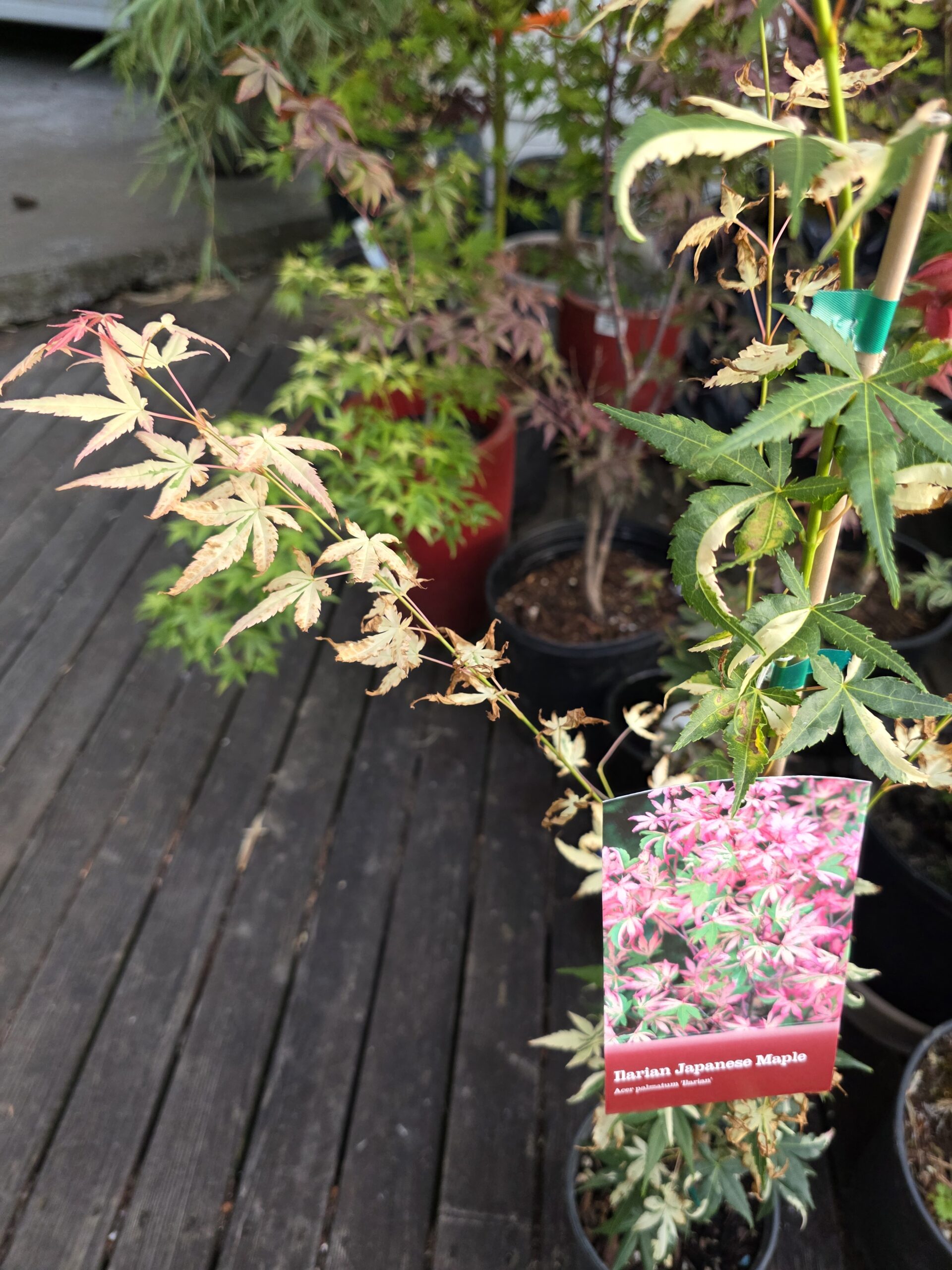
The Ikandi Maple, scientifically known as Acer palmatum 'Ikandi,' is a stunning variegated Japanese maple characterized by its vibrant pink leaves in spring, tiger-striped foliage in summer, and brilliant fall colors.
Appearance and Characteristics
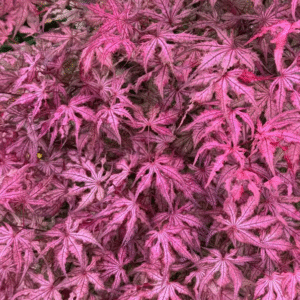
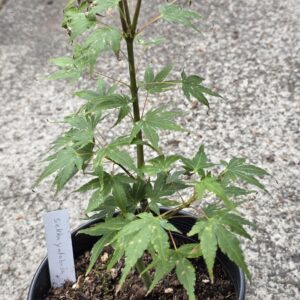
- Foliage: The Ikandi Maple is renowned for its pink and white variegated leaves. In spring, the leaves emerge as nearly solid pink before transitioning to shades of green with white and pink stripe-like patterns in summer. In autumn, the foliage transforms into vivid oranges, reds, and yellows, creating a spectacular display .
- Size and Growth Habit: This medium-sized tree typically grows to about 10-12 feet tall and 4-6 feet wide at maturity. It has an upright and vase-shaped form, making it suitable for smaller garden spaces .
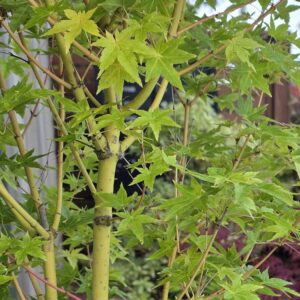
- Bark: The tree features green bark that contrasts beautifully with its colorful leaves throughout the seasons.
Growing Conditions
- Light Requirements: The Ikandi Maple performs best in partial shade with protection from the hot afternoon sun. Morning sun or dappled light is ideal for enhancing leaf variegation .
Source
Acquired from Scott (Kirkland) June 2025 as a 24" tall specimen in a 3-gallon container.
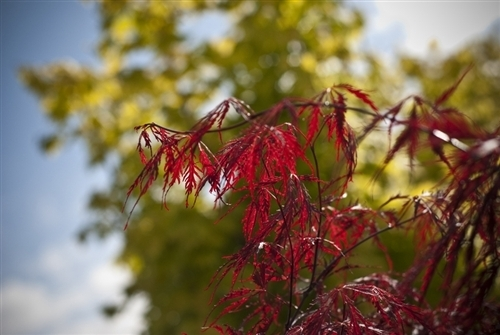
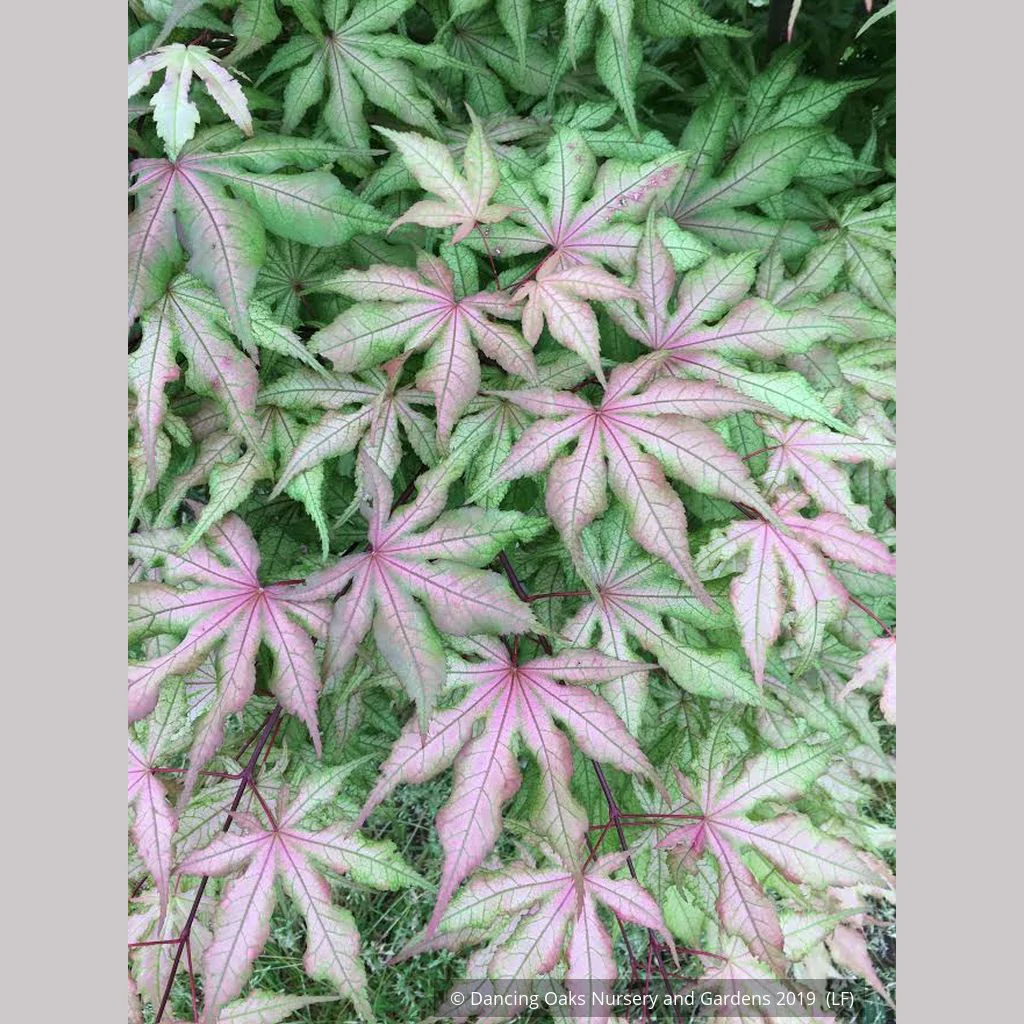
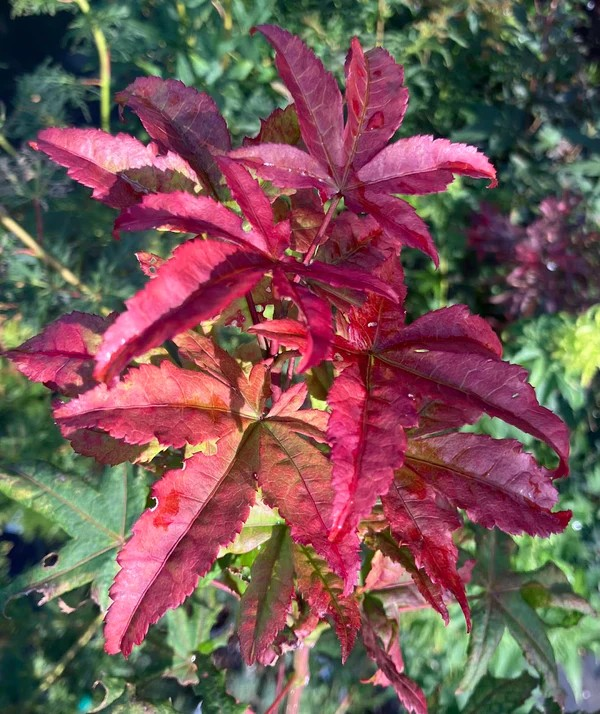
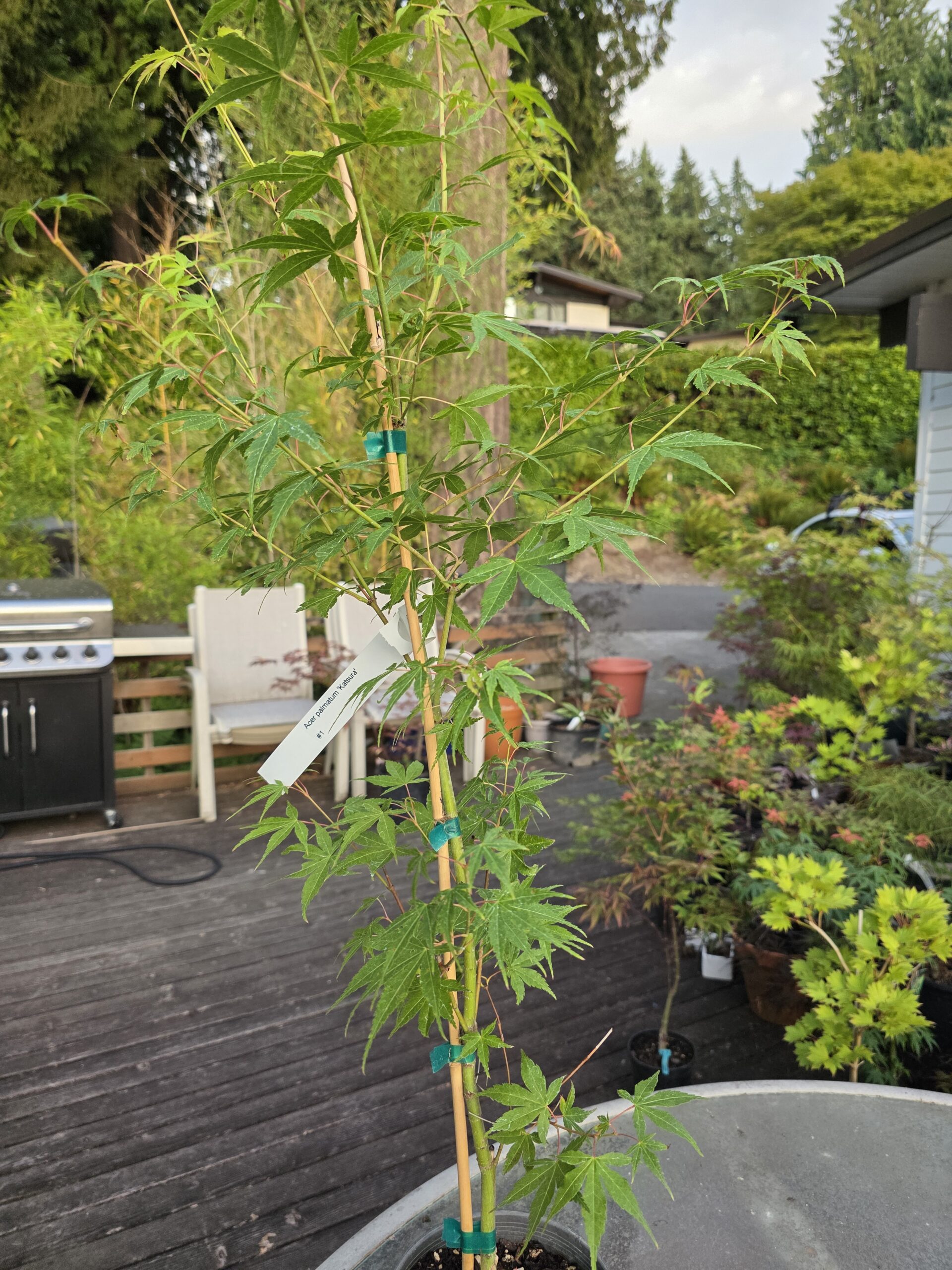
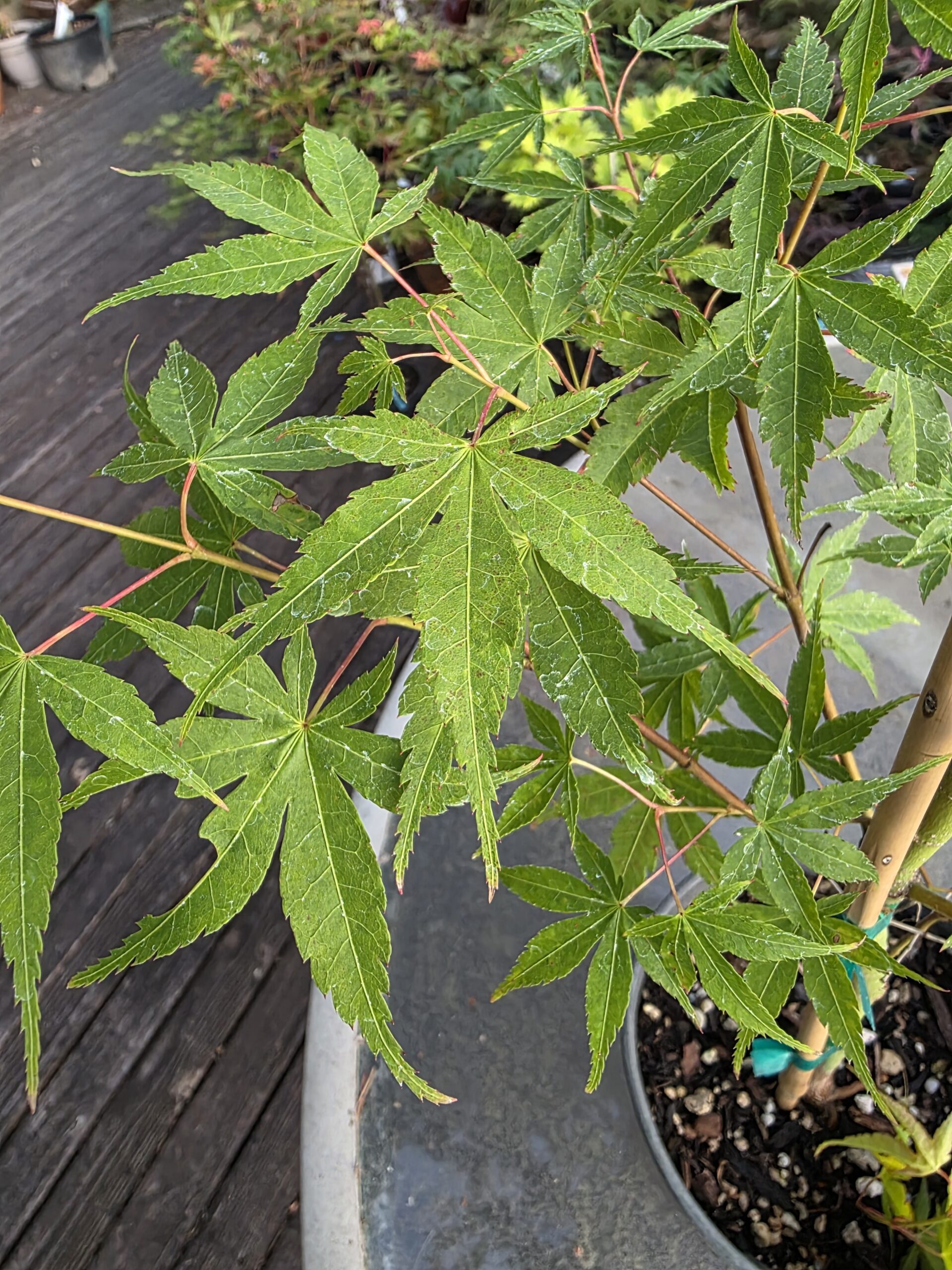
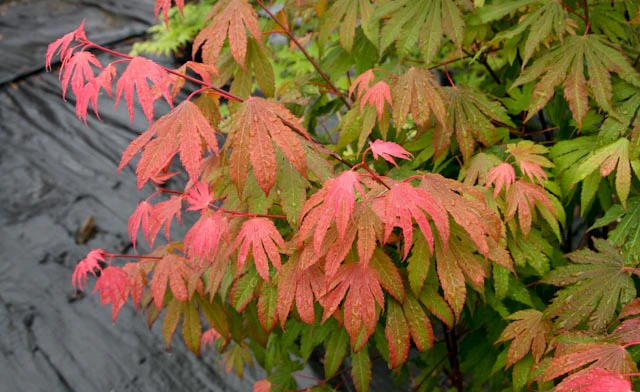
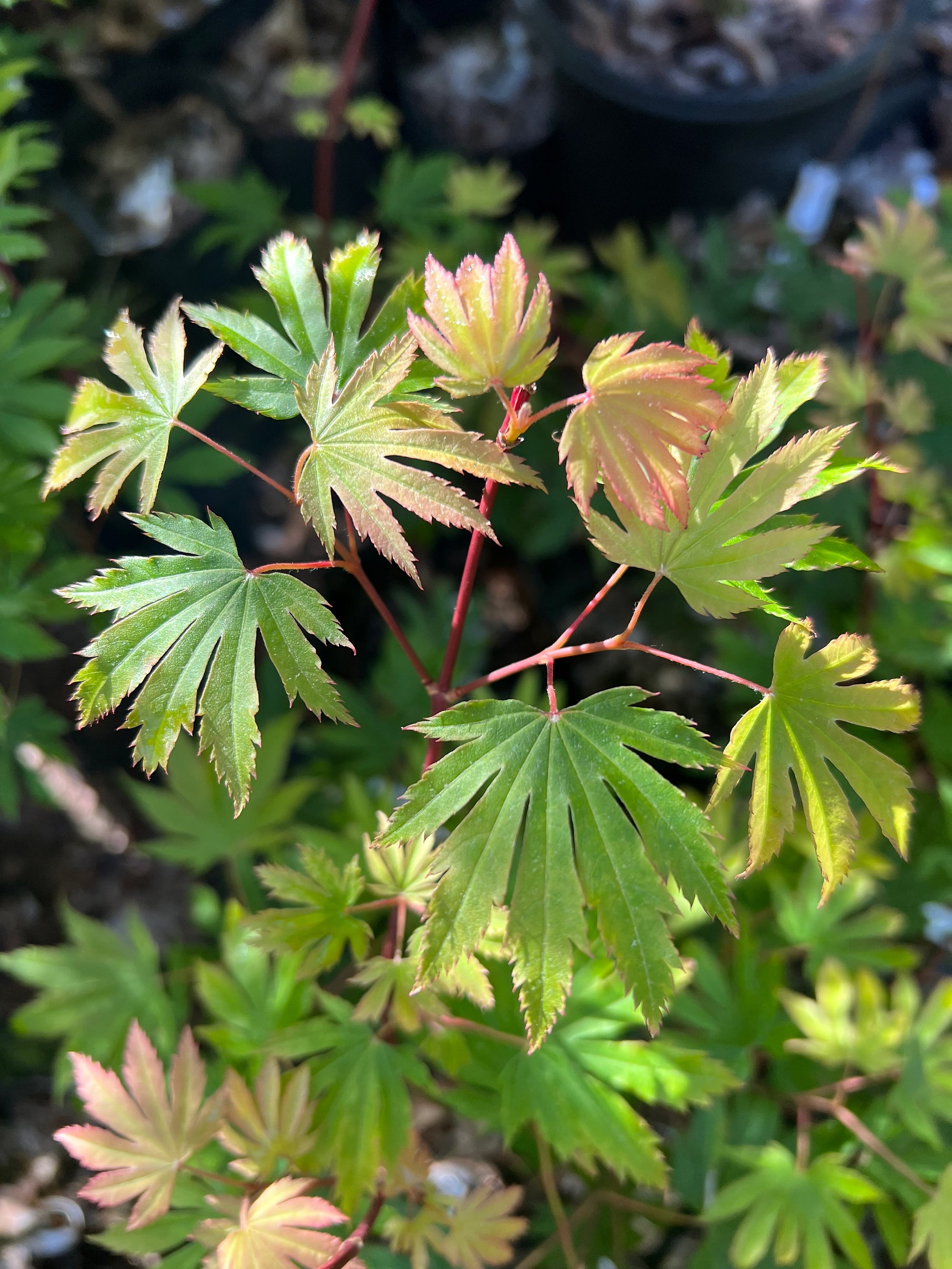
The Koto No Ito Japanese Maple, also known as 'Harp Strings', is a slow-growing, semi-dwarf tree with unique narrow, string-like leaves that change color beautifully throughout the seasons.
General Description
The Koto No Ito (Acer palmatum 'Koto-no-ito') is a deciduous tree cherished for its elegant, finely divided foliage that resembles harp strings, reflecting its name which translates to "harp strings" in Japanese. It typically grows to a height of 6-10 feet (approximately 1.8-3 meters) and a width of 4-8 feet at maturity, with a slow growth rate of about 3-6 inches per year .
Foliar Characteristics
- Spring: In early spring, new leaves emerge in a crimson hue but quickly transition to a vibrant green.
- Summer: The leaves maintain a rich green color throughout the summer, adapting well even in partial shade .
- Fall: As autumn approaches, fall colors can be striking, with leaves turning golden yellow, orange, or sometimes crimson, providing a stunning display .
Growth Habit and Care
- The Koto No Ito has a vase-shaped growth habit, making it a graceful addition to gardens. It prefers full sun to partial shade and thrives in well-drained, organic, slightly acidic soils enriched with moisture
Source
Acquired from Scott (Kirkland) as a 30" high specimen in a 3-gallon container May 2025.
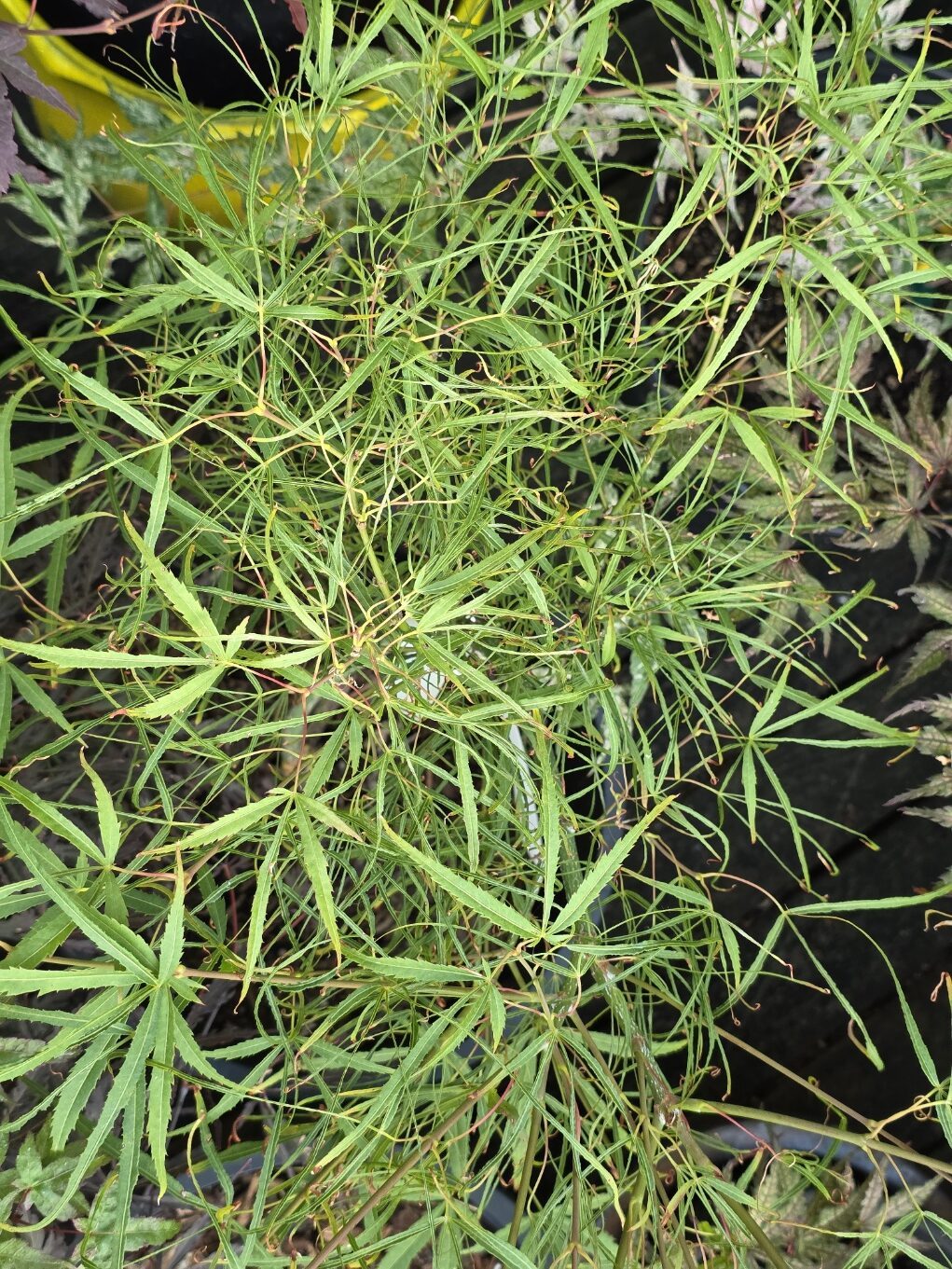
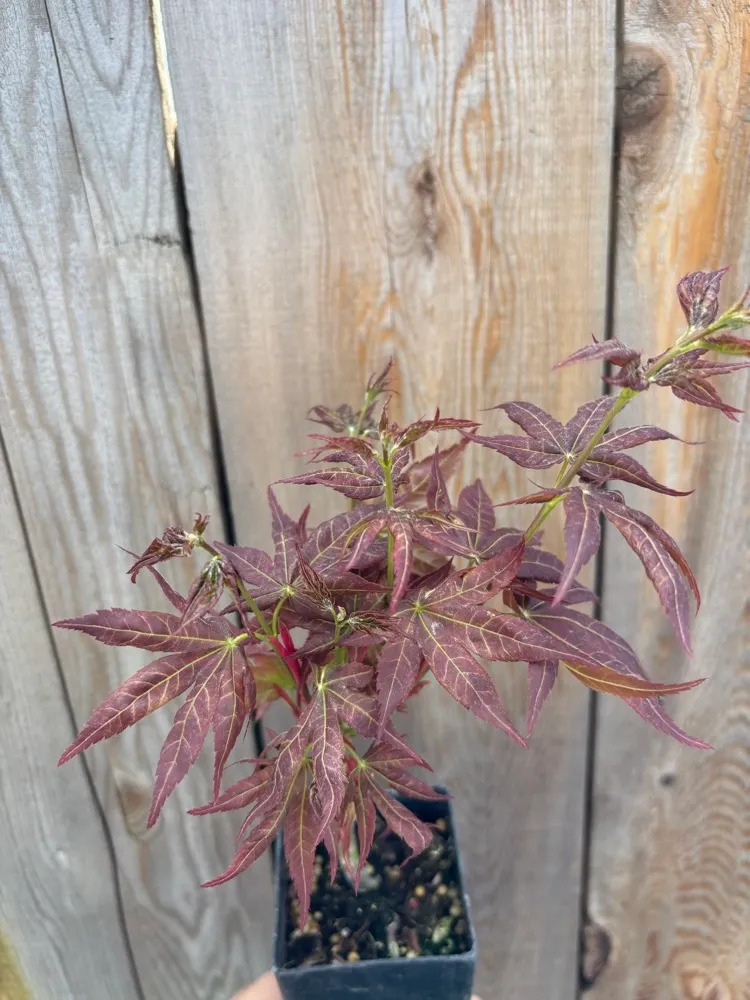
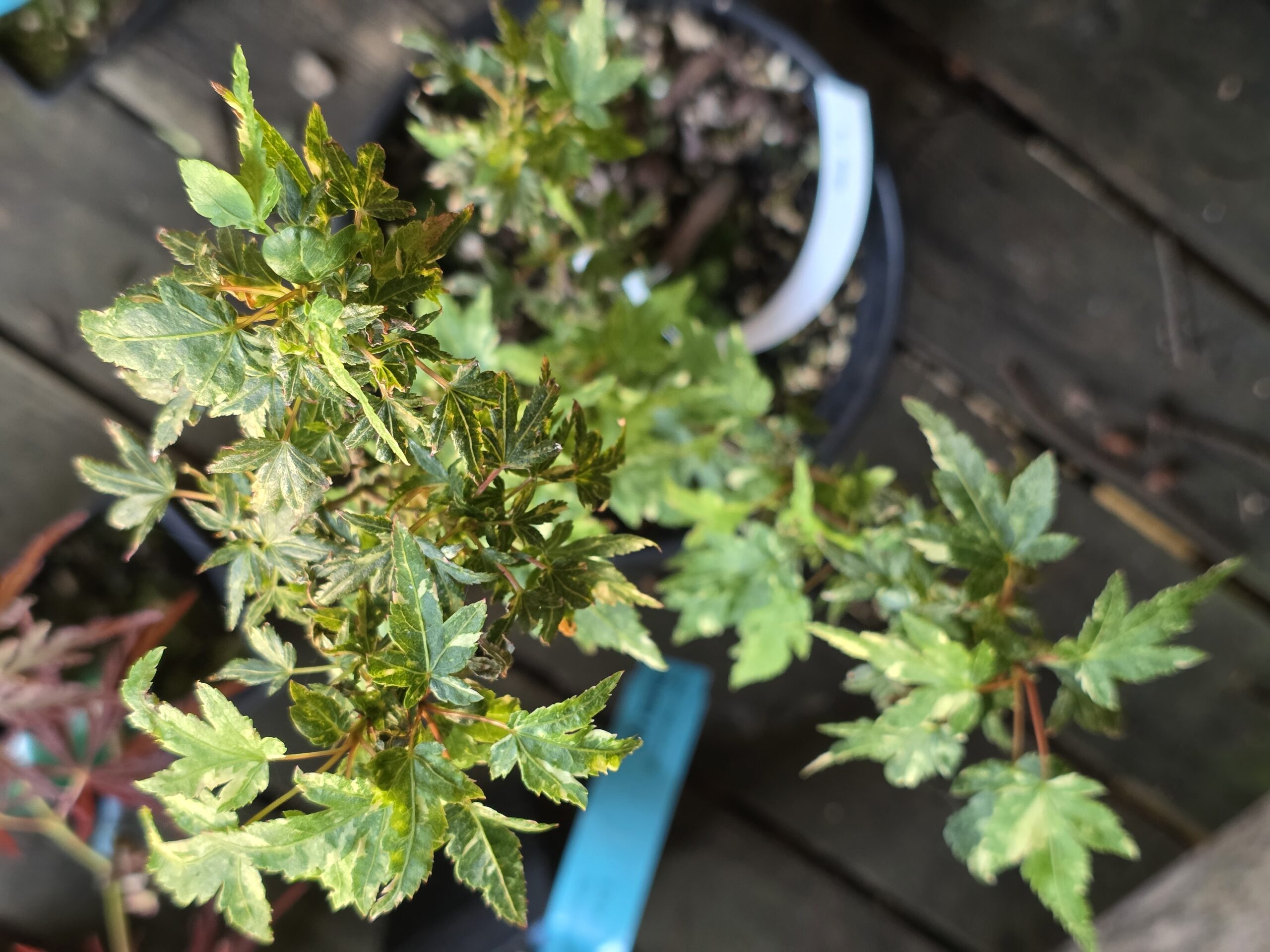
- Foliage:
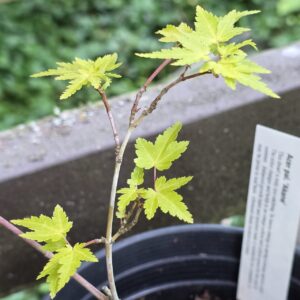
- Spring: Bright lemon yellow leaves emerge.
- Summer: Leaves mature to a rich lime green.
- Fall: Transitions to warm hues of orange and yellow, creating a stunning display.
- Growth Habit:
- It is a dwarf tree that typically reaches about 5 feet tall and 5 feet wide in approximately 10 years. It has a slow growth rate of 4-8 inches per year. The branches have a semi-pendulous habit, forming an irregular mound shape, making it a great specimen tree for small gardens.
- USDA Hardiness Zones: Tolerant in zones 5 to 9, it prefers conditions of full sun to partial shade.
- Soil: Prefers well-drained, rich, slightly acidic soil. Regular moisture is needed for optimal growth.
- Watering: Newly planted trees should be watered weekly for a season until established. Container-grown trees will require more frequent watering due to faster drying out of the soil.
- Light: Best suited for a combination of morning sun and afternoon shade; however, it can tolerate full sun in cooler northern areas. Care should be taken in hot southern climates to prevent leaf scorch.
Source
Acquired from Nerie (Burien) in June 2025 as a 3' high specimen in a 2-gallon pot for $50.
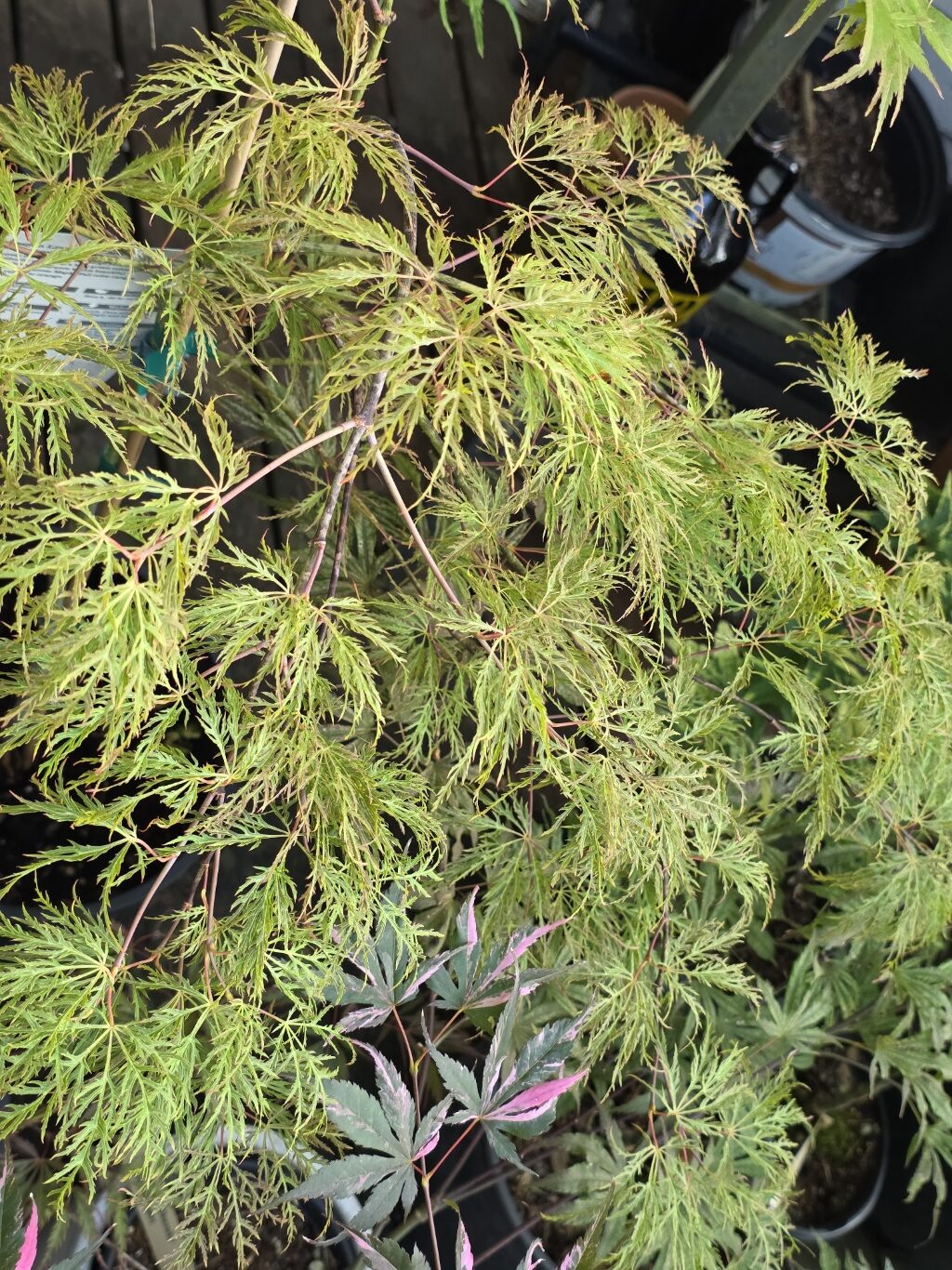
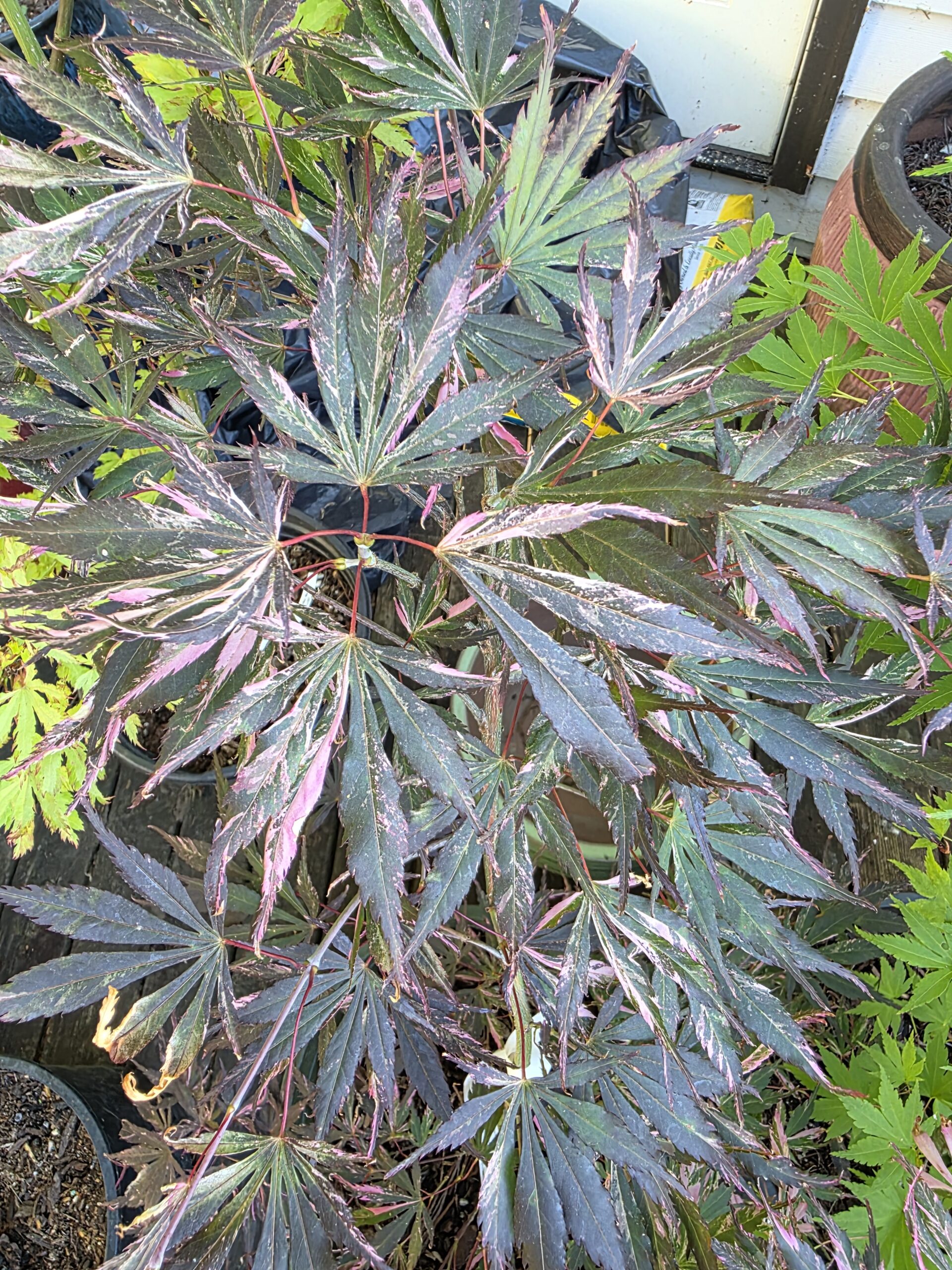
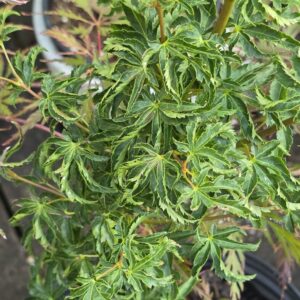
The Lion Japanese Maple, also known as 'Shishigashira,' is a distinctive small tree noted for its crinkled foliage and upright growth, making it an exquisite addition to any garden. It's also sometimes referred to as 'Meijishi,' named after a mythological female lion character from Japanese drama.
Description
The Lion Japanese Maple, scientifically named Acer palmatum 'Shishigashira', is characterized by its dense, crinkled foliage that resembles the mane of a lion. The leaves are dark green during the growing season and turn brilliant colors of orange and yellow in the fall, often being one of the last maple varieties to change color. This slow-growing tree achieves a mature height of about 8 to 15 feet and a spread of 6 to 10 feet, making it suitable for smaller spaces .
Growth Habit
This cultivar tends to grow in an upright vase shape with short, sturdy branches. The branches are not only thickly covered with leaves but also show a delightful twisting and layering structure, adding depth and interest to the landscape. The Lion's Head Japanese Maple features thick layers of green leaves that become a striking golden and red during the autumn. It has an upright growth habit, forming a compact and ornamental shape ideal for gardens and landscapes.
Its growth rate is moderate, typically reaching up to about 12 to 20 inches per year under ideal conditions. It can grow fairly slowly, achieving a height of about 8 to 12 feet over the years.
Care Requirements
- Sunlight: Prefers full sun to partial shade; however, it may require some protection from extreme afternoon sun to prevent leaf scorch .
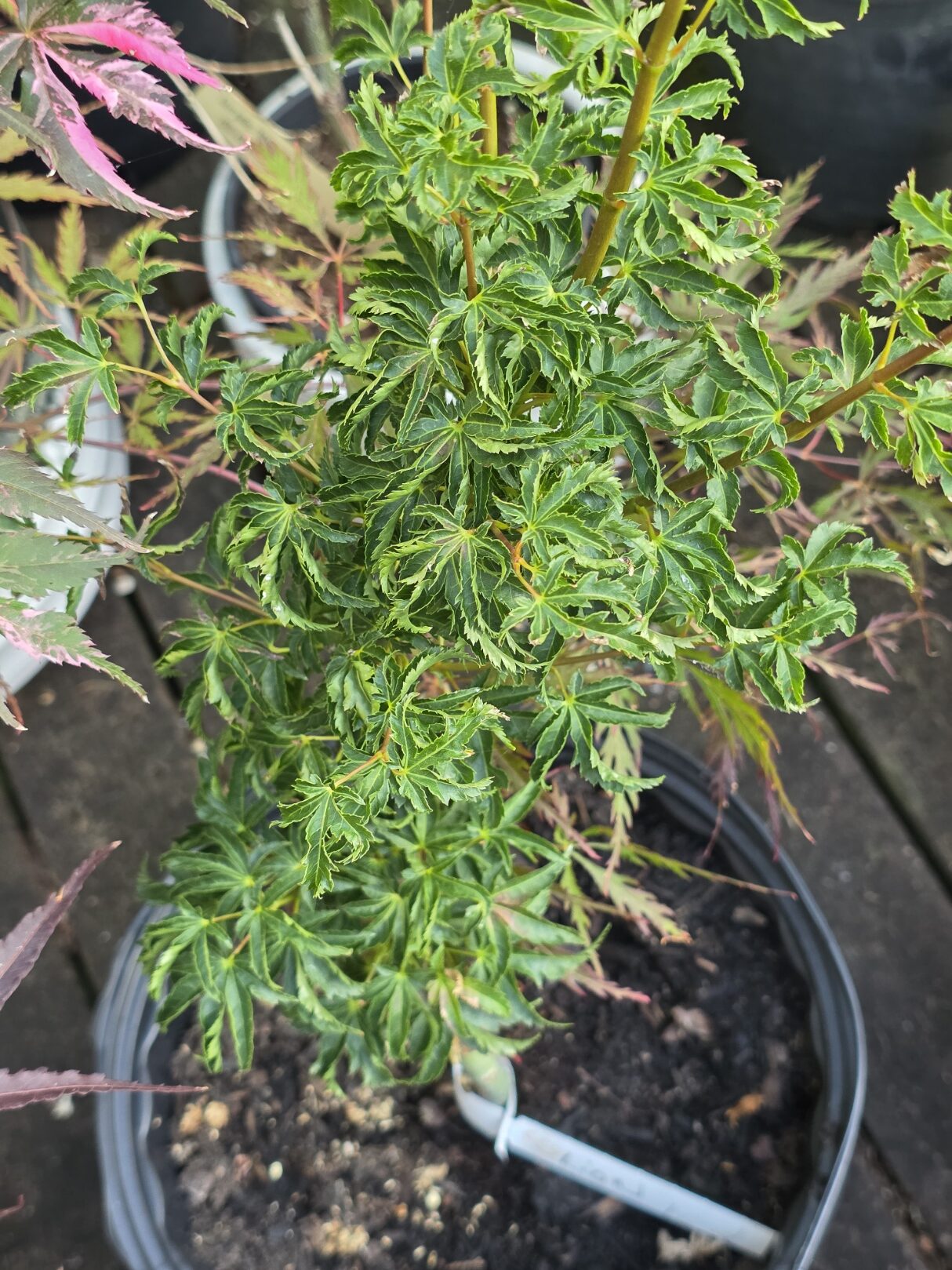
The "Little Gem" Japanese maple is a compact, dwarf form of the vine maple, characterized by its small, rounded leaves and rich fall color.
Characteristics
- Foliage: Features small, rounded green leaves that may have pink-red margins when emerging. In the fall, the foliage transforms to a striking array of golden yellow, orange, and red.
- Growth Habit: This shrub grows in a dense, rounded form, which makes it perfect for confined spaces or as a decorative feature in gardens.
- Size: Typically grows to about 3 to 4 feet in height and width over 10 years.
Requirements
- Sun Exposure: Best grown in morning sun to afternoon shade; full sun can enhance fall color but may require more moisture.
Key Characteristics
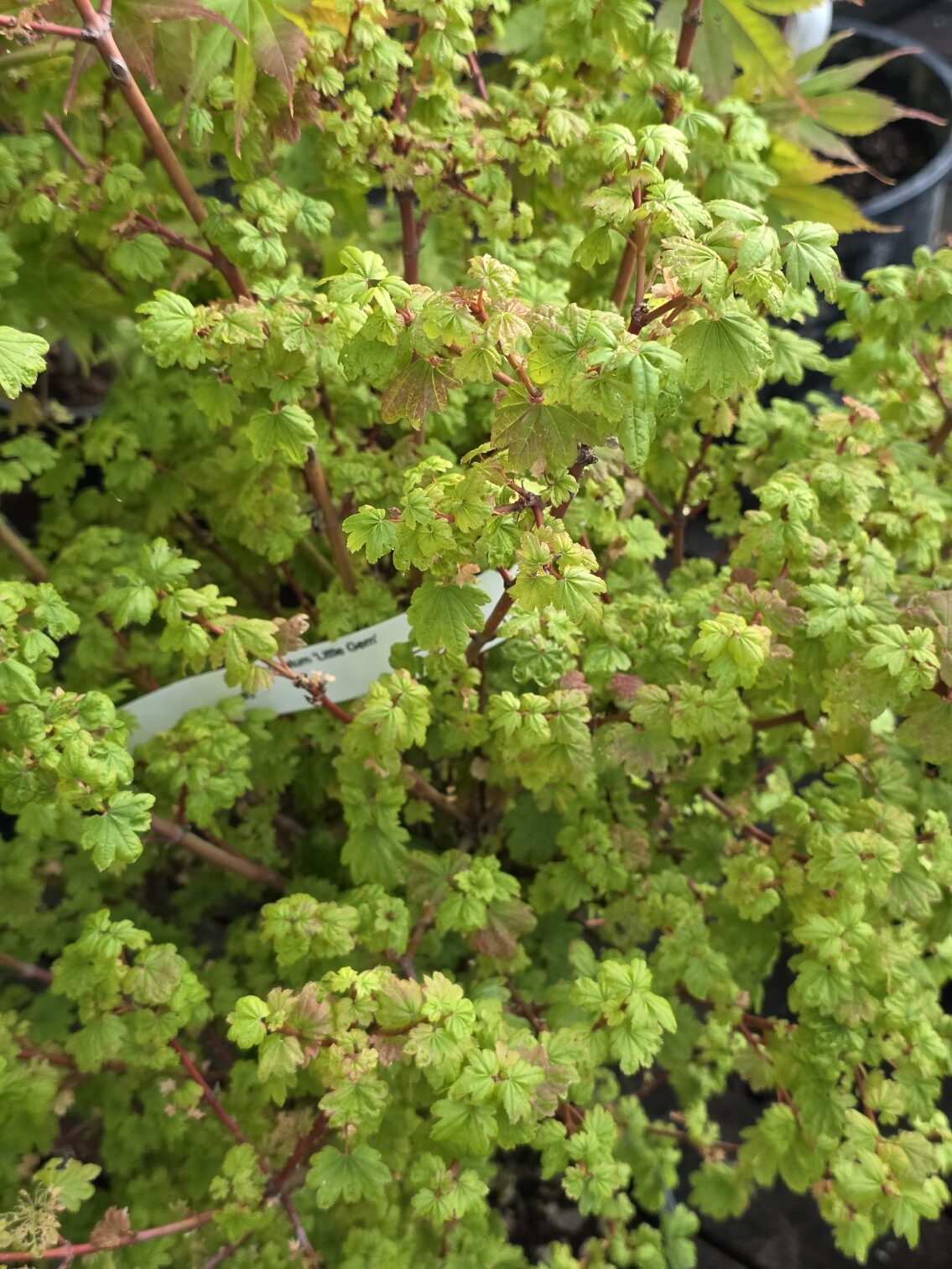
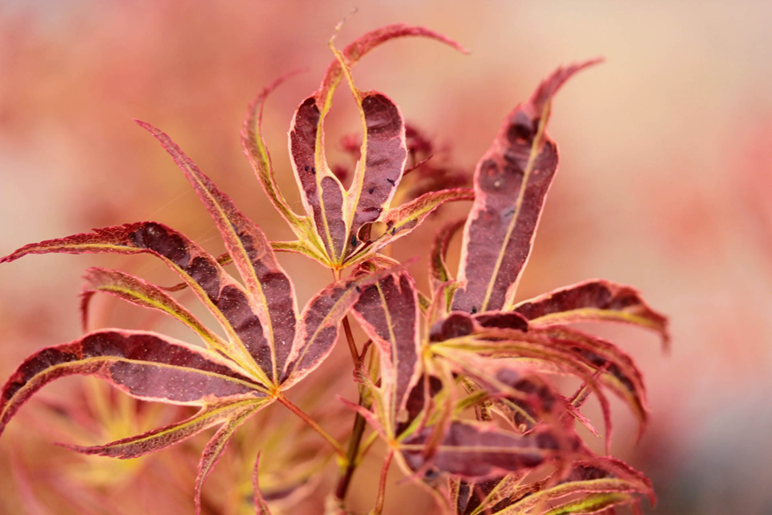
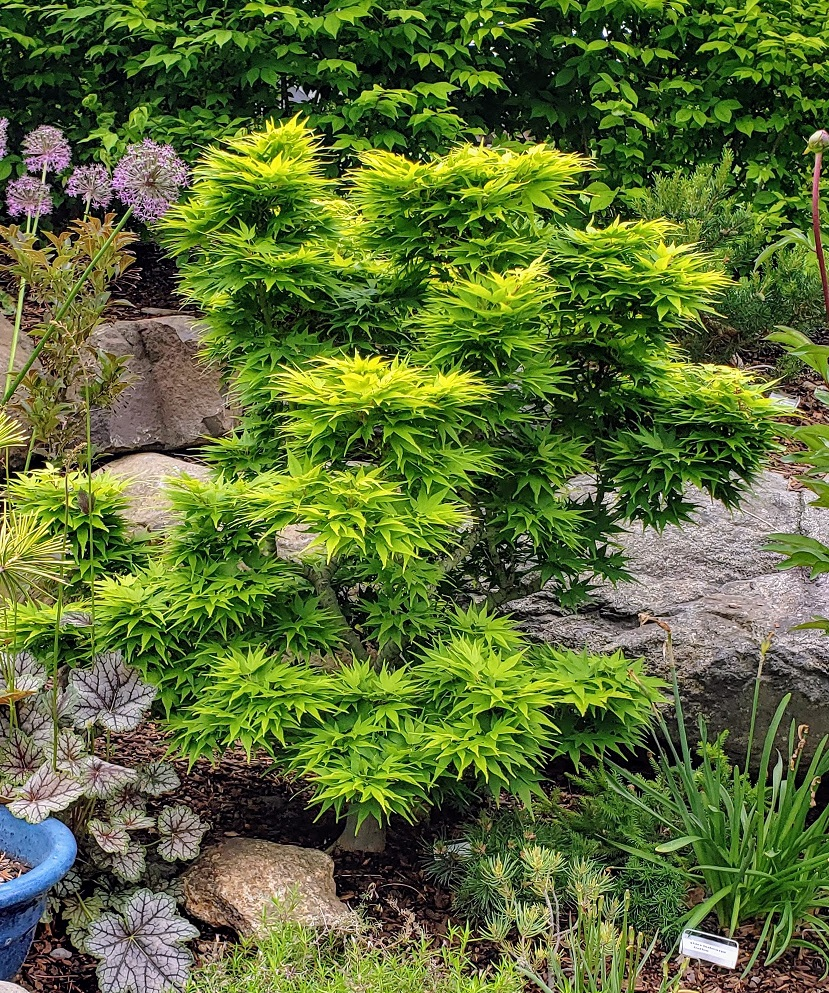
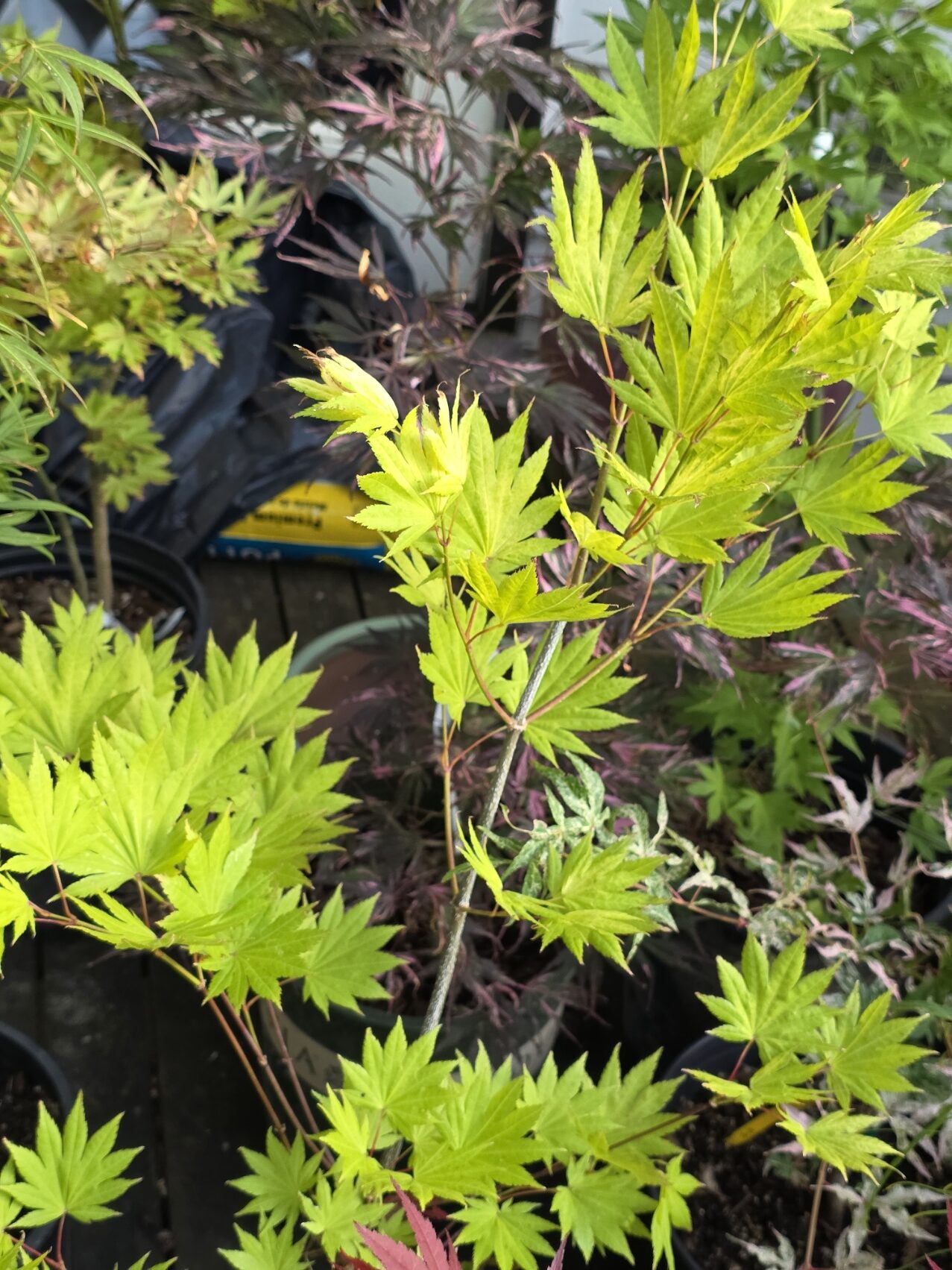
- Scientific Name: Acer shirasawanum 'Moonrise'
- USDA Hardiness Zones: 5 to 9
- Mature Height: Typically reaches 8-12 feet in height.
- Mature Width: 6-10 feet in width.
Seasonal Color Changes
- Spring: Bright red young leaves that eventually transition to chartreuse with pink highlights as they mature.
- Summer: Leaves maintain a striking green-yellow hue, often with an orange blush in sunny exposures.
- Fall: A dramatic shift to brilliant shades of red and orange, providing exceptional visual interest.
Planting and Growing Conditions
- Light Requirements:
- Prefers full sun to partial shade. Best colors are often seen in dappled sunlight or morning sun with afternoon shade to prevent leaf burn.
Source
Scott (Kirkland) in a 3-gallon container June, 2025, at about 36" tall.
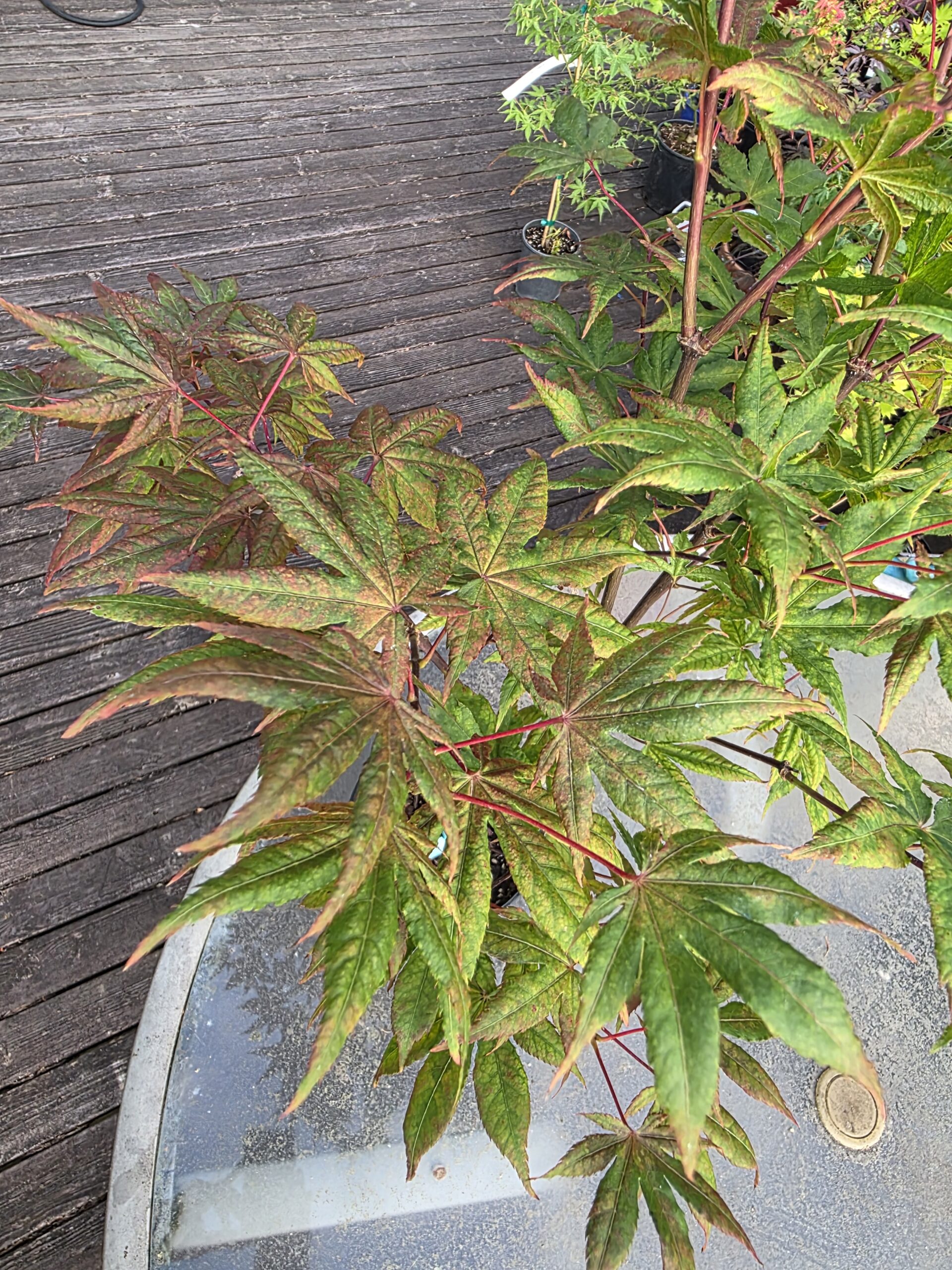
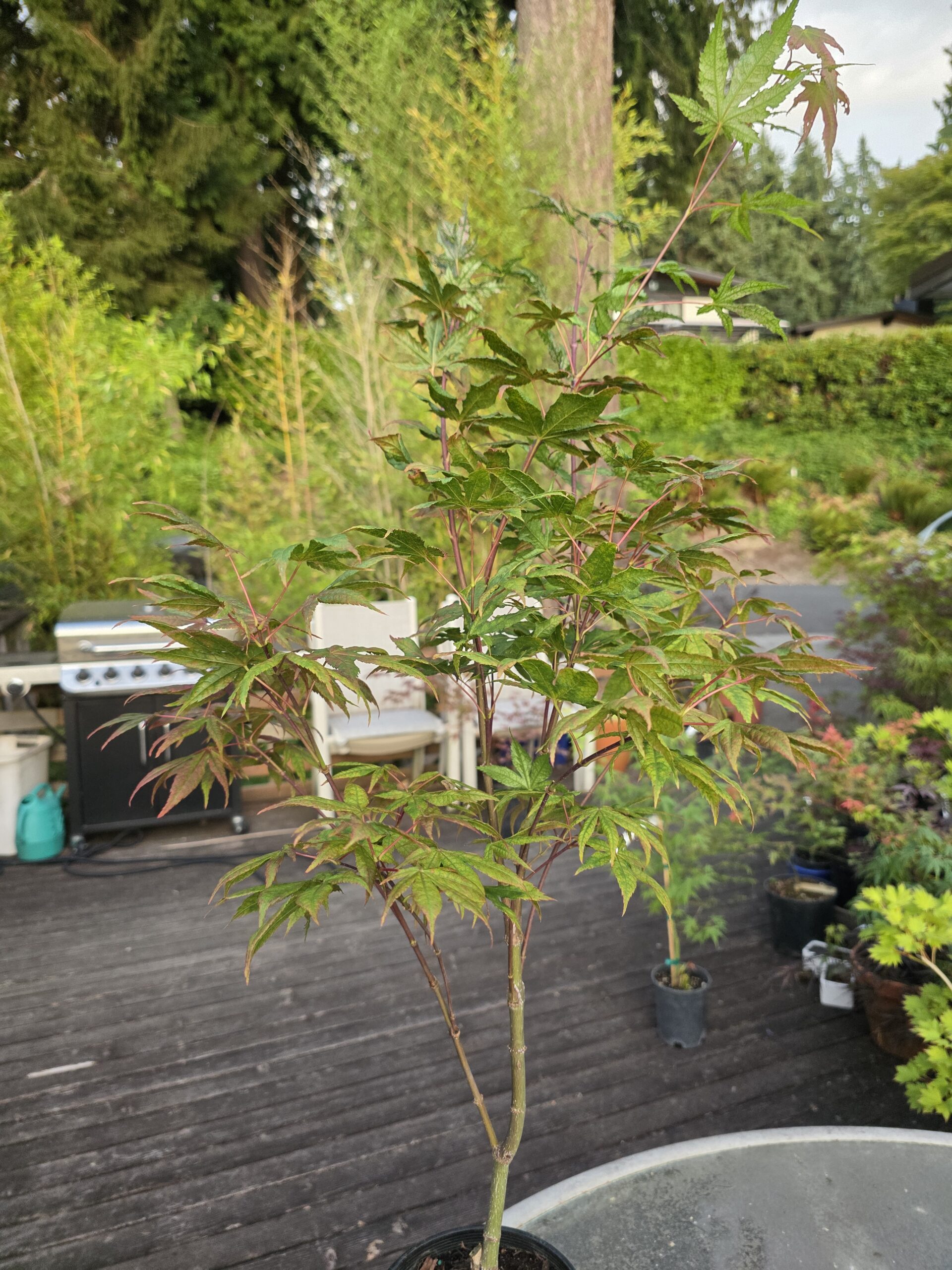
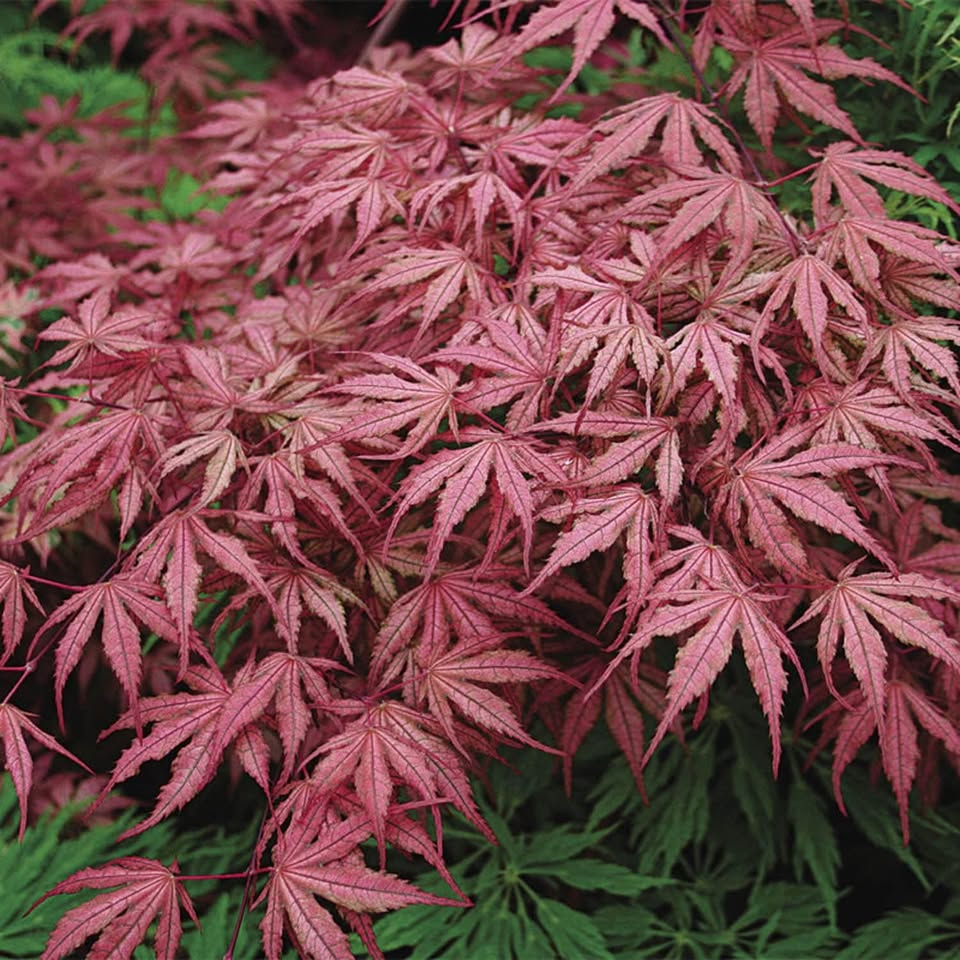
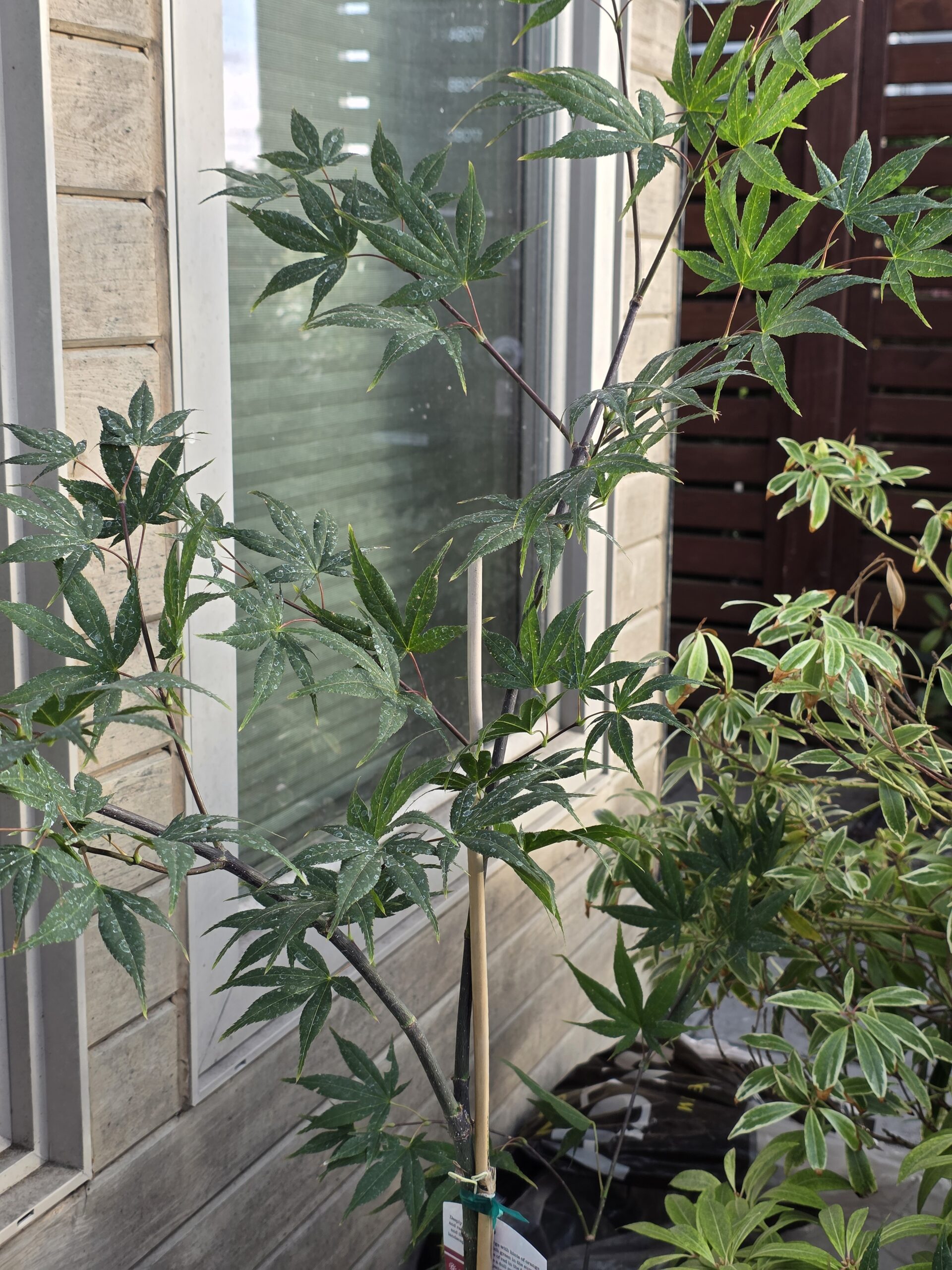
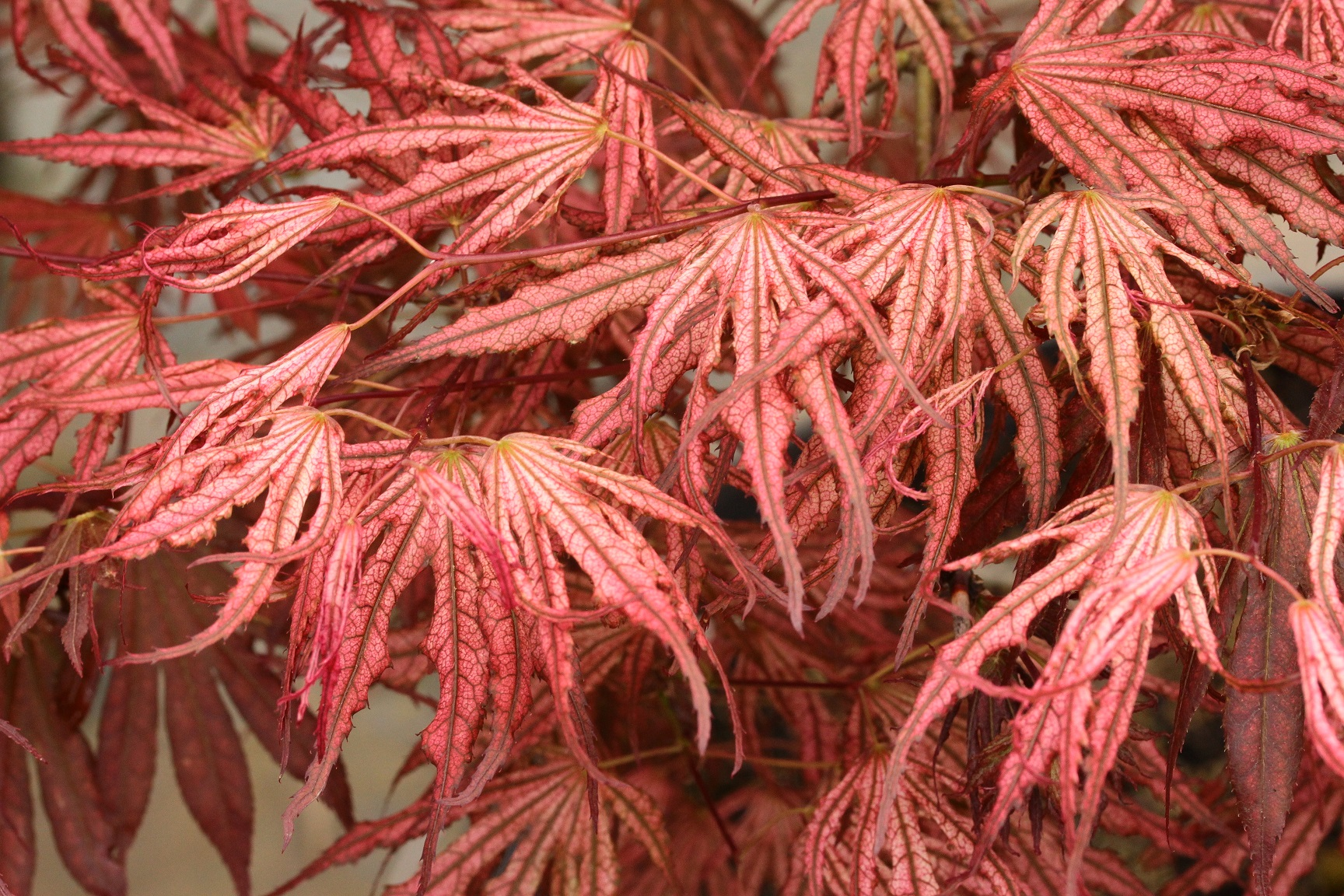
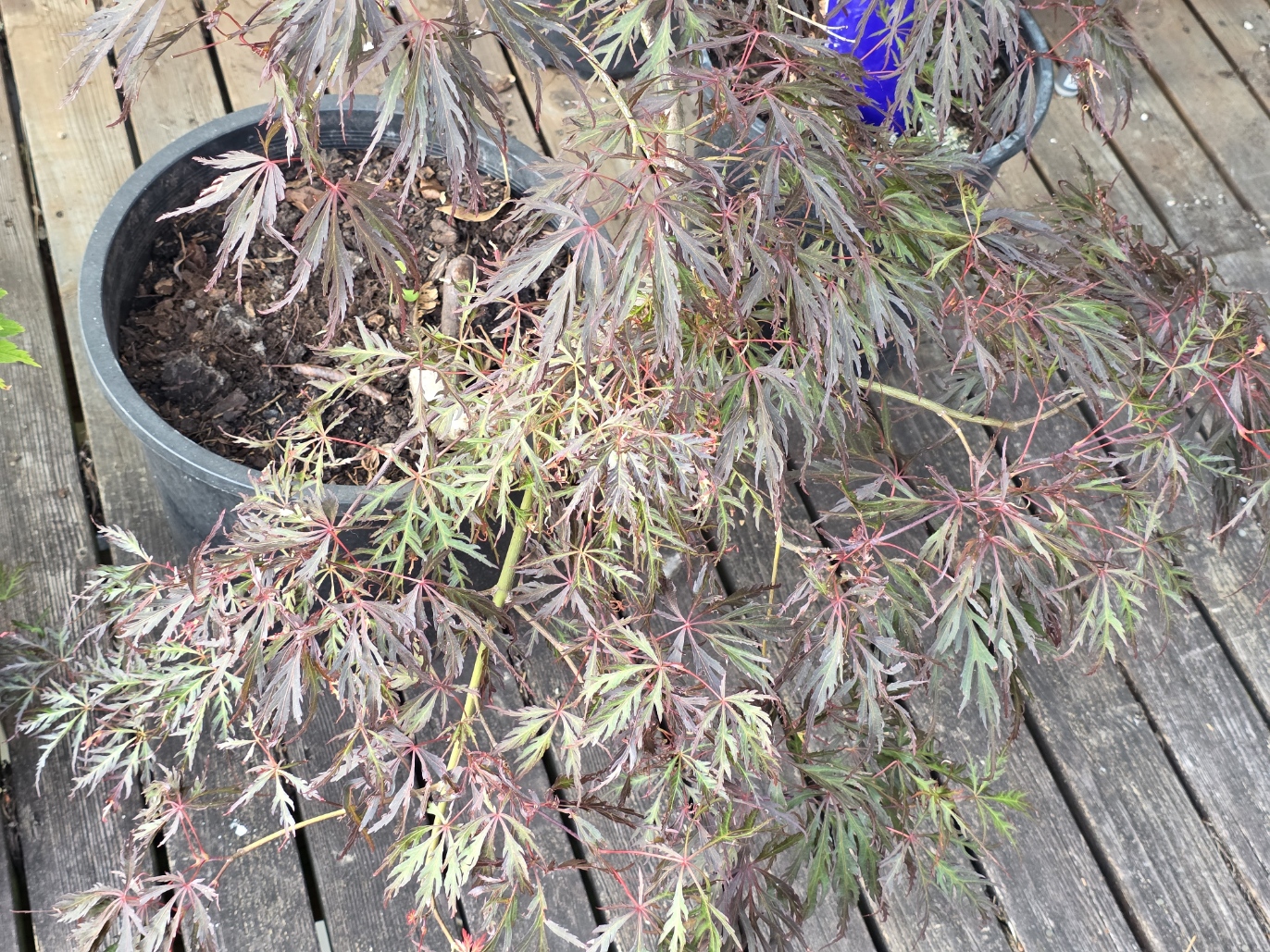
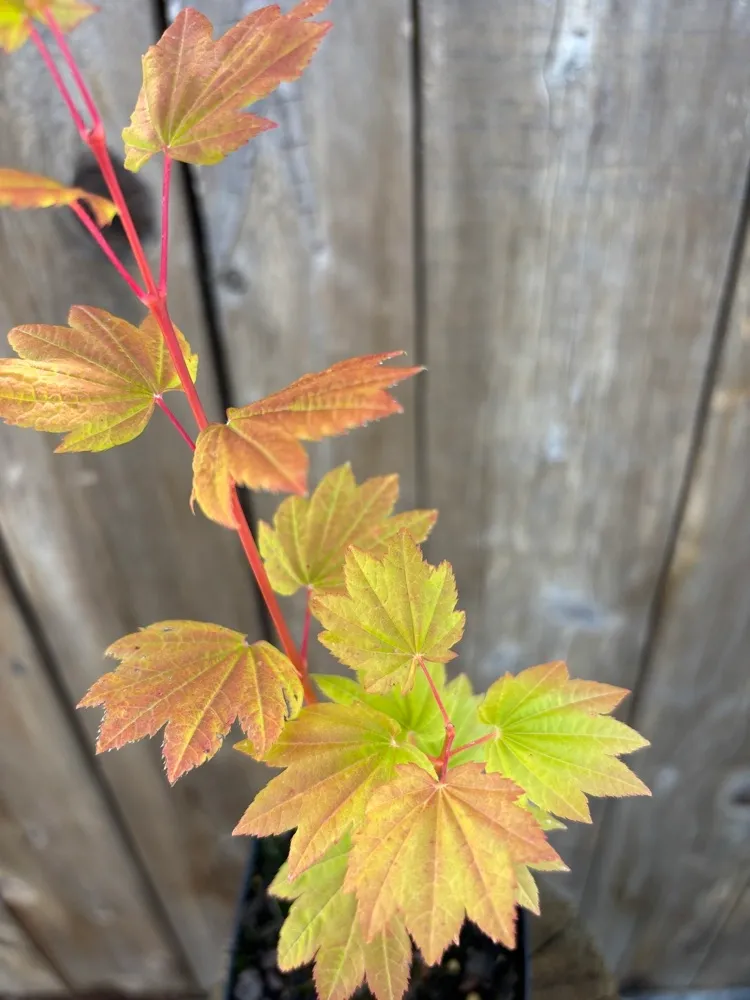
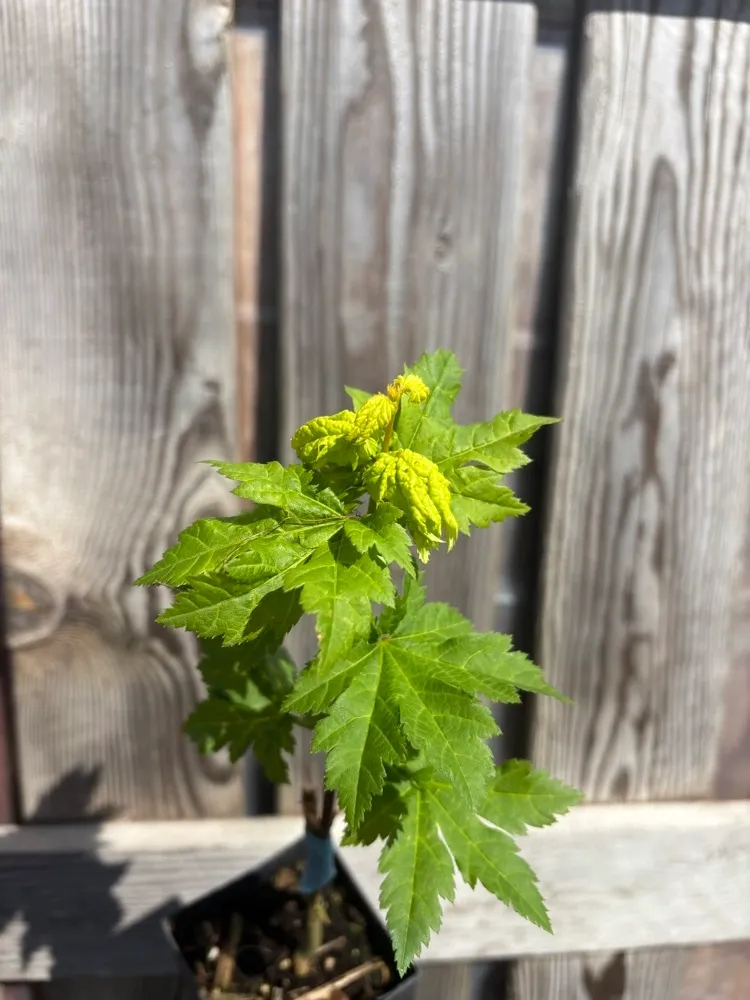
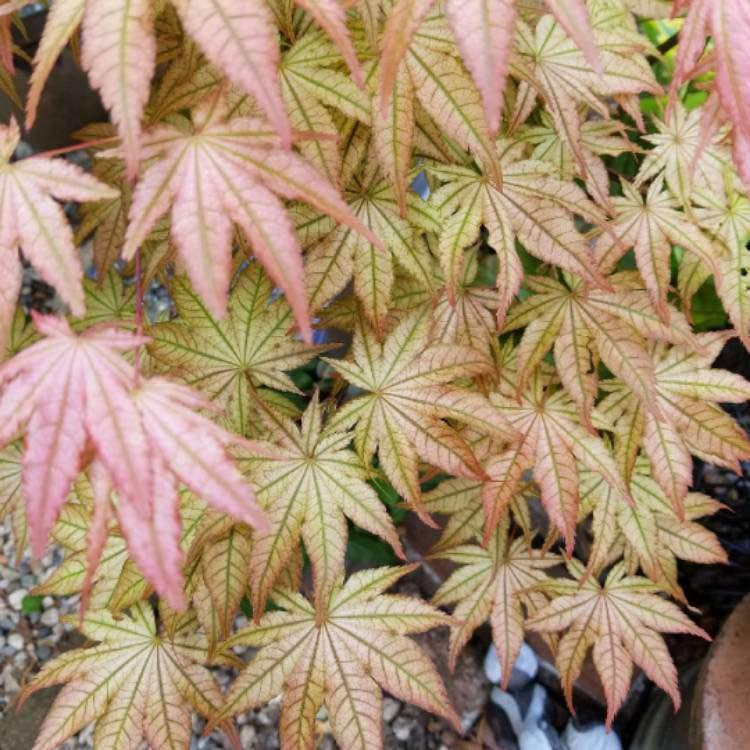
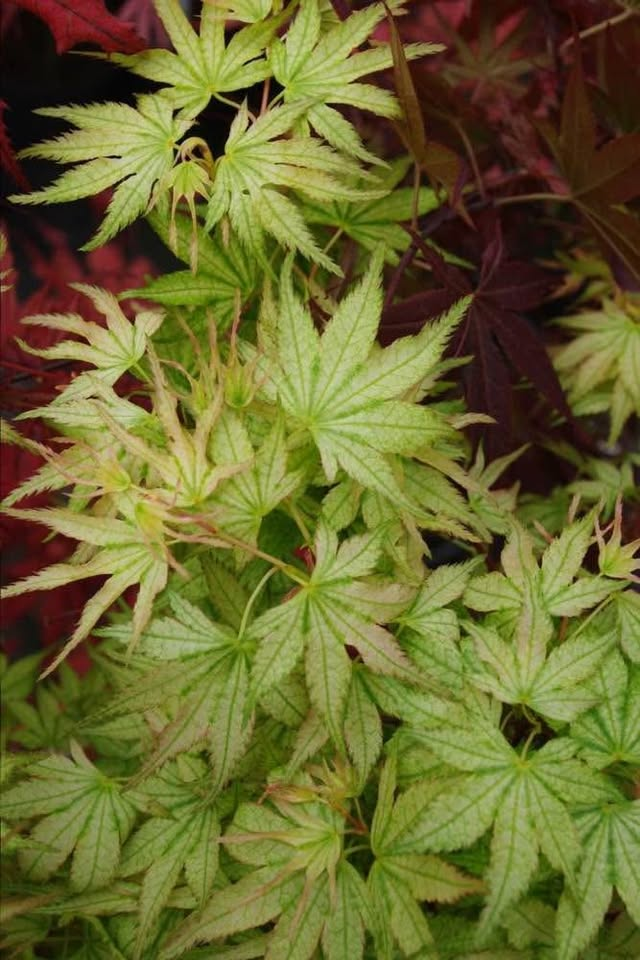
´Orangeola Japanese Maple is not quite as red as many other laceleaf weeping Japanese maples, but the foliage is orange-red when it first emerges in spring. By mid-summer, the color is a mix of burgundy and muted green. Acer palmatum Orangeola’s dramatically cascading habit and long-term seasonal interest make it one of our favorites. The second flush of summer growth repeats the bright spring show and produces a beautiful contrast against the older foliage. Dark red and fiery orange-red colors finish the display in fall.
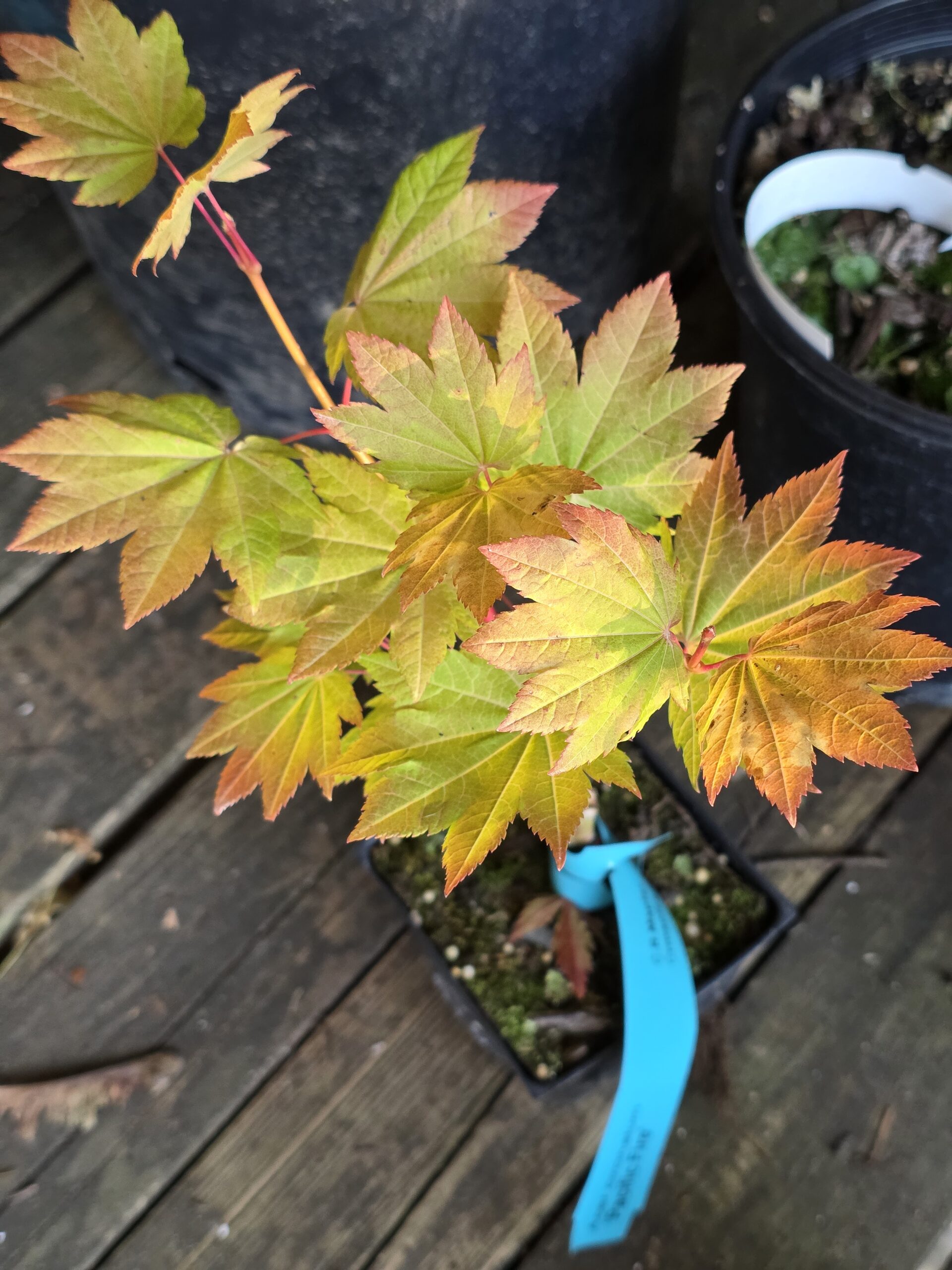
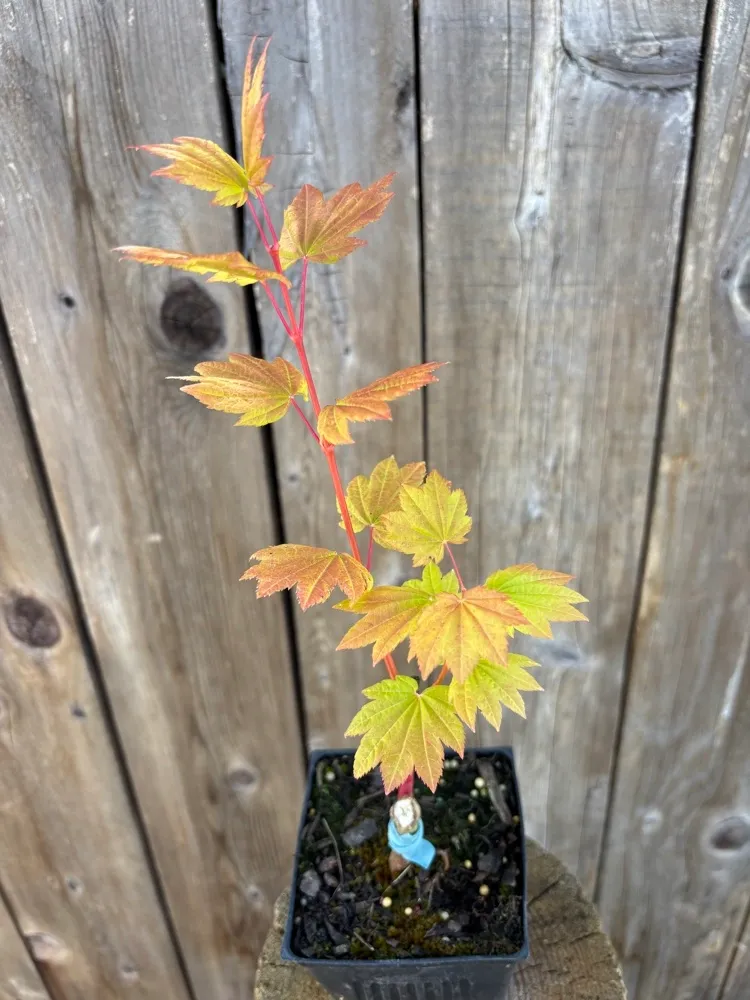
Description
- Growth Habit: It is a slow-growing, semi-dwarf tree that can reach 6 to 8 feet tall and about 3 to 5 feet wide in 20 years, making it well-suited for smaller spaces or container cultivation .
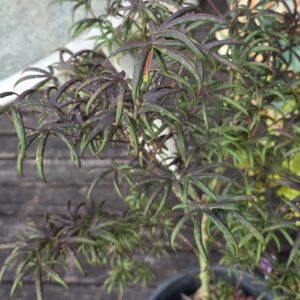
- Foliage: The leaves are small, with lobes that curl downwards, resembling a starfish, hence its name. In spring, the leaves emerge bright red, transitioning to a deep maroon by summer, and displaying brilliant crimson colors in the fall.
Growing Conditions
- Light Preferences: Best grown in partial shade or filtered sunlight. Morning sun with afternoon shade is ideal to prevent leaf scorch .
Source
Acquired JUly 20, 2025, from Scott (Kirkland) in a 3-gallon container as a 30" high specimen.
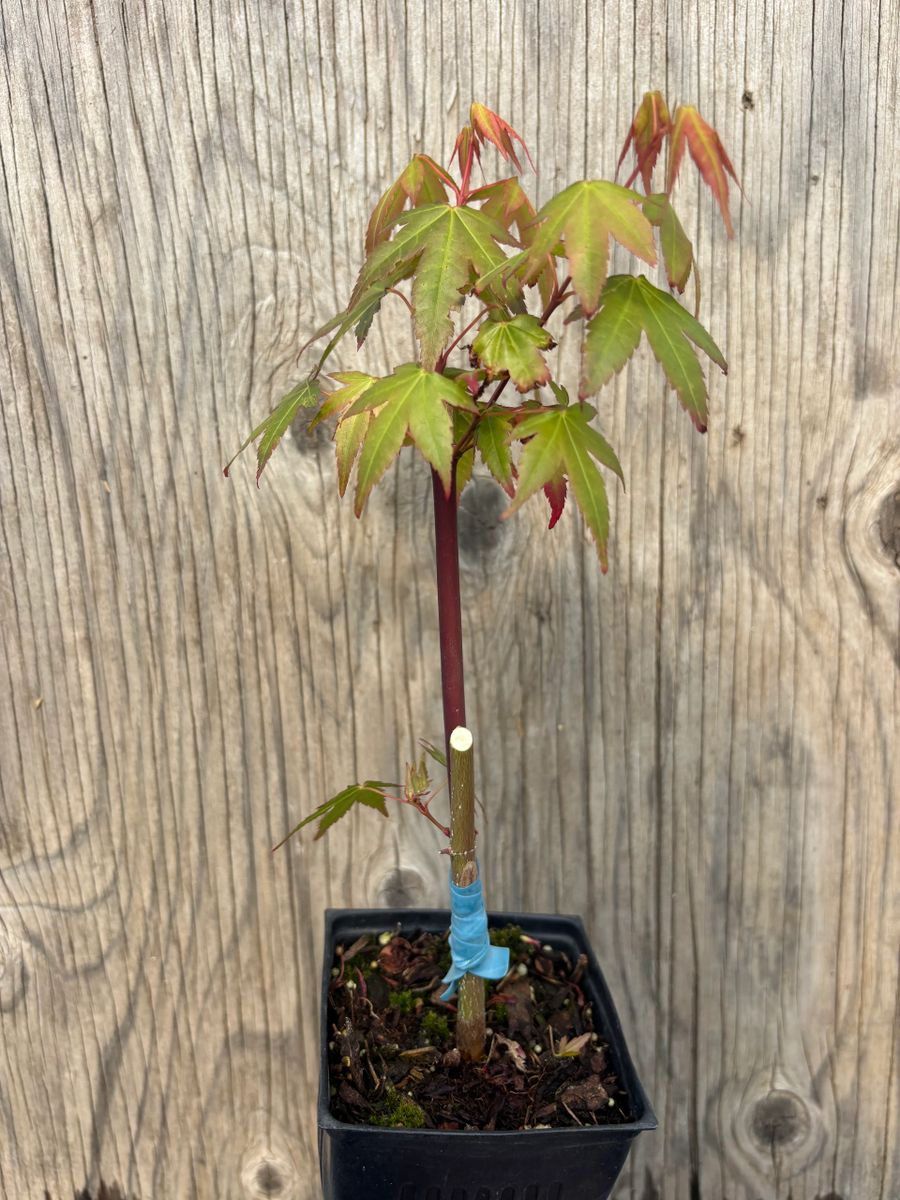
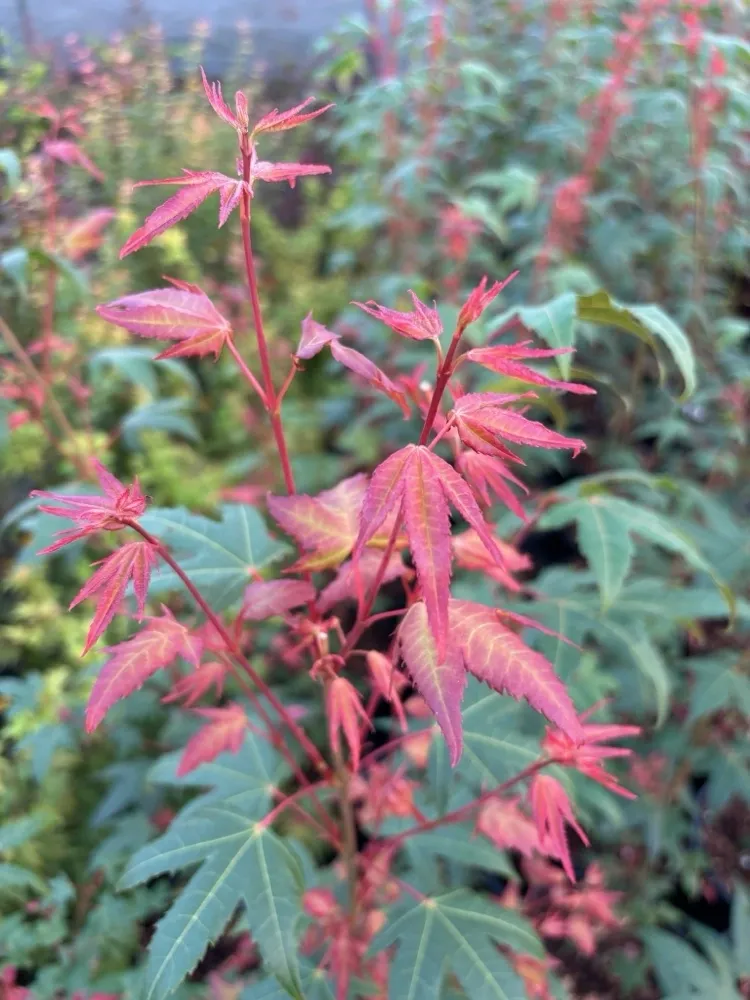
General Characteristics
- Height: Typically grows to about 4-6 feet tall, with a similar width.
- Growth Habit: Upright and bushy, often described as having a rounded canopy.
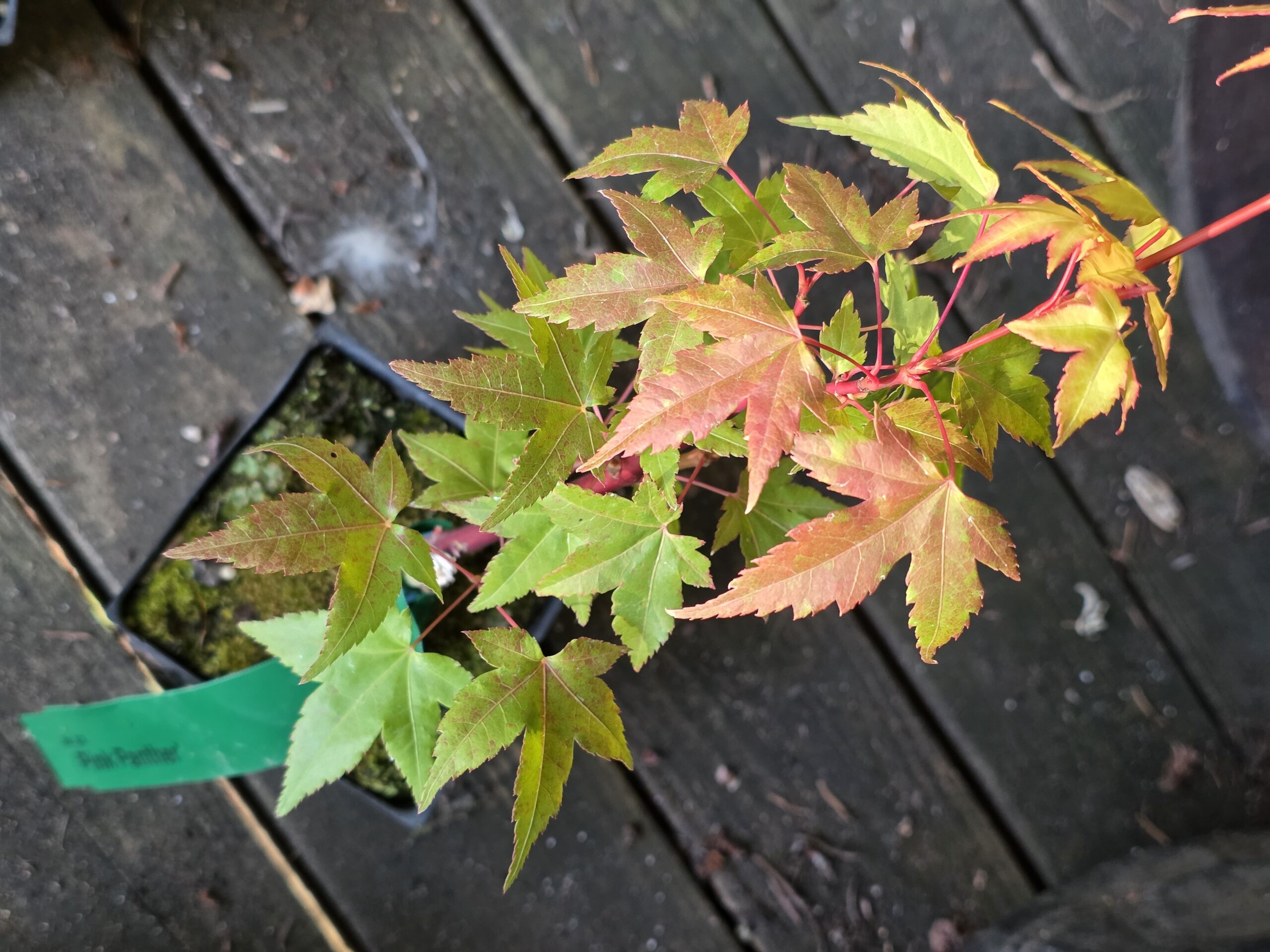
- Leaf Colors: The leaves emerge with a bright pinkish-red in spring, turn to deep purple-red during summer, and transition to fiery scarlet and orange in fall .
- Bark: Features distinctive dark red-to-black bark that adds interest year-round.
Growing Conditions
- Light Preference: Thrives best in partial shade to full sun. In hotter climates, some afternoon shade is beneficial to prevent leaf scorch .
Source
Wang's Nursery (Gig Harbor) in a 1-gallon container as a 12" high recently grafted specimen.
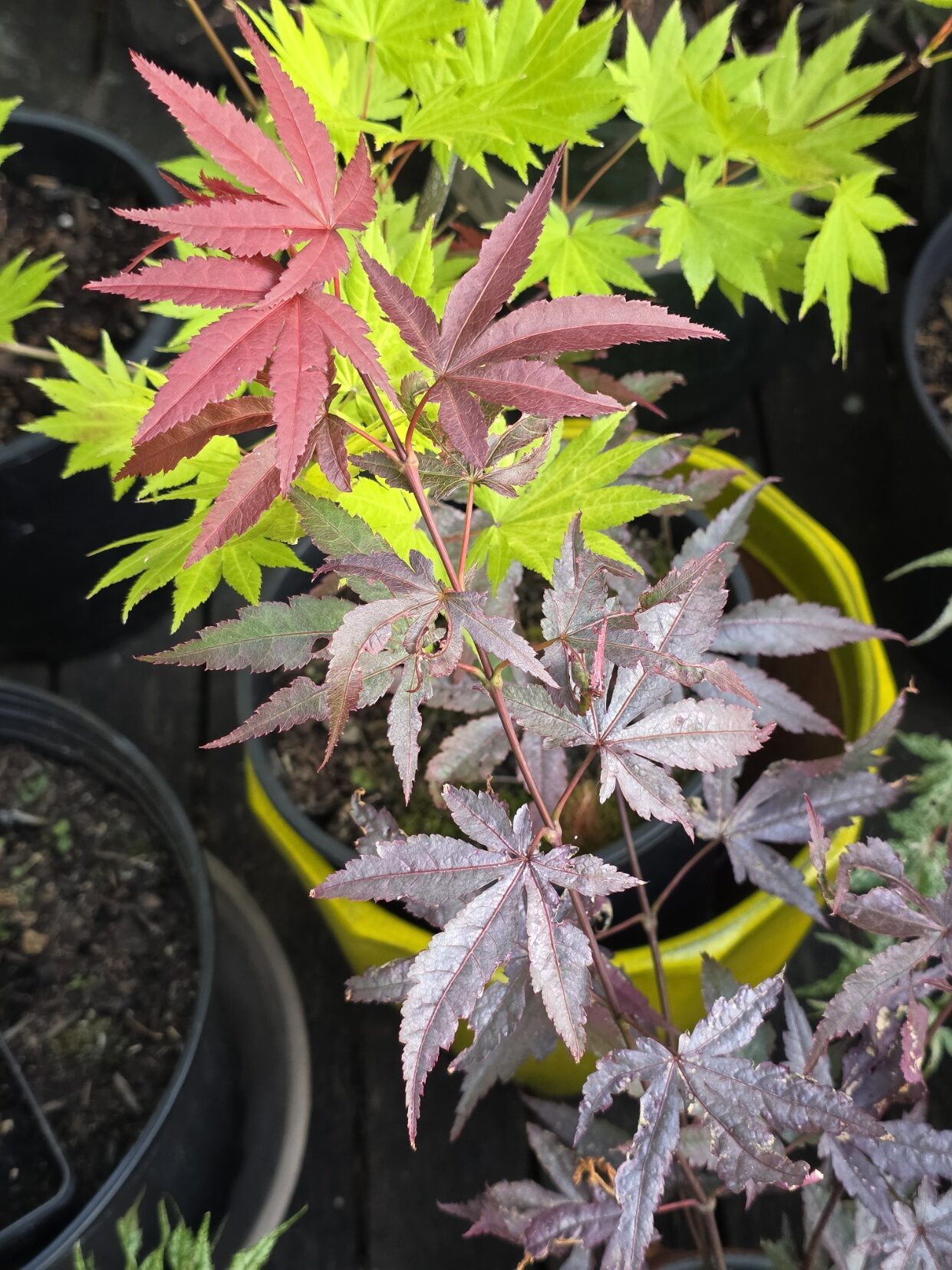
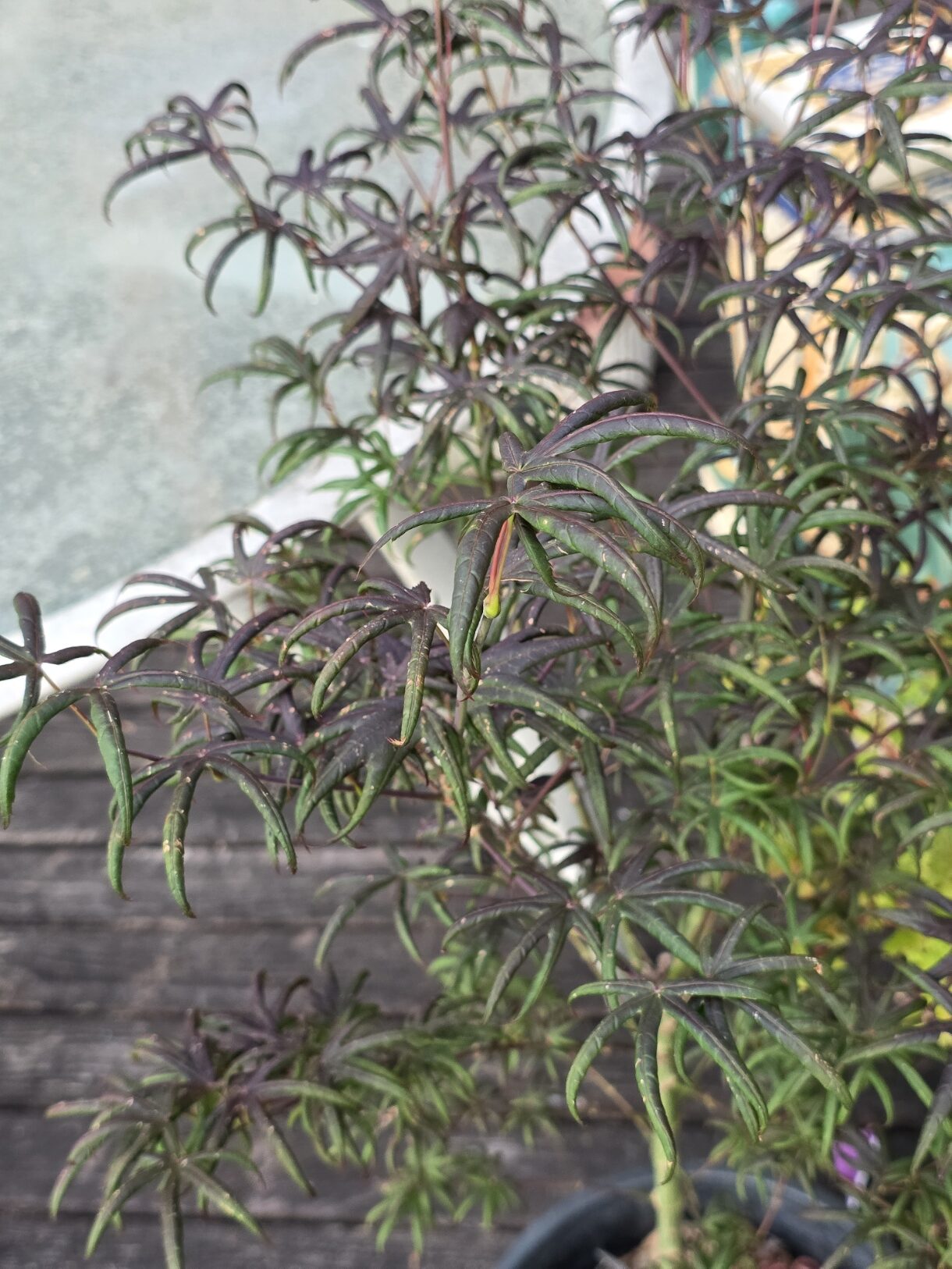
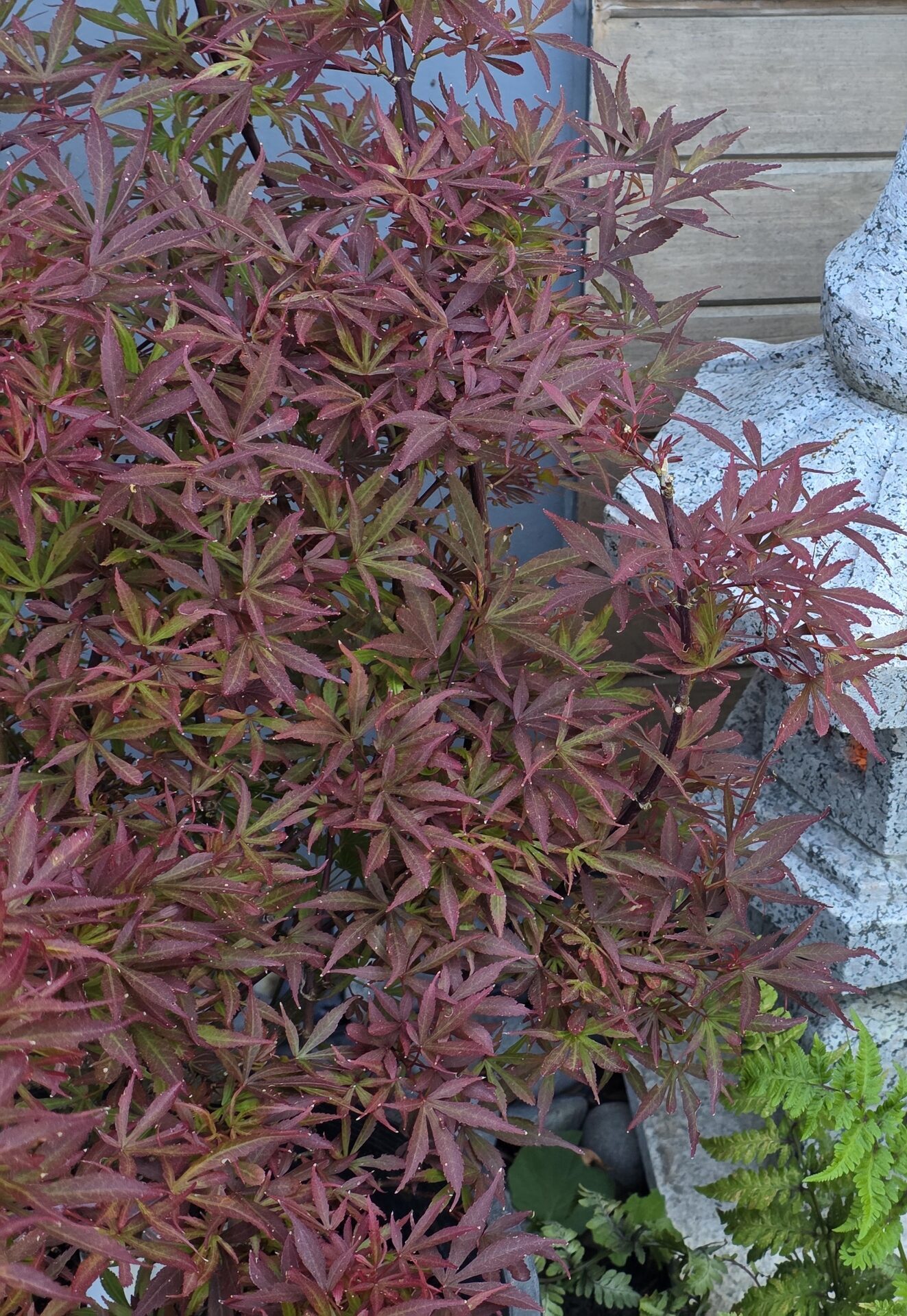
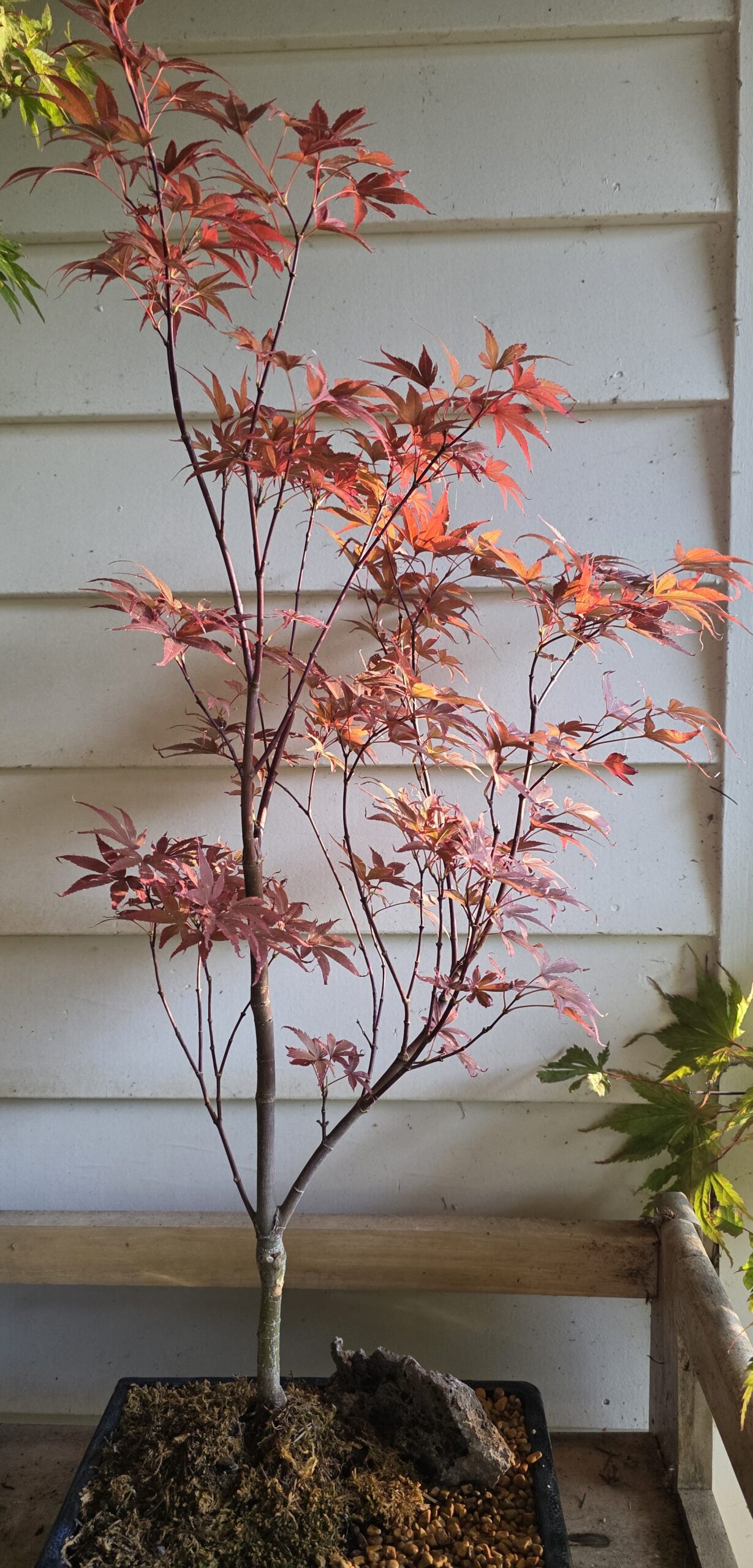
A unique maple with bright red foliage. Each leaf has 3-5 lobes that are long and slender, giving an outstanding and distinctive texture to this bushy tree. The slender branches with mostly consistent thickness can sometimes mimic black bamboo.
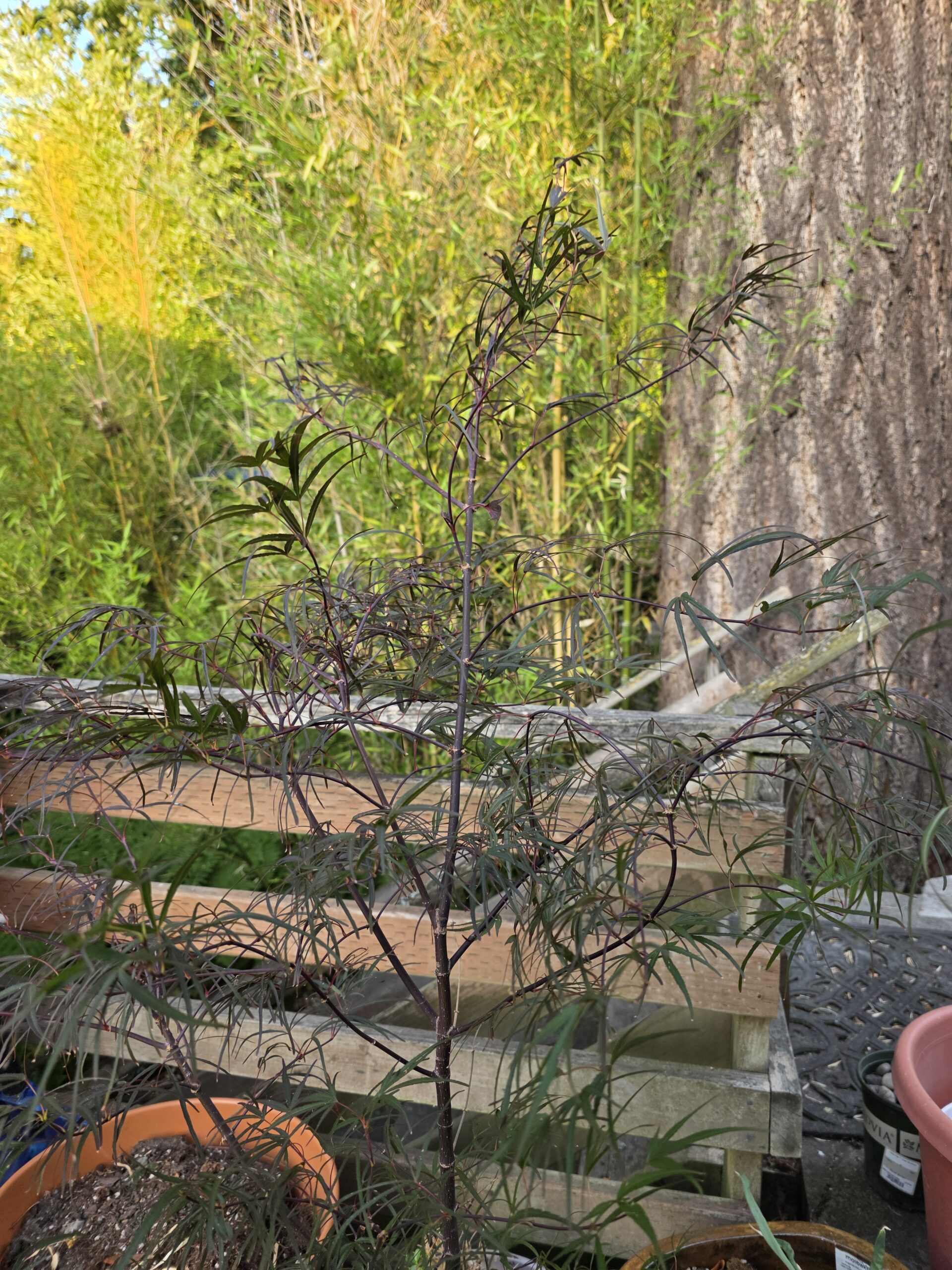
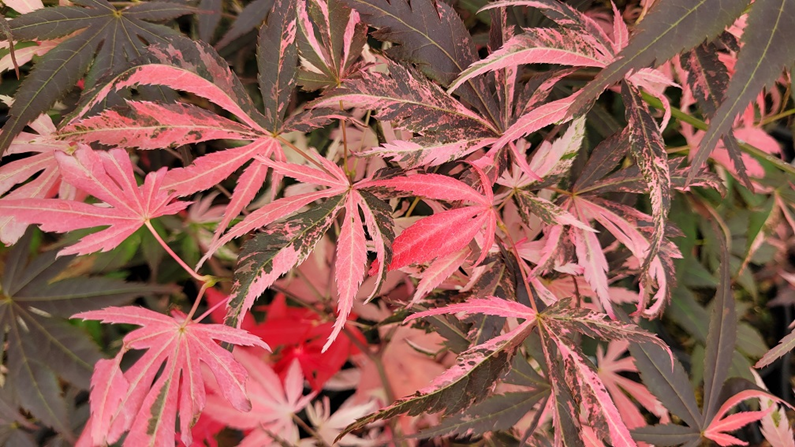
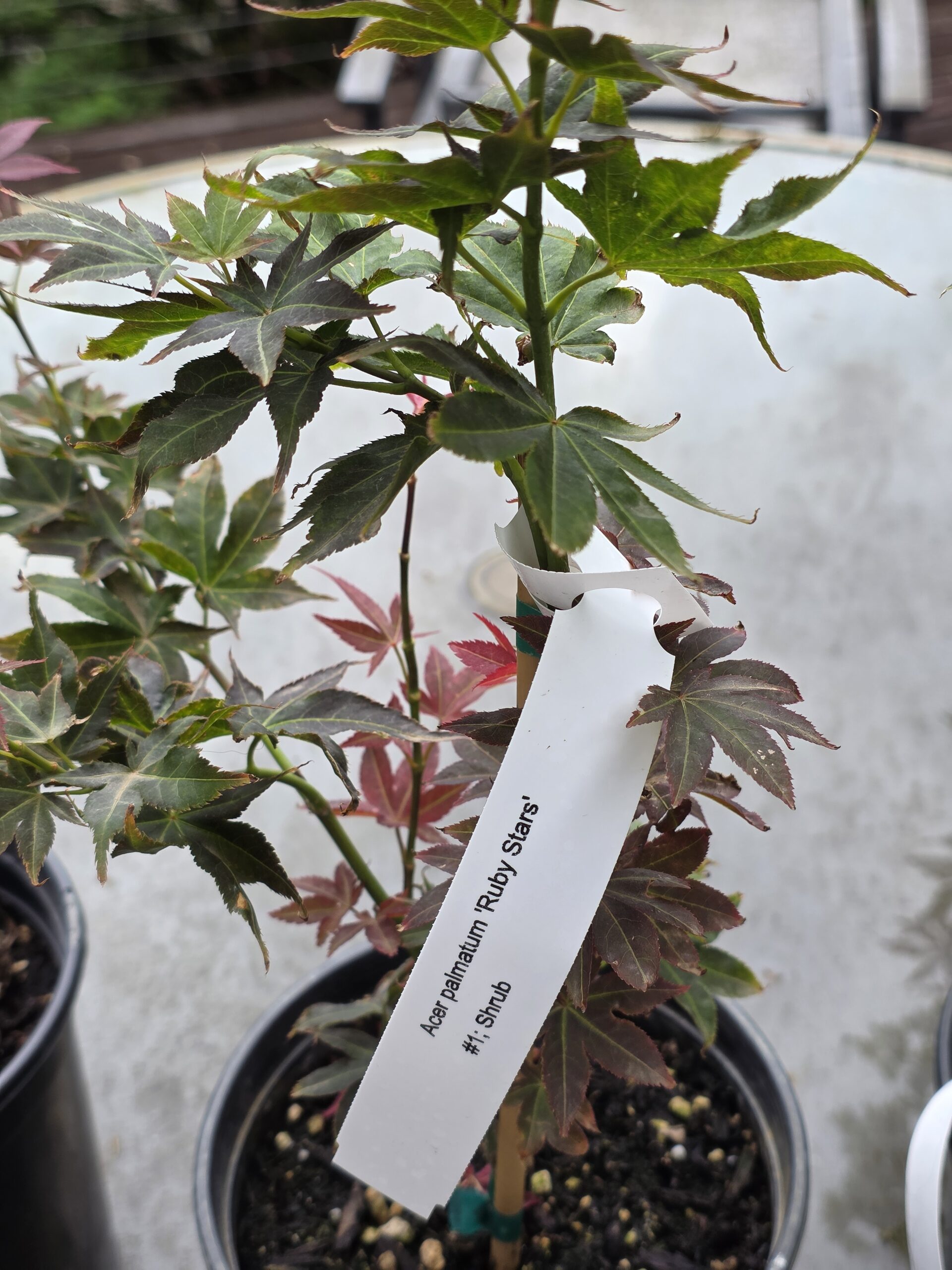
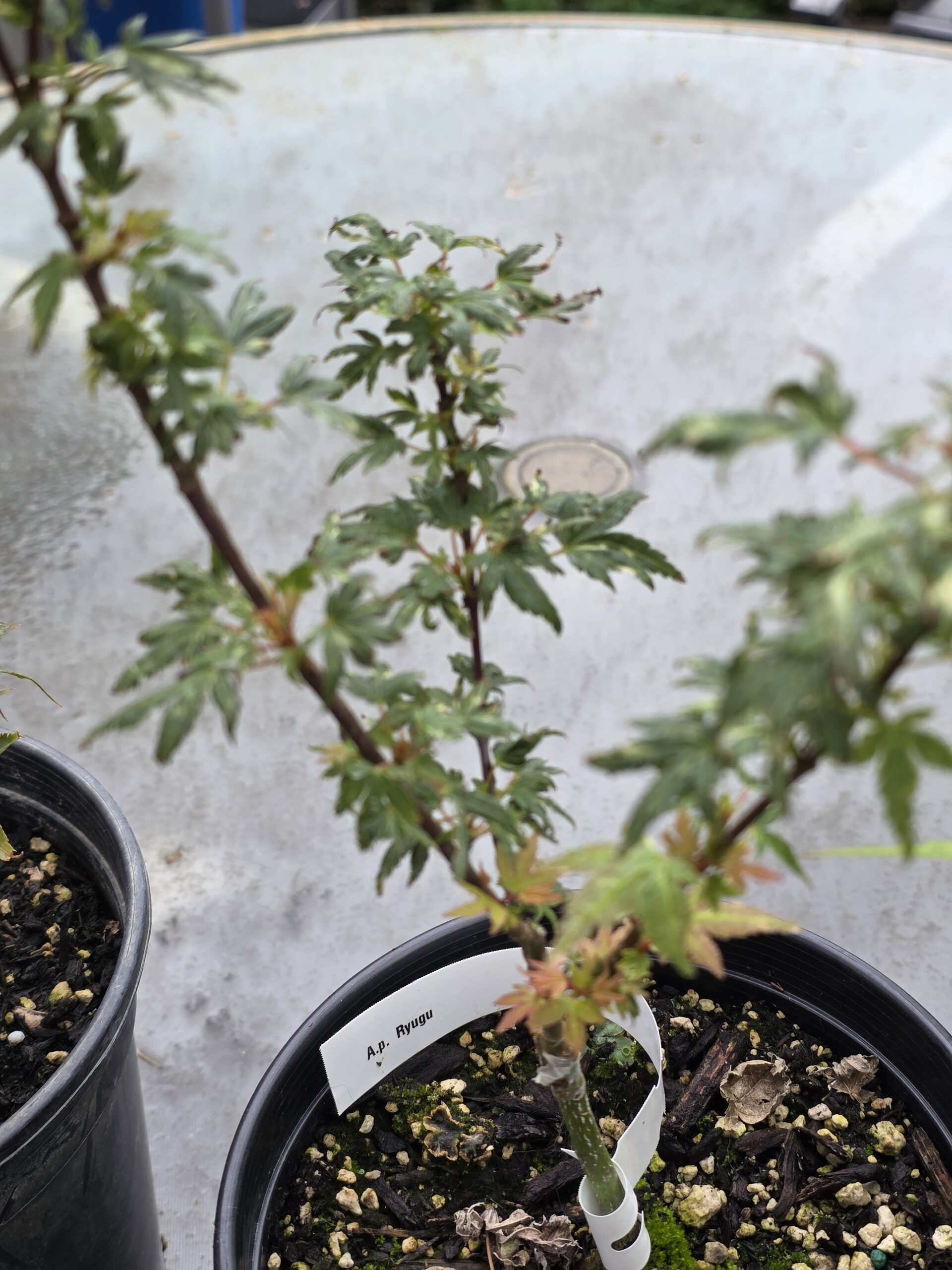
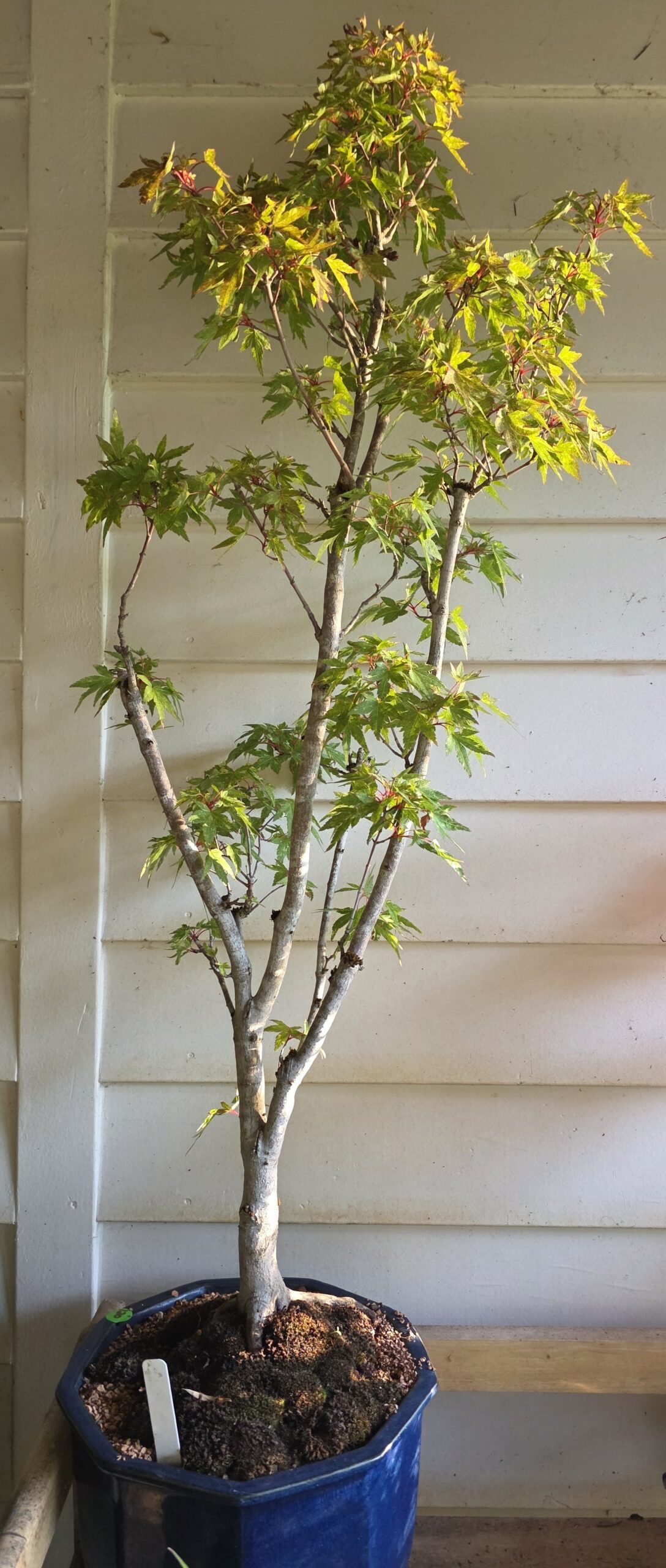
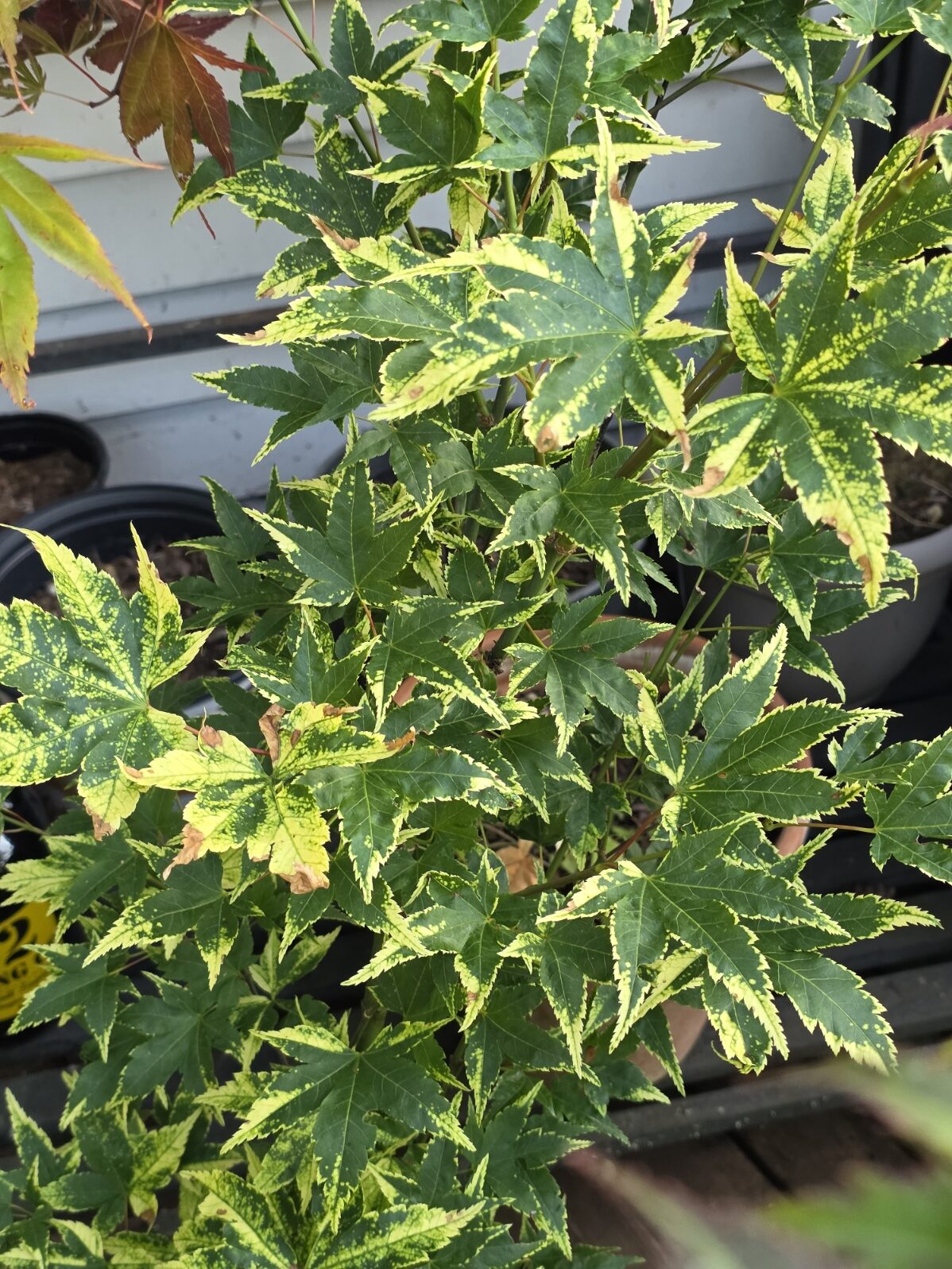
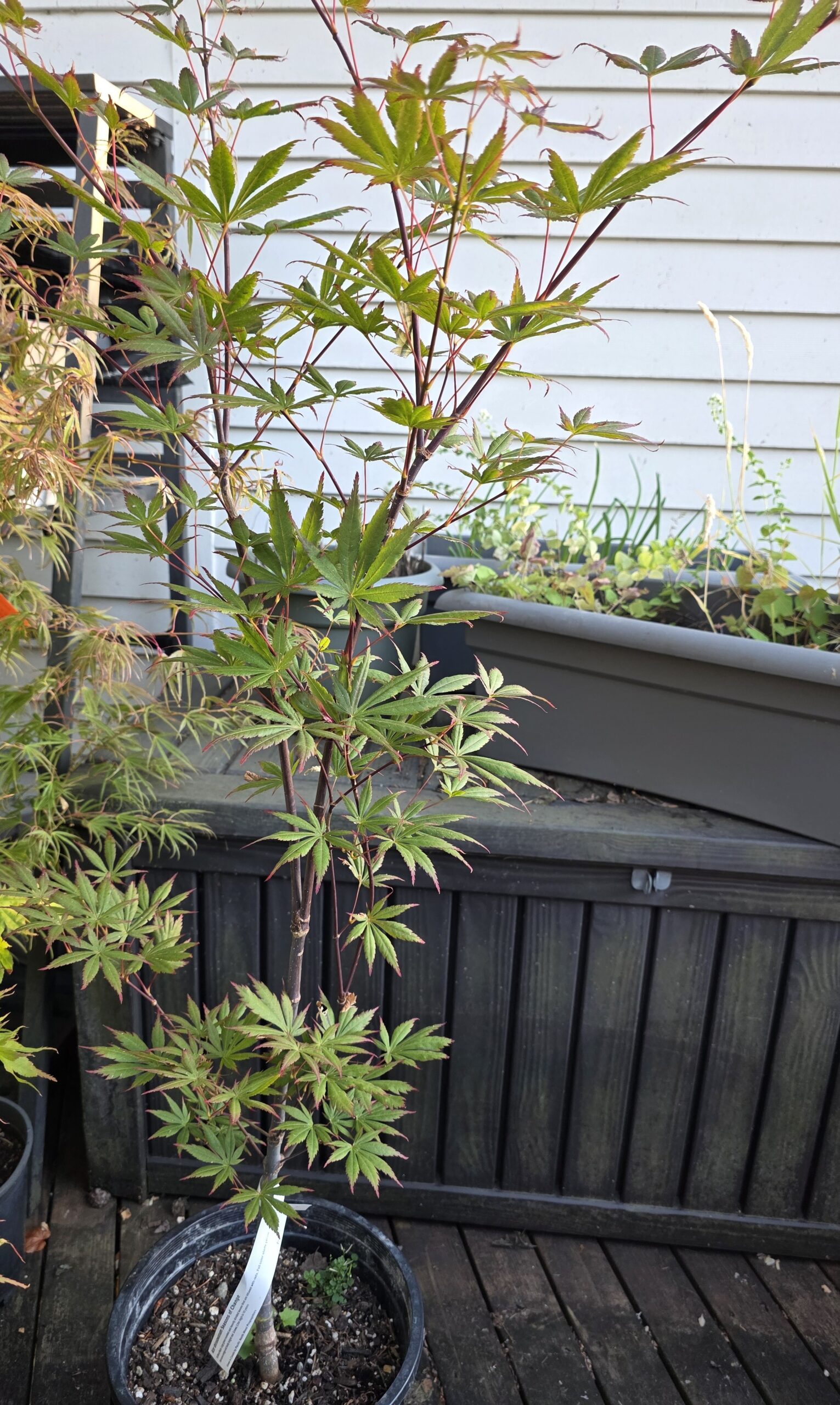
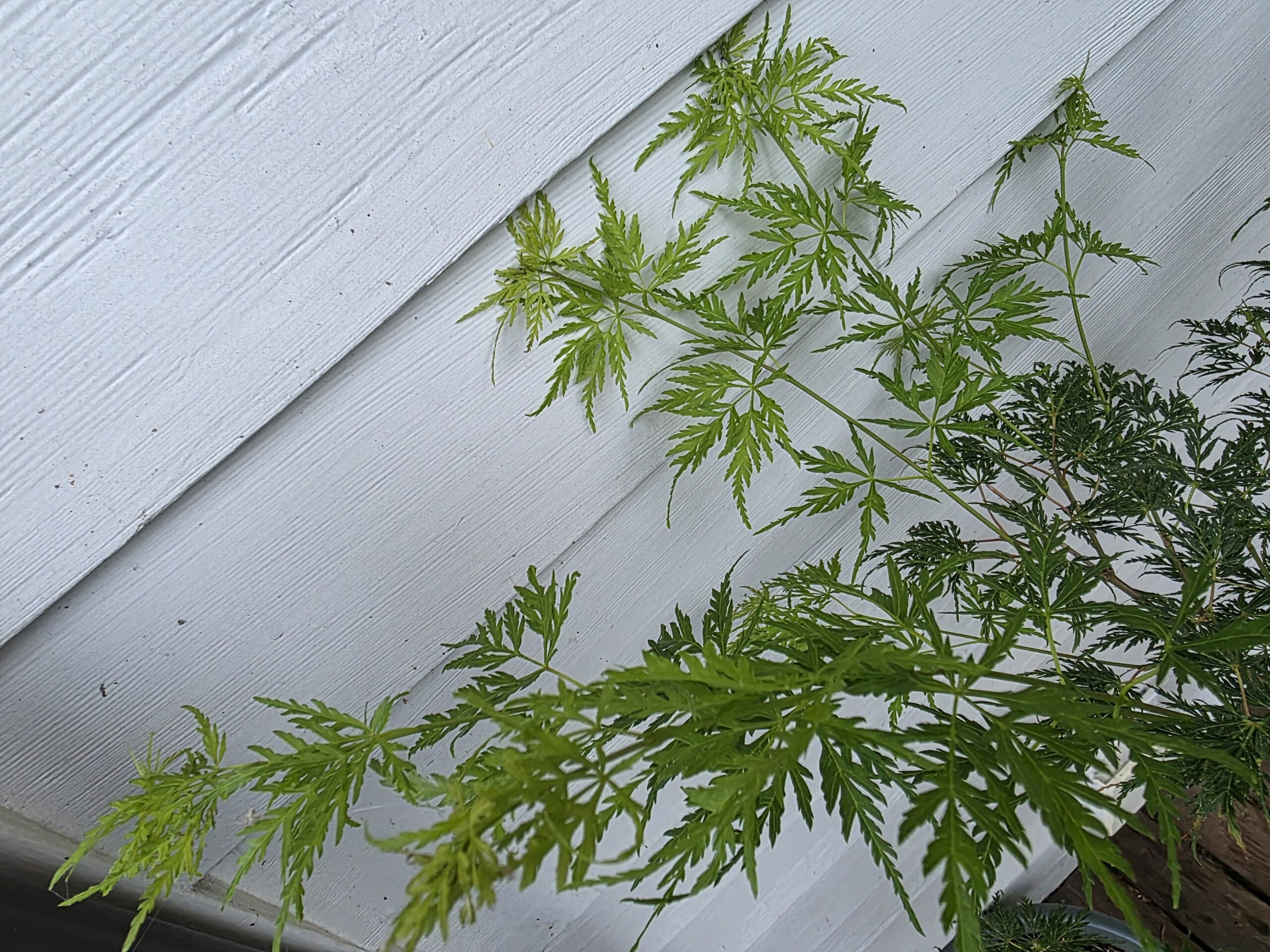
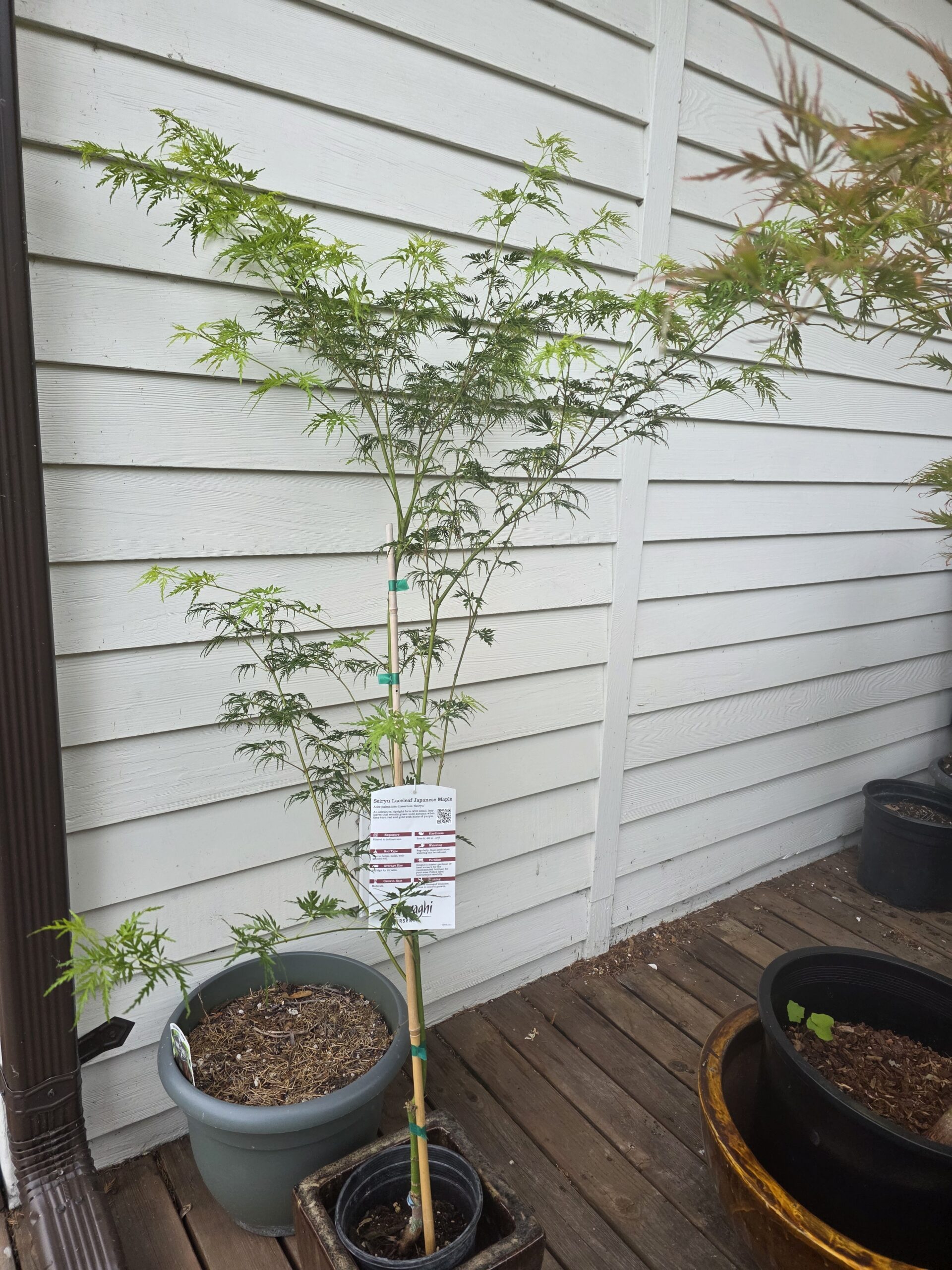
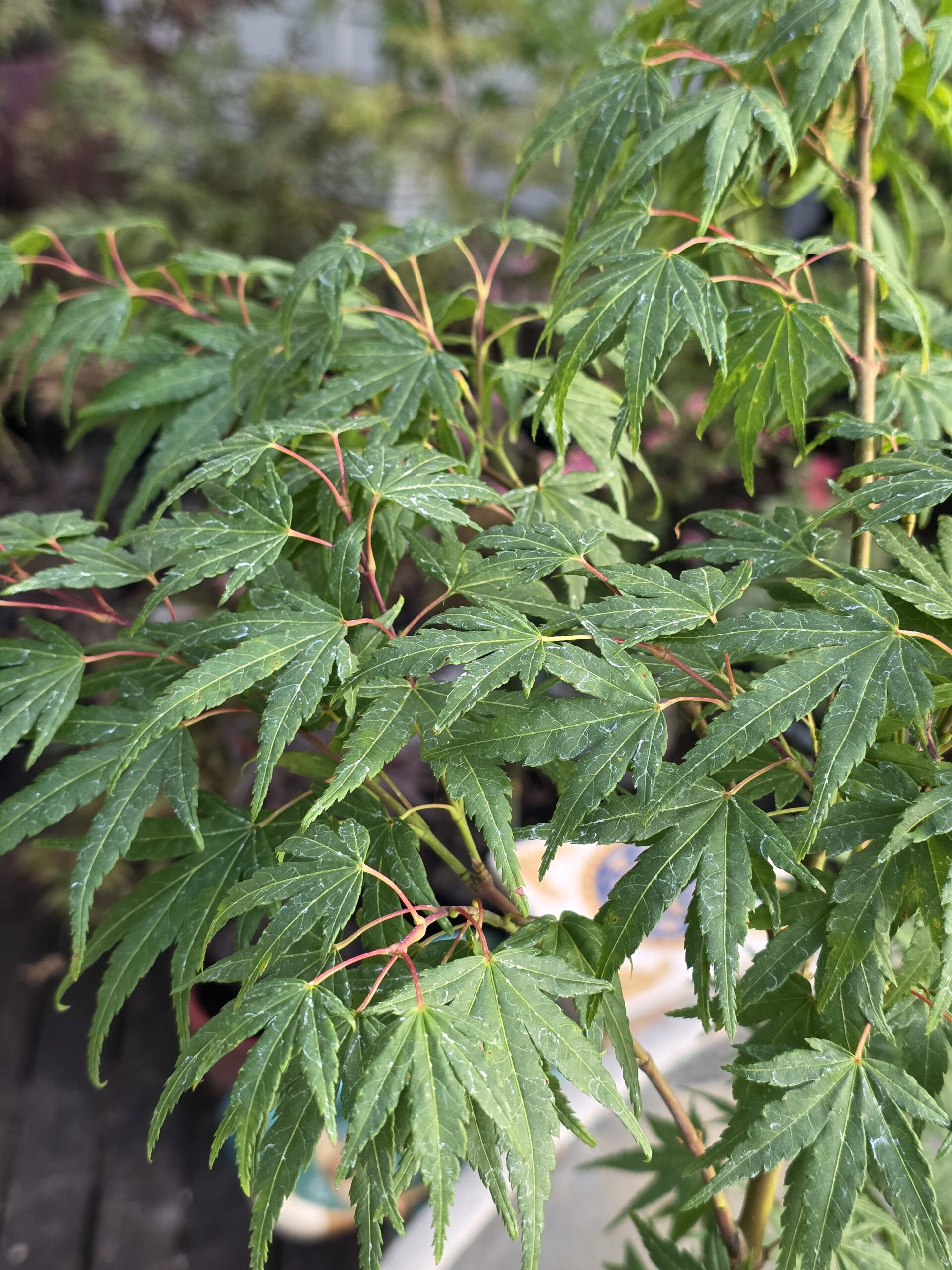
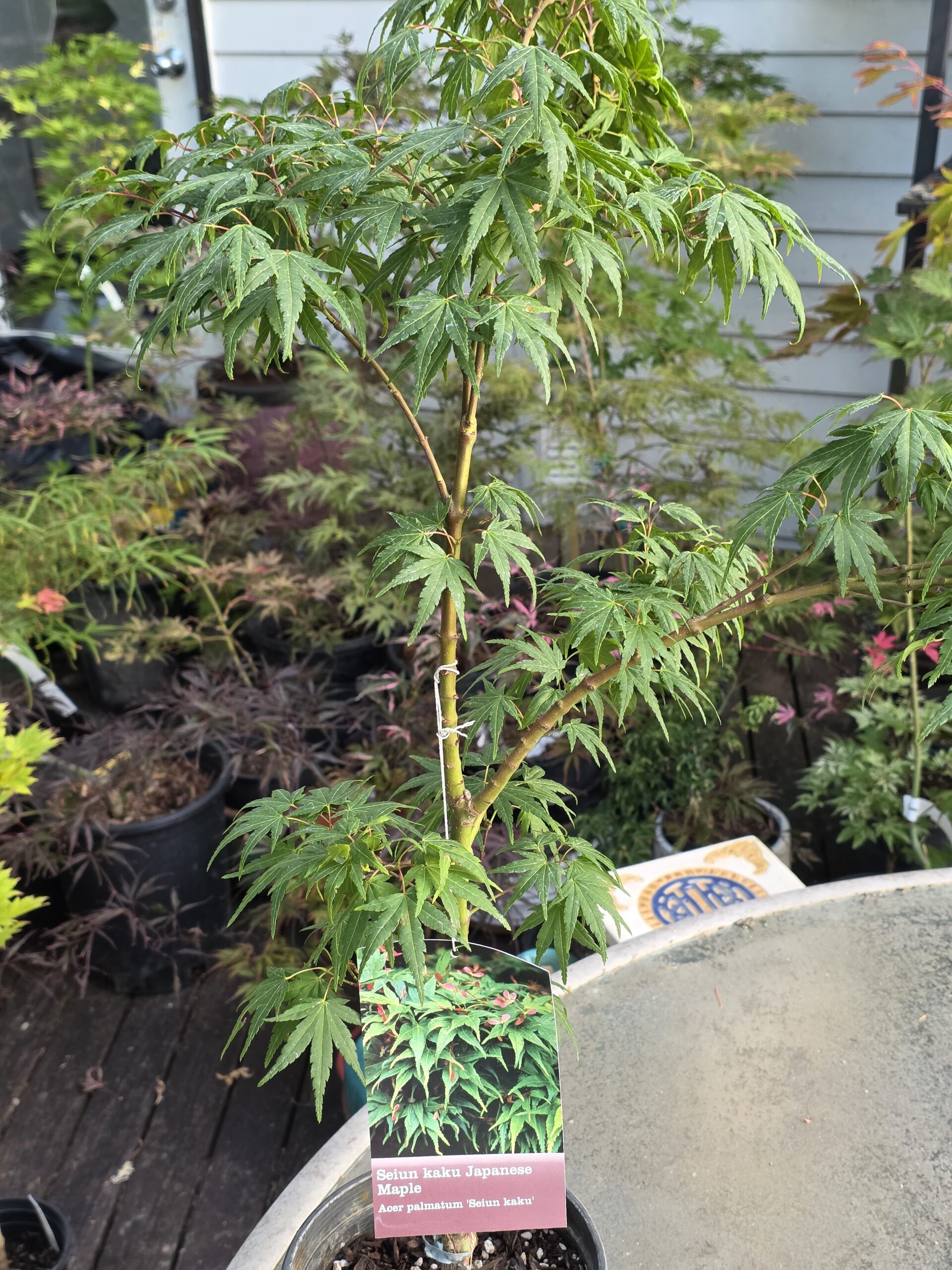
Leaf colors are similar to ‘Bloodgood’ but everything is miniaturized. Spring leaves are bright purple-red and darken to rich purple-red. Small leaves are compressed on the stems.
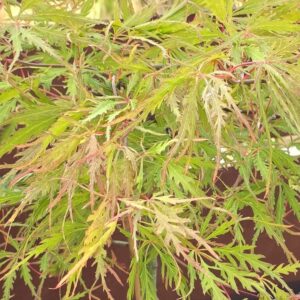
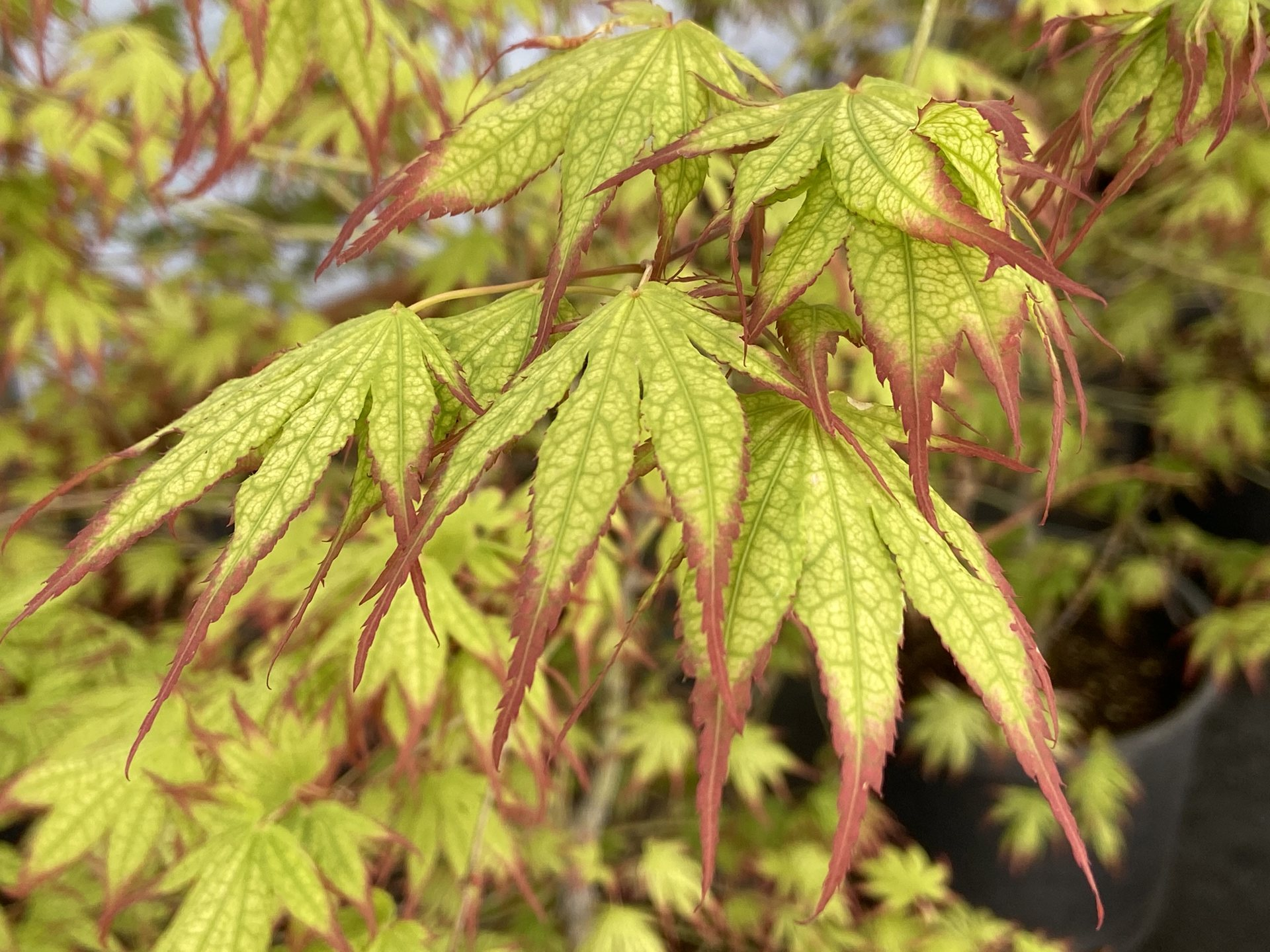
´The Spring Delight is a dwarf, lace-leaf variety known for its weeping branches of yellow-green spring leaves that look as if they have been dipped in cranberry juice. The color is primarily a vivid green in summer and display bright orange and yellow hues in fall. This variety is characterized by its slow growth. It is noted for its good sun tolerance and is relatively easy to grow.
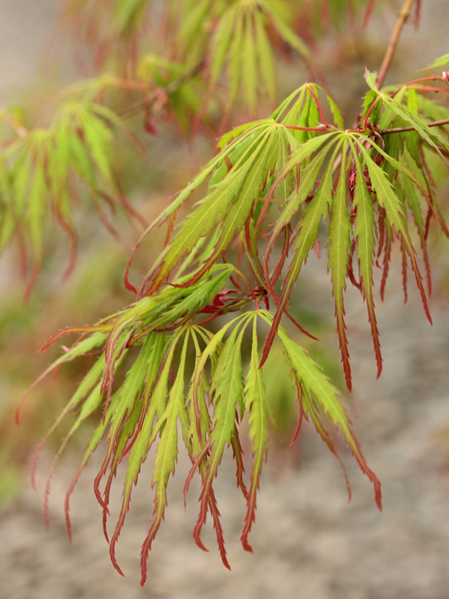
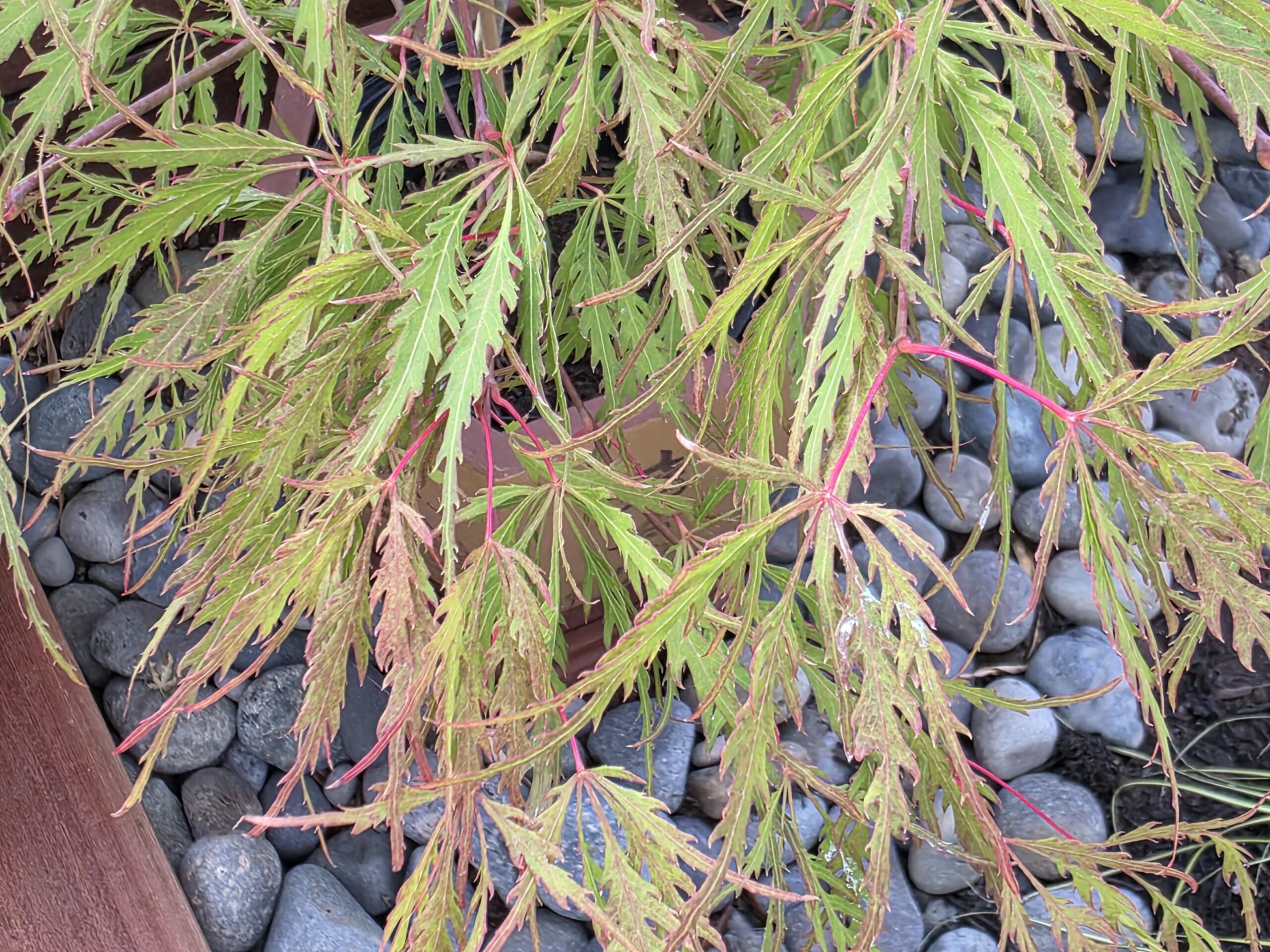
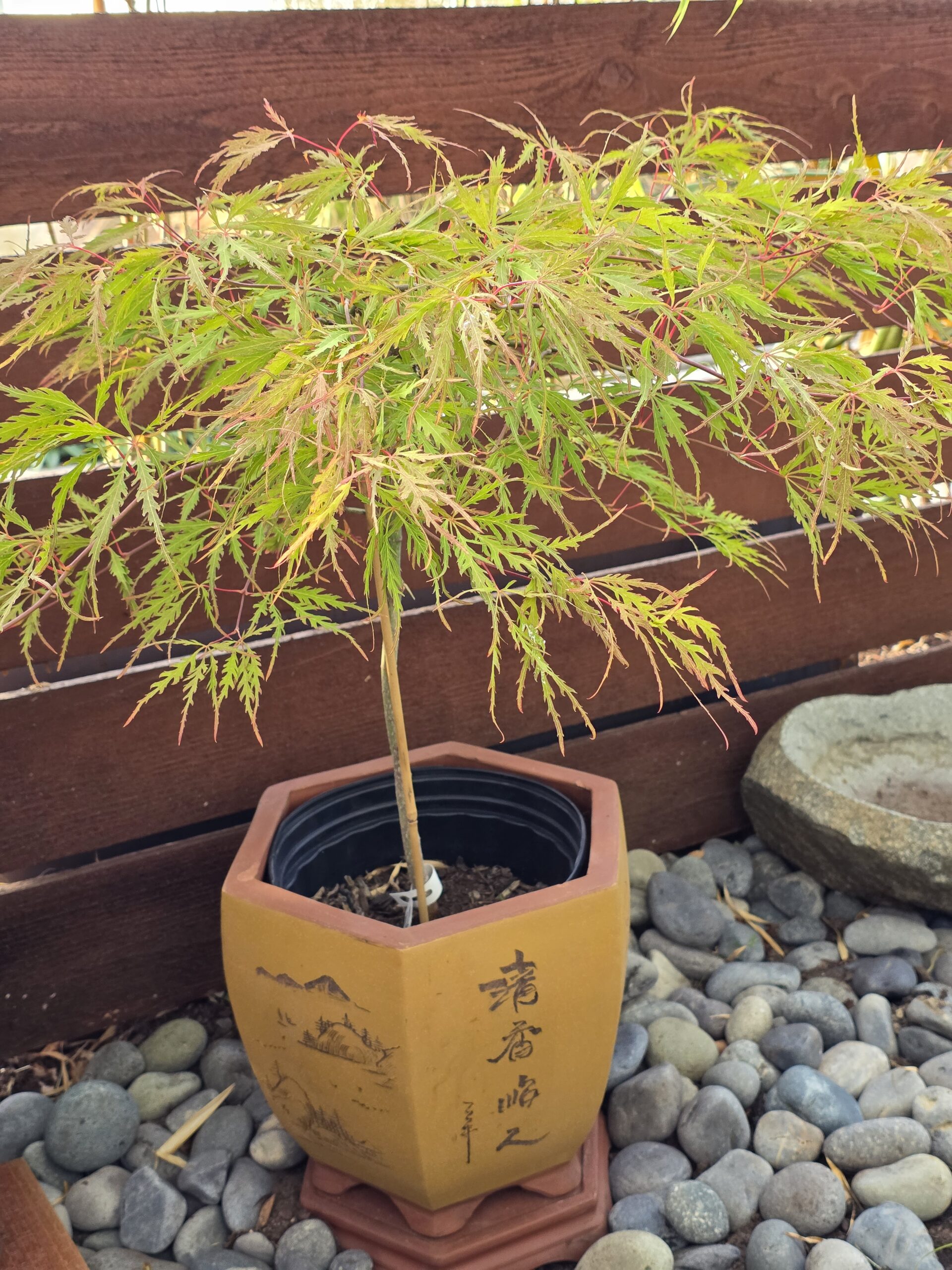
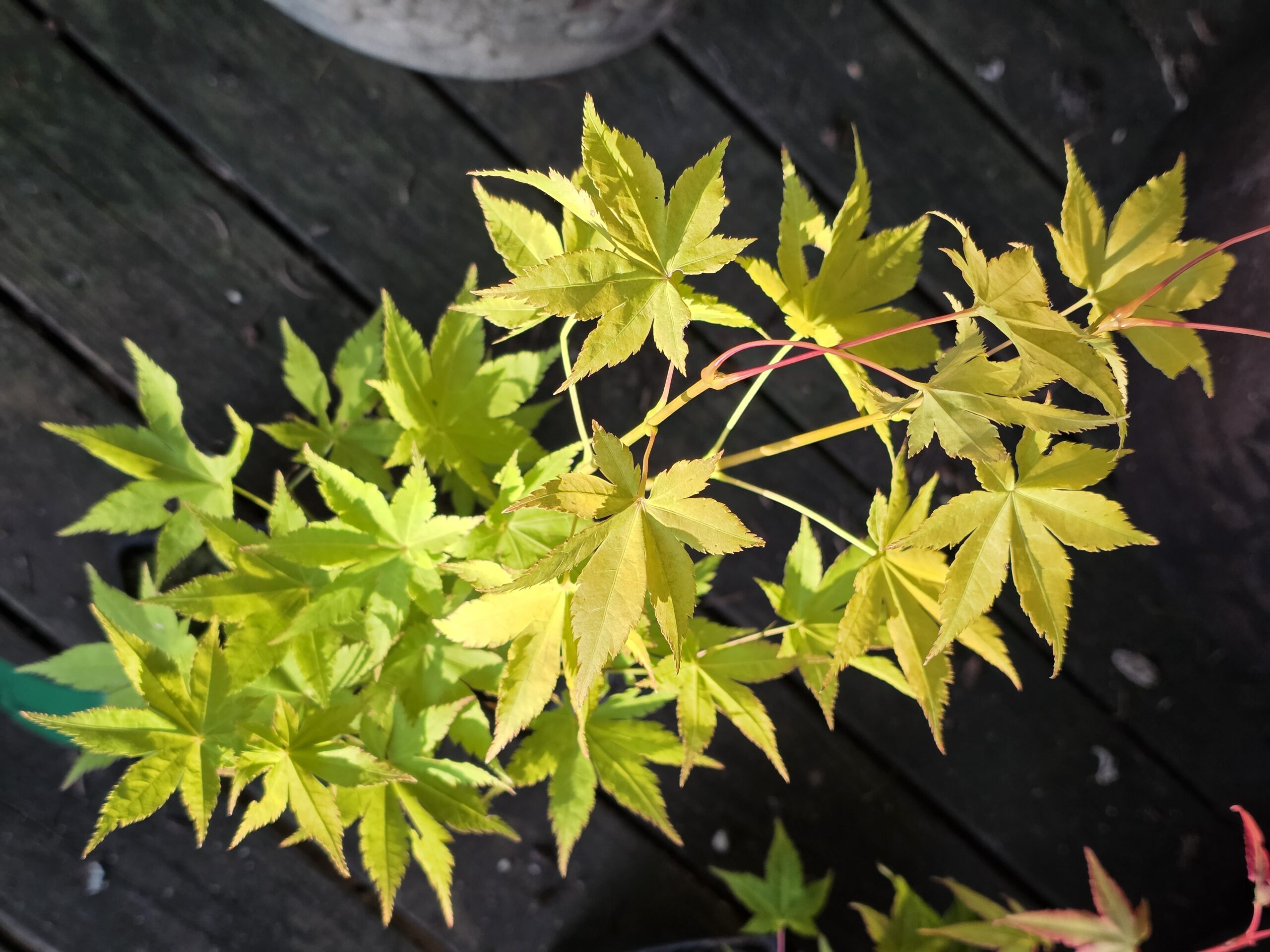
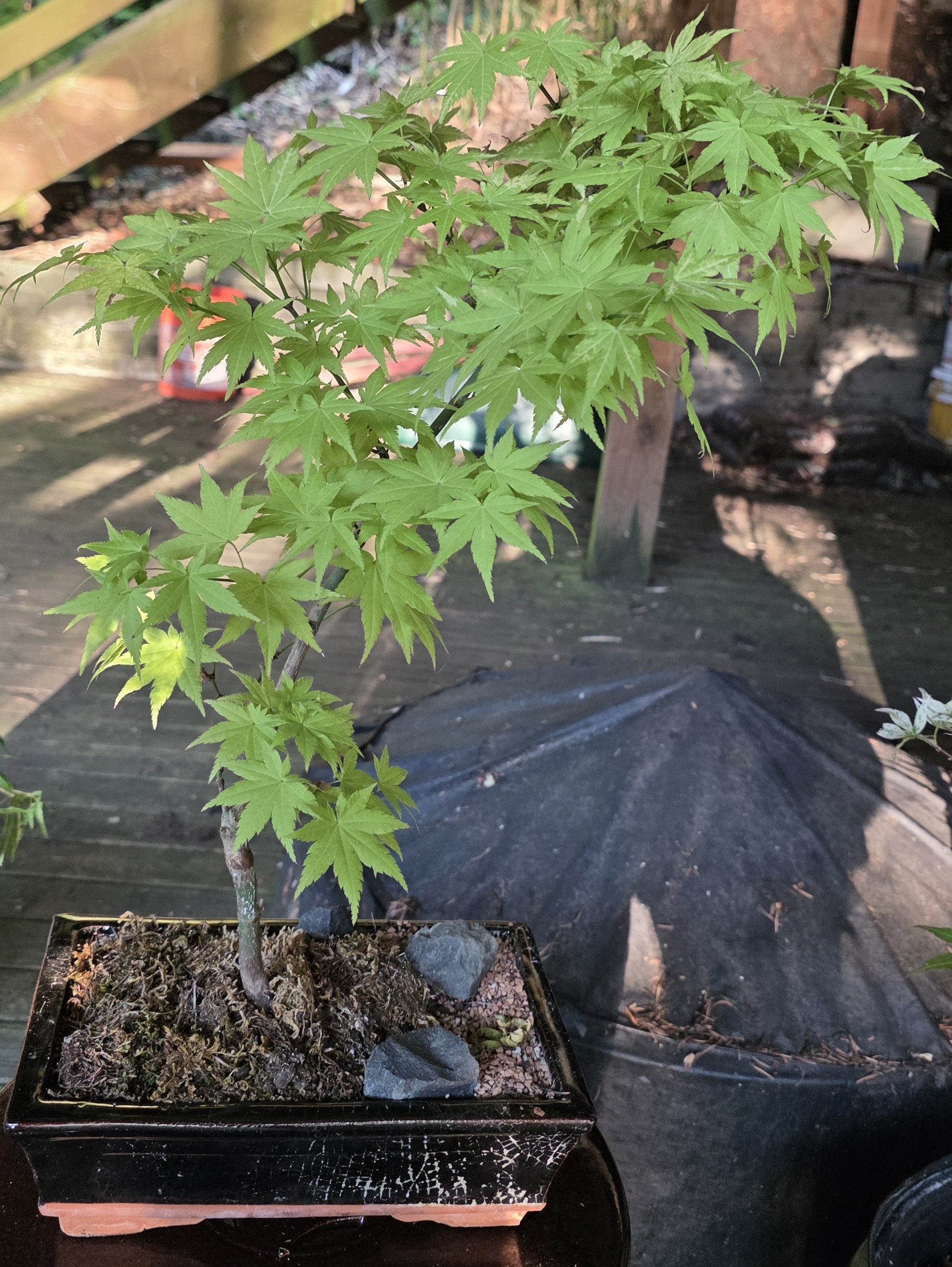
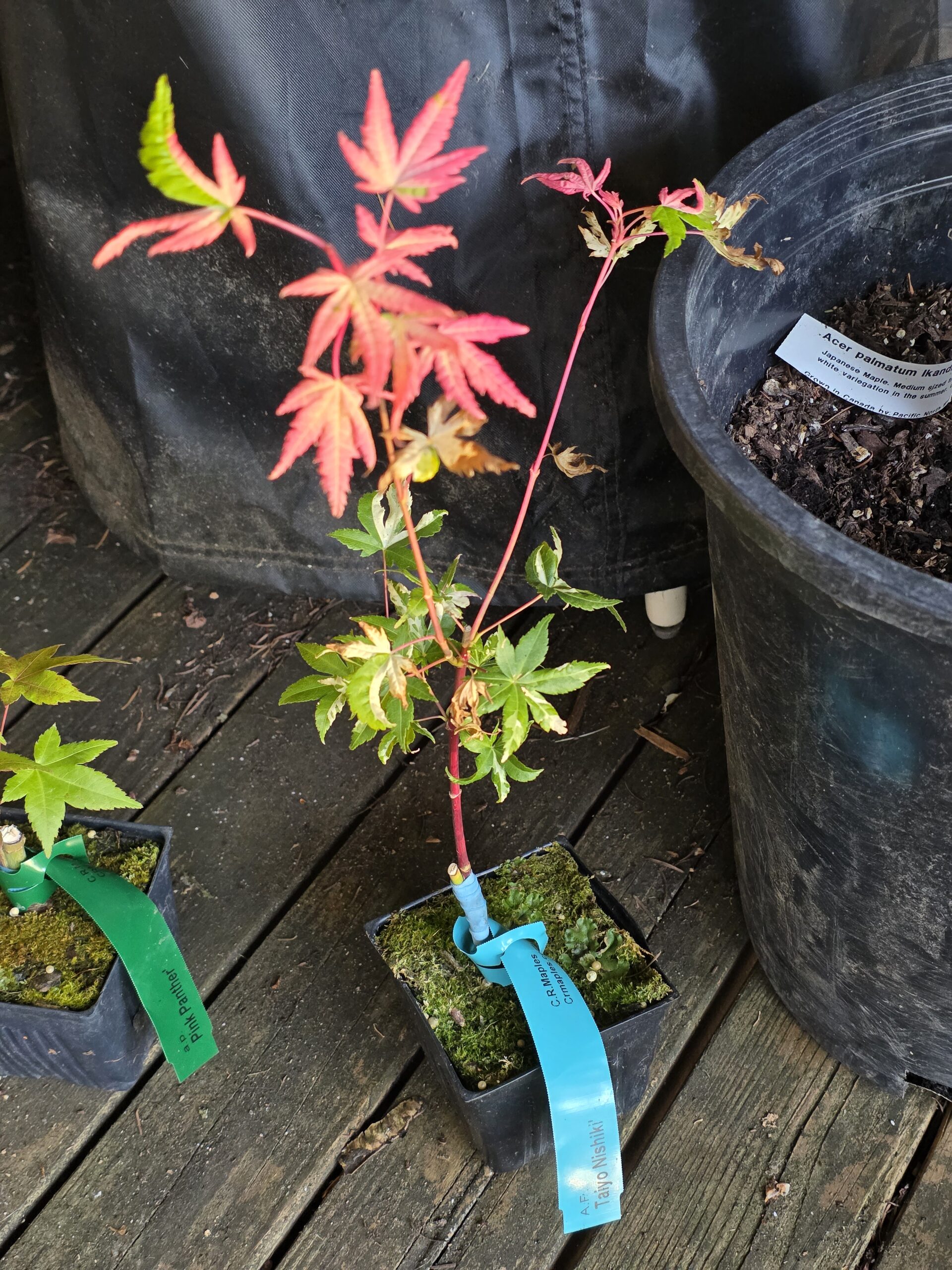
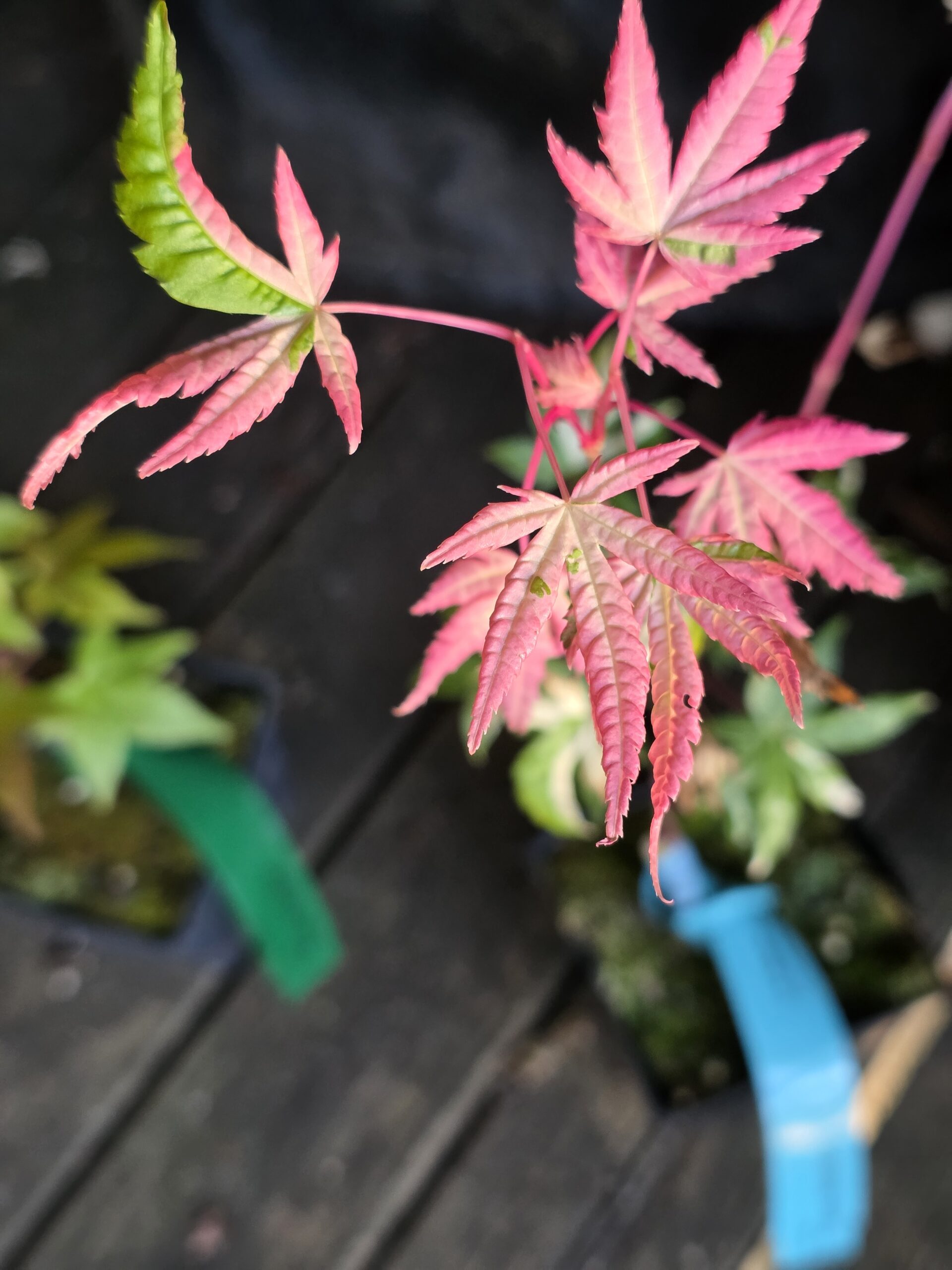
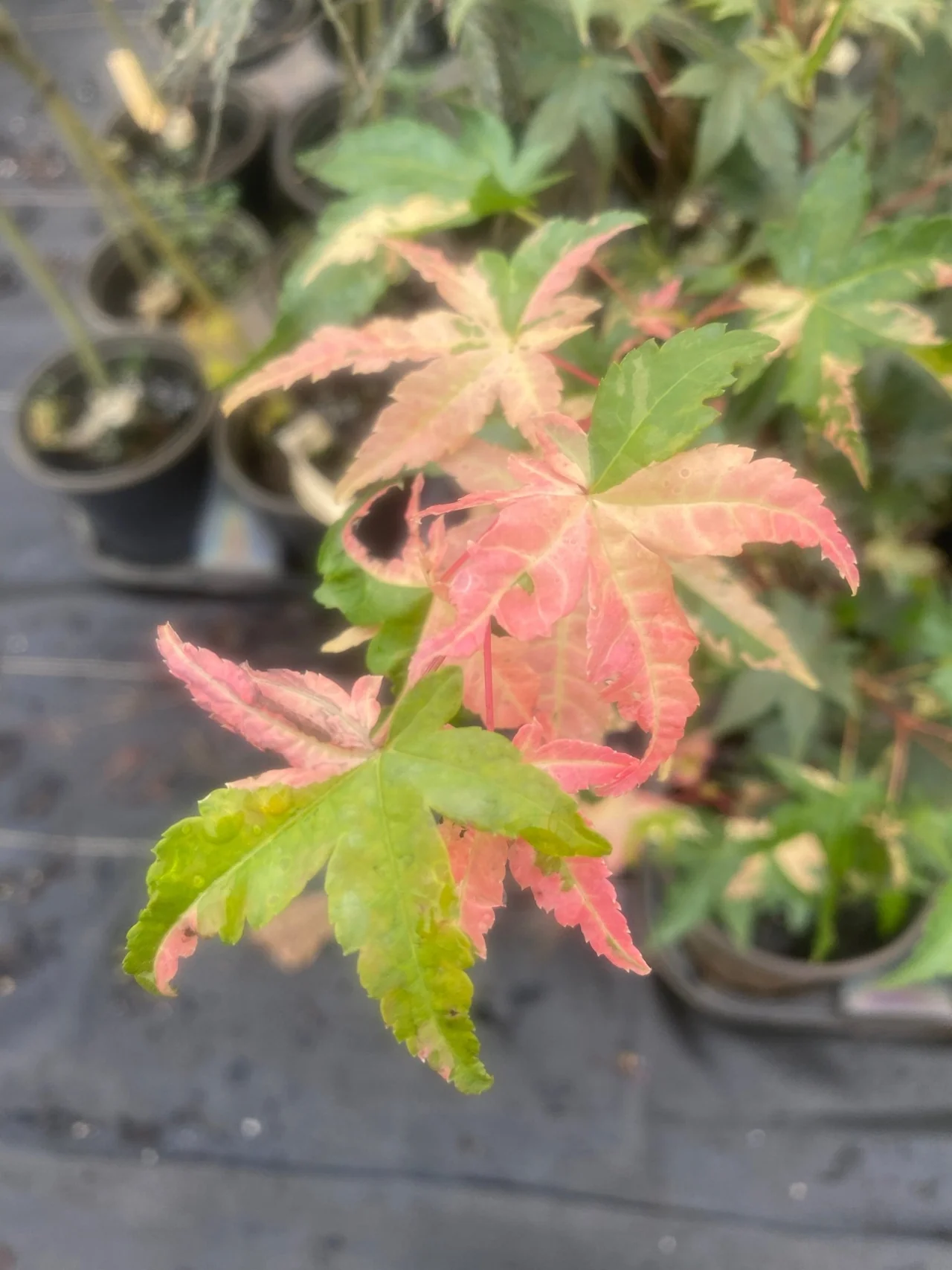

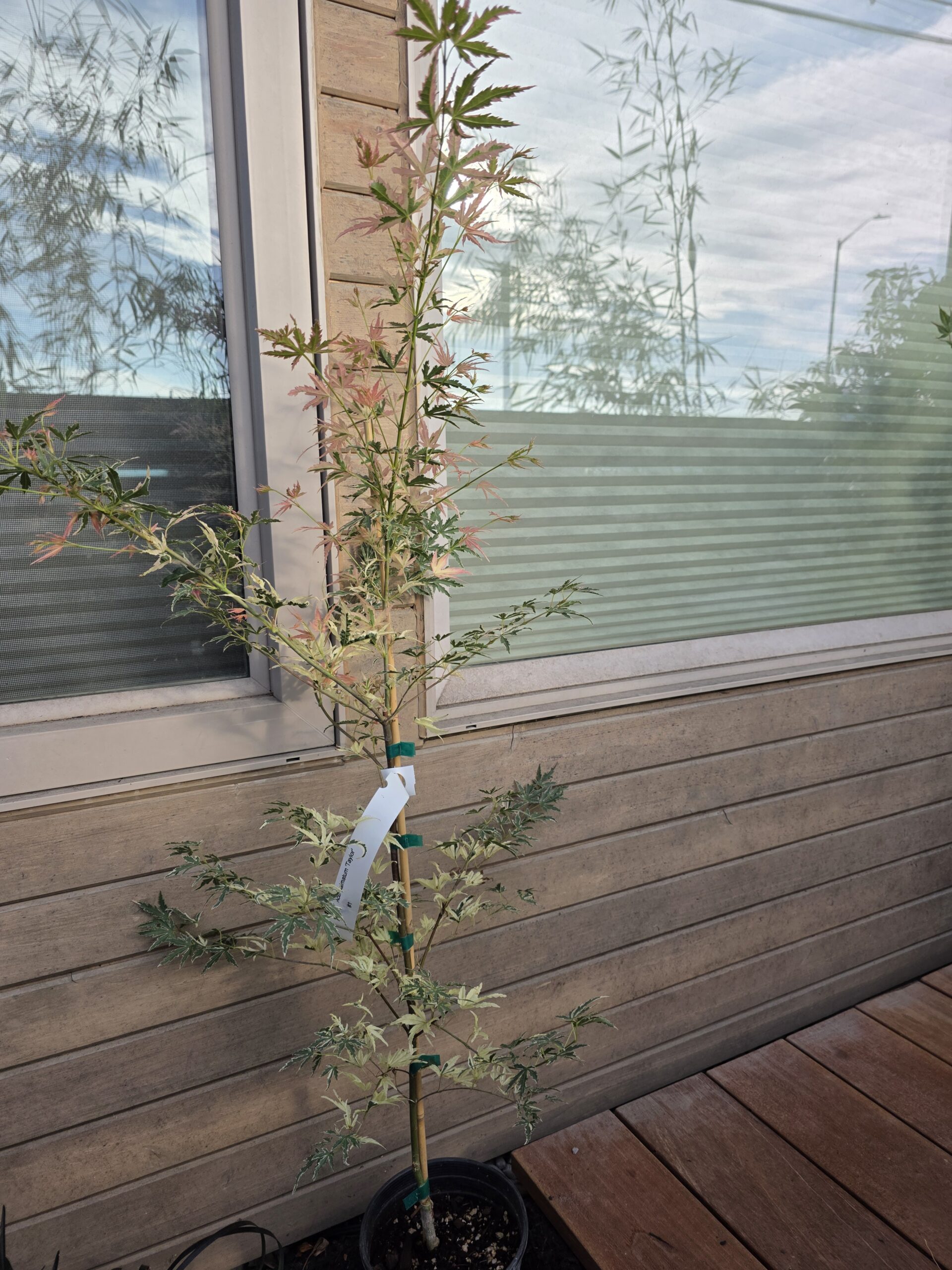
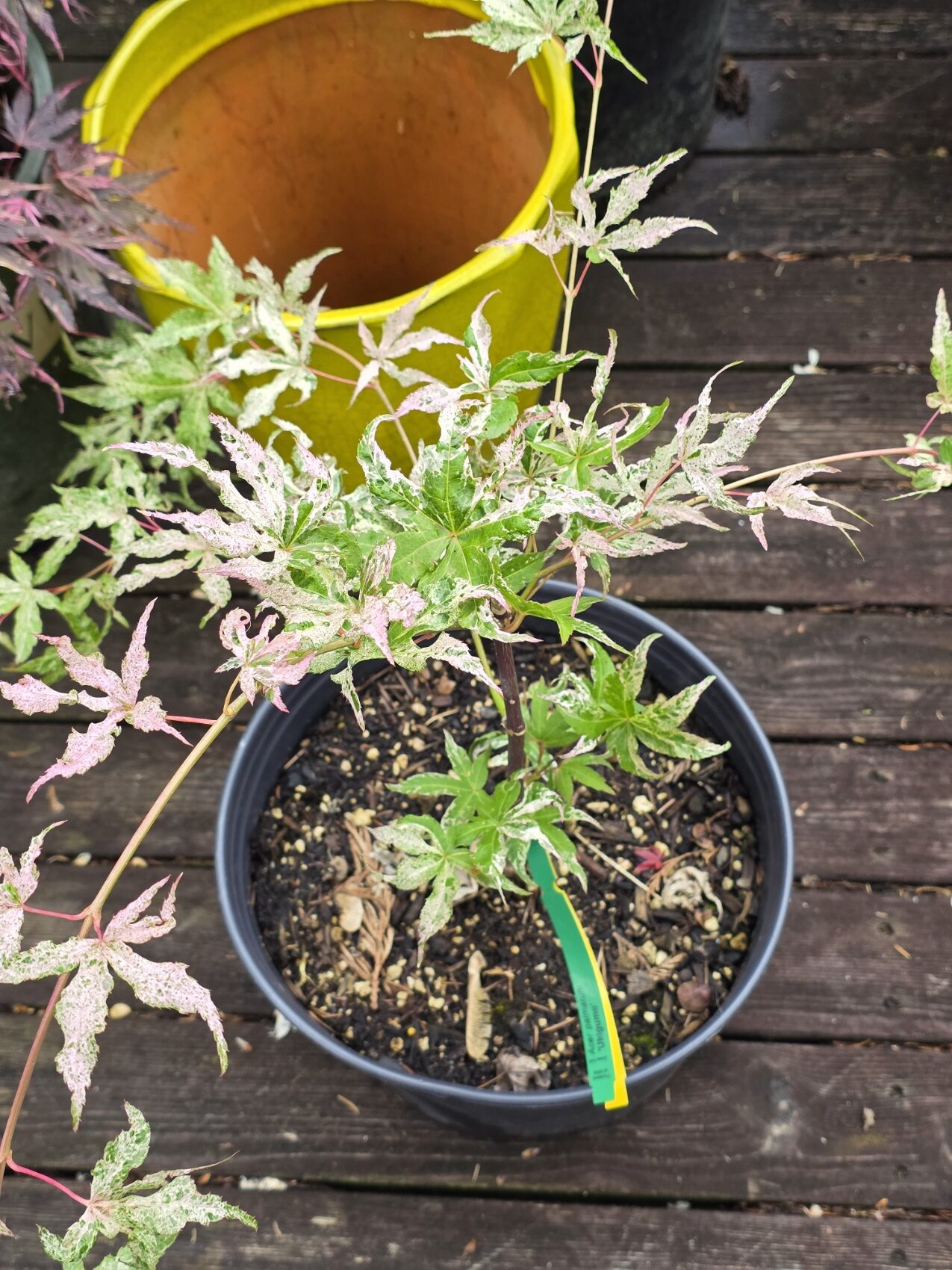
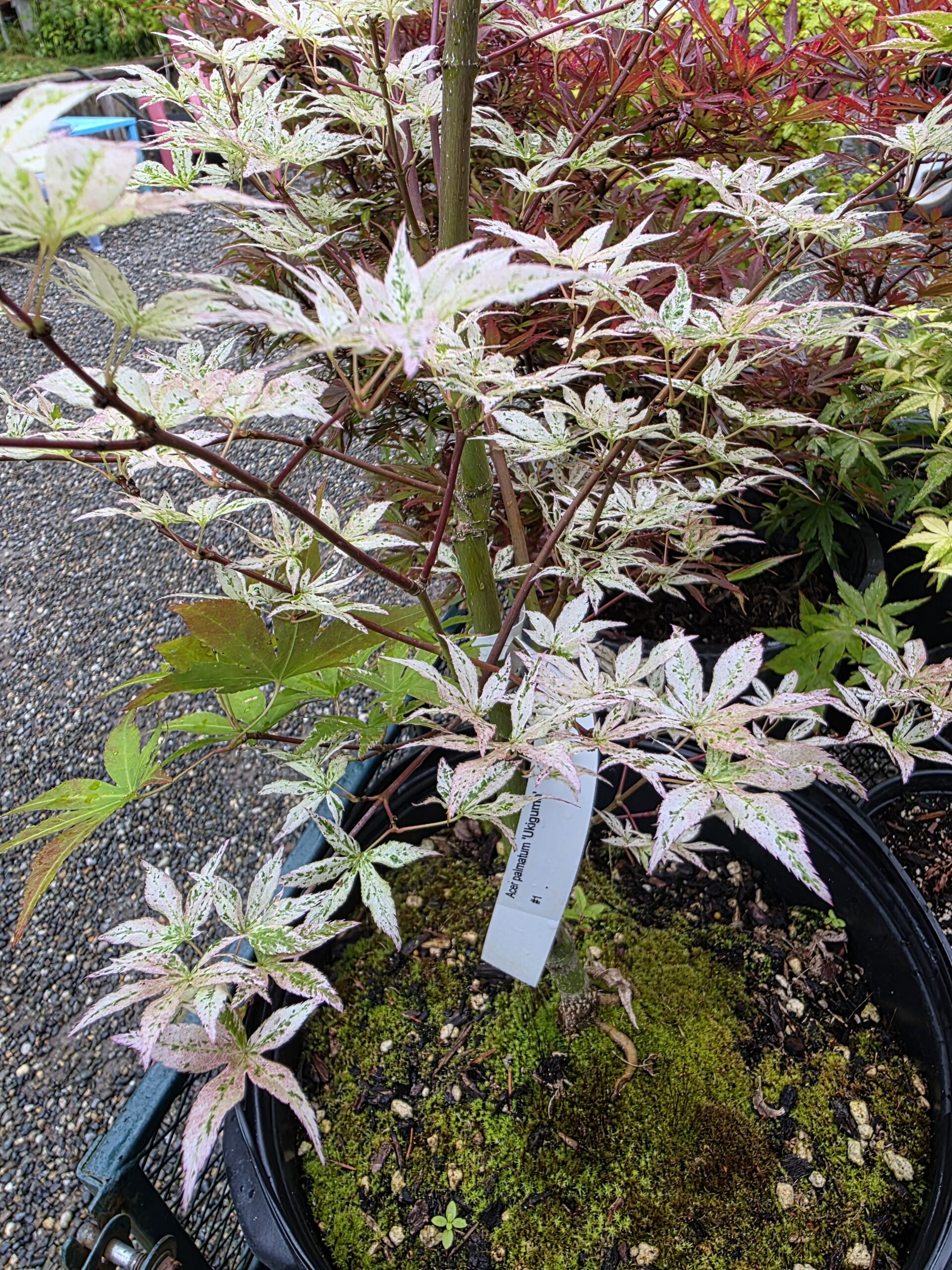
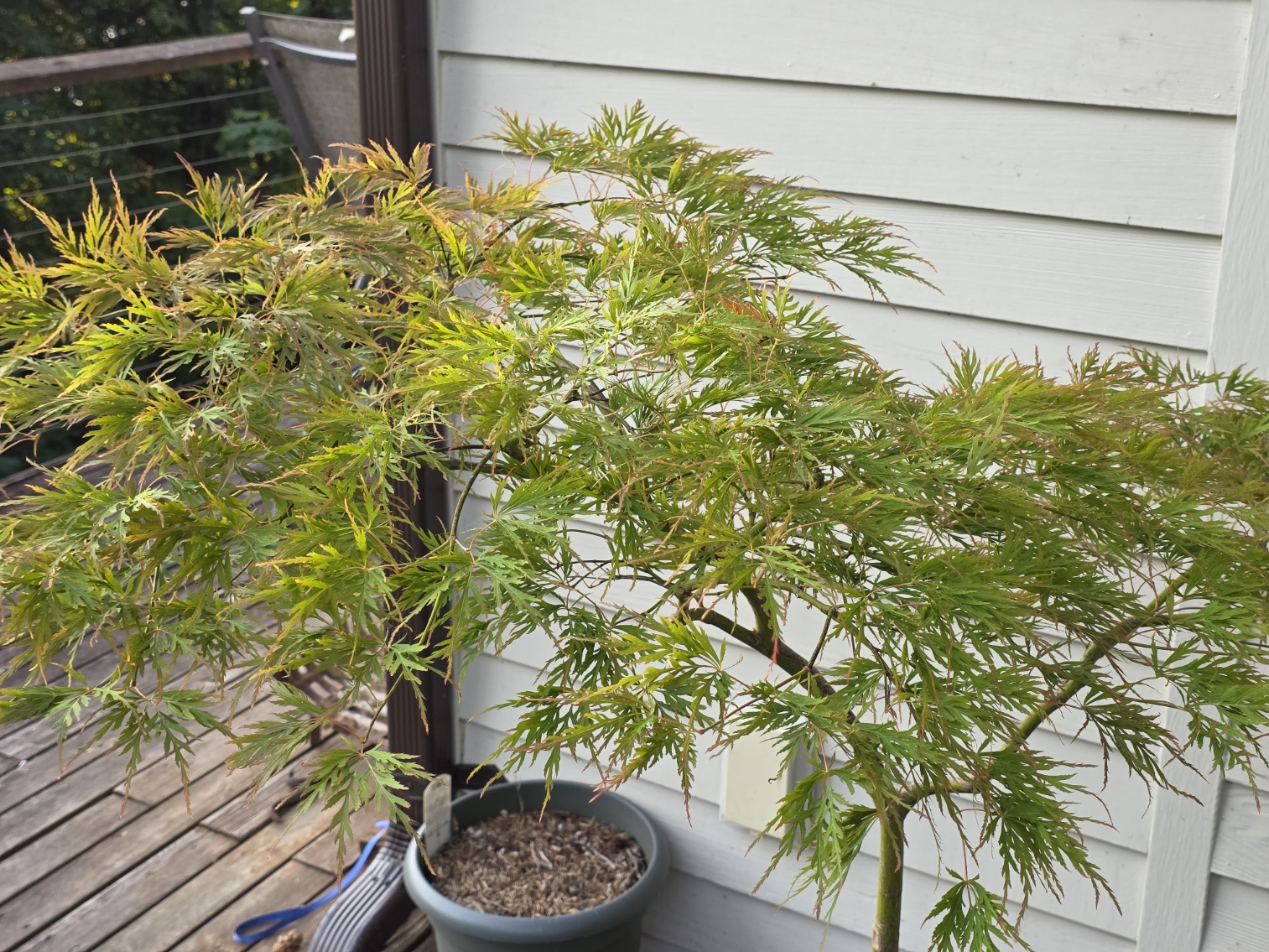
The Yellow Thread Maple is a striking Japanese maple known for its delicate, strap-like golden-yellow foliage that changes color throughout the seasons.
Description and Characteristics
- Scientific Name: Acer palmatum 'Yellow Threads'
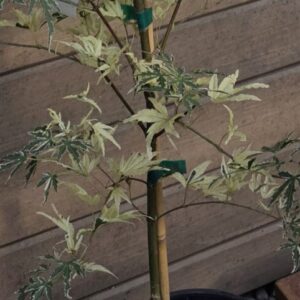
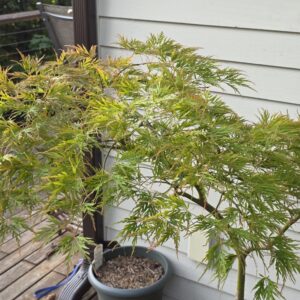
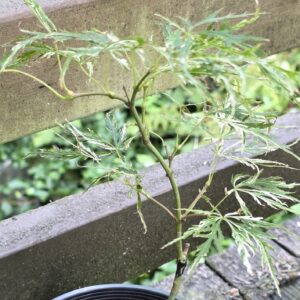
- Foliage: The leaves emerge bright yellow in spring, transitioning to a softer chartreuse in summer, and finally transform into warm orange hues in the fall. The leaves are thin and linear, resembling yellow threads, giving the tree its unique name.
- Growth Habit: This cultivar typically grows to a height of about 6 to 8 feet and a width of approximately 4 to 6 feet over ten years. It develops a broad canopy and has a slow growth rate, making it suitable for smaller landscapes and gardens.
Ideal Growing Conditions
- Light Requirements: 'Yellow Threads' thrives best in partial shade to full sun. However, providing some shade during the hottest part of the day can help maintain its vibrant leaf color.
Source
West Seattle Nursery in a 5-gallon container as a 4' high specimen for $140.